
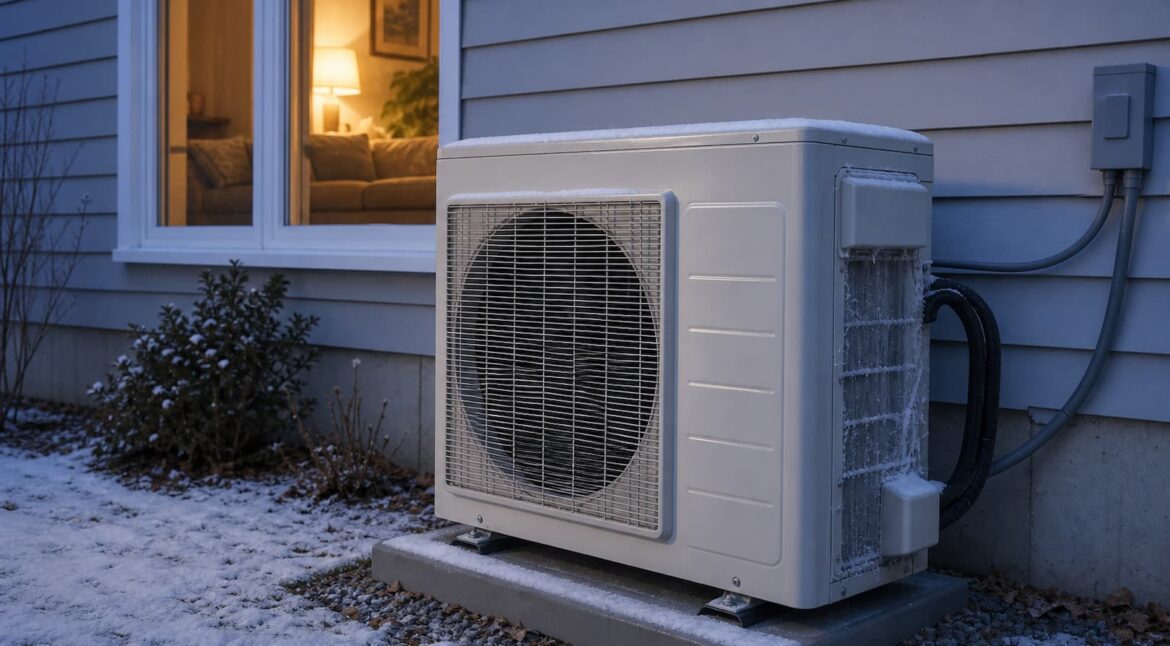
Heat-pump air often feels less intense than furnace air, but the home should still warm. If it does not, thermostat settings, airflow, outdoor ice, defrost, auxiliary heat, refrigerant, controls, or a failed component may be responsible. Use the operating pattern to decide what to check and when to call.
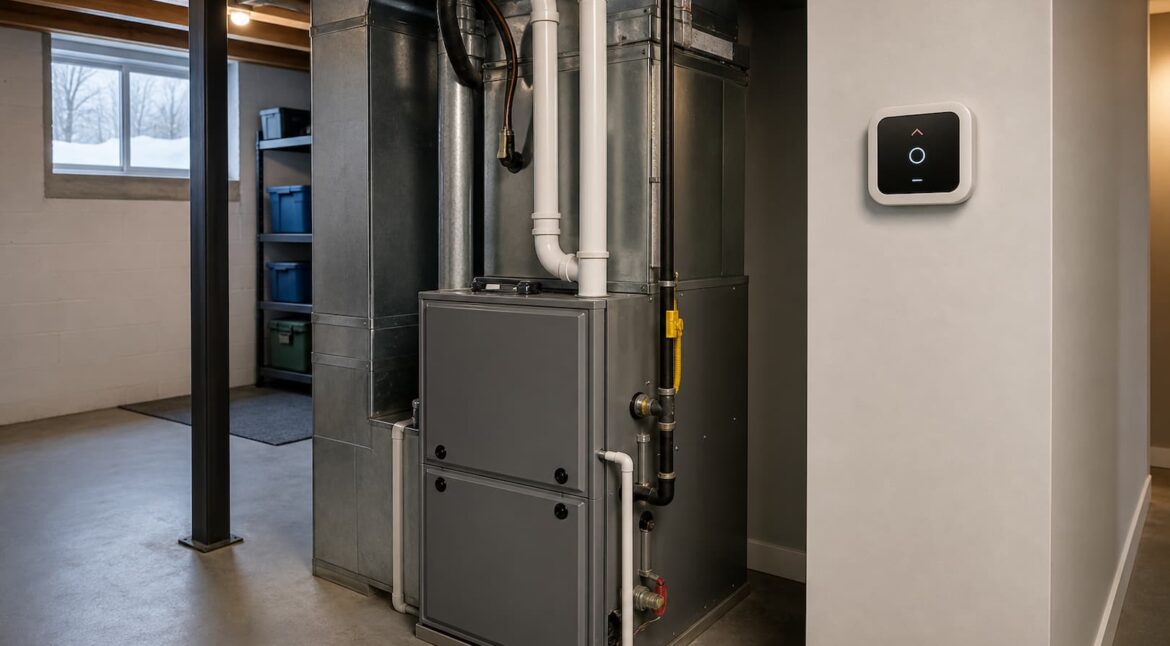
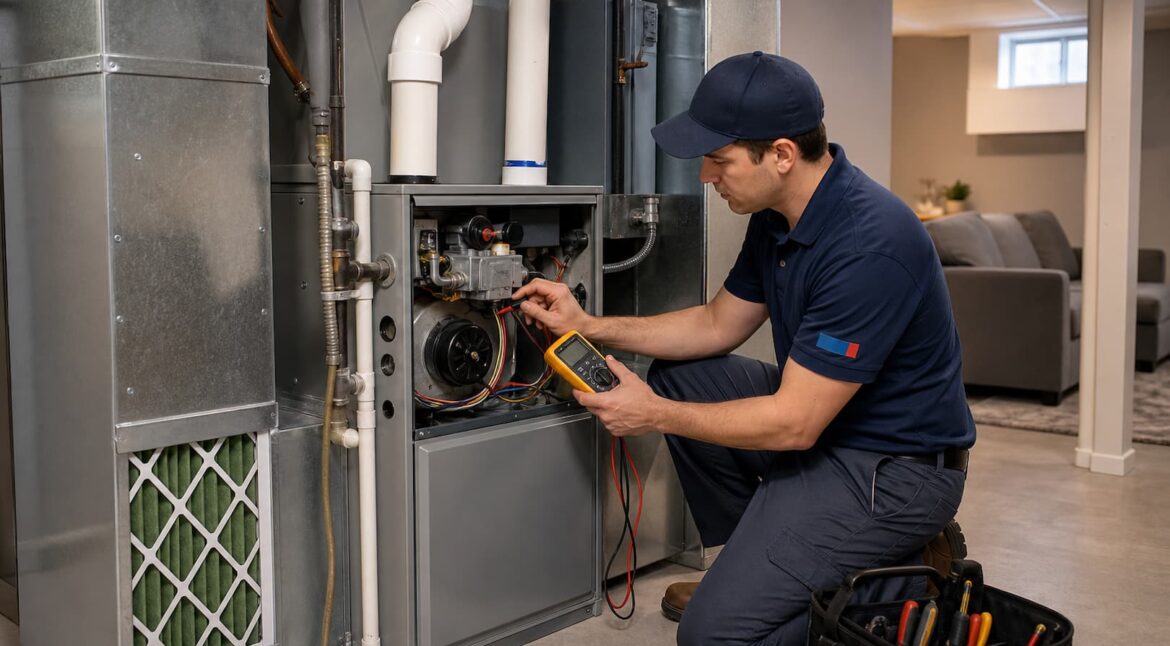
A furnace that will not turn on may have lost its thermostat call, electrical power, fuel, draft proof, ignition, flame signal, airflow, or condensate path. The sounds and timing of the failed startup help narrow the cause. Here is what you can safely check—and when to stop.
A furnace can blow cool air because of a thermostat setting, a normal startup delay, restricted airflow, ignition failure, a dirty flame sensor, venting trouble, or a safety shutdown. This guide shows you how to read the pattern, make safe checks, and know when the furnace needs professional diagnosis.
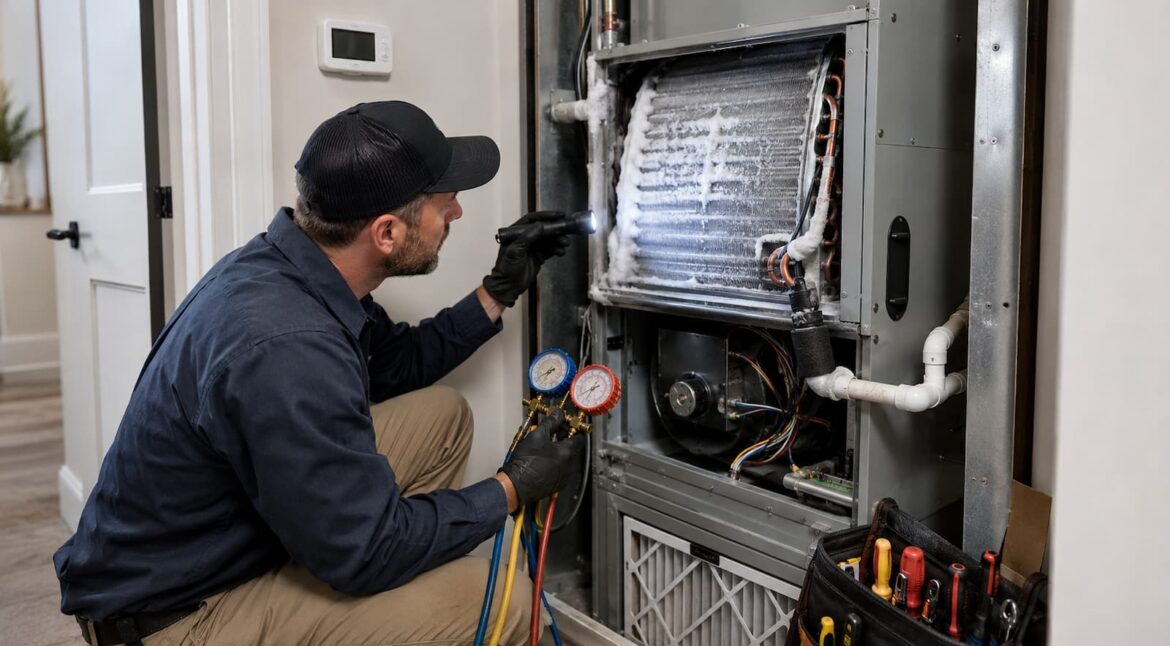
If your AC is freezing up, the ice is usually a symptom of a deeper problem — restricted airflow, a dirty filter, dirty evaporator coil, low refrigerant, blower issues, blocked vents, duct problems, or a system running under the wrong conditions. This guide explains why AC systems freeze, what to…
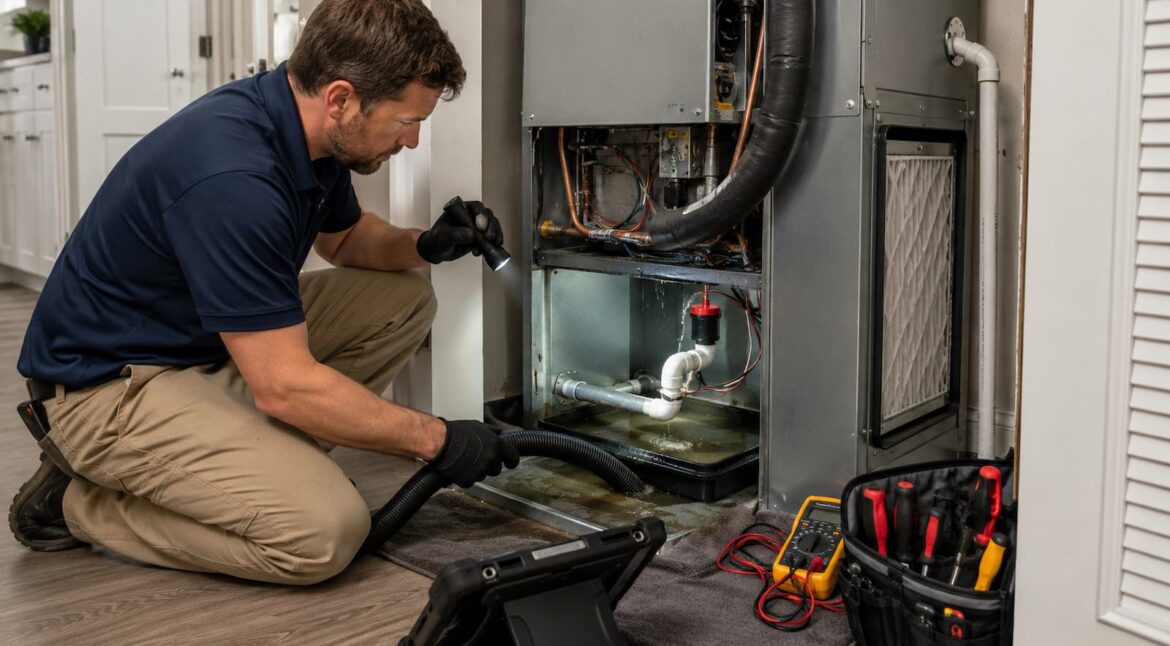
If your AC is leaking water, the problem is usually connected to the condensate drain system, a clogged drain line, cracked drain pan, failed condensate pump, frozen evaporator coil, dirty filter, poor airflow, or improper installation. This guide explains why AC systems produce water, when leaking is normal or not,…