
Weak Airflow From Vents: Causes and Solutions
Weak airflow can make a working furnace or air conditioner look like failed equipment. The blower runs, the thermostat shows a heating or cooling call, and the air at the grille may be the right temperature—yet the room never becomes comfortable. Sometimes the cause is a filter or closed damper. Other times the system is fighting a dirty coil, a slipping blower, excessive duct pressure, leakage, collapsed flex duct, poor return paths, or a zone-control problem.
The first useful distinction is scope. If every vent is weak, start near the equipment and the main air path. If only one or two rooms are affected, focus on their registers, branch ducts, balancing dampers, door position, and return-air path. If airflow changes when another zone calls, the issue may involve dampers or system design. “More fan” is not a complete answer; airflow has to fit the blower, coil, filter, ducts, and equipment operating range.
Quick answer: Check whether the problem affects one vent, one floor, one zone, or the whole home. Replace a visibly dirty filter with the correct size, open supply registers, clear return grilles, and make sure furniture or rugs do not block airflow. If the filter bends inward, vents whistle, the coil freezes, the blower sounds strained, or airflow stays weak throughout the house, schedule an HVAC airflow diagnosis. The technician should measure static pressure and equipment performance—not simply turn the fan speed up.
Is the Problem at One Vent or Every Vent?
Weak Airflow at One Vent
One weak register usually points downstream of the main trunk. The register may be closed or clogged with construction debris. A branch damper may have moved. Flexible duct may be crushed by storage, kinked around framing, torn, or disconnected. A rigid branch can have a failed joint or hidden obstruction. The room may also lack a return path, so air delivery drops when its door is closed.
Weak Airflow on One Floor or Side of the House
This pattern can involve a main branch, balancing damper, zone damper, duct leakage in an attic or crawlspace, or a layout that was never balanced for seasonal loads. A finished basement, converted attic, addition, or wall removed during renovation can change where air needs to go. If the system has zoning, a damper that is stuck partly closed may starve several rooms together.
Weak Airflow Throughout the Home
Whole-house weakness shifts attention to the common path: filter, return duct, blower wheel and motor, indoor coil, main trunk, zone panel, and overall static pressure. It can also occur when a cooling coil is frozen or when an electronically controlled blower reduces speed because of a fault. If airflow everywhere changed suddenly, a component, damper, obstruction, or ice problem is more likely than a duct design that has been poor for years.
Safe Airflow Checks for Homeowners
Check the Filter—and Its Fit
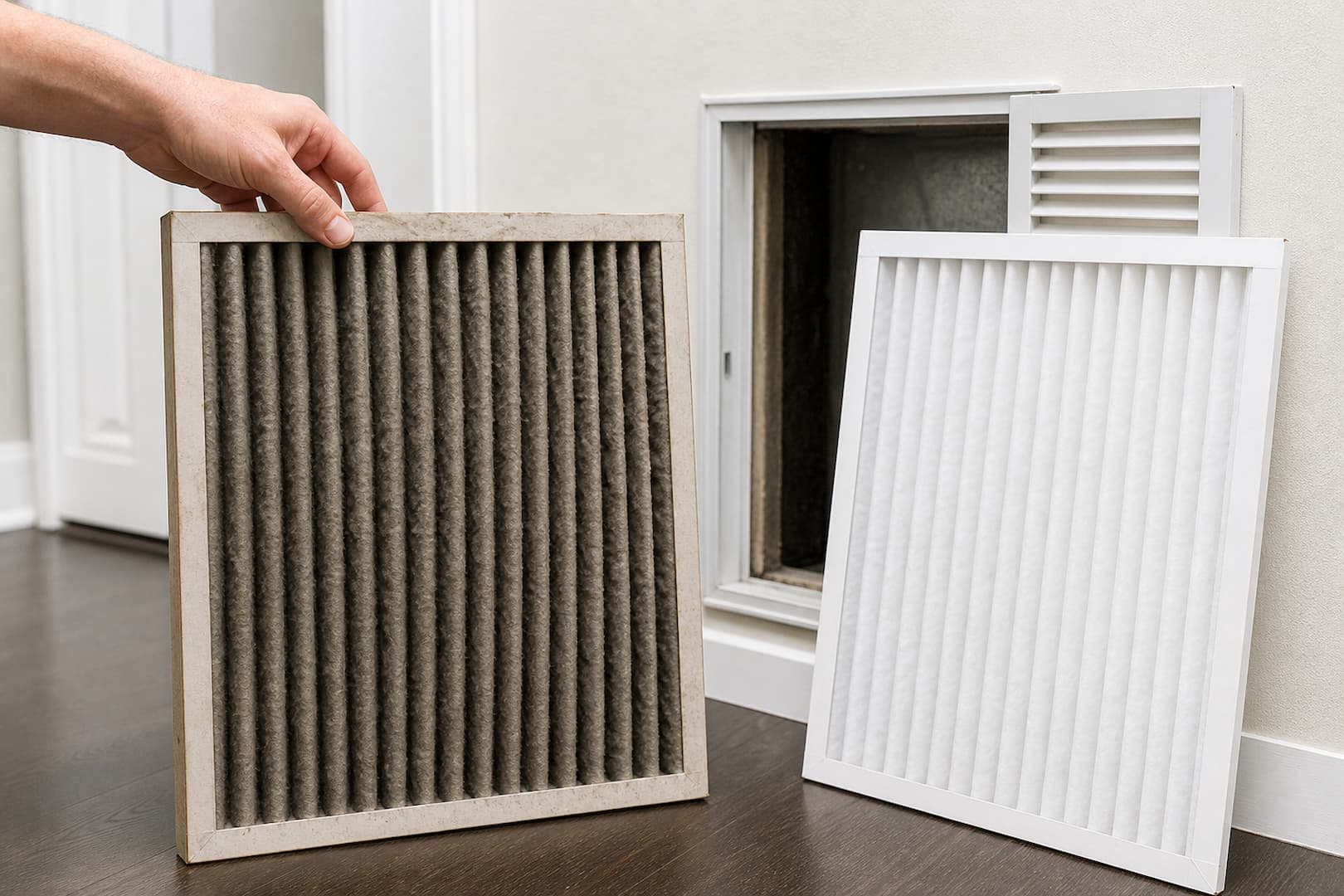
Turn the system off before removing a filter from a homeowner-accessible rack. Replace it if dust and debris cover the surface or light barely passes through. Match all dimensions, including thickness, and point the arrow toward the blower. A filter that is too small can pull air around its edges and dirty the equipment. A filter that is too restrictive for the duct and blower can reduce airflow even when it looks clean.
Do not run the system without a filter as an experiment. Dust can collect on the blower and coil, and an unrestrained filter slot can pull unfiltered basement or attic air into the return. If the old filter is bowed sharply toward the equipment or makes a loud suction sound, photograph it; that is useful evidence of high return-side pressure.
Open Registers and Clear Returns
Confirm that the register damper is open and that its grille is not matted with dust. Move furniture, rugs, curtains, laundry, and boxes away from supply and return openings. Many floor registers have a lever that is easy to bump while vacuuming. Return grilles may not have a lever at all; do not mistake a return for a closed supply and cover it.
Keep most supply registers open. Closing vents does not make the blower send a fixed amount of air wherever you want it. It changes system pressure, can increase leakage, may create noise, and can reduce airflow through heating or cooling equipment. Use balancing dampers and measurements when redistribution is needed.
Compare Rooms Under the Same Conditions
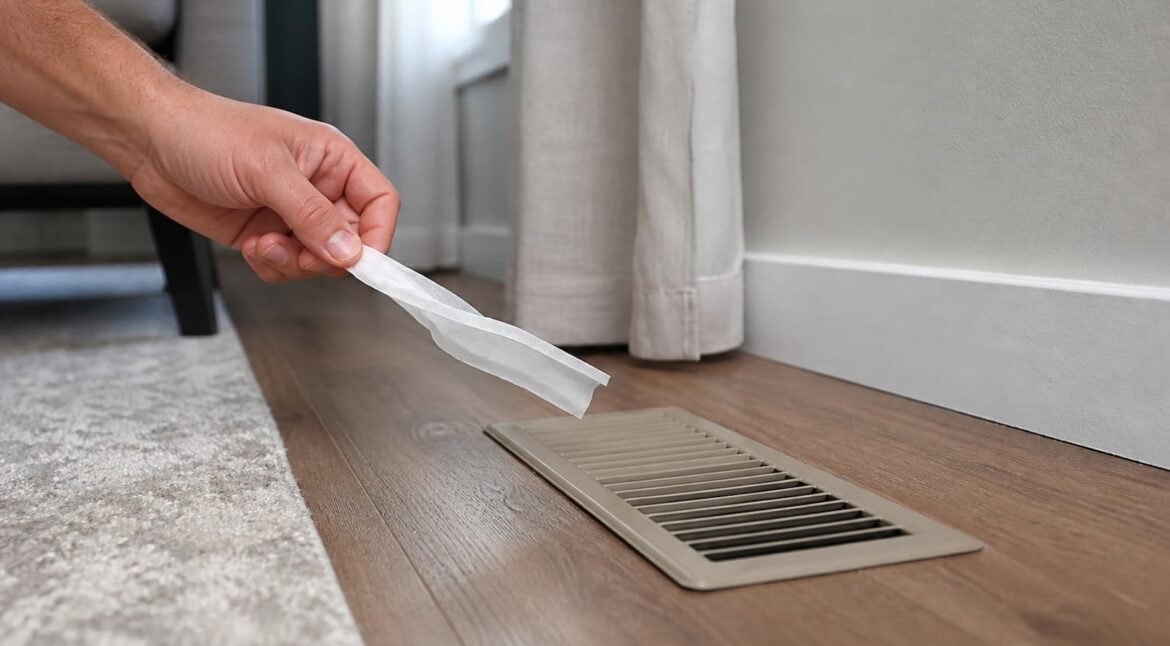
With the system running steadily, walk through the home and write down which vents feel strong, weak, noisy, or silent. Note door position and whether the room is over a garage, under an attic, or far from the equipment. A strip of lightweight tissue held near—not inserted into—the grille can show relative differences. It is not a measurement, but it helps map the pattern before service.
Look for Visible Duct Damage Without Entering Unsafe Areas
In an accessible unfinished basement, you may see an open joint, hanging flex duct, loose register boot, or manual damper handle. Do not crawl into tight attics or crawlspaces, step between joists, disturb old insulation, or touch suspected asbestos-containing material. Do not reach into a duct with the blower running. Photograph visible damage and leave repair of inaccessible or contaminated areas to a qualified professional.
Check for Ice or Water Near the Indoor Unit
Weak airflow during cooling can be both a cause and a result of a frozen evaporator coil. Ice blocks the coil, so vent airflow falls even further. Turn cooling off if you see ice on the refrigerant line or cabinet. If the blower works normally, setting Fan to On may help thaw it. Watch for water and do not restart cooling until the coil has thawed and the filter and vents have been checked. Repeated freezing requires service.
Common Causes of Weak Airflow From HVAC Vents
1. Dirty or Overly Restrictive Air Filter
A clogged filter adds resistance on the return side. The blower moves less air, rooms become uneven, heating or cooling runs longer, and equipment temperatures or pressures can move outside the intended range. Pet hair, renovation dust, candles, smoke, high occupancy, and continuous fan use can load a filter faster than its nominal replacement interval.
Higher-efficiency filtration is useful only when the filter area, cabinet, return duct, and blower can support it. A deep media filter with ample surface area may impose less resistance than a thin filter of similar rating, but product labels alone do not tell you how it performs in your system. Pressure drop should be measured when filtration upgrades are considered.
2. Dirty Evaporator Coil
The indoor cooling coil sits directly in the air stream. Dust can reach it through filter bypass, a poor filter rack, return leaks, or years of use. Buildup narrows the spaces between fins and reduces heat transfer. Because the coil is inside a cabinet or plenum, homeowners may have a clean filter today while the coil still carries debris from past operation.
3. Dirty Blower Wheel
A centrifugal blower depends on the shape and depth of its blades. Dust packed into the wheel changes that geometry. The motor can sound normal while the wheel moves substantially less air. Buildup can also create imbalance and vibration. Cleaning requires proper access and protection of the motor, electronics, and surrounding cabinet.
4. Weak Blower Motor, Capacitor, Module, or Control
Motors may run slowly, overheat, cycle off, fail on one speed, or struggle against high static pressure. Traditional motors may depend on a run capacitor. Variable-speed and electronically commutated motors use modules and programmed airflow profiles. Relays, boards, wiring, speed taps, and configuration all influence output. Replacing a capacitor or changing a speed is appropriate only after testing shows why airflow is low.
5. Return Air Is Restricted or Undersized
The blower cannot deliver air it cannot pull back. Small return ducts, closed doors without transfer paths, blocked grilles, a restrictive filter rack, crushed return flex, and dirty return components can starve the system. Bedrooms may lose supply airflow when their doors close because pressure builds in the rooms. A jump duct, transfer grille, door undercut, or additional return may be part of a designed correction.
6. Leaking, Disconnected, Kinked, or Crushed Ducts
Supply air can escape through failed joints before reaching the register. Return leaks can pull hot attic air, cold crawlspace air, dust, or odors into the system. Flexible duct loses capacity when compressed, sharply bent, sagging, or pinched. A branch completely separated from its boot can leave one room with almost no airflow while wasting conditioned air in an unoccupied space.
7. Closed or Misadjusted Balancing Damper
Manual balancing dampers are often located in branch ducts near the trunk. Their handles can move during work, or someone may close one without recording the original position. Motorized zone dampers can stick, lose power, break a linkage, or receive the wrong command. A bypass damper set incorrectly can also change how air moves when only one zone calls.
8. Duct System Has Excessive Static Pressure
Static pressure is the resistance the blower works against. Small ducts, too few returns, restrictive grilles, closed dampers, dirty components, sharp transitions, and an undersized filter rack all add resistance. Some variable-speed blowers try to maintain airflow by increasing effort, which can make them noisier and raise energy use until they reach their limit. Other blowers simply move less air.
9. The Cooling Coil Is Frozen
Low airflow can freeze the coil; low refrigerant, a leak, fan trouble, a dirty coil, or control problems can do the same. Once ice forms, it becomes a major restriction. The correct repair is not merely to thaw the system. Airflow and refrigerant performance have to be checked after the ice is gone, under stable operating conditions.
10. Equipment or Duct Design Does Not Match the House
An oversized unit is not a cure for weak ducts. It may require more airflow than the distribution system can carry, creating noise, pressure, short cycles, and comfort swings. An undersized blower, poor transition, missing return, long compressed branch, or register selected for appearance rather than throw can all limit delivery. Additions and renovations often expose these mismatches because the original system is asked to serve more space or a different layout.
What the Pattern Often Suggests
| Airflow pattern | Likely area to inspect | Typical solution path |
|---|---|---|
| One vent is weak | Register, branch damper, branch duct, room return path | Open, reconnect, straighten, seal, balance, or add return path |
| One floor or zone is weak | Trunk, zone damper, attic/crawlspace leaks, balancing | Test damper control and repair or rebalance ducts |
| Every vent is weak | Filter, return, coil, blower, main ducts, ice | Measure system pressure and equipment airflow |
| Airflow weak only in cooling | Cooling speed, evaporator coil, ice, zoning | Thaw if frozen, then test cooling airflow and refrigeration |
| Airflow changes when doors close | Room pressure and return pathway | Evaluate transfers, returns, door undercuts, and balance |
Solutions That Work—and Shortcuts That Usually Do Not
The right solution removes the restriction, repairs the leakage, restores blower performance, or corrects distribution while keeping the equipment inside its required operating range. That may mean a filter-rack upgrade, coil or blower cleaning, motor repair, return enlargement, branch repair, damper correction, duct sealing with mastic or listed metal tape, zoning changes, or a redesigned transition.
Avoid these common shortcuts:
- Do not run without a filter. It transfers the dirt problem to more expensive components.
- Do not close most vents. Pressure rises and total airflow can fall.
- Do not install a stronger blower blindly. The existing ducts and coil may not support it.
- Do not use cloth “duct tape” for permanent duct repair. Use materials listed for HVAC ducts and prepare the surface correctly.
- Do not assume duct cleaning fixes every airflow problem. A disconnected branch, small return, closed damper, or motor fault needs a different remedy.
- Do not add booster fans before measuring. They can mask poor design, increase leakage, or unbalance return and supply air.
What an HVAC Airflow Diagnosis Should Include
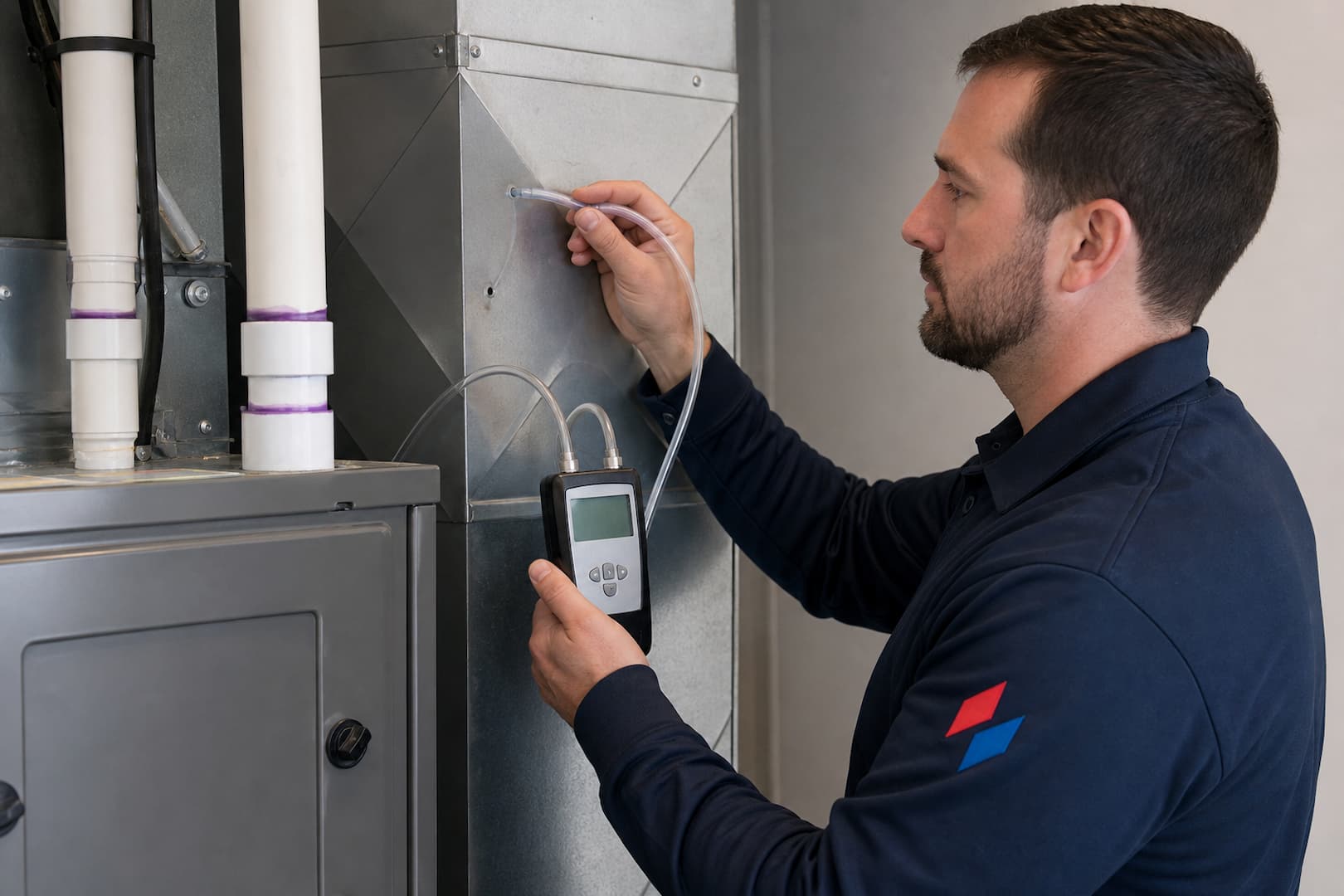
Airflow is measurable. A technician can compare total external static pressure with the equipment’s approved range and break that pressure down across the filter, coil, return, and supply sides. Blower tables or commissioning data then help estimate delivered airflow. Temperature rise in heating and temperature change in cooling provide another check on whether heat transfer and air volume make sense together.
Depending on the complaint, useful checks include:
- Filter pressure drop and rack bypass.
- Return and supply static pressure.
- Blower speed or airflow profile, motor current, capacitor or module condition, and wheel cleanliness.
- Evaporator coil cleanliness, temperature, frost, and refrigerant performance.
- Room-by-room register airflow or velocity with grille type and damper position noted.
- Duct leakage, disconnected branches, compressed flex, insulation, and trunk sizing.
- Zone damper commands, bypass behavior, pressure relief, and operation with each zone combination.
- Room pressure with doors open and closed to evaluate return paths.
A lasting correction is verified afterward. Static pressure should improve where expected, equipment temperatures should remain in range, and the affected rooms should receive more useful air without creating new noise or starving another area.
When Weak Airflow Needs Prompt Service
- Ice is visible on the AC coil, cabinet, or refrigerant line.
- The furnace starts warm, turns cool, and repeats short cycles.
- The blower hums, squeals, smells hot, or stops intermittently.
- A filter is being pulled out of shape or a return grille whistles loudly.
- Water is leaking near the indoor unit or into finished space.
- Airflow dropped suddenly after a noise, renovation, storm, or recent service.
- Heating or cooling cannot maintain a safe indoor temperature.
A sudden whole-house airflow loss, frozen coil, hot motor odor, or heating limit fault deserves residential HVAC repair. If the system is otherwise operating but airflow has declined gradually, a measured maintenance and diagnostic visit can still prevent a larger failure.
Preventing Airflow Problems
- Check filters monthly during peak seasons and replace them based on condition.
- Keep grilles open, visible, and free of dust and furniture.
- Do not store items on flexible ducts in attics, basements, or crawlspaces.
- After remodeling, have airflow rechecked if walls, doors, rooms, or equipment loads changed.
- Ask for coil and blower inspection during HVAC maintenance, not only a filter change.
- If you want higher-efficiency filtration, size the media and return path for acceptable pressure drop.
Frequently Asked Questions
Why is airflow weak from only one vent?
Check the register lever and room return path first. A closed balancing damper, disconnected or crushed branch duct, leakage, or obstruction can also reduce one vent while the rest of the system remains normal.
Can a dirty filter reduce airflow from every vent?
Yes. All system air passes through the common return and filter. A loaded or overly restrictive filter can lower total airflow, increase noise, and contribute to furnace overheating or AC freezing.
Will closing vents make other rooms get more air?
It may change distribution slightly, but closing many registers raises pressure and can reduce total airflow or increase duct leakage. Proper balancing uses measurements and, where available, branch dampers—not a house full of closed grilles.
Does weak airflow mean the blower motor is failing?
It can, but filters, coils, wheels, returns, dampers, ducts, and ice are also common. Motor diagnosis should include its control, capacitor or module, configured speed, current, wheel condition, and the pressure it is working against.
Can duct cleaning improve weak airflow?
Only when significant debris is actually restricting the duct or a component. Cleaning will not resize an undersized return, reconnect a branch, open a damper, repair a motor, or correct a frozen coil. Diagnose the restriction before choosing the service.
How does a technician measure HVAC airflow?
Methods can include total external static pressure, pressure drop across components, blower performance tables, temperature measurements, flow hoods, anemometers, and duct leakage or pressure tests. The right combination depends on the equipment and complaint.
Bottom Line
Map the weak vents before assuming the system is universally weak. One room points toward a branch and return path. One zone points toward a trunk or damper. Every vent points toward the filter, coil, blower, returns, main ducts, or ice. That simple map makes the service visit far more productive.
Replace a dirty correctly sized filter, open and clear the grilles, and look for safe, visible damage. If airflow does not recover, ask for measurements. The durable solution is the one that moves the required air without excessive pressure, noise, leakage, or equipment stress—not the one that merely makes a single register feel stronger for a day.