

Commercial HVAC Maintenance Agreements • New Jersey
Commercial HVAC Maintenance Agreement Plans in New Jersey
Scheduled preventive HVAC maintenance, clear service scopes, photo documentation, and priority support for commercial buildings that cannot afford avoidable system downtime.
Sadowski HVAC helps New Jersey business owners, property managers, and facility teams stay ahead of preventable HVAC problems. Our commercial maintenance agreement plans are built around routine inspections, filter service, drain checks, rooftop unit maintenance, operating review, and transparent documentation after each visit.
Preventive Maintenance Agreements Built for Active Commercial Buildings
Commercial HVAC systems often run for long hours, serve multiple occupied areas, and support business operations that depend on stable indoor conditions. When maintenance is delayed, small issues such as clogged filters, dirty coils, blocked condensate drains, worn belts, weak airflow, or early electrical wear can turn into expensive service calls.
A Sadowski HVAC maintenance agreement gives your property a structured service plan instead of a reactive approach. We define what will be checked, when visits should happen, what components require routine attention, and how findings will be reported to your team.
The goal is simple: help your HVAC equipment operate more reliably, reduce preventable disruptions, and give owners and managers a clearer picture of system condition throughout the year.
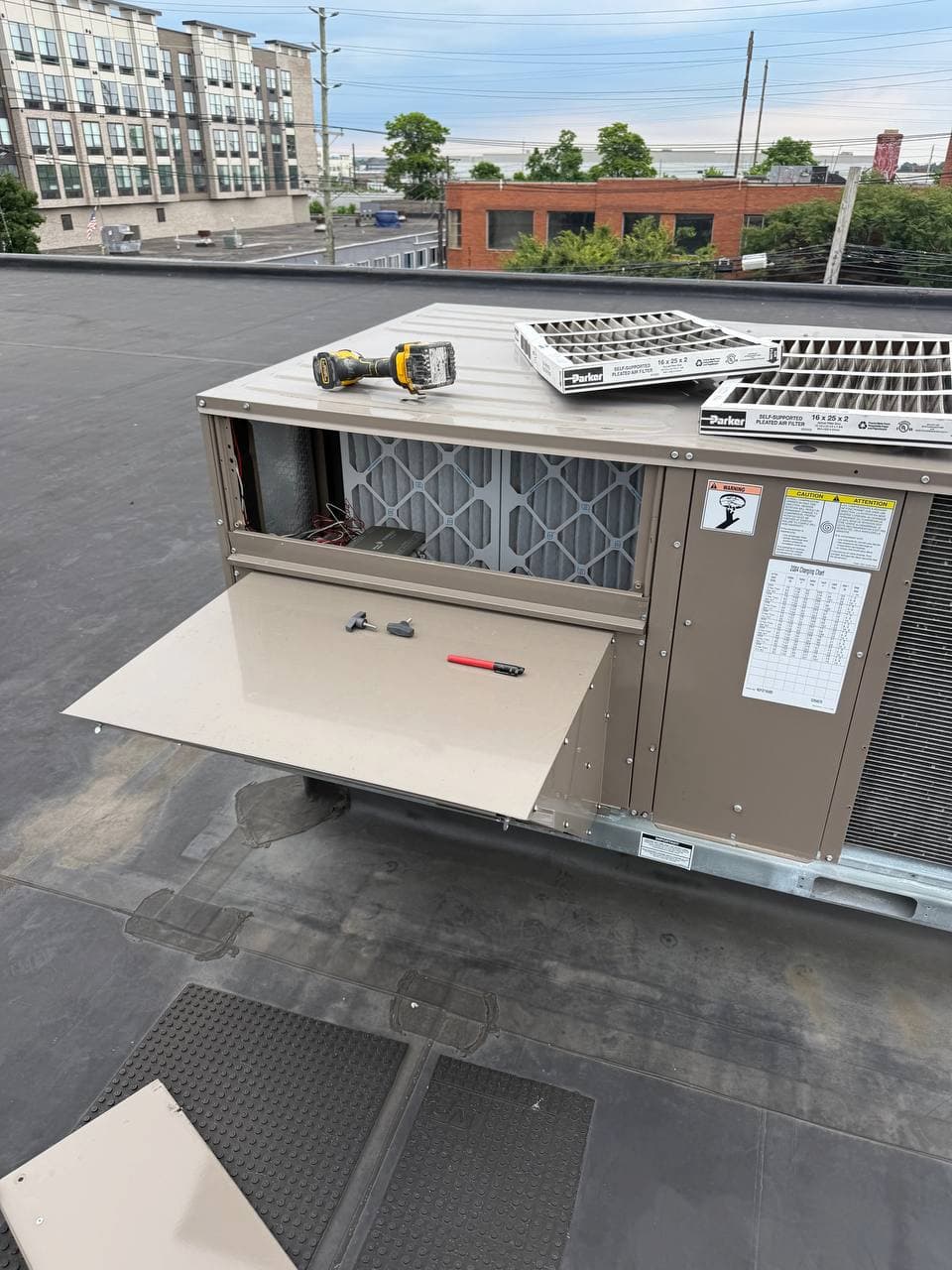
More than a reminder on a calendar
A true maintenance agreement combines scheduling, service scope, inspection history, documentation, and communication. It helps your building move from “fix it when it breaks” to a more controlled maintenance strategy.
Why Preventive Commercial HVAC Maintenance Is Worth Planning
Routine maintenance cannot prevent every HVAC issue, but it can help identify common problems earlier and keep critical equipment cleaner, more serviceable, and easier to monitor over time.
Protect Equipment Life
Regular inspections and cleaning help reduce unnecessary strain on compressors, motors, fans, coils, and other major HVAC components.
Improve Reliability
Maintenance visits help catch restricted airflow, clogged drains, worn belts, dirty coils, and early operating concerns before they create bigger problems.
Support Better Airflow
Clean filters, accessible equipment, and basic airflow review help commercial systems move conditioned air more consistently through occupied spaces.
Reduce Surprise Downtime
A proactive plan gives your team a better chance to address developing issues before they interrupt employees, customers, tenants, or operations.
What Makes a Maintenance Agreement Different?
A one-time HVAC maintenance visit can be useful, but a maintenance agreement creates structure. It defines recurring service, sets expectations, builds equipment history, and gives your property a clearer maintenance path.
One-Time Maintenance Visit
A single visit is usually focused on the current condition of the system. It may be helpful before a season starts or after a comfort complaint, but it does not create a long-term maintenance rhythm by itself.
- Useful for an immediate inspection or seasonal tune-up
- Limited equipment history unless repeated consistently
- Scheduling is usually requested manually by the property
- Best for specific short-term concerns or one-off service needs
Commercial Maintenance Agreement
A maintenance agreement is built for recurring care. It keeps service organized, documents what we find, and helps business owners and managers make better decisions about repairs, replacements, and system planning.
- Recurring preventive maintenance based on your equipment and building use
- Defined scope of work for inspections, cleaning, filters, drains, and system checks
- Photo and video documentation after visits
- Priority scheduling and preferred service options when included in the agreement
What Your Commercial HVAC Maintenance Plan Can Include
Every building is different, so the final scope depends on your equipment, access, operating schedule, filter load, tenant needs, and service history. These are common items that may be included in a Sadowski HVAC commercial maintenance agreement.
Filter Service and Airflow Review
Filter inspection and replacement where included, filter rack condition review, return air concerns, visible restriction issues, and general airflow observations.
Coil Condition Checks
Evaporator and condenser coil condition review, visible dirt buildup, blocked surface areas, and recommendations when coil cleaning is needed.
Condensate Drain Inspection
Condensate drain pan and drain line observations, signs of blockage, standing water, rust, biological buildup, and water damage risk around equipment.
Electrical and Control Review
Visual review of wiring, contactors, controls, operating sequence, thermostat or control response, and signs of heat, wear, or abnormal operation.
Belts, Motors, and Fans
Inspection of belts where applicable, motor condition, fan operation, vibration concerns, worn components, and service recommendations before failure.
Operating Notes and Recommendations
Basic performance observations, abnormal sounds, access issues, repair recommendations, and practical next steps for the property team.
Photo and Video Documentation After Maintenance Visits
Commercial clients need more than a line that says “maintenance completed.” Sadowski HVAC documents real conditions found during service so owners, managers, and facility teams can see what was inspected, what was cleaned or replaced, and what may need attention.
This documentation is especially useful for multi-location businesses, property managers, landlords, and decision makers who are not always on-site when maintenance is performed.
When we find an issue, we explain it in practical terms and help separate urgent concerns from items that should simply be monitored or planned for later.
What you receive
Condition photos, maintenance notes, visible concerns, and practical recommendations after the visit.
Why it helps
Owners and managers can review system condition without being physically present during service.
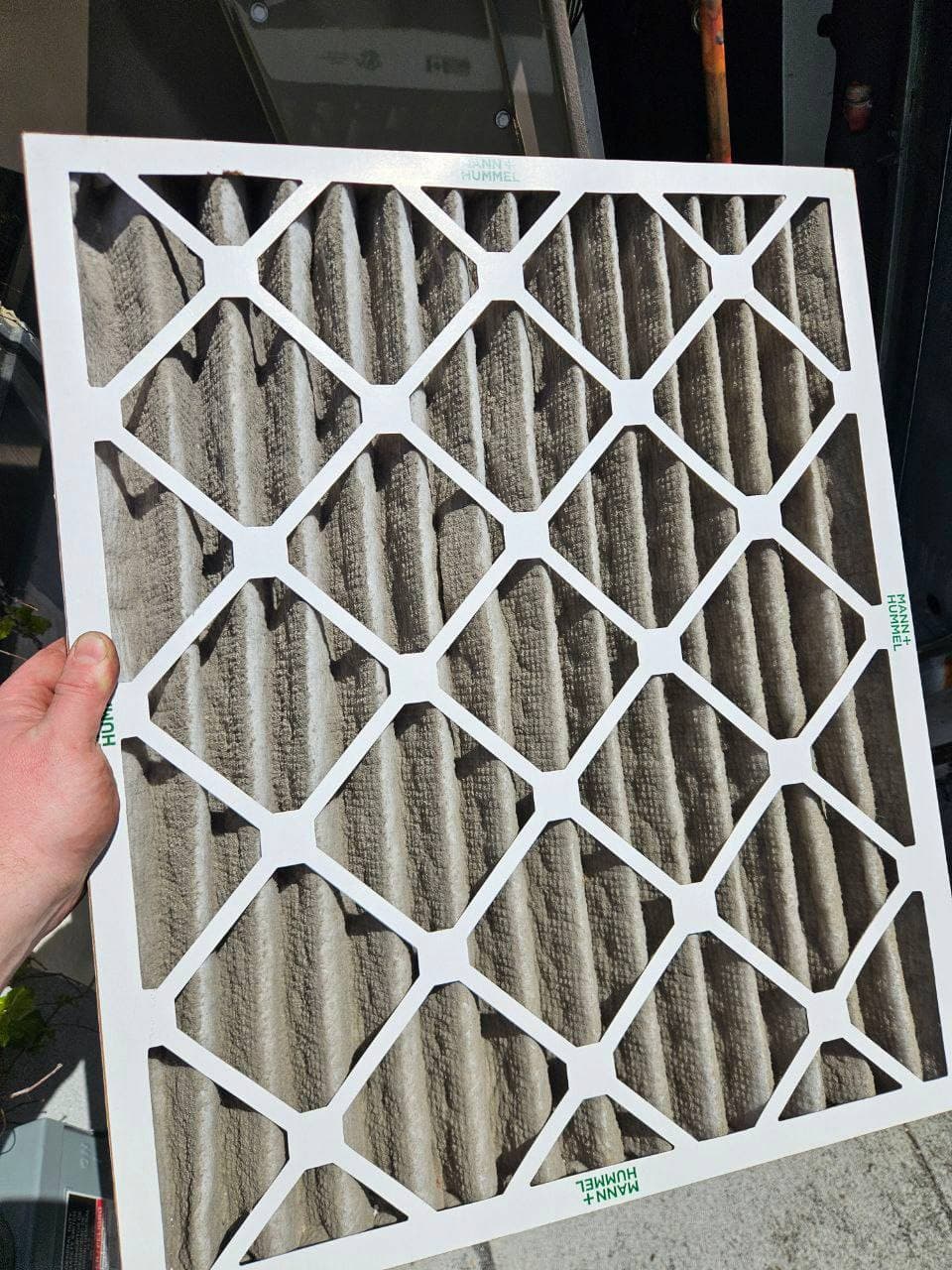
Filter condition
Documented during service so the property team can see actual airflow restriction risk.
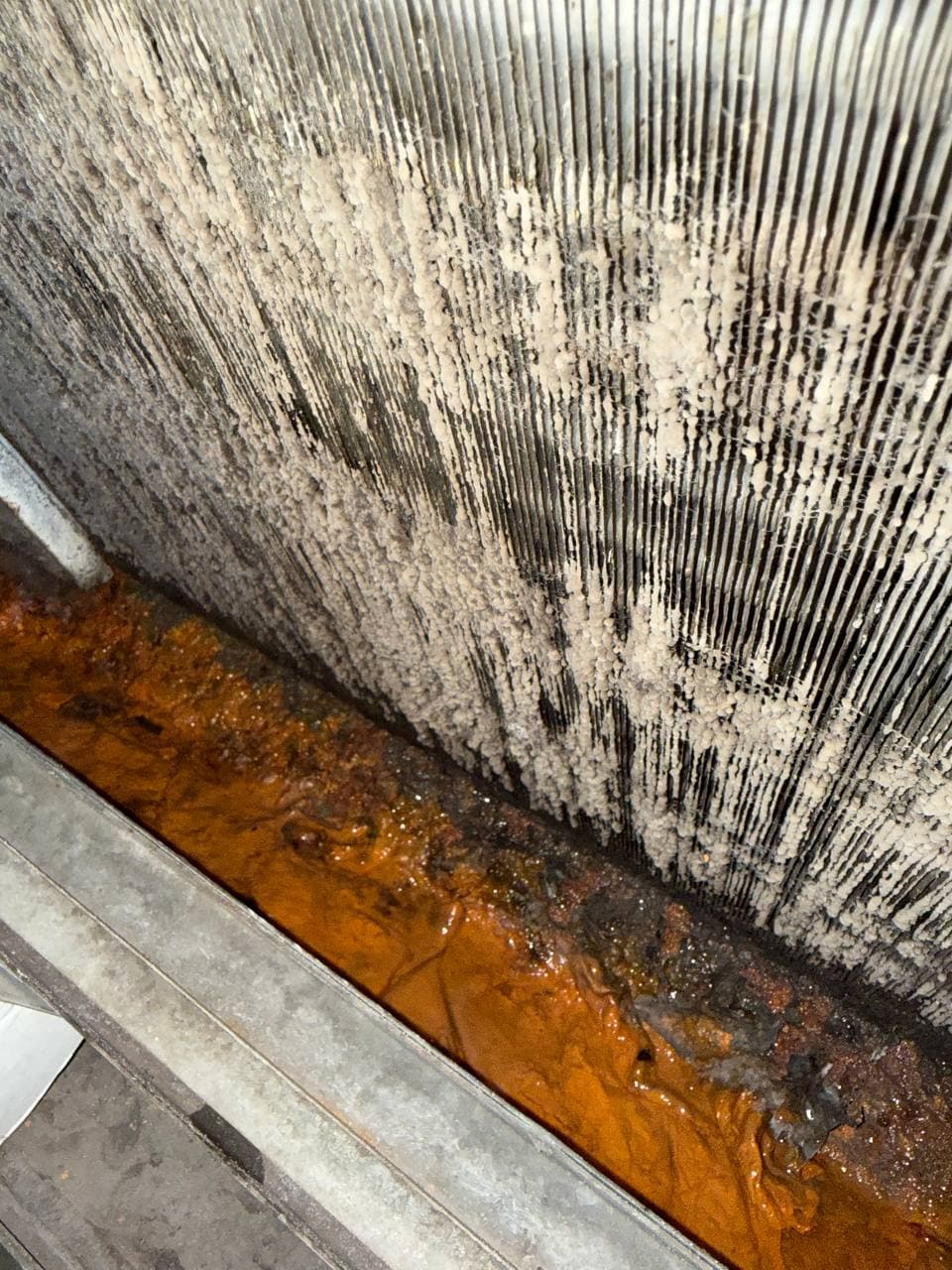
Drain pan condition
Recorded for follow-up before water issues become more disruptive.
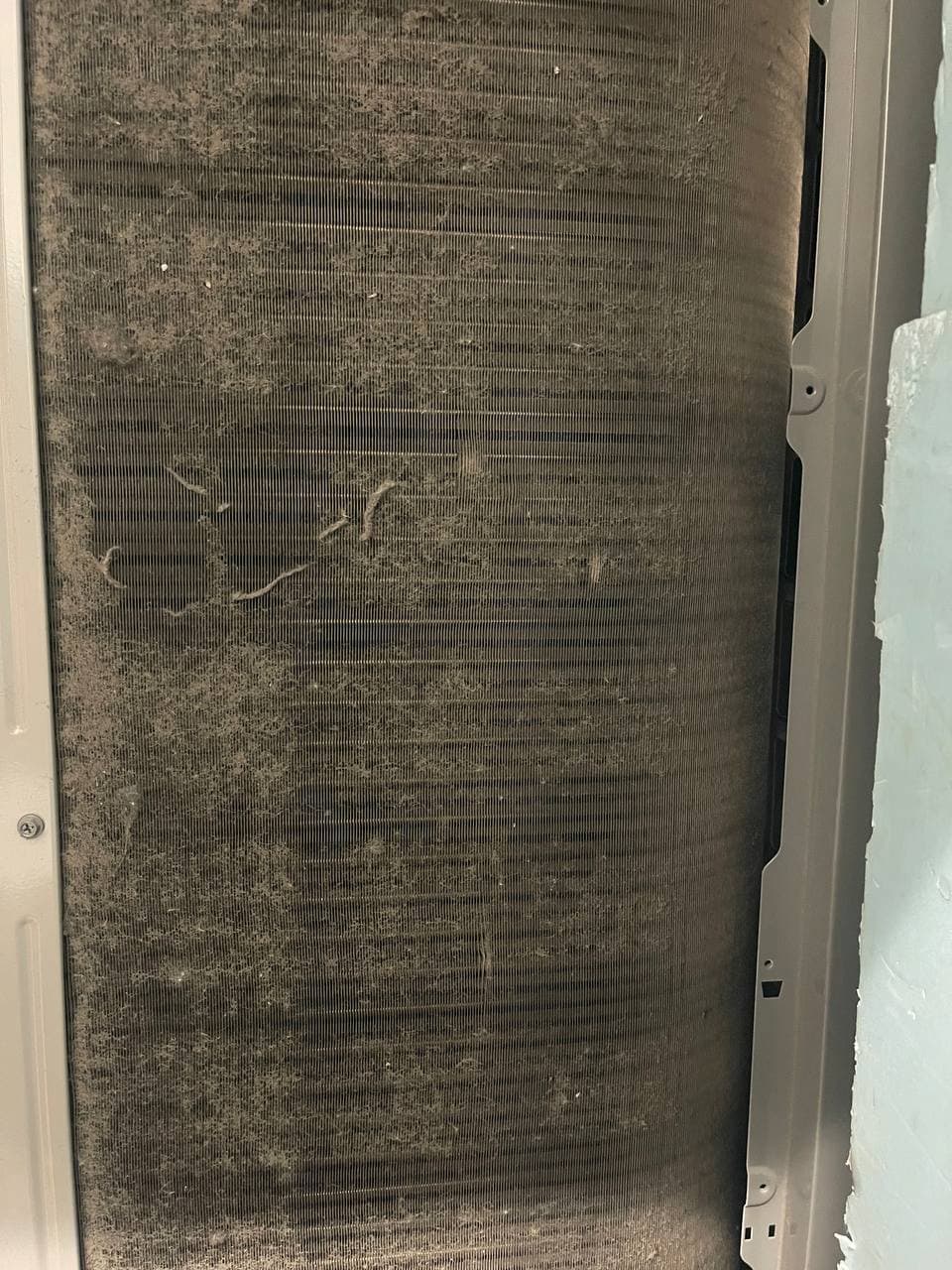
Coil condition
Reviewed before service recommendations are made.
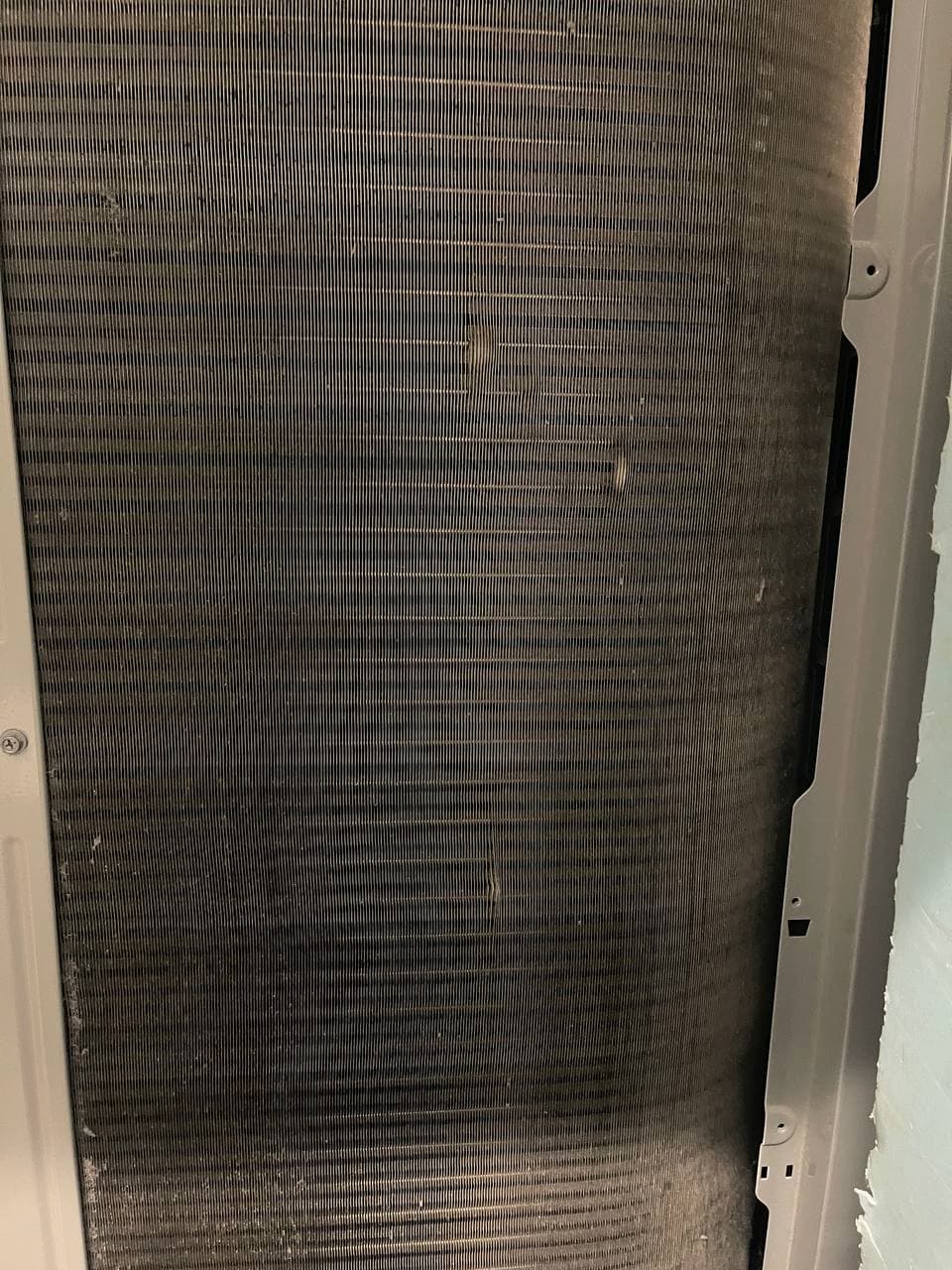
Before-and-after visibility
Useful documentation for owners, managers, and maintenance records.
How Often Should Commercial HVAC Systems Be Maintained?
The right schedule depends on equipment type, runtime, building use, rooftop access, filter loading, tenant sensitivity, and whether your systems support critical business operations.
Semi-Annual Maintenance
A common option for lighter-use commercial systems that need seasonal preparation before cooling and heating demand increases.
Quarterly Maintenance
Often a better fit for rooftop units, multi-tenant spaces, retail buildings, restaurants, and equipment exposed to heavier runtime or dirt load.
Custom Maintenance Plan
Some facilities need more frequent filter service, drain checks, or system review based on occupancy, operating hours, environment, or comfort requirements.
Real Conditions We Find During Commercial HVAC Maintenance Visits
Many HVAC problems develop slowly. These photos show the kind of conditions that can go unnoticed until comfort drops, water issues appear, airflow becomes restricted, or equipment begins working harder than it should.
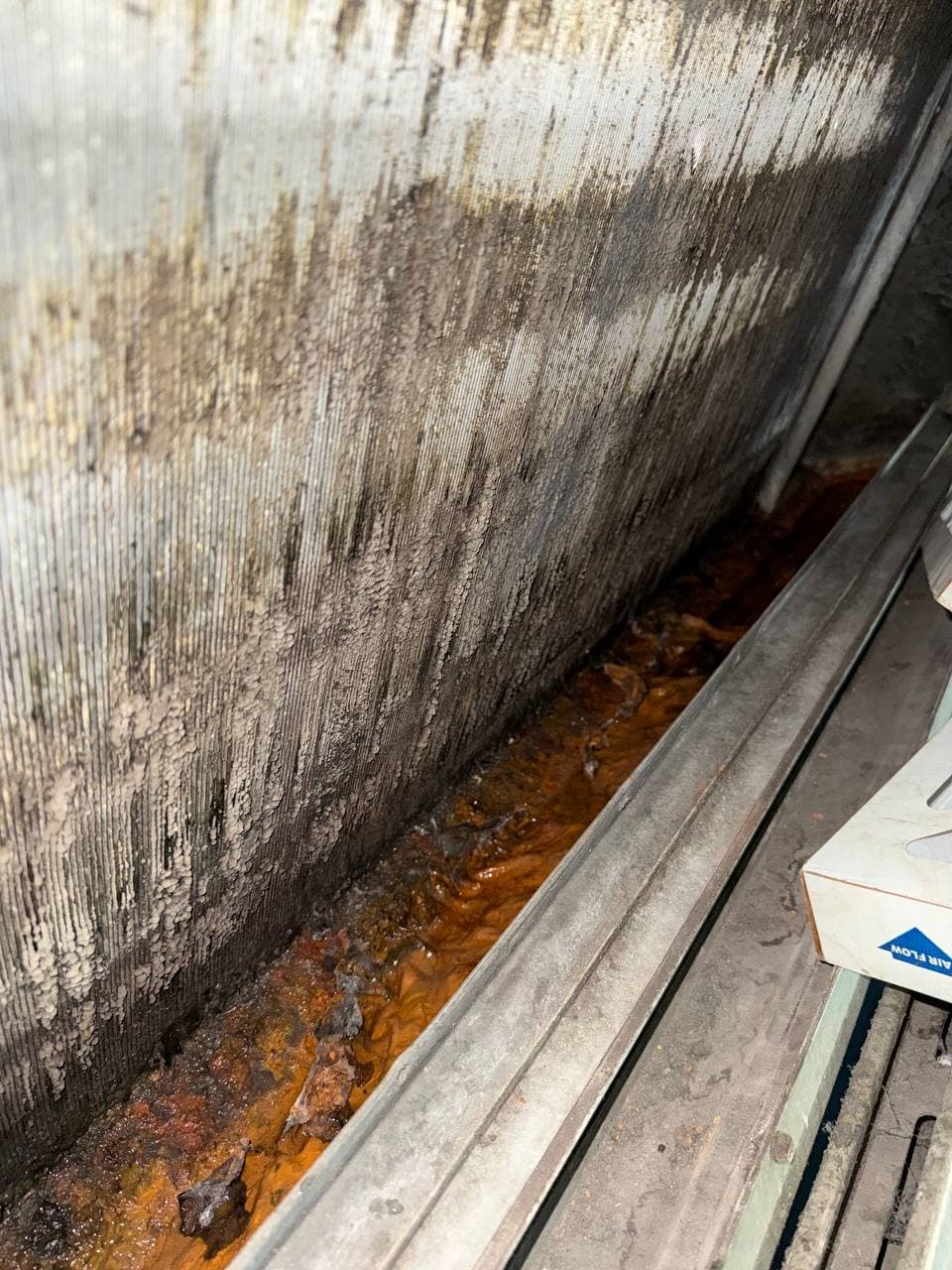
Clogged condensate areas
Drainage issues can increase the risk of water problems, odors, shutdowns, and avoidable repair calls.
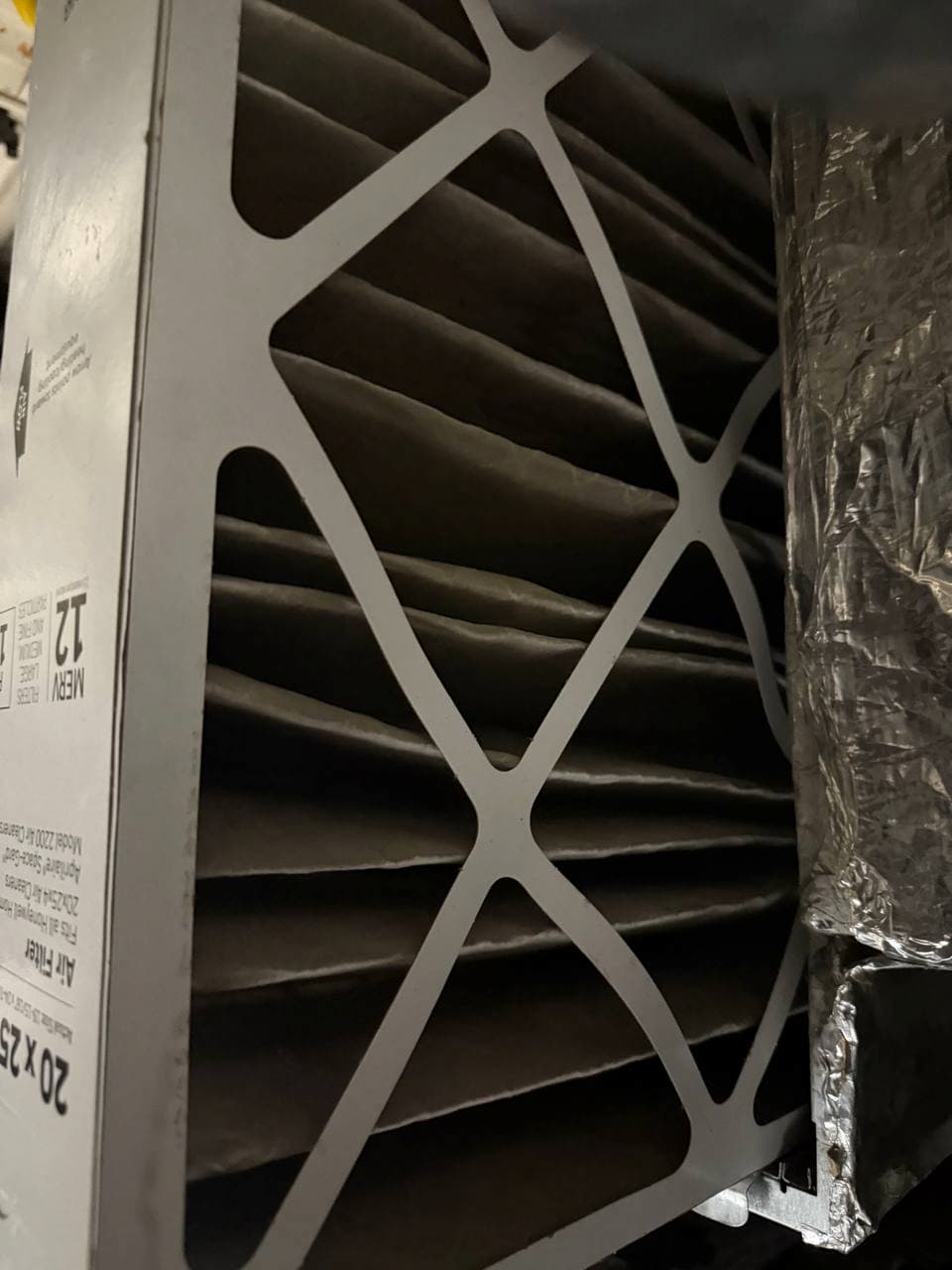
Restricted filters
Dirty filters reduce airflow and can place extra strain on the system.
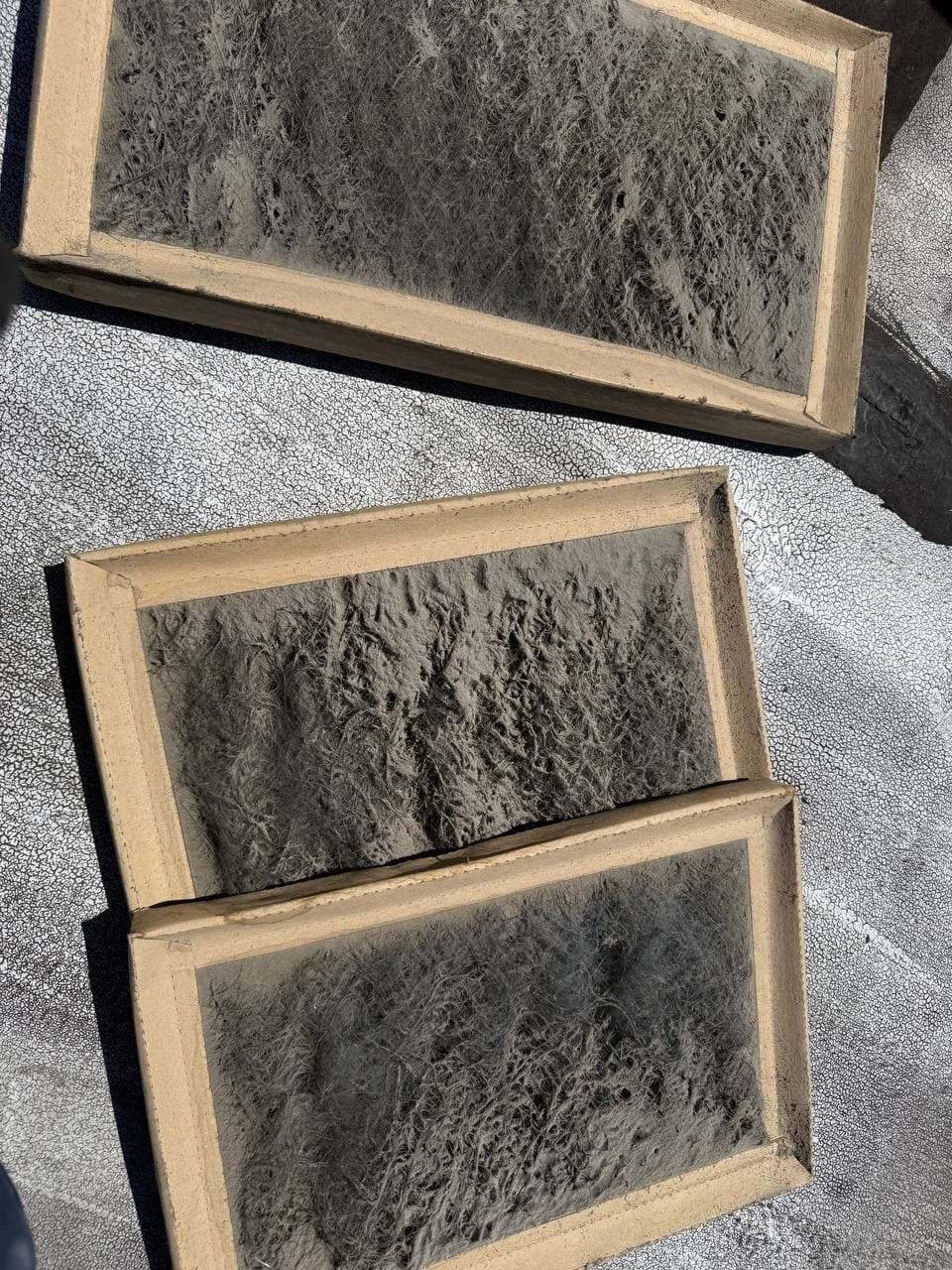
Heavy filter buildup
Filter condition is one of the most visible signs that routine service is overdue.
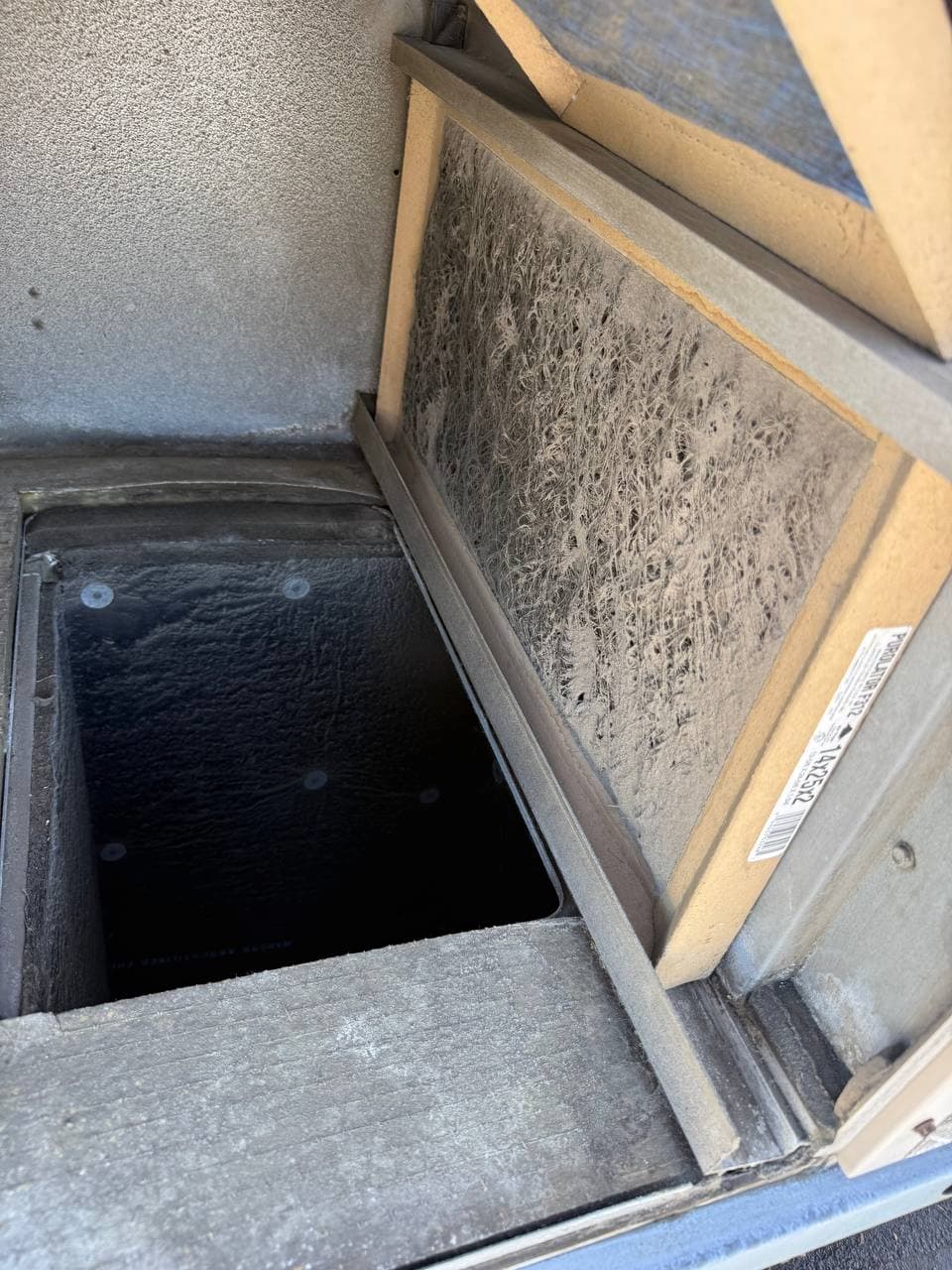
Hidden issues inside equipment
Internal system conditions are easy to miss without scheduled inspection access.
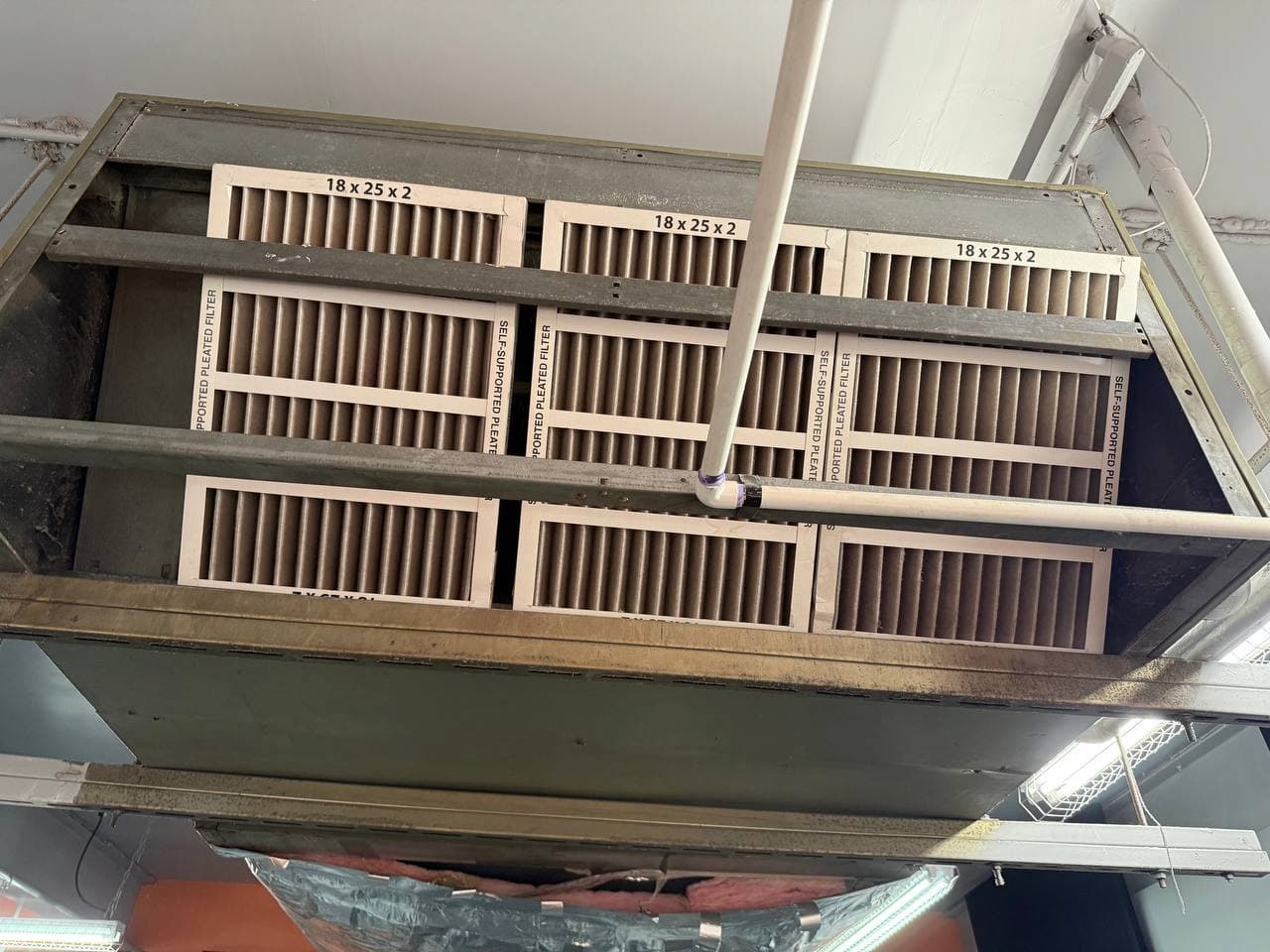
Large filter banks
Commercial systems often require more organized filter tracking than residential equipment.
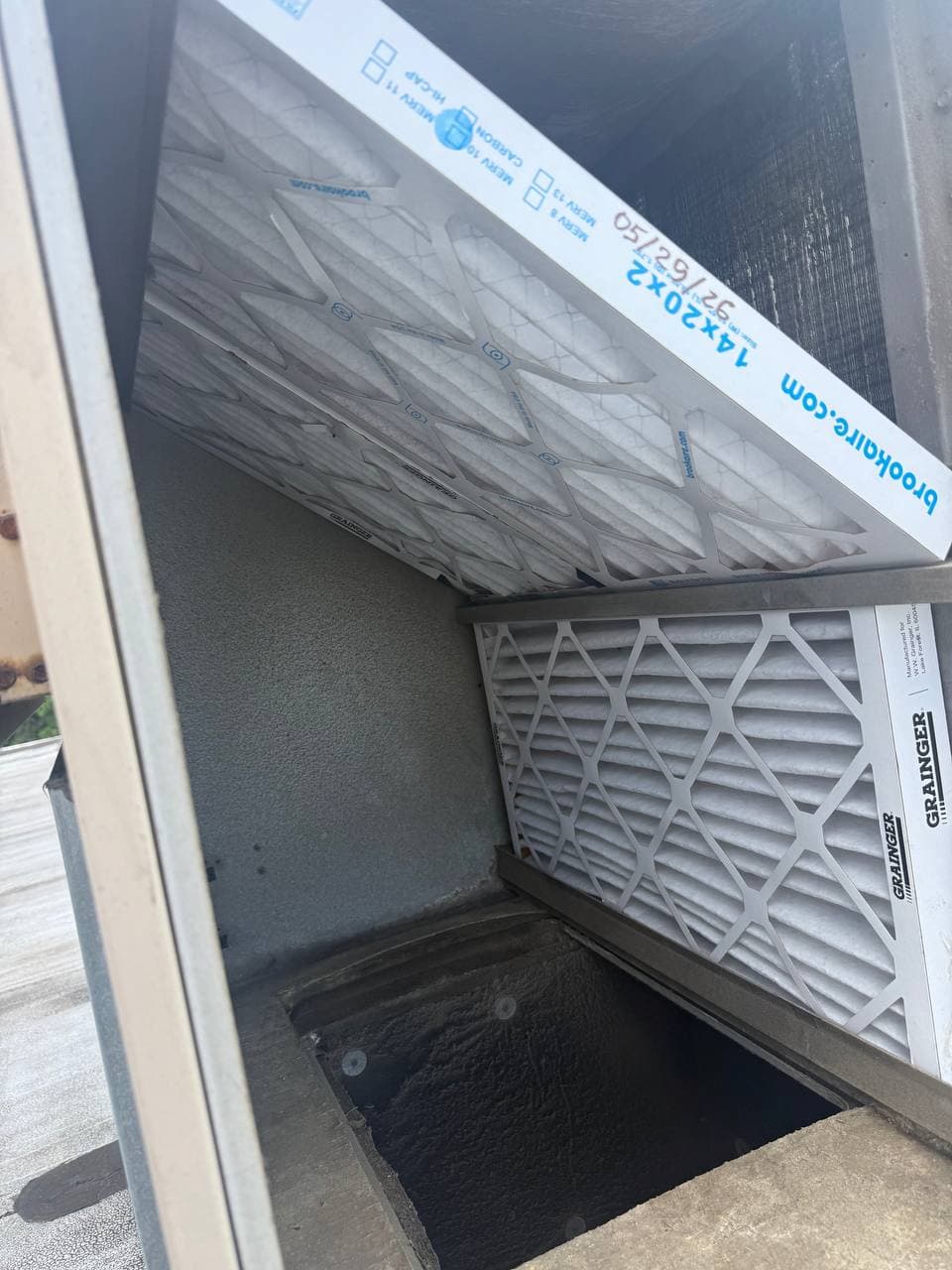
Maintenance access matters
Good maintenance also means reviewing access, serviceability, filter fit, and whether future visits can be performed safely and consistently.
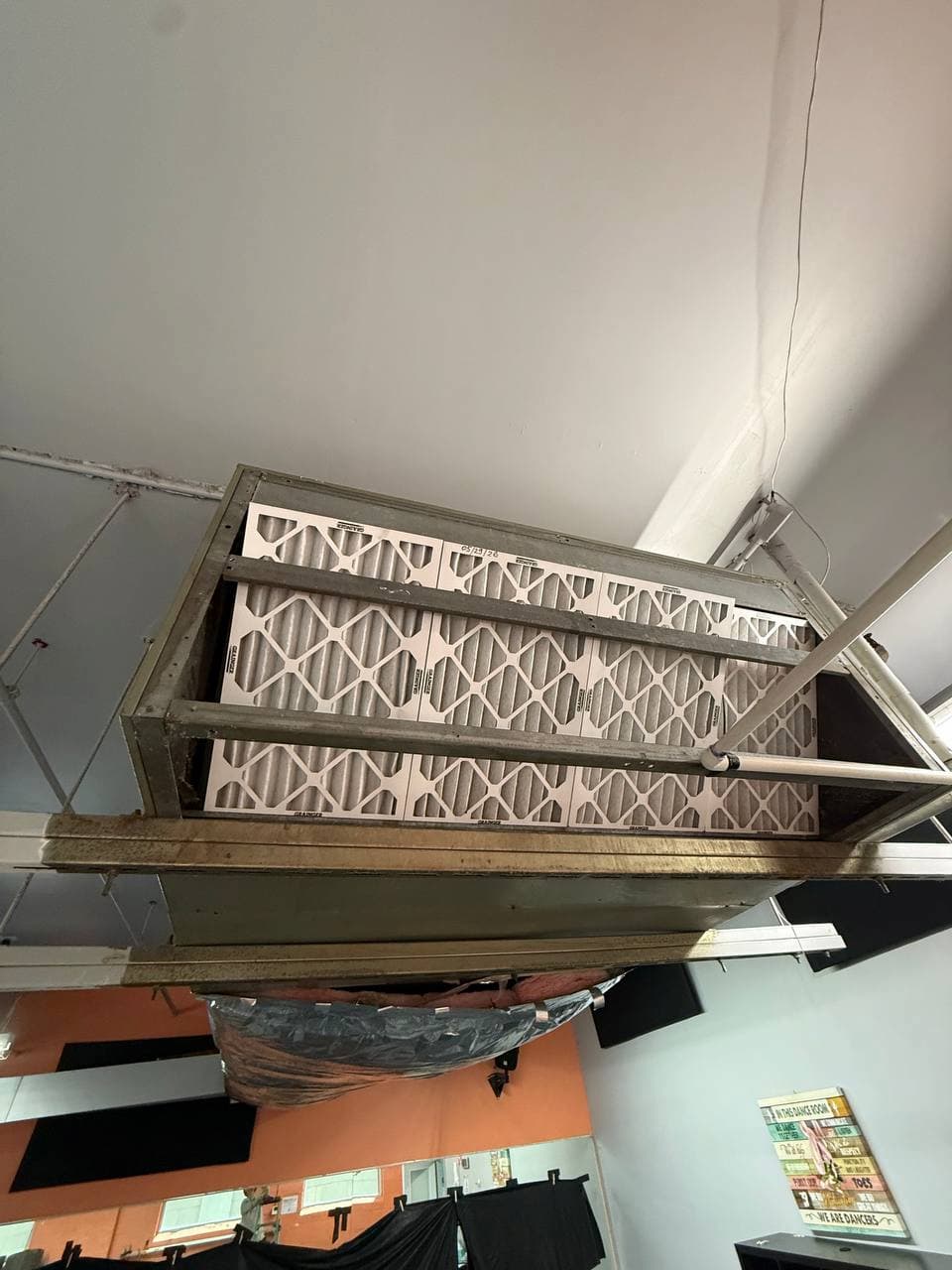
Indoor filter banks
Some commercial systems have filter layouts that need consistent tracking and access planning.
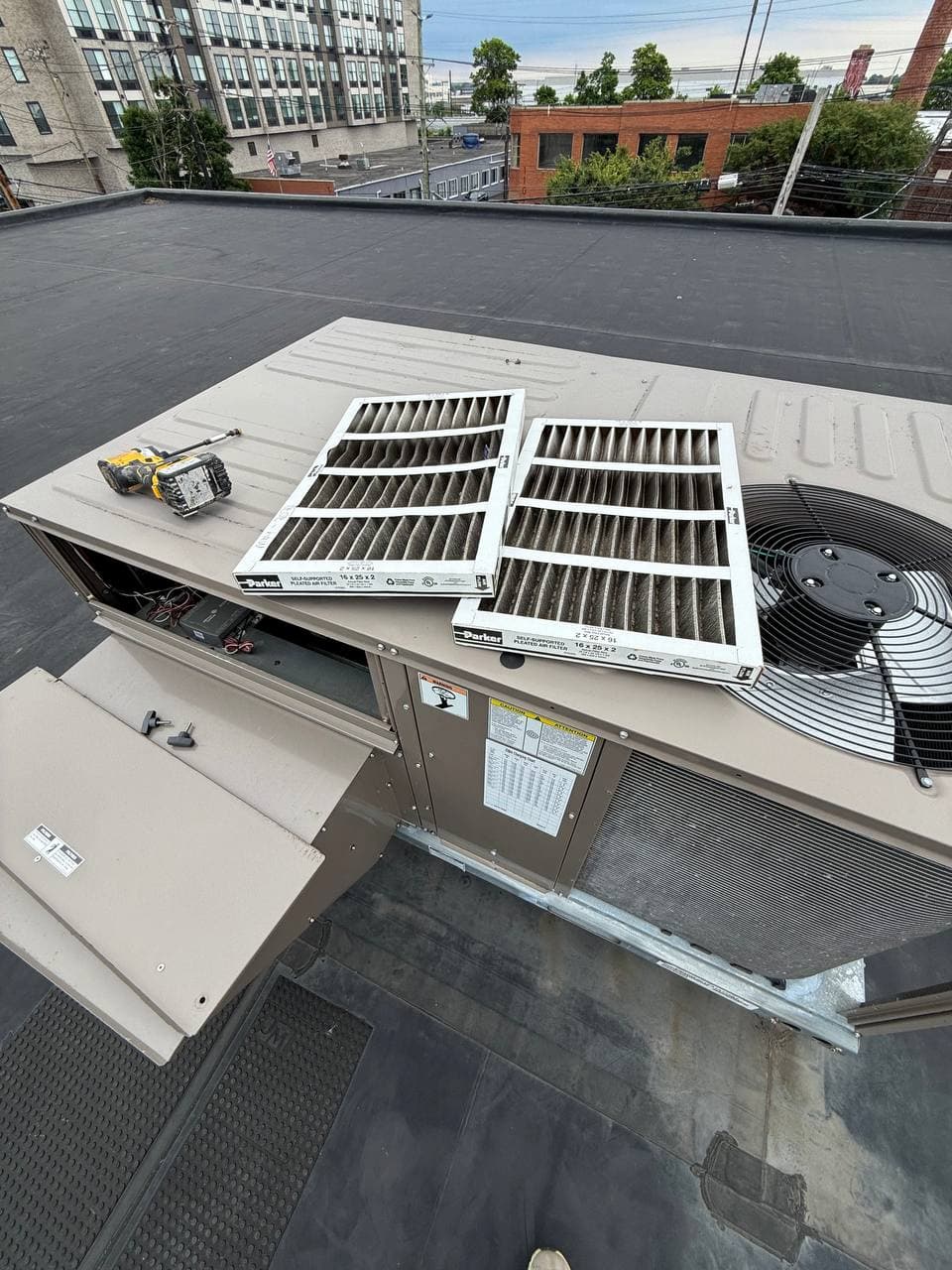
Rooftop unit access
RTU maintenance should include practical review of panels, filters, internal sections, and serviceability.
Commercial Equipment and Buildings We Can Support
Sadowski HVAC creates maintenance agreements for a wide range of commercial and light commercial systems. The plan is adjusted to the equipment on-site, how the building is used, and how much service history already exists.
Equipment commonly covered
Your maintenance agreement can be structured around the equipment actually serving your building, not a generic checklist that ignores site conditions.
Properties that benefit from agreements
Maintenance agreements are especially useful for properties where comfort problems can affect tenants, employees, customers, inventory, scheduling, or daily operations.
How We Build a Maintenance Agreement for Your Building
A good commercial maintenance plan starts with understanding the equipment, not guessing from a template. We review your systems, discuss building priorities, define the scope, and set a schedule that makes sense for your operation.
Equipment Review
We review the HVAC systems, rooftop access, filter setup, service needs, equipment condition, and known comfort concerns.
Scope Definition
Your agreement outlines what will be inspected, serviced, cleaned, replaced, documented, and reported after each visit.
Maintenance Schedule
We recommend a visit frequency based on equipment type, operating hours, filter load, seasonality, and business needs.
Ongoing Reporting
After visits, we provide condition notes, photos, videos when appropriate, and recommendations for repairs or future planning.
Commercial First, Residential When Needed
This page is focused on commercial HVAC maintenance agreement plans because businesses, property managers, and facility teams usually need a more formal scope, recurring schedule, documentation, and service history.
Sadowski HVAC also provides residential HVAC maintenance, but home maintenance is usually structured differently. Residential service is more focused on seasonal comfort, home equipment, filter habits, and simple tune-up scheduling.
Commercial HVAC Maintenance Agreement FAQ
What is a commercial HVAC maintenance agreement?
A commercial HVAC maintenance agreement is a recurring service plan for your building’s heating, cooling, ventilation, and related equipment. It defines the maintenance schedule, covered equipment, inspection items, service tasks, documentation, and any priority service terms included in the plan.
What is included in a commercial HVAC maintenance plan?
The scope depends on your equipment and building needs, but common items include filter inspection or replacement, coil condition review, condensate drain checks, belt and motor inspection, fan operation, electrical and control observations, rooftop unit review, operating notes, photos, videos when appropriate, and repair recommendations.
How often should commercial HVAC systems be maintained?
Many commercial HVAC systems benefit from semi-annual or quarterly maintenance. Buildings with heavy runtime, rooftop equipment, high filter load, sensitive tenants, restaurants, medical spaces, or multiple systems may need a custom schedule.
Do you provide photo documentation after maintenance visits?
Yes. Sadowski HVAC provides photo documentation and, when useful, video documentation showing system condition, work performed, and concerns found during the visit. This helps owners and managers understand what is happening even when they are not on-site.
Can a maintenance agreement help reduce emergency HVAC repairs?
A maintenance agreement cannot eliminate every repair, but it can reduce preventable surprises by identifying restricted airflow, dirty filters, clogged drains, worn parts, dirty coils, and early operating concerns before they become more disruptive.
Do maintenance agreement customers receive priority scheduling?
Priority scheduling can be included in a commercial maintenance agreement. The exact terms should be reviewed in the agreement so your team understands what is included before the plan begins.
Do you maintain rooftop units and packaged systems?
Yes. Sadowski HVAC maintains commercial rooftop units, packaged HVAC systems, air handlers, split systems, heat pumps, commercial AC systems, boilers, controls, and related commercial HVAC components.
Is the maintenance scope customized for each building?
Yes. Commercial HVAC maintenance should reflect the equipment, building use, operating hours, access conditions, and service history. We can recommend a scope and schedule based on your property’s real conditions.
Do you offer residential HVAC maintenance too?
Yes. Sadowski HVAC also provides residential HVAC maintenance. Residential service is usually structured differently from commercial maintenance agreements because the equipment, schedule, and documentation needs are different.
Let Sadowski HVAC Manage Your Commercial Maintenance Schedule
Your HVAC system is one of the most important assets in your building. A proactive maintenance agreement helps protect that investment, reduce preventable disruption, and keep your team informed with clear documentation after every visit.