

Restaurant Mechanical Service • Linden, NJ
Restaurant HVAC & Refrigeration in Linden, NJ
One local team for the systems that keep the dining room comfortable, the kitchen workable, and cold storage dependable through a busy shift.
Sadowski HVAC helps independent restaurants, cafés, bars, bakeries, takeout kitchens, and food-service operations in Linden troubleshoot heating, cooling, airflow, and commercial refrigeration problems. We check the failed equipment, but we also look at what is happening around it. Kitchen exhaust, make-up air, rooftop HVAC, door traffic, product loading, and refrigeration performance can all affect one another.
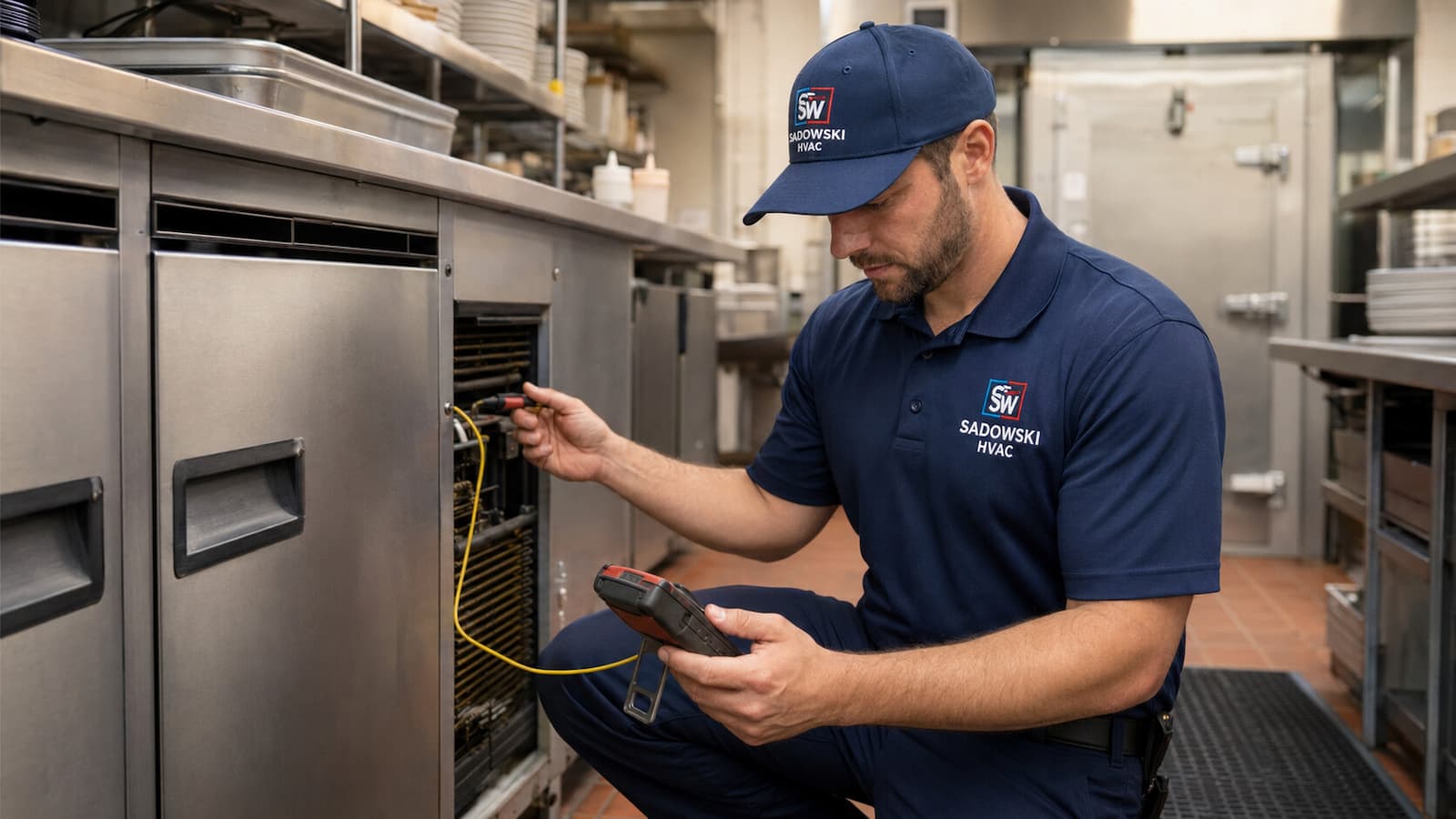
The Whole Restaurant
A Restaurant Is Three Different Mechanical Environments
The front of house, cookline, and cold-storage side do not experience the same load. Treating them as one generic commercial space can hide the reason a system struggles only during dinner, after a delivery, or when every exhaust fan is running.
Dining Room & Guest Areas
Comfort has to remain steady while doors open, seats fill, and kitchen heat tries to migrate forward. Noise, humidity, drafts, odors, and slow temperature recovery all matter here.
Cookline & Production Kitchen
Cooking equipment releases heat, steam, and grease-laden air while the exhaust system removes a large volume of indoor air. Make-up air and HVAC must respond without creating a hot, drafty, or heavily negative kitchen.
Prep Line & Storage
Walk-ins, reach-ins, prep tables, freezers, and ice equipment face door openings, warm product loads, defrost cycles, blocked airflow, and condenser conditions that can change recovery time.
Protect the Current Shift
Start With What Can Interrupt Service Today
Restaurant mechanical calls do not all carry the same consequence. The first response changes with the risk. A warm dining room is not the same problem as a rising walk-in temperature, a failed make-up air unit, or a breaker that will not hold.
Product Temperature Is Rising
A walk-in, prep table, reach-in, or freezer is no longer holding the expected temperature, and stored food may be affected.
The Kitchen Is Hot, Smoky, or Hard to Balance
Doors pull shut, odors move into the dining room, heat builds around the line, or airflow changes when exhaust equipment starts.
Guest Areas Will Not Recover
The dining room is comfortable before opening but drifts during occupancy, or one section remains warmer, colder, or more humid than the rest.
Electrical, Water, or Mechanical Safety Concern
A burning odor, smoke, repeated breaker trip, loud grinding, water near electrical components, or visibly damaged wiring changes the priority.
Equipment & Service Scope
Restaurant HVAC and Refrigeration Service in Linden
Some restaurants need one urgent repair. Others need a contractor who can trace a recurring pattern across the rooftop, kitchen, and cold side. Sadowski HVAC supports both situations with a service scope built around the equipment on site.
Commercial Refrigeration Diagnostics & Repair
We troubleshoot equipment that is running warm, icing, leaking, cycling abnormally, alarming, making unusual noise, or taking too long to recover. On the equipment side, we may test the evaporator, condenser, compressor, refrigerant circuit, electrical components, controls, defrost system, drains, and fans. Door condition and loading practices matter too.
Restaurant Heating & Cooling
Service for rooftop units, packaged equipment, split systems, air handlers, thermostats, zone controls, heating components, cooling components, condensate systems, and airflow issues affecting occupied restaurant spaces.
Kitchen Airflow & Equipment Interaction
When the scope involves HVAC-side airflow, we evaluate make-up air operation, fans, motors, belts, controls, and supply-air conditions. We also check how exhaust changes pressure in the building. That tells us whether the symptom is local to one unit or part of the restaurant’s overall air balance.
Specific Equipment Problem?
The broader restaurant page helps when several systems or zones may be involved. For a clearly identified cold-side failure, use the focused service page that matches the affected equipment.
Connected Loads
Why the Systems Need to Be Diagnosed Together
A restaurant can have several pieces of equipment that work individually yet perform poorly as a group. The interaction becomes most visible during peak cooking, full occupancy, hot weather, deliveries, or simultaneous defrost and cooling demand.
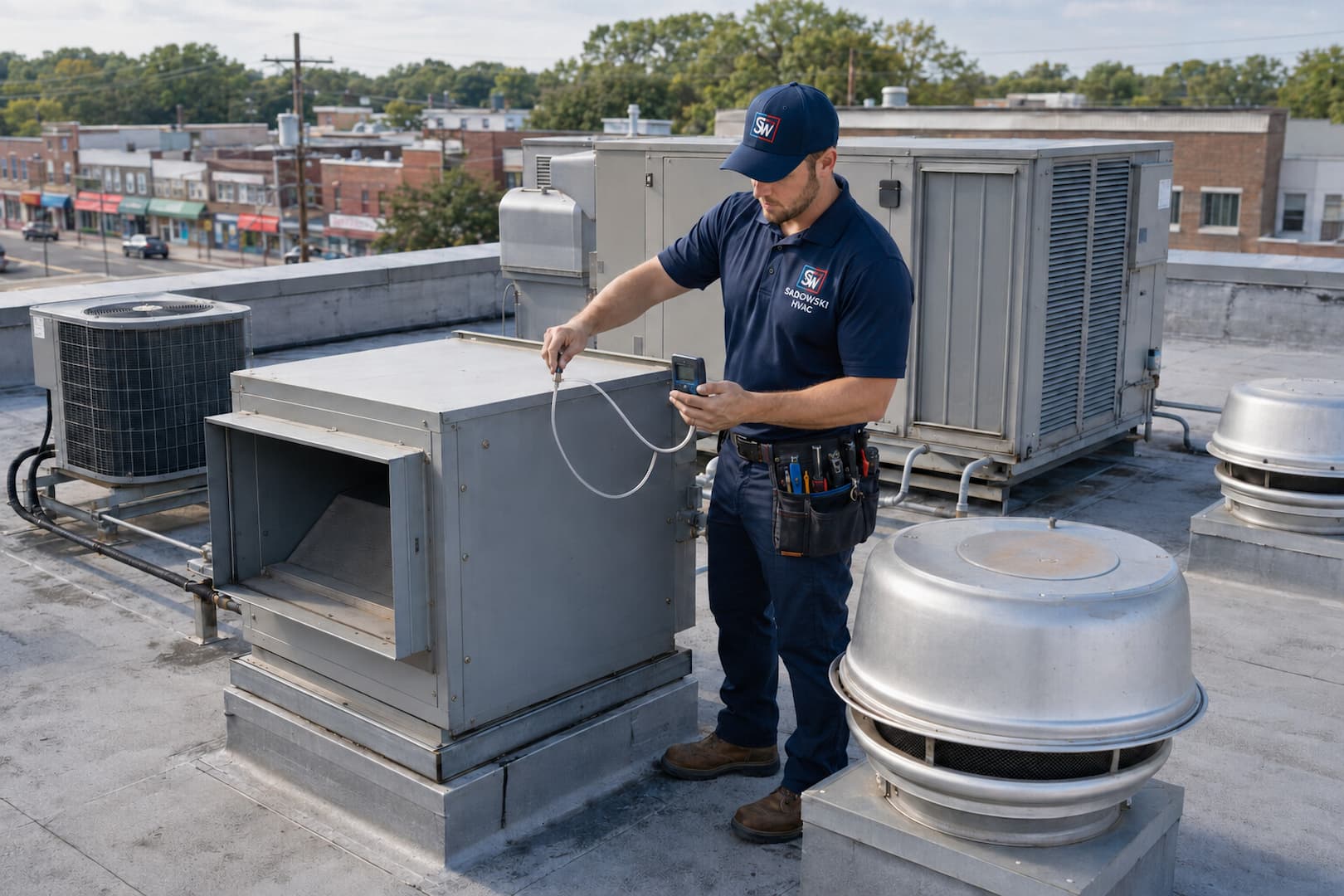
The load moves through the building.
A useful diagnosis follows that load rather than stopping at the first component that looks suspicious.
Cooking and exhaust remove conditioned air.
The cookline adds heat and moisture while exhaust fans pull air out. The building has to replace that air somewhere.
Make-up air changes kitchen temperature and pressure.
Too little replacement air can contribute to negative pressure. Air delivered at the wrong volume or condition can make the kitchen harder to cool or heat.
Rooftop HVAC carries the guest and ventilation load.
Occupancy, outdoor air, door traffic, solar gain, kitchen transfer, filters, coils, controls, and duct distribution all influence whether the dining room recovers.
Refrigeration rejects heat into its surroundings.
A dirty or restricted condenser, failed fan, hot equipment location, iced evaporator, or defrost problem can extend runtime and slow temperature recovery.
What this changes in the field: adding refrigerant, lowering a thermostat, or resetting a unit may hide the symptom for a short time. Measurements across airflow, temperature, controls, electrical operation, and the refrigerant circuit show whether that action actually addresses the cause.
Measure Before Repair
What a Restaurant Symptom Can Point To
The table below shows why the first description matters. It does not diagnose the equipment remotely, but it helps restaurant operators understand what the service visit may need to separate.
| What the team notices | Conditions we may check | What the finding changes |
|---|---|---|
| The walk-in warms after deliveries. | Door time, warm product load, evaporator airflow, coil ice, fan operation, condenser condition, control response, and actual pull-down trend. | It separates an equipment fault from a load-and-recovery problem, or shows that both are contributing. |
| The dining room drifts only during dinner service. | Occupancy load, supply and return airflow, filters and coils, thermostat location, zoning, rooftop-unit capacity, kitchen transfer, and exhaust/make-up air operation. | It helps avoid treating a peak-load or air-balance issue as a simple thermostat failure. |
| Prep-table pans are warm while the base seems cold. | Air curtain and pan arrangement, product loading, lid use, evaporator airflow, coil condition, control settings, fans, gaskets, and box temperature. | The repair may involve airflow and setup rather than the same corrective work used for a fully warm cabinet. |
| Doors pull hard and odors move forward. | Exhaust operation, make-up air, outside-air path, fan and belt condition, controls, blocked grilles, and pressure symptoms across the restaurant. | It shows whether the problem is tied to replacement air, mechanical failure, control sequence, or another building condition. |
| A unit trips, restarts, and fails again. | Electrical components, motor current, safeties, pressure conditions, overheating, airflow restrictions, control signals, and the operating sequence at failure. | It prevents repeated resets from substituting for a repair and helps identify whether the fault is intermittent or load-related. |
After approved repair work, operation should be checked under realistic conditions where practical. That may include temperature movement, fan operation, control response, drainage, cycling, airflow, or the way the unit behaves as the restaurant load returns.
Describe the ProblemChoose the Right Service Path
The Pattern Matters More Than the First Symptom
An isolated failed part, a system that repeats the same breakdown, and equipment that is undersized for the current restaurant do not call for the same recommendation. We organize findings around what the operation needs now and what may deserve a planned correction.
Correct an Isolated Failure
A defined component or condition has failed, the rest of the system is reasonably serviceable, and a focused repair can return the equipment to normal operation.
Resolve a Repeat Problem
The same alarm, temperature swing, icing pattern, leak, breaker trip, or comfort complaint keeps returning. That history changes the diagnostic depth and may reveal an unresolved cause.
Reduce Avoidable Stress
Coils, filters, belts, drains, fan assemblies, electrical connections, controls, and refrigeration components need scheduled attention before operating hours and seasonal demand expose a weakness.
Replace or Rework the System
Aging equipment, chronic repairs, poor serviceability, capacity mismatch, remodel changes, discontinued parts, or inefficient operation can make planned replacement more responsible than another temporary fix.
Maintenance With Clear Ownership
Restaurant Maintenance Works Best When Everyone Knows Their Part
A restaurant usually places more operating hours, heat, moisture, grease, door activity, and seasonal load on mechanical equipment than a typical office. The maintenance cadence should reflect the menu, cooking volume, equipment mix, service hours, and history of the site rather than a generic annual checklist.
What the Restaurant Team Can Watch
Simple observations between professional visits give the service technician better history and help the person in charge act sooner when a trend changes.
- Keep required temperature records and distinguish product readings from the equipment’s air display
- Report recurring alarms, slow recovery, ice, leaks, noise, odors, drafts, or breaker trips instead of repeatedly resetting equipment
- Keep accessible air openings and equipment clearances free from boxes, pans, packaging, and stored supplies
- Watch door gaskets, closers, curtains, hinges, and staff habits that leave cold equipment open longer than necessary
- Share changes in operating hours, menu, cookline equipment, deliveries, seating, or remodel layout that may alter the load
What Professional Service Can Address
Planned service looks for equipment conditions that are not resolved by normal cleaning or daily operating checks.
- Filters, coils, fans, motors, belts, pulleys, bearings, electrical components, and control operation
- Condensate drainage, refrigeration drains, evaporator ice, defrost operation, temperature controls, and safeties
- Refrigerant-side performance, compressor and condenser behavior, line condition, and signs that require leak diagnostics
- Rooftop-unit heating and cooling response, outside-air conditions, make-up air symptoms, and airflow complaints
- Documented repair priorities, aging components, access concerns, and replacement items that should be planned before failure
A useful maintenance plan is equipment-specific. High-use refrigeration and kitchen air equipment may need a different visit cadence from dining-room HVAC. Sadowski HVAC can review the site, service history, and operating schedule before defining the scope.
Commercial Maintenance Options
Linden-Based Service
A Local HVACR Partner for Working Restaurants
Sadowski HVAC is based in Linden, not routed through an anonymous national dispatch network. We work directly with restaurant owners, general managers, chefs, facility contacts, landlords, and property managers. The technical findings are explained in plain language, and the visit is coordinated around a live business.
- Office633 Pierce Ave Unit 7, Linden, NJ 07036
- LicenseNJ HVAC License #13VH11514600
- Phone732-551-7848
- HoursMonday–Friday, 8:00 AM–5:00 PM; call for current urgent-service availability
- CoordinationRoof access, kitchen access, meal periods, deliveries, landlord requirements, and equipment history
Questions From Restaurant Operators
Restaurant HVAC & Refrigeration FAQ
These answers cover the practical questions that usually come up when comfort, cold storage, or kitchen airflow starts affecting the day’s operation.
Can Sadowski HVAC service both restaurant HVAC and commercial refrigeration?
Yes. We work with common restaurant heating, cooling, airflow, and refrigeration equipment. That combined scope is especially useful when a comfort or temperature problem may involve the interaction between rooftop HVAC, kitchen air, and cold-side equipment.
What types of restaurant refrigeration equipment do you work on?
Service may include walk-in coolers and freezers, reach-in units, refrigerated prep tables, undercounter equipment, evaporators, condensing units, temperature controls, defrost components, drains, and commercial ice equipment. Access, equipment condition, and parts availability affect the scope.
What should we do when a walk-in or prep table starts warming?
Limit unnecessary door openings and record the equipment display and actual product temperatures separately. Follow the restaurant’s food-safety procedure. If that procedure or the person in charge requires product to be moved or discarded, act promptly. Then request refrigeration service with the readings, equipment type, and time the change began.
Can an HVAC technician tell us whether food is safe to serve?
No. The technician can diagnose why refrigeration equipment is not maintaining temperature and document equipment conditions. Product disposition belongs to the restaurant’s person in charge under its food-safety plan and any direction from the local health authority.
Why does the dining room get warm only during the dinner rush?
The cause might be in the rooftop unit, controls, zoning, filters, coils, or air distribution. It may also reflect a full dining room, open doors, kitchen heat transfer, or the amount and condition of outdoor replacement air. The fact that it happens during a specific service period is valuable diagnostic information.
Why are exterior doors difficult to open when the kitchen exhaust is running?
That can be a sign of negative building pressure: exhaust is removing more air than the make-up and outside-air systems are replacing. Fan operation, belts, controls, blocked air paths, and overall system balance may need to be checked.
Can restaurant HVAC or refrigeration be repaired in one visit?
Sometimes. A same-visit repair depends on the failed component, diagnostic time, ice or access conditions, equipment age, and whether the correct part is available. If the work needs a return visit, the first visit should still produce clear findings and a practical next step.
Do you offer planned maintenance for restaurant systems?
Yes. The maintenance plan should reflect operating hours, cooking volume, rooftop exposure, refrigeration load, equipment mix, and service history. Restaurant systems often need a more tailored cadence than equipment in a low-load office. See our commercial HVAC maintenance options in Linden.
Can service be coordinated around prep and meal periods?
We coordinate around business hours, kitchen access, roof access, deliveries, and high-impact service periods where practical. The available window depends on urgency and the work required, so include scheduling constraints when you contact us.
Can you help plan equipment replacement or a restaurant retrofit?
Yes. Replacement planning may be appropriate when equipment has repeated failures, poor serviceability, discontinued parts, capacity problems, or operating costs that no longer support another repair. A retrofit can also address layout, controls, airflow, access, or load changes created by a remodel or new kitchen equipment.
Tell Us What Is Affecting the Shift
Describe what changed and where your team sees it. A few concrete details help Sadowski HVAC prepare for the right restaurant HVAC or refrigeration diagnostic path in Linden.
- Restaurant: concept, service hours, and the least disruptive access window
- Equipment: walk-in, prep table, reach-in, RTU, make-up air unit, fan, or unknown system
- Symptom: warm, iced, leaking, noisy, cycling, tripping, weak airflow, odor, or humidity
- Timing: after deliveries, during prep, at peak occupancy, overnight, or continuously
- Readings: thermostat, box display, product temperature, alarm code, or breaker condition
- Access: roof, kitchen, mechanical room, landlord contact, and parking or ladder constraints