

Walk-In Cooler Maintenance in Linden, NJ
A walk-in cooler works through long door openings, warm deliveries, kitchen heat, and changing product loads. Maintenance helps the equipment recover without making every shift wait for the next temperature alarm.
Plan cooler maintenance
Share the property, cooler use, equipment label if available, current temperature behavior, alarm history, and the best access window.
Door traffic and product load belong in the diagnosis
A cooler that holds temperature overnight but drifts during deliveries may need a different response than one that never satisfies. The first points toward load, infiltration, airflow, or recovery; the second may point toward a persistent equipment or control fault.
We look at the evaporator, condensing unit, doors, drainage, controls, and the way the box is loaded. Cases stacked against the evaporator can block return air. A weak closer can leave the door open by an inch. A greasy condenser near kitchen exhaust can lose heat-transfer capacity even while the fans keep spinning.
Those observations become the maintenance priorities. They also give the property team a baseline to compare with the next slow recovery, alarm, or change in sound.
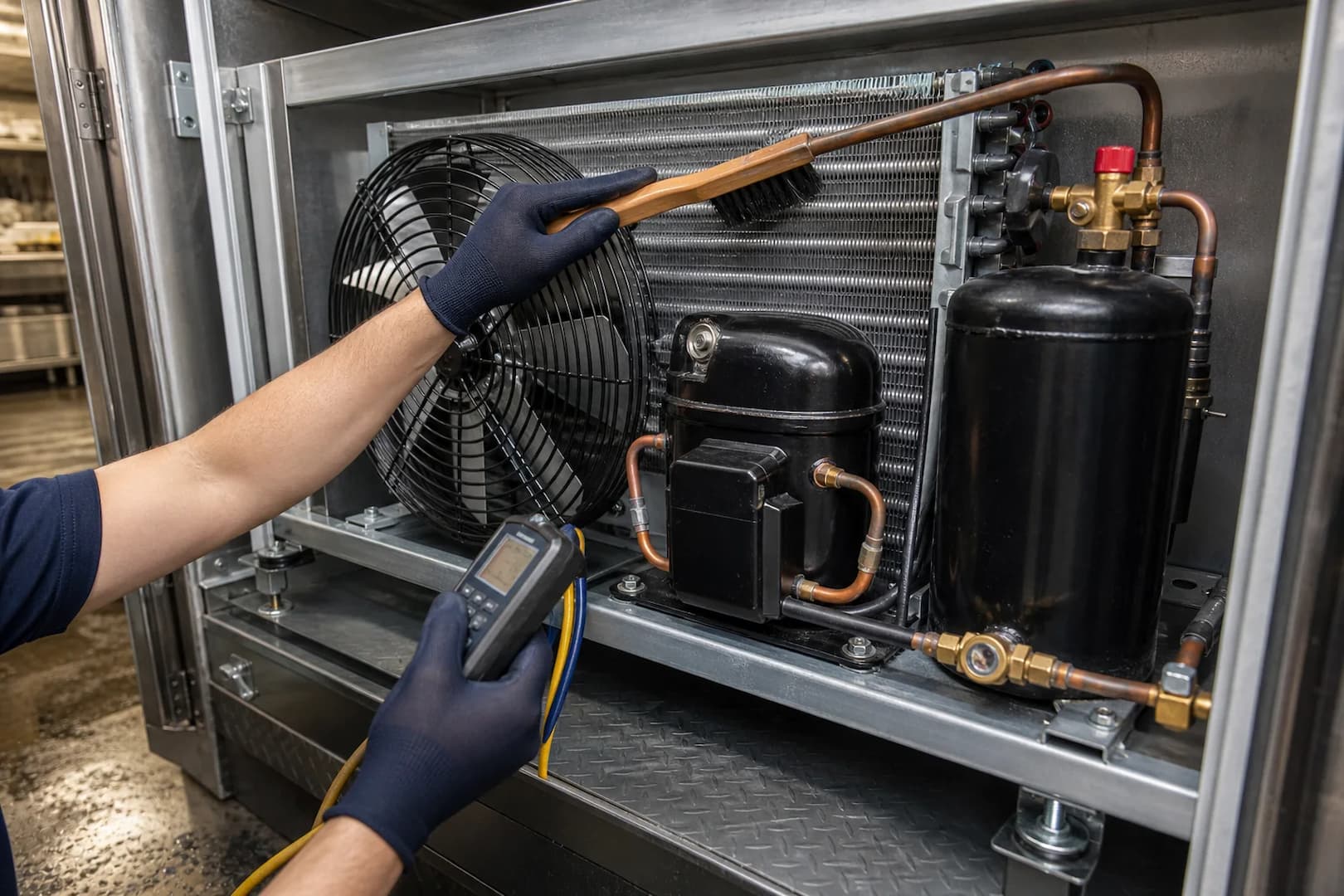
A maintenance visit across the whole cooler
- Evaporator coil, fan motors, blades, guards, wiring, defrost where fitted, and air clearance
- Drain pan, drain line, traps or pumps where present, and evidence of overflow or biofilm
- Condensing coil, condenser fans, compressor area, receiver, sight glass where fitted, and piping
- Contactors, terminals, controls, pressure safeties, disconnect, and visible electrical wear
- Temperature control, probes, displays, alarms, and accessible monitoring devices
- Door gaskets, closer, hinges, latch, threshold, curtains, panels, and penetrations
Simple habits can reduce avoidable load
Clear space around the evaporator allows air to circulate. A clean, unobstructed condenser can reject heat. Doors that close fully limit humid infiltration. None of those steps replaces technical service, but each changes how hard the system has to work.
We note operational conditions without turning the visit into a blame exercise. The purpose is to identify what the equipment can correct and what the property team can improve through loading, storage, cleaning, or door-use practices.
If an active fault appears during maintenance, we separate the repair from routine work and explain the risk of waiting.
How planned cooler service moves
Review history
Temperature logs, alarms, complaints, door traffic, deliveries, previous repairs, and cleaning history help reveal patterns.
Inspect the box
Doors, panels, air path, evaporator, fans, drain, controls, sensor position, product clearance, and visible moisture are checked.
Inspect the condensing unit
Coil, fan, compressor area, wiring, controls, piping, service components, noise, vibration, and ambient airflow are reviewed.
Set priorities
Cleaning, adjustment, repair, operational observations, and future watch items are documented in a useful order.
What recurring cooler symptoms can mean
Long run time
Dirty coils, door leakage, product load, blocked airflow, fan condition, setpoint, control calibration, refrigerant performance, and ambient temperature all affect run time.
Slow recovery after a delivery
Door-open time, warm product, airflow clearance, evaporator fan speed, condenser condition, equipment capacity, and staging should be viewed together.
Condensation near the door
Gasket gaps, frame heat where fitted, damaged sweeps, poor closing, humid infiltration, panel seams, threshold condition, and room humidity may contribute.
Water below the evaporator
A restricted drain, pan damage, poor slope, missing trap where required, coil icing, drain heater issue, or condensation from uninsulated piping leaves clues.
Uneven temperature inside the box
Blocked supply or return paths, crowded shelving, failed fan, sensor location, open door, damaged strip curtains, or warm product can create local pockets.
Noise from the condensing unit
Fan blades, motor bearings, loose guards, contactors, compressor mounts, piping contact, vibration isolation, and changing refrigerant conditions are possible sources.
Use the page that matches the current need
Walk-in cooler maintenance FAQ
How often should a walk-in cooler be serviced?
There is no single interval for every site. Door traffic, kitchen grease, dust, condenser location, run hours, equipment age, drain conditions, and manufacturer guidance all influence the plan.
Why does the cooler get warm during deliveries?
Warm product and long door openings add heat and moisture. If recovery has worsened, inspect airflow, door sealing, coil condition, fans, controls, refrigeration performance, and whether the load exceeds what the system can reasonably pull down.
Can a dirty condenser increase energy use?
Yes. Restricted heat rejection raises operating pressure and can extend run time or trip safeties. Cleaning method must suit the coil and site conditions so fins and electrical parts are not damaged.
What causes water on a walk-in cooler floor?
Possible sources include a blocked evaporator drain, pan overflow, door condensation, damaged panels, sweating pipes, cleaning water, a plumbing issue, or a source outside the refrigeration system.
Does maintenance include door gaskets?
Door sealing should be inspected because infiltration directly affects load and moisture. Cleaning, adjustment, or replacement depends on gasket condition, door alignment, hinges, closer, latch, and threshold.
What access should we provide?
Arrange safe access to the evaporator, condensing unit, controls, and electrical disconnect; preserve working clearance; share alarm or temperature history; and manage stored goods under your facility procedures.
Give the cooler a baseline before peak demand
Share how the box is used, when temperature drifts, and what has changed. We will use that information to shape a practical maintenance visit.
Sadowski HVAC Corp. · 633 Pierce Ave Unit 7, Linden, NJ 07036 · Mon–Fri 8:00 AM–5:00 PM