

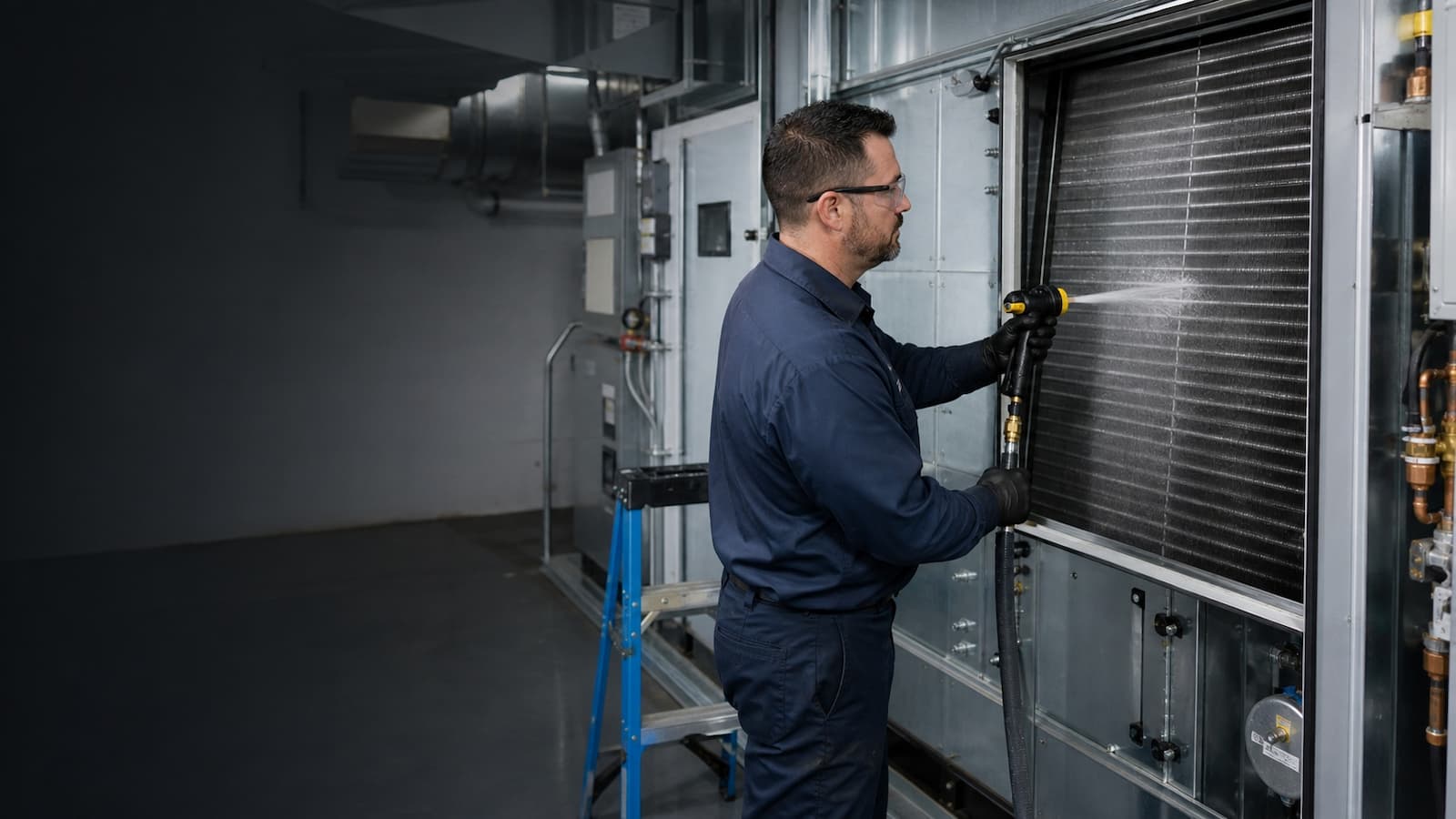
Commercial HVAC Coil Cleaning in Linden, NJ
Dirt can settle into a coil long before the system stops. We clean accessible commercial HVAC coils with a method chosen for the equipment, the buildup, and the space around it—then check what changed.
Request a coil cleaning assessment
Tell us the property type, equipment location, access conditions, and what the system has been doing. Photos of the unit label and coil area are useful when available.
A dirty coil is a heat-transfer problem, not just a cosmetic one
Dust, lint, pollen, grease, and other debris can settle between tightly spaced fins. Air may still pass through, but not as freely as the system was designed to move it.
On an indoor evaporator coil, fouling can reduce airflow and interfere with heat transfer. An outdoor condenser coil has a different job and a different exposure: it must reject heat while dealing with weather, airborne debris, and whatever the property puts into the surrounding air.
Cleaning may recover performance that fouling has taken away. It cannot repair a failed fan motor, a refrigerant fault, damaged controls, or a coil that has deteriorated beyond cleaning. That distinction matters, so we inspect first.
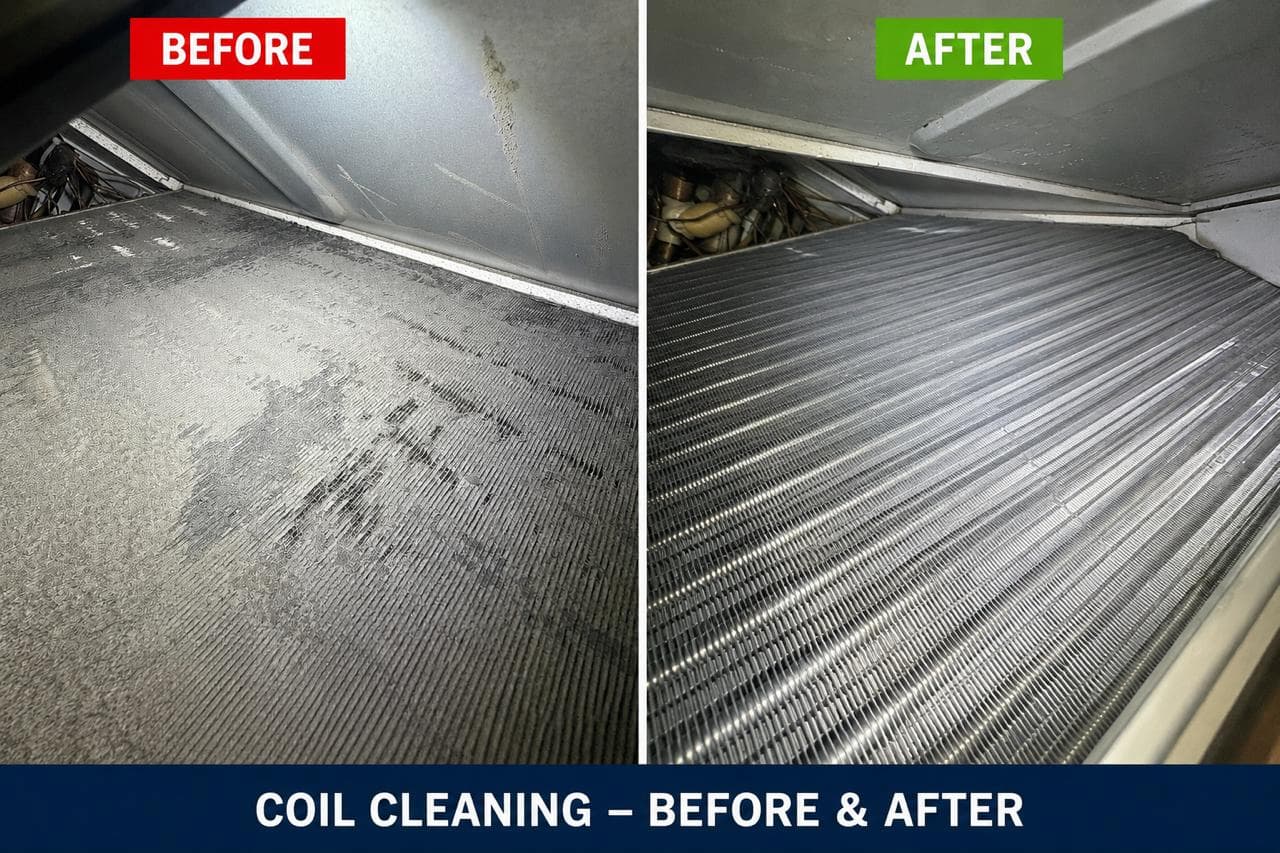
Commercial coil cleaning depends on where the coil sits
Access, contamination, fin construction, drainage, surrounding electrical parts, and manufacturer guidance shape the job. A ceiling-mounted indoor section cannot be approached like an exposed outdoor condenser.
Indoor and evaporator coils
Air handlers, fan coils, split-system indoor sections, and the evaporator side of packaged equipment may collect fine dust or heavier deposits. The work plan accounts for access panels, filters, drain pans, nearby finishes, and where rinse water can go.
Condenser coils
Outdoor and mechanical-room condensers reject heat through the coil surface. Cleaning must protect fins, electrical components, controls, and adjacent equipment while leaving the coil with a clear path for airflow.
Rooftop and packaged units
An RTU may place evaporator and condenser sections in the same cabinet, but the two sides face different conditions. We review panels, coil faces, fan sections, drains, economizer areas, and rooftop access before setting the scope.
Commercial refrigeration coils
Walk-ins, cases, and other refrigeration equipment have product-temperature and defrost considerations that ordinary comfort-cooling work does not. Those systems require a refrigeration-specific plan and coordination with site operations.
The coil can be part of the problem without being the whole problem
A visual layer of debris is useful evidence. So are pressure drop, temperature behavior, fan operation, freeze patterns, drain condition, and the history of the equipment. Together they show whether cleaning belongs near the top of the work list.
What happens during commercial coil cleaning
Every unit changes the details, but the basic order stays the same. We inspect the equipment, protect the space, clean the coil, put the unit back together, and see how it runs.
Review the complaint and service history
We note airflow or temperature complaints, run-time changes, previous cleaning, recent construction, filter history, alarms, and any access restrictions.
Inspect the coil and surrounding section
Coil faces, fins, panels, fan area, filters, drain pan, condensate path, wiring, sensors, and visible contamination help determine the scope.
Prepare the work area
The equipment is shut down as required. We protect nearby electrical parts and building surfaces, establish water control, and arrange safe access.
Clean without abusing the fins
Loose material and embedded buildup are addressed with tools, pressure, and products appropriate for the coil. Heavy fouling may need more than one pass.
Reassemble and check operation
Panels, filters, drains, and disturbed components are returned to service. We look for leaks, unusual noise, drainage trouble, airflow concerns, and operating changes.
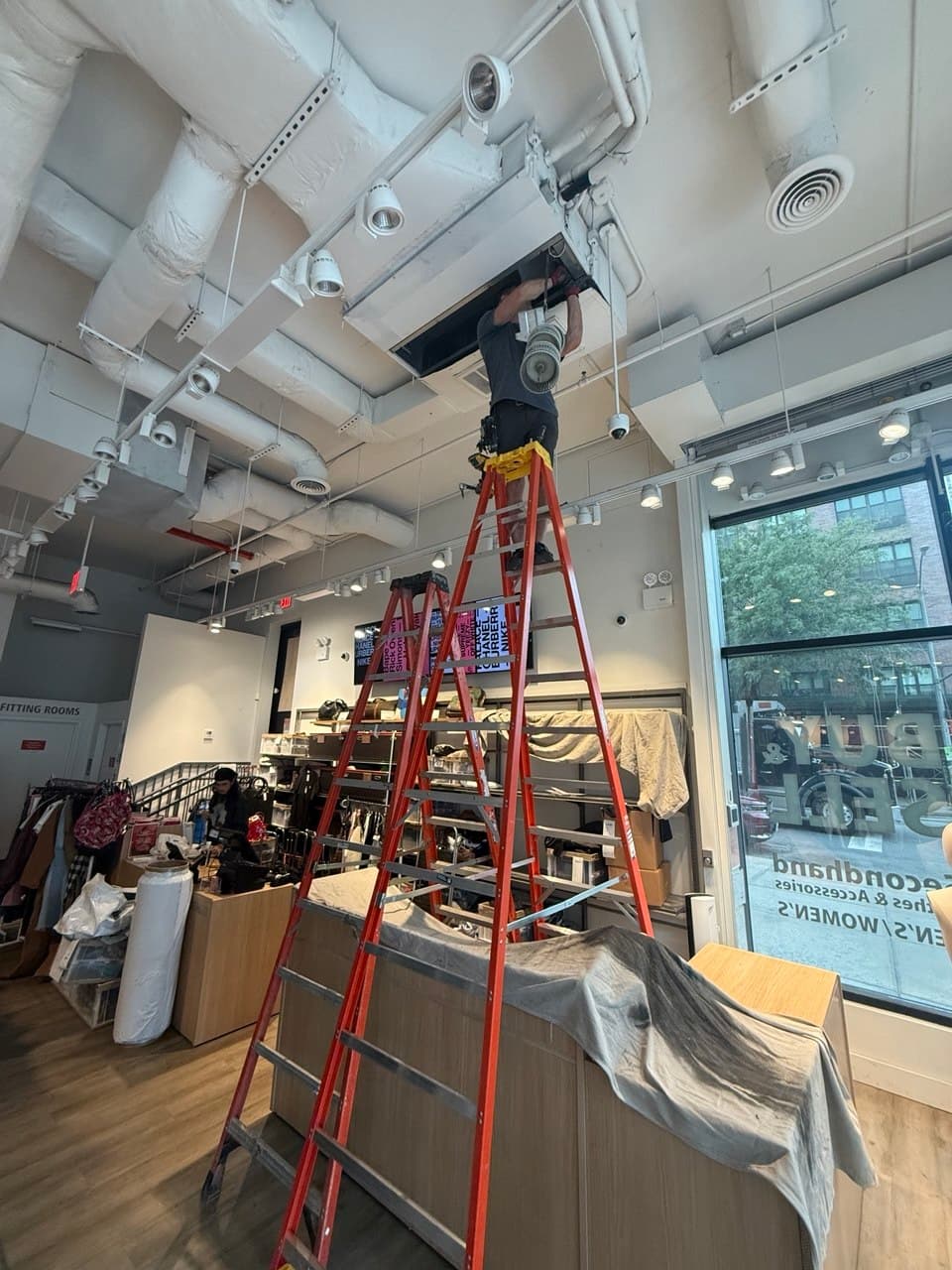
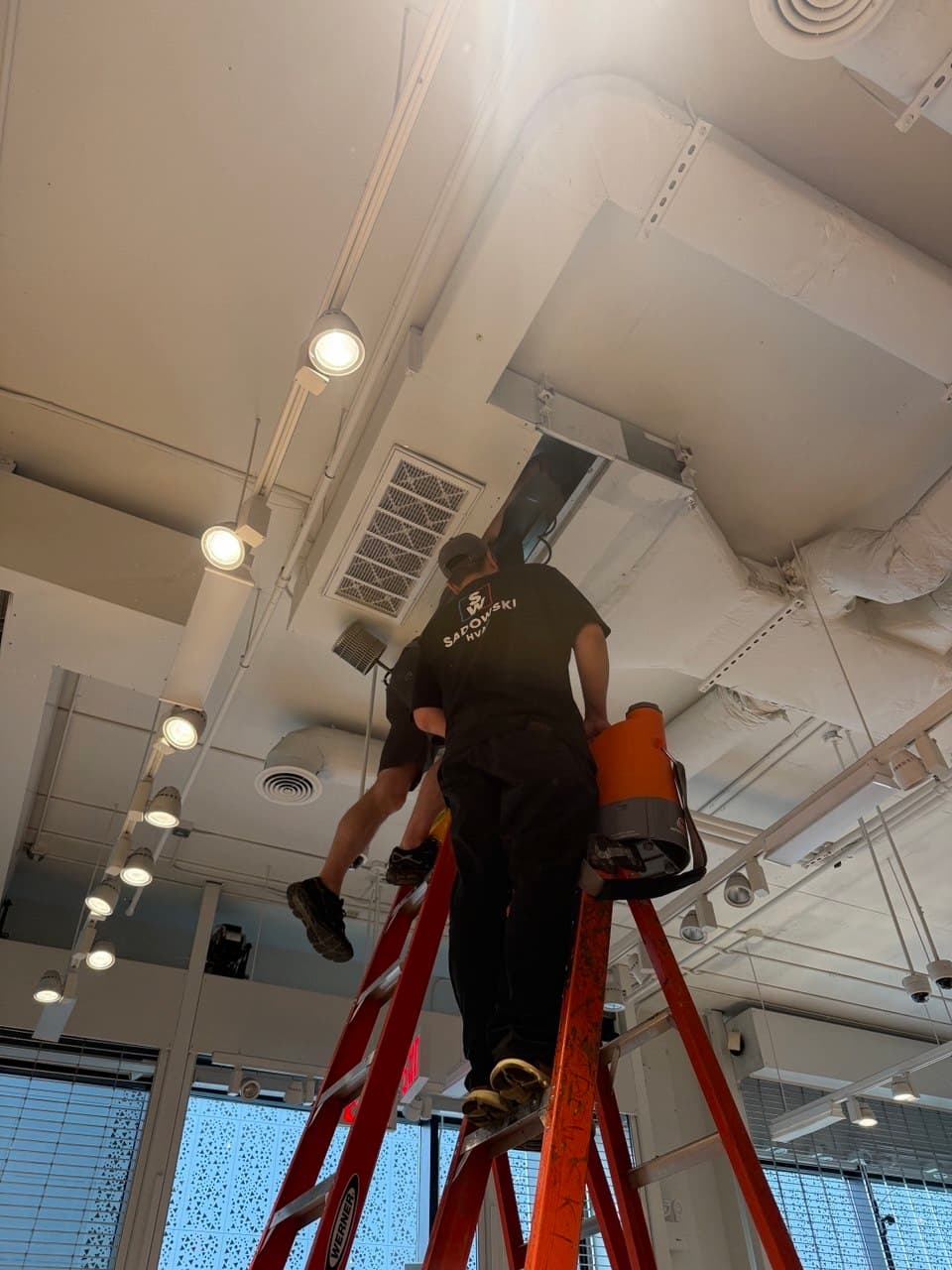
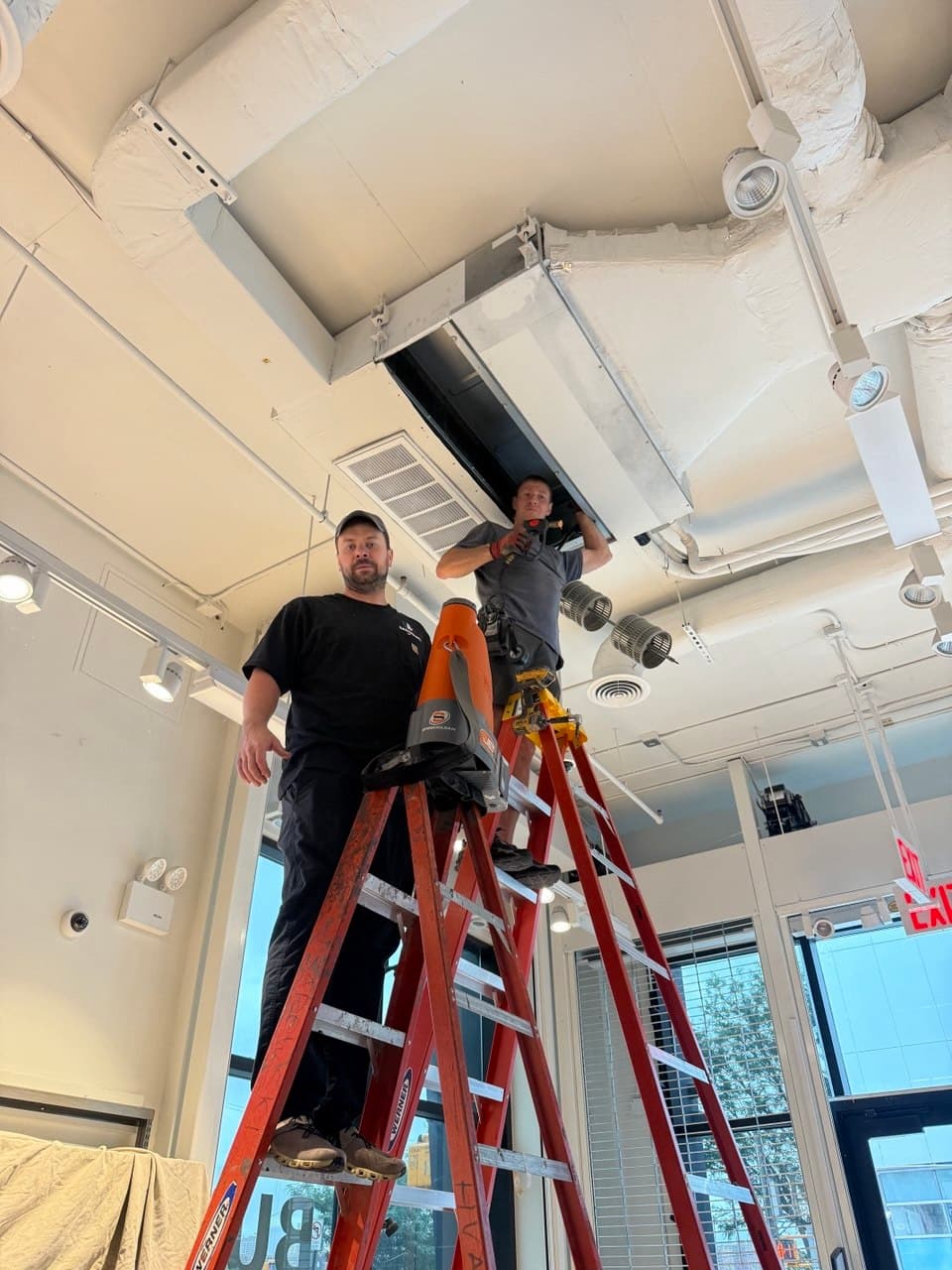
Planned indoor coil cleaning in a retail space
This visit called for overhead access to a ceiling-mounted commercial HVAC unit. The team protected the fixtures and sales floor below, opened the equipment, completed the planned coil work, and documented the result.
What affects commercial coil cleaning cost
A visible coil face does not show the whole job. Price depends on how much equipment must be opened, how the buildup behaves, and what the crew must do to protect the property.
Commercial HVAC coil cleaning FAQ
Is coil cleaning included in commercial HVAC maintenance?
It can be, but it should be written into the agreed scope. Some visits include inspection only; others include accessible coil cleaning, drain work, filters, fan-section service, and operating checks. Coil condition, access, contamination, and site protection can make cleaning a separate quoted task.
How do I know whether a commercial HVAC coil needs cleaning?
Visible buildup is the clearest sign. Worsening airflow, longer run time, recurring freeze-ups, poor temperature recovery, a dirty filter history, nearby construction, grease exposure, or no cleaning record can justify a closer inspection. Those symptoms can have other causes, so the coil should be evaluated with the rest of the system.
Do you clean both evaporator and condenser coils?
We assess accessible indoor evaporator coils and outdoor or mechanical-room condenser coils. The cleaning method and site preparation differ. Equipment design, fin material, buildup, water control, electrical exposure, access, and manufacturer guidance determine what can be done safely.
Can a dirty evaporator coil cause the system to freeze?
Restricted airflow across an evaporator coil can contribute to freezing, but it is not the only cause. Filters, fan speed, dampers, blower condition, controls, sensors, refrigerant operation, and building load should be checked before treating cleaning as the complete repair.
Will coil cleaning fix poor cooling?
It may help when fouling is restricting airflow or heat transfer. Cleaning will not correct a failed compressor, weak motor, refrigerant leak, control fault, damaged ductwork, closed damper, or an undersized system. We separate cleaning needs from repair findings.
How often should commercial HVAC coils be cleaned?
There is no useful single interval for every property. Coil location, filter fit and replacement schedule, outdoor debris, grease, construction dust, run hours, tenant activity, equipment type, and prior inspection findings should set the timing.
Can coil cleaning be completed in an occupied retail or office space?
Often, yes, with planning. Overhead access, ladders or lifts, shutdown timing, water containment, protection of merchandise and finishes, pedestrian control, noise, and cleanup need to be coordinated with the property team. Some jobs are better scheduled before opening or after hours.
How much does commercial HVAC coil cleaning cost?
Cost depends on the number and size of coils, equipment type, access, height, contamination, disassembly, water control, shutdown window, and whether troubleshooting or repairs are also required. Photos, equipment information, and an onsite review help define a reliable scope.
Get a coil cleaning scope that fits the equipment
Send the unit type, property use, access details, symptoms, and photos if you have them. We will help determine whether the next step is cleaning, broader maintenance, or troubleshooting.
Sadowski HVAC Corp. · 633 Pierce Ave Unit 7, Linden, NJ 07036 · Mon–Fri 8:00 AM–5:00 PM