

Commercial Refrigeration Maintenance in Linden, NJ
Walk-ins, reach-ins, display cases, and prep equipment work under different loads, yet a blocked coil, weak fan, failing door seal, drain problem, or drifting control can disrupt any of them. Sadowski HVAC builds maintenance around the equipment and the way the site operates.
Plan refrigeration maintenance
List the equipment, property use, recent temperature or alarm history, service concerns, operating hours, and the best time for access.
A kitchen, market, and storage box do not age the same way
Grease near a condenser, cardboard dust in a stockroom, constant door traffic, crowded evaporators, hot deliveries, and overnight washdown practices all change what the equipment has to overcome.
We begin with an inventory and operating history, then inspect accessible evaporators, condensers, fans, compressors and piping, doors, drains, controls, defrost components where fitted, electrical parts, and the space around each unit. The purpose is to find developing conditions before they become a temperature event.
The work order should leave priorities, not a mixed list. Cleaning and adjustment belong apart from active repairs, monitor items, and operating observations so the facility can see what needs attention now.
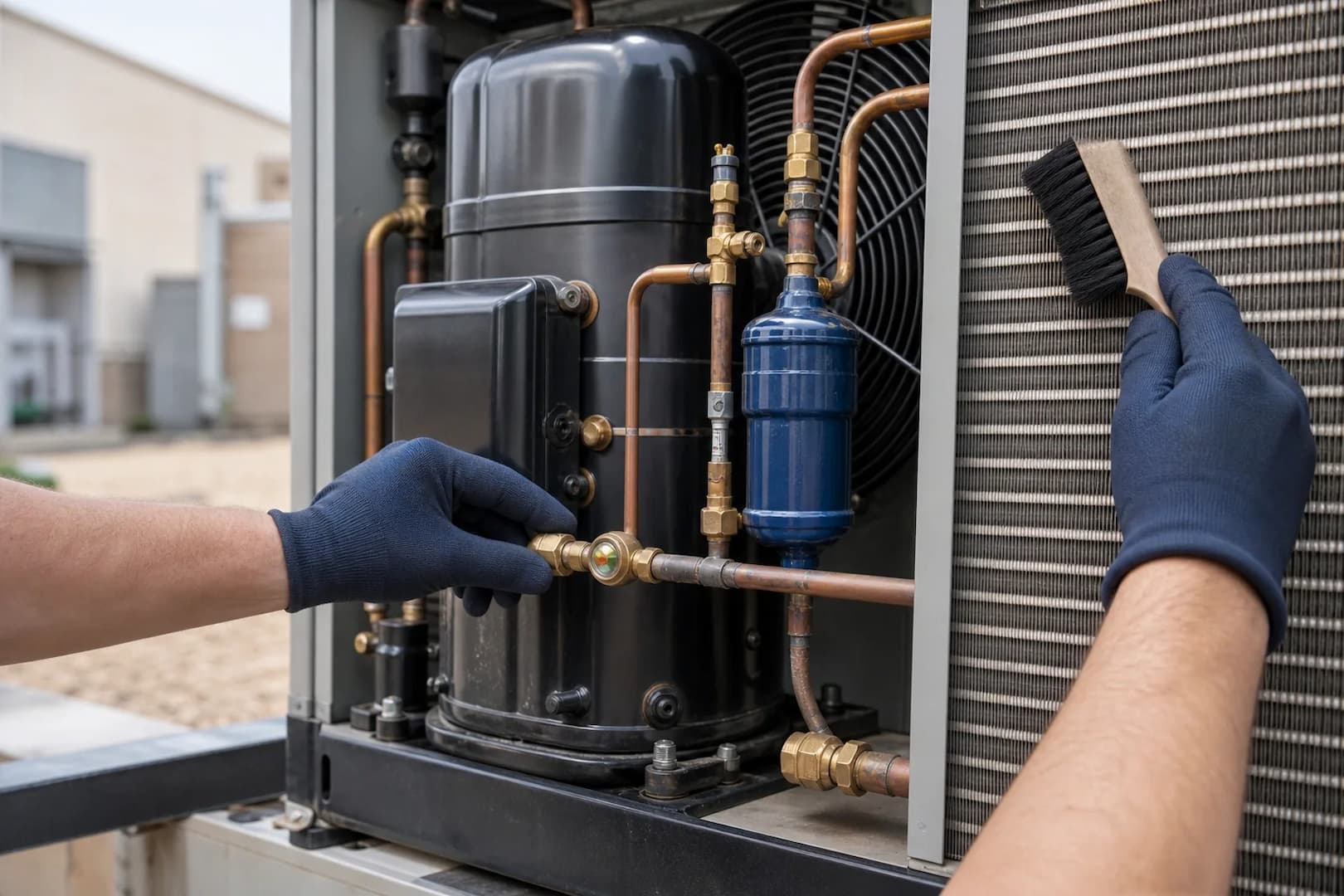
How commercial refrigeration service is organized
Inventory and history
Equipment, locations, use, temperature records, alarms, door traffic, prior repairs, cleaning, and access requirements establish the route.
Inspect and clean
Accessible coils, fans, drains, doors, cabinets, controls, electrical areas, air paths, and surrounding conditions are addressed to the agreed scope.
Observe operation
Temperatures, calls, fan and compressor behavior, defrost where relevant, noise, vibration, controls, and recovery patterns provide a working baseline.
Rank the findings
Completed maintenance, current repair needs, watch items, access limitations, and operational observations are documented in separate groups.
Components we consider across the refrigeration system
- Evaporator coils, fan motors, blades, guards, defrost components where fitted, air clearance, and frost pattern
- Condensing coils, fans, compressor area, receivers and sight glasses where present, piping, vibration, and ambient airflow
- Temperature controls, sensors, displays, alarms, pressure controls, accessible monitoring points, and wiring condition
- Electrical terminations, contactors, capacitors where used, disconnects, heaters, safeties, and signs of overheating
- Drain pans, lines, traps, pumps where fitted, insulation, cabinet penetrations, and evidence of overflow or condensation
- Door gaskets, hinges, closers, latches, sweeps, thresholds, curtains, panels, and storage clearances
Not every asset needs the same visit
A remote walk-in condensing unit on a roof has different access and seasonal exposure than a self-contained prep table beside a cooking line. Age, run hours, environment, criticality, service history, and manufacturer guidance help set the service level.
An equipment list keeps smaller assets from disappearing between emergency calls. Model and serial information, location, use, setpoint, maintenance observations, repair history, and known access constraints make later diagnosis more efficient.
When equipment is already failing, maintenance does not disguise the issue. We identify the active repair separately and explain how it relates to the condition found during the planned visit.
Small changes that can become expensive interruptions
Condenser airflow is restricted
Grease, dust, bent fins, blocked intake, stored items, poor room ventilation, or a weak fan can reduce heat rejection and raise operating stress.
Evaporator begins to ice
Airflow restriction, fan trouble, door leakage, defrost faults, drain conditions, sensor error, control setup, or a refrigeration issue may build frost.
Temperature drifts at busy times
Door openings, warm product, blocked air paths, coil condition, capacity, controls, compressor staging, ambient heat, and recovery time should be viewed together.
Water appears near equipment
Drain restrictions, pan damage, defrost water, door condensation, sweating pipes, insulation gaps, cleaning practices, or a source outside the system can contribute.
Door seals no longer meet
Torn gaskets, hinge wear, weak closers, misalignment, damaged latches, uneven floors, frame condition, and frequent loading let heat and moisture enter.
Controls no longer match readings
Sensor placement, calibration, damaged probes, loose wiring, control setup, display error, door activity, air stratification, or a separate monitoring device may explain the difference.
Choose maintenance for the asset or the whole site
Commercial refrigeration maintenance FAQ
What equipment can be included in a maintenance plan?
A plan can cover walk-in coolers and freezers, remote or self-contained reach-ins, prep equipment, and refrigerated display cases, subject to the installed equipment, access, and agreed scope.
How often should commercial refrigeration be maintained?
Grease and dust exposure, door traffic, run hours, equipment age, condenser location, temperature criticality, service history, season, and manufacturer guidance affect the interval. One schedule rarely fits every asset on a site.
Does maintenance include refrigerant charging?
Refrigerant is not a routine consumable. If testing indicates a charge problem or leak, that becomes a repair diagnosis. Adding refrigerant without establishing the system condition is not preventive maintenance.
Can maintenance prevent every breakdown?
No. It can reduce avoidable faults, reveal wear and changing conditions, preserve airflow and heat transfer, and create a useful baseline. Components can still fail between visits.
Why are temperature logs useful to the technician?
They show timing, duration, recovery, defrost or door patterns, and whether the issue is isolated or recurring. Logs are most useful alongside known loading, cleaning, alarm, and operating events.
What should our team prepare before maintenance?
Provide the equipment list, current setpoints, alarm and temperature history, known faults, recent repairs, roof or mechanical access, safe working clearances, stored-product procedures, and a site contact.
Build the visit around the equipment you depend on
Send an asset list or begin with the most critical boxes and cases. We will use the site conditions and operating history to shape the maintenance scope.
Sadowski HVAC Corp. · 633 Pierce Ave Unit 7, Linden, NJ 07036 · Mon–Fri 8:00 AM–5:00 PM