

Walk-In Freezer Maintenance in Linden, NJ
Freezer maintenance is most valuable before frost covers the coil or temperature recovery starts stretching into the next shift. We inspect refrigeration, defrost, airflow, doors, drains, and controls as one operating system.
Plan freezer maintenance
Share the property, freezer size or equipment label if known, current temperature behavior, frost pattern, recent repairs, and preferred service window.
A freezer can hold temperature today and still be heading toward a failure
A worn door gasket, slow fan motor, blocked drain, dirty condenser, damaged insulation, or weak defrost component may first appear as longer run time, a small frost patch, or slower recovery after deliveries.
Maintenance gives those clues a place to surface. We look at the evaporator and condensing unit, but also at how people use the box: door traffic, product loading, blocked air paths, strip curtains, lighting, floor or drain conditions, and any recent change in setpoint or schedule.
A clean coil is only one result. The more useful outcome is a baseline: what is normal for this box, what needs correction now, and what deserves watching before the next busy season.
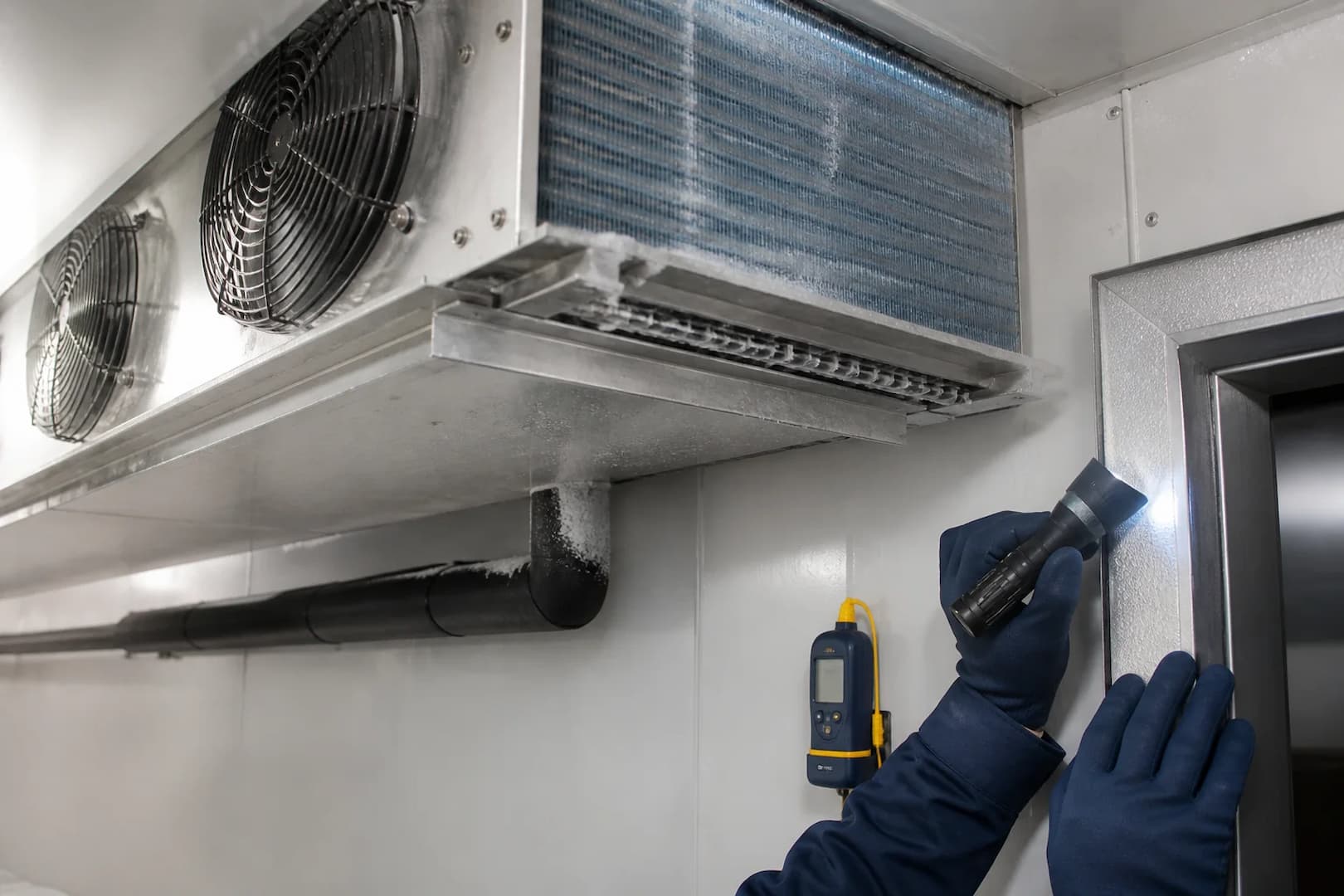
What happens during a planned visit
Review operation
Temperature history, alarms, product loading, door use, defrost schedule, past repairs, and any seasonal pattern establish the context.
Inspect the box
Door, gasket, closer, threshold, panels, penetrations, evaporator, fans, drain, lighting, air path, frost, and accessible controls are reviewed.
Check the condensing side
Coil, fan, compressor area, electrical components, piping, service valves, visible oil evidence, controls, and operating conditions are checked.
Record priorities
Immediate repairs, cleaning, adjustments, operational observations, and watch items are separated so the property team can plan sensibly.
Small conditions that can become freezer calls
Frost builds on one part of the coil
Defrost heaters, termination or fan-delay controls, sensors, clock or board operation, drain behavior, refrigerant distribution, infiltration, and fan operation can shape the pattern.
Ice forms near the door
Gasket gaps, hinge or closer wear, latch adjustment, threshold condition, strip curtains, door traffic, panel seams, and warm humid air entering the box deserve attention.
Temperature recovers slowly
Coil airflow, product loading, door time, fan motors, condenser condition, refrigerant performance, setpoint, defrost timing, and outdoor ambient can each affect recovery.
Water or ice collects below the evaporator
A blocked drain, frozen drain line, failed pan heater, poor slope, damaged heat tape, defrost overflow, or infiltration can leave similar evidence.
Condensing unit runs unusually hot
Dirty coil surfaces, failed fan, blocked airflow, high ambient conditions, electrical issues, refrigerant condition, or excessive refrigeration load may be involved.
Alarm history keeps repeating
We compare the timing of temperature, door, power, pressure, and control alarms with defrost cycles, deliveries, building events, and actual equipment operation.
Freezer components worth checking together
- Evaporator coil, fan guards, fan motors, blades, wiring, and airflow clearance
- Defrost heaters, time or board control, sensors, termination, fan delay, and drain heating where fitted
- Drain pan, drain line, heat tape, traps where applicable, and signs of overflow
- Condensing unit coil, fans, compressor area, contactors, terminals, safeties, and controls
- Door gaskets, hinges, closer, latch, threshold, sweeps, strip curtains, and panel penetrations
- Temperature controls, probes, displays, alarms, and accessible monitoring connections
Planned work should reveal defects, not hide them
Cleaning and adjustment can restore airflow or door sealing when parts are still serviceable. A burned terminal, weak motor, failed heater, damaged gasket, blocked drain, leaking component, or unreliable sensor needs a separate repair recommendation.
Repeated ice removal is not maintenance if the underlying defrost, drain, infiltration, or refrigeration fault remains. The same is true of resetting an alarm without understanding why it returns.
When an active failure threatens temperature, the job shifts from preventive maintenance to repair. The findings from the planned visit still help by showing the condition of the rest of the system.
Walk-in freezer maintenance FAQ
How often should a walk-in freezer be maintained?
Hours of operation, door traffic, kitchen conditions, condenser location, dust or grease exposure, defrost type, equipment age, and manufacturer guidance matter. Busy food-service equipment often needs a closer interval than a lightly used storage box.
Should there be frost on a freezer evaporator?
A light, temporary frost pattern can occur between defrost cycles. Heavy, persistent, or uneven ice can point to defrost, airflow, infiltration, drain, fan, control, or refrigerant issues.
Can maintenance prevent every breakdown?
No. Components can still fail without warning. Maintenance reduces avoidable stress, catches visible deterioration, and creates a record of changing conditions, but it is not a guarantee against failure.
Why check the door if the problem seems mechanical?
Warm, humid air entering through a poor gasket or door that does not close adds refrigeration load and moisture. That can increase frost, extend run time, and complicate defrost and drain behavior.
Do you clean walk-in freezer coils?
Accessible coil cleaning may be part of the agreed maintenance scope. Method and timing depend on coil type, contamination, product protection, electrical safety, access, and the condition of the fins.
What should we prepare before service?
Provide equipment access, recent temperature and alarm history, repair records, safe working space, and any property rules. Protect or relocate product as required by your facility's handling plan.
Keep repair, installation, and maintenance distinct
Schedule freezer care before the next frost pattern spreads
Tell us how the box is used and what has changed. We will use those details to shape a practical maintenance visit for your Linden property.
Sadowski HVAC Corp. · 633 Pierce Ave Unit 7, Linden, NJ 07036 · Mon–Fri 8:00 AM–5:00 PM