
Commercial Refrigeration Repair • Linden, NJ
Commercial Refrigeration Repair in Linden
Practical refrigeration repair for Linden businesses facing rising temperatures, inventory risk, or repeated equipment shutdowns.
Sadowski HVAC troubleshoots commercial refrigerators, walk-in coolers and freezers, reach-ins, prep tables, display cases, and related refrigeration equipment. We find the fault, explain the test results, and check the unit after an approved repair. A system that turns back on still has to prove that it can pull down and hold temperature.
Before the service call
A Refrigeration Failure Starts With the Clock
A warm cabinet, iced evaporator, or cycling compressor puts both inventory and daily operations at risk. Whether the unit is running matters, but the better questions are: What temperature is it holding, and when did that begin to change?
Protect the product without hiding the symptom
Record the actual cabinet or product temperature, the setpoint, the time you noticed the change, and any alarm shown by the controller. If product must be moved, note where it went. Avoid changing several settings or repeatedly resetting the unit; that can erase useful fault history and stress a failing component.
Read and record
Capture the displayed temperature, an independent reading if available, alarm codes, and whether the unit is still cooling.
Limit door openings
Keep doors closed and follow your food-safety plan when deciding which products need to be moved or discarded.
Describe the pattern
Tell us whether temperature rose suddenly or slowly, whether ice is visible, and what the unit did before the problem appeared.
Equipment coverage
Commercial Refrigerators and Cold-Storage Equipment We Diagnose
Commercial refrigerator repair may involve a single reach-in behind the line or a remote system serving a large walk-in. What we test depends on the equipment, its controls, the refrigerant circuit, and how the unit is used each day.
Walk-In Coolers
Evaporator icing, failed fan motors, warm boxes, drain problems, door and gasket issues, control faults, and condensing-unit concerns. For equipment-specific help, see our walk-in cooler repair service.
Walk-In Freezers
Low-temperature systems require careful checks of defrost heaters, termination controls, fan delay, door heat, ice patterns, and system performance. Visit our walk-in freezer repair page.
Reach-In Refrigerators
Upright single- and multi-door units, undercounter refrigerators, worktop units, and glass-door merchandisers that run warm, cycle erratically, leak, or frost.
Refrigerated Prep Tables
Pizza, sandwich, salad, and food-prep units where airflow, rail loading, lid position, ambient kitchen heat, and cabinet performance all affect temperature.
Display and Beverage Cases
Glass-door cases, open or enclosed display refrigeration, bottle coolers, bar refrigeration, and merchandising units with uneven or unstable cooling.
Commercial Freezers
Reach-in, undercounter, and specialty commercial freezers with frost, long runtimes, defrost trouble, weak door seals, or failure to recover after loading.
What the symptom may mean
The Same Warm Box Can Have Very Different Causes
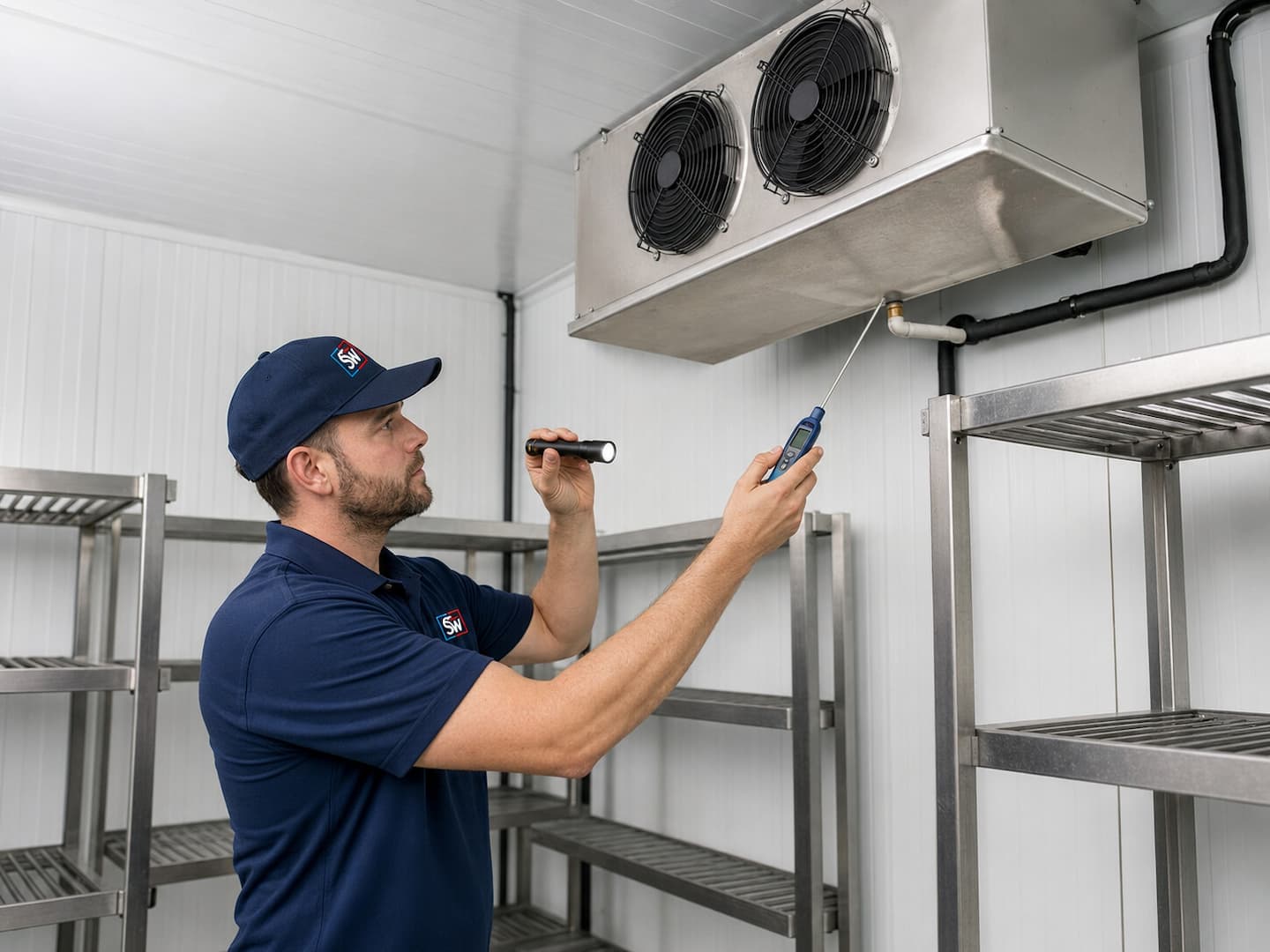
A refrigeration system can run and still fail to cool properly. A sound diagnosis compares temperature, airflow, coil condition, control commands, electrical readings, and refrigerant-circuit performance instead of relying on one symptom.
Not holding setpoint
Possible causes include dirty coils, poor airflow, failed fans, control or sensor errors, refrigerant loss, compressor trouble, excessive load, or an open door.
Frost on the evaporator
Uniform ice, a partially starved coil, and ice concentrated near an entry point tell different stories. Defrost, airflow, drains, and the sealed system all need context.
Runs constantly
A unit may run without reaching temperature because heat cannot leave the condenser, cold air cannot move, the door leaks, or system capacity has fallen.
Short cycling or alarms
Pressure controls, temperature controllers, probes, contactors, overloads, and safety circuits can stop operation for a legitimate reason—or because a control has failed.
Leaks and blocked drains
Defrost water must reach the drain and remain protected from freezing where required. A clogged line or damaged pan can create ice and water outside the unit.
Noise, vibration, or heat
Fan blades, motors, bearings, mounts, contactors, and compressors can produce useful clues before a complete shutdown. New sounds deserve attention.
Diagnostic method
From Complaint to Verified Operation
We compare what the kitchen, store, or facility team noticed with what the equipment is actually doing when we arrive.
Confirm the operating complaint
We review the temperature trend, setpoint, alarms, product load, recent changes, and the exact sequence that brought attention to the unit.
Inspect the complete system
Air must move through clean coils, doors must seal, drains must work, and controls must call for the correct operation before we draw conclusions about the sealed system.
Test the suspected fault
Electrical values, temperatures, sensor readings, defrost operation, component behavior, and pressure readings when needed help isolate the failure.
Repair, restart, and verify
After approved work, we observe the operating sequence and temperature response, then explain what was corrected and what still deserves attention.
Why verification matters: a controller display may begin falling before the cabinet or product has recovered. The useful result is stable refrigeration performance, not merely a compressor that starts.
Scope and cost
Fix This Failure—or Plan for a Larger Problem?
Commercial refrigeration repair cost depends on equipment type, access, diagnostic time, the failed component, refrigerant and parts requirements, and whether one fault has caused another. We separate the immediate repair from broader reliability concerns so the decision stays clear.
A focused repair may be sensible when…
The equipment is otherwise sound, the fault is isolated, compatible parts are available, and the repair is proportionate to the remaining service life.
- A fan motor, control, sensor, contactor, drain, or defrost component has a confirmed failure
- The cabinet and doors are in serviceable condition
- The system previously held temperature without repeated service calls
- The repair can be tested under a representative operating condition
A broader plan may be wiser when…
Repeat failures, obsolete parts, deteriorated panels or doors, extensive sealed-system damage, or capacity problems make another isolated repair a poor long-term bet.
- Service records show recurring refrigerant, compressor, electrical, or defrost failures
- The equipment no longer meets the operation’s temperature or capacity needs
- Several major components are near end of life
- Downtime and inventory exposure now cost more than planned replacement
Commercial environments
Refrigeration Repair Built Around the Way the Site Operates
A busy restaurant kitchen does not place the same demands on refrigeration as a retail display case or an office break room. Access, room temperature, loading, customer traffic, cleaning schedules, and acceptable downtime all affect how we plan the work.
Restaurants and cafés
Walk-ins, reach-ins, prep rails, undercounter units, beverage coolers, and equipment serving an active kitchen line.
Markets and delis
Display refrigeration, merchandisers, walk-in storage, food-prep units, and customer-facing cases.
Bars and venues
Bottle coolers, back-bar refrigeration, undercounter units, and cold storage that must recover during peak service.
Commercial facilities
Office kitchens, institutional food service, specialty retail, and facilities with several refrigerated assets to coordinate.
Need repair for space heating, air conditioning, an RTU, or an air handler rather than cold-storage equipment? See our commercial HVAC repair in Linden. Identifying the equipment when you call helps us route the request correctly from the start.
A better first visit
What to Send With Your Service Request
A short, specific intake often saves time on site. You do not need to diagnose the unit; just share what the operation is seeing and what changed.
Six details that help
Photos are useful when they show the whole unit, the model/serial label, the controller display, and the equipment location. Avoid opening panels to get a picture.
Questions from Linden businesses
Commercial Refrigeration Repair FAQ
Do you repair both walk-ins and self-contained commercial refrigerators?
Yes. We service walk-in coolers and freezers, remote condensing systems, reach-ins, undercounter refrigerators, prep tables, display cases, and other commercial refrigeration equipment. The tests and repair options vary with the type of system.
What commercial refrigerator problems do you repair?
Common calls include warm cabinets, unstable temperature, evaporator ice, failed fans, control or sensor faults, drain leaks, defrost problems, unusual noise, short cycling, dirty or blocked coils, electrical failures, and sealed-system concerns. What we recommend depends on the equipment and what the testing confirms.
Should we reset a refrigerator that keeps alarming?
One reset may clear a temporary event, but repeated resets can hide the pattern and add starts to a struggling compressor. Record the alarm, temperature, and time. If the alarm returns or temperature continues rising, request service rather than continuing to reset the unit.
Can we chip ice off an evaporator to keep operating?
No. Tools can puncture a coil, damage a drain pan, bend fins, or contact wiring. Heavy ice also has a cause—often a defrost, airflow, door, drain, control, or refrigerant-side issue. Shut the unit down if ice is contacting a fan or creating an unsafe condition and arrange professional service.
How is commercial refrigeration different from ordinary appliance repair?
Commercial systems may use remote condensing units, field-installed piping, pressure and defrost controls, higher loads, different duty cycles, and site-specific operating requirements. A refrigeration technician evaluates the entire system and the way the equipment is used, not only the cabinet.
Will you tell us whether repair or replacement makes more sense?
Yes. Once the fault and equipment condition are understood, we can explain the immediate repair and any broader concerns involving parts availability, repeat failures, cabinet condition, capacity, or remaining service life. The final business decision stays with you.
Do you offer commercial refrigeration maintenance?
Yes. Preventive service can include operating checks, coil and airflow review, temperature controls, defrost components, drains, electrical connections, door condition, and documentation appropriate to the equipment. Ask about a maintenance plan when requesting service.
Request service
Tell Us What the Refrigeration Equipment Is Doing
Send us the unit type, current temperature, symptoms, and access details. That gives us a clearer picture of the urgency and helps us prepare for the first visit to your Linden business.
- Unit: walk-in, reach-in, prep table, display case, freezer, or other commercial refrigeration
- Condition: warm, iced, leaking, noisy, cycling, alarming, or completely down
- Timing: when the change began and whether temperature is stable or still rising
- Access: site contact, equipment location, and the best service window