
Walk-in Cooler Repair • Linden, NJ

Walk-in Cooler Repair in Linden, NJ

When a walk-in cooler starts running warm, icing up, leaking water, or alarming, every minute matters for inventory, food safety procedures, and business continuity. Sadowski Heating & Air Conditioning provides focused walk-in cooler repair in Linden for restaurants, markets, delis, convenience stores, kitchens, and local commercial properties that need clear diagnostics and practical repair options.

Warm Box Conditions Diagnostics for temperature rise, weak cooling, long run times, and sudden loss of refrigeration.
Ice and Airflow Issues Evaporator ice, fan problems, blocked coils, and defrost failures checked at the source.
Condensing Unit Problems Compressor, fan motor, pressure control, electrical, and refrigerant-related symptoms reviewed.
Business-Focused Repair Findings explained clearly so you can make decisions quickly when product is at risk.

NJ HVAC License #13VH11514600, 633 Pierce Ave Unit 7, Linden, NJ 07036, Mon-Fri 8:00 AM-5:00 PM

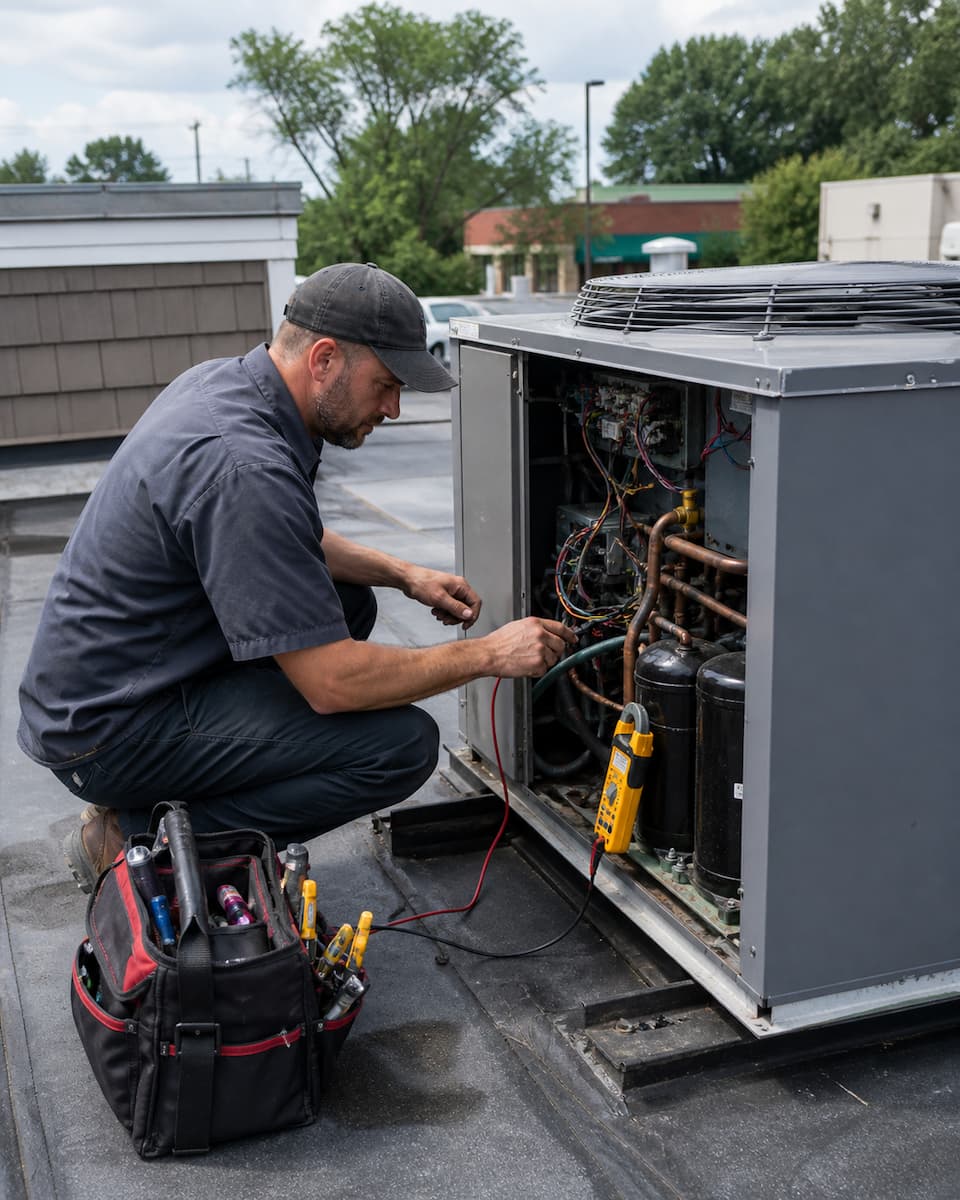
Commercial refrigeration technician responding to a walk-in cooler repair call
A cooler problem is a business problem. Loss of temperature can affect inventory, staff workflow, customer service, and compliance procedures in a very short window.

Urgent Refrigeration Repair

Walk-in cooler repair needs speed, but not guesswork.

A failed cooler can look simple from the outside: the box is warm. The cause may be a bad fan, iced coil, failed defrost timer, dirty condenser, refrigerant leak, thermostat issue, compressor problem, door gasket failure, or drain restriction. A careful diagnostic approach helps avoid wasting time on the wrong fix.

Protect Product Decisions

We help identify the equipment issue while your team follows its own temperature logging and product handling procedures.

Reduce Repeat Failures

Repair should address why the cooler stopped holding temperature, not only reset a control or clear temporary ice.

Support Business Uptime

Restaurants, markets, delis, and kitchens need practical repair direction when inventory and service are at risk.

Explain the System

Clear findings help you understand whether the issue is airflow, controls, refrigeration, electrical, drainage, or cabinet-related.

Cooler Failure Signs

Symptoms that call for walk-in cooler repair.

Walk-in cooler problems often show up as temperature drift, ice, noise, water, or alarms before the system completely fails. The sooner the issue is diagnosed, the better chance you have to reduce product loss and avoid secondary damage.

01

Box Temperature Rising

The cooler runs but cannot pull down temperature, or it holds temperature only during slower business hours.

02

Evaporator Coil Icing

Ice on the coil can come from airflow problems, defrost failure, refrigerant issues, door infiltration, or fan problems.

03

Fans Not Running

Evaporator fan or condenser fan failure can quickly reduce cooling performance and stress other refrigeration components.

04

Water on the Floor

Drain restrictions, frozen drains, pan issues, defrost problems, or ice melt can create water around or inside the box.

05

Compressor Short Cycling

Rapid starts and stops can point to pressure controls, dirty coils, refrigerant conditions, electrical faults, or control issues.

06

Door or Gasket Problems

Air leaks, damaged gaskets, door closers, and heavy traffic can make the refrigeration system work harder than it should.

Diagnostic Approach

We trace the refrigeration problem through the whole cooler system.

A walk-in cooler can lose temperature because of airflow, heat rejection, refrigerant movement, controls, defrost timing, door infiltration, electrical faults, drainage issues, or a failing component under load. We look at the chain of operation instead of stopping at the first visible symptom.
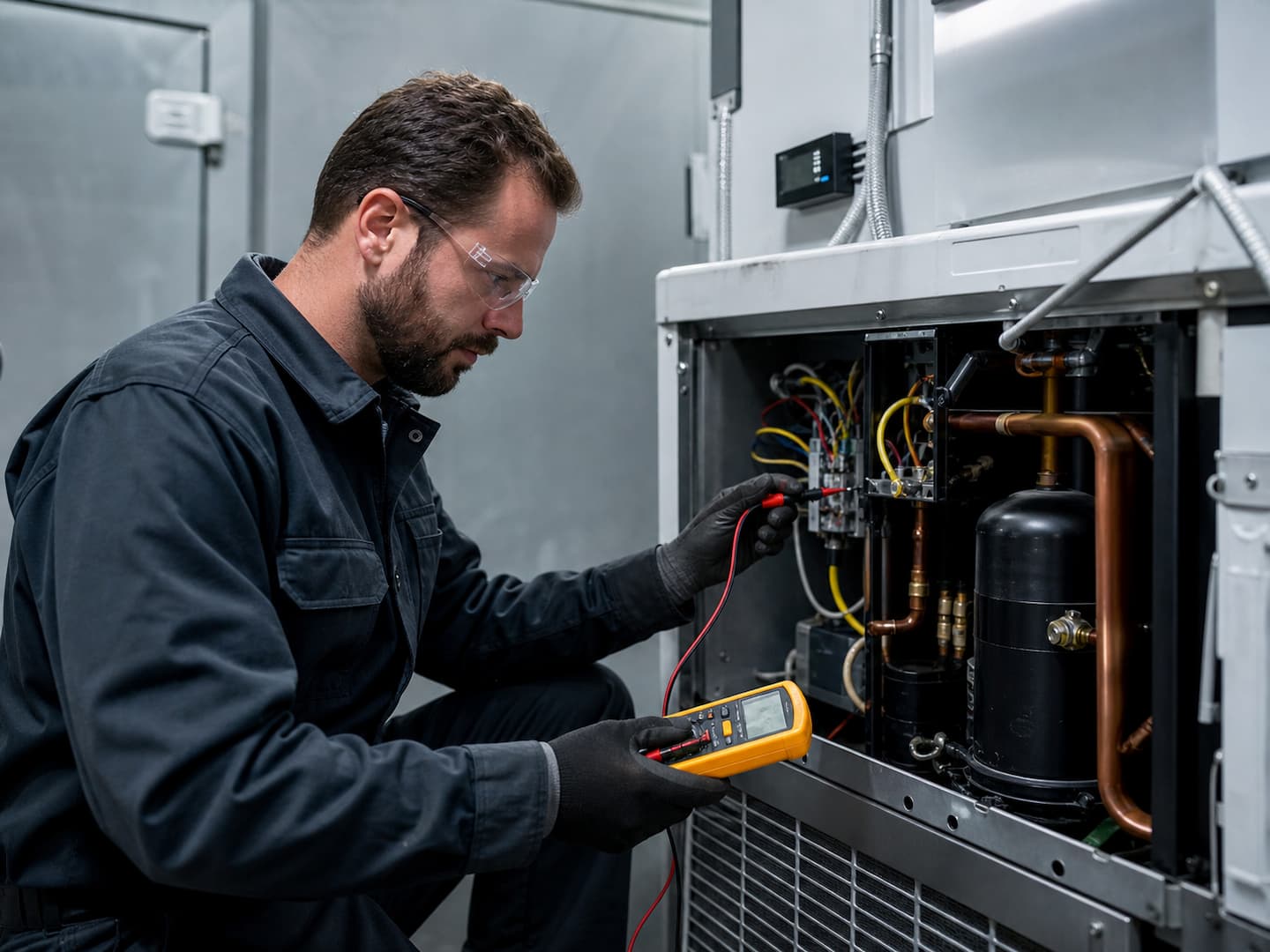
Technician tracing a walk-in cooler refrigeration problem

Controls tell part of the story.

Setpoint, sensor readings, fan behavior, defrost cycle, and compressor response help narrow the cause of temperature drift.

Box Temperature and Controls Thermostat response, sensor condition, setpoint behavior, alarm history, and temperature patterns inside the cooler.
Evaporator Section Coil condition, fan operation, ice pattern, drain pan condition, airflow path, and defrost performance.
Condensing Unit Compressor operation, condenser fan, coil condition, contactors, capacitors, pressure controls, and heat rejection.
Refrigerant Circuit Cooling performance, signs of leaks, metering behavior, operating pressures where applicable, and line temperature clues.
Electrical System Wiring, safeties, relays, control voltage, power supply, nuisance trips, and components tested under operating load.
Doors and Infiltration Gaskets, closers, sweeps, door alignment, high traffic patterns, and warm moist air entering the cooler.

Ice is a symptom, not the full diagnosis.

Melting the ice may restore temporary airflow, but the cooler can ice up again if the underlying cause is still present.

  • Defrost failure can hide behind a warm box complaint.
  • Door leaks can create moisture and recurring ice.
  • Fan issues can starve the coil of proper airflow.

How we narrow the cause

Confirm Symptom Temperature, ice, water, alarms, noise, or short cycling.
Check Airflow Fans, coil condition, restrictions, and door infiltration.
Test Operation Controls, electrical load, compressor response, and defrost.
Explain Repair Clear findings, urgency, and practical next steps for the business.

Repair Areas

Walk-in cooler components we troubleshoot.

A walk-in cooler is a connected refrigeration system. Repair can involve the box, evaporator, condensing unit, refrigerant circuit, electrical controls, drainage, or air sealing. The correct repair depends on which part of the system is no longer doing its job.

  • 1 Compressors, contactors, capacitors, condenser fan motors, and pressure controls.
  • 2 Evaporator fan motors, coils, drain pans, drain lines, and ice buildup issues.
  • 3 Defrost clocks, heaters, termination controls, sensors, and temperature controls.
  • 4 Refrigerant leaks, metering problems, poor cooling performance, and long run times.
  • 5 Door gaskets, sweeps, hinges, closers, and warm air infiltration symptoms.
  • 6 Electrical faults, control wiring, nuisance trips, alarms, and intermittent operation.
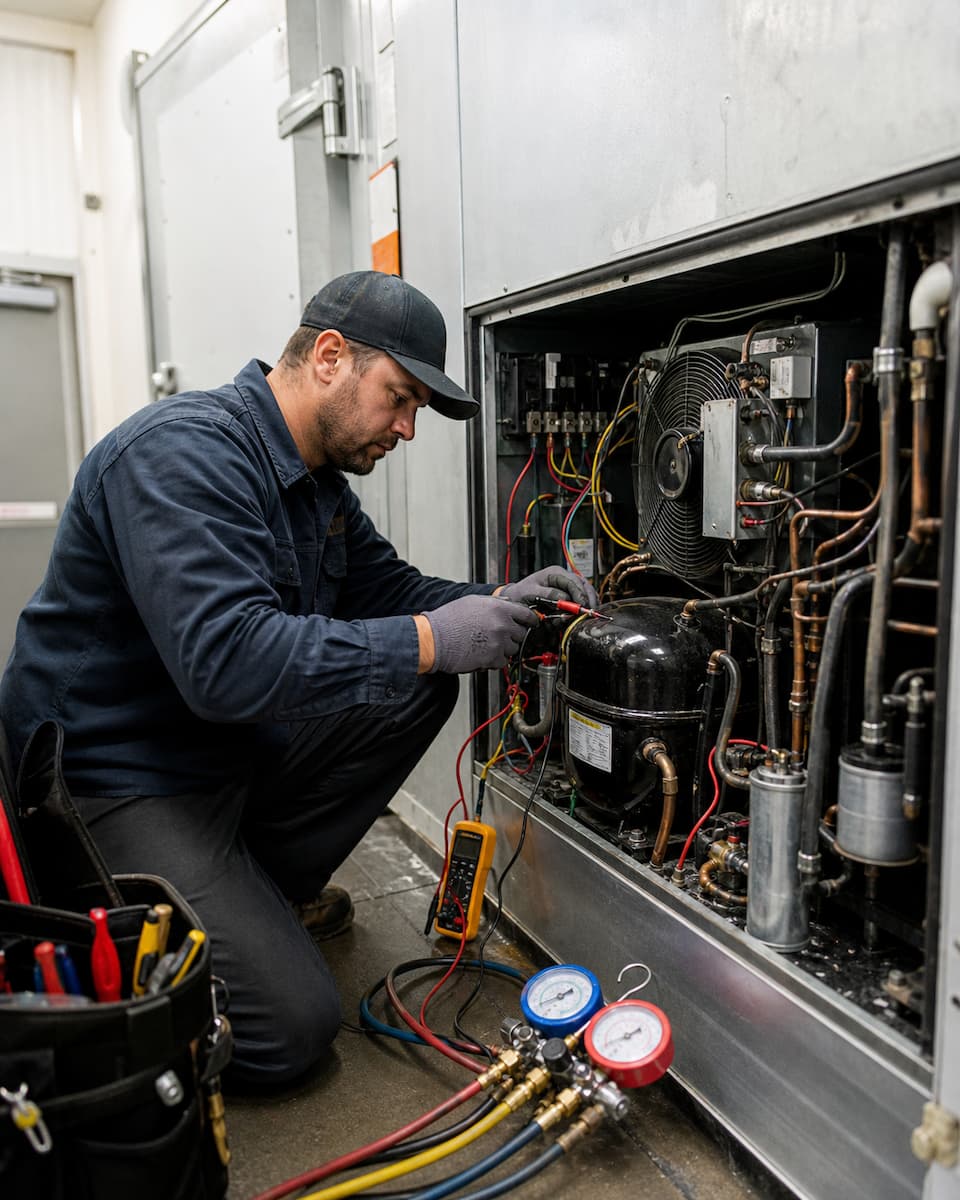
Technician troubleshooting walk-in cooler components

Repair should support stable box temperature.

The goal is not just to restart equipment. The cooler needs to pull down, hold temperature, drain correctly, and run without repeating the same fault.

Repair Process

From warm cooler complaint to a practical repair path.

When a walk-in cooler is not holding temperature, the repair process needs to be organized and transparent. We focus on what is happening now, what caused it, and what needs to be corrected to restore dependable refrigeration.

Temperature Review

We ask when the issue started, how fast the box warmed up, and whether the system has alarms, ice, leaks, or unusual noise.

System Inspection

Evaporator, condensing unit, fans, controls, doors, drains, electrical components, and visible refrigeration conditions are reviewed.

Root Cause

The diagnostic focus is why the cooler cannot hold temperature, not just which visible symptom appeared first.

Repair Options

Findings are explained clearly so you can decide how to move forward based on urgency, parts, and business impact.

Operation Check

After repair, cooling response, airflow, drainage, and equipment behavior are checked as far as site conditions allow.

Technician servicing walk-in cooler equipment for a local Linden business

Local Commercial Refrigeration Support

Walk-in cooler repair for Linden businesses and nearby commercial properties.

Sadowski Heating & Air Conditioning is based in Linden, NJ. We support local businesses that rely on walk-in coolers to protect inventory, keep prep moving, and avoid avoidable interruptions.

  • Linden
  • Roselle
  • Rahway
  • Elizabeth
  • Cranford
  • Union County
Business Types Restaurants, delis, markets, convenience stores, commercial kitchens, food service spaces, and local retail operations.
Repair Priorities Temperature recovery, airflow, defrost, electrical function, refrigeration performance, drainage, and door sealing.
Local Information NJ HVAC License #13VH11514600, 633 Pierce Ave Unit 7, Linden, NJ 07036.

Walk-in Cooler Repair FAQ

Questions Linden businesses ask when a cooler fails.

Walk-in cooler problems are stressful because they affect inventory and daily operations. These answers help explain what may be happening and what to prepare before service.

Why is my walk-in cooler running but not getting cold?

Common causes include dirty condenser coils, weak fan motors, iced evaporator coils, defrost failure, thermostat issues, refrigerant problems, door air leaks, or compressor-related faults. A diagnostic visit is needed to identify the cause.

What should I do if the walk-in cooler temperature is rising?

Document temperatures, limit door openings, follow your product handling procedure, and call for repair. If product is at risk, move it according to your internal food safety process.

Is ice on the evaporator coil always a refrigerant problem?

No. Ice can be caused by airflow restrictions, failed evaporator fans, defrost issues, door infiltration, dirty coils, control problems, or refrigerant conditions. The ice pattern and system behavior both matter.

Can a walk-in cooler repair be completed in one visit?

Sometimes, depending on the failed component, equipment condition, and parts availability. If a same-visit repair is not practical, you should receive clear findings and a practical next step.

Do door gaskets really affect cooler temperature?

Yes. Damaged gaskets, poor door closure, and warm air infiltration can make the refrigeration system run longer, ice the coil, increase humidity, and create temperature complaints.

Commercial Cooler Repair

Walk-in cooler not holding temperature in Linden?

Call Sadowski Heating & Air Conditioning for walk-in cooler repair diagnostics, clear findings, and practical next steps when your commercial refrigeration system starts running warm, icing up, leaking, or shutting down.