

Wine Cellar Cooling Repair • Linden, NJ

Wine Cellar Cooling Repair in Linden, NJ

When a wine cellar starts running warm, overcooling, cycling constantly, leaking condensate, losing humidity balance, or making unusual noise, the issue can affect the collection and the finished room. Sadowski Heating & Air Conditioning provides wine cellar cooling repair in Linden with diagnostics focused on temperature stability, airflow, controls, condensate, refrigeration performance, and room envelope conditions.

Temperature Drift Diagnostics for cellars that run warm, swing in temperature, or fail to reach setpoint.
Condensate and Moisture Leaks, drain issues, high humidity, dry conditions, and condensation concerns reviewed.
Cooling Unit Faults Fans, controls, sensors, compressor behavior, coils, and refrigerant symptoms checked.
Collection-Focused Repair Findings explained around protecting wine, finishes, and long-term cellar performance.

NJ HVAC License #13VH11514600, 633 Pierce Ave Unit 7, Linden, NJ 07036, Mon-Fri 8:00 AM-5:00 PM

When Conditions Drift

A wine cellar problem is often gradual before it becomes obvious.

Wine cellar cooling issues can begin as longer run times, small temperature swings, moisture around equipment, or a fan that sounds different. Catching those changes early helps protect the collection and the room finishes.

Document the current cellar temperature and setpoint.
Look for water near the unit, drain, wall, or ceiling.
Avoid changing several settings at once before diagnosis.
Warm Cellar

The unit runs but the room cannot reach or hold the target temperature, especially during warm weather or after door openings.

Too Cold

Overcooling can point to sensor placement, controls, short cycling, airflow issues, or equipment not responding correctly.

Humidity Trouble

Dry cork concerns, condensation, musty odor, or moisture on surfaces can involve both equipment and room envelope issues.

Noise or Vibration

Fan motors, loose panels, compressor behavior, duct noise, or blocked airflow can become disruptive in finished spaces.

Repair Signals

Symptoms that point to wine cellar cooling repair.

A wine cellar cooling system can show trouble through temperature, humidity, sound, water, airflow, or control behavior. The visible symptom helps guide the diagnostic path.

01

Temperature Rising

The cellar slowly warms, fails to recover, or needs longer run times to approach the setpoint.

02

Short Cycling

The unit starts and stops frequently without stabilizing the cellar, often stressing components.

03

Condensate Leaks

Water near the unit, ceiling, wall, or drain can point to pan, trap, pump, slope, or freeze-up issues.

04

Control Errors

Sensors, thermostats, boards, setpoints, or communication issues can create incorrect operation.

05

Weak Airflow

Blocked filters, dirty coils, fan faults, duct restrictions, or rack placement can reduce circulation.

06

Humidity Swing

Humidity that stays too high or too low may involve runtime, envelope leakage, drainage, or equipment condition.

07

Unusual Noise

Rattling, vibration, bearing noise, compressor sounds, or duct noise can become noticeable in quiet spaces.

08

Ice or Frost

Coil icing can come from airflow problems, refrigerant conditions, controls, or operating below intended limits.

Diagnostic Approach

We check the cooling system and the cellar conditions together.

A wine cellar can drift out of range because of equipment failure, blocked airflow, sensor problems, condensate trouble, refrigerant conditions, or a room envelope that is letting in too much heat or moisture.
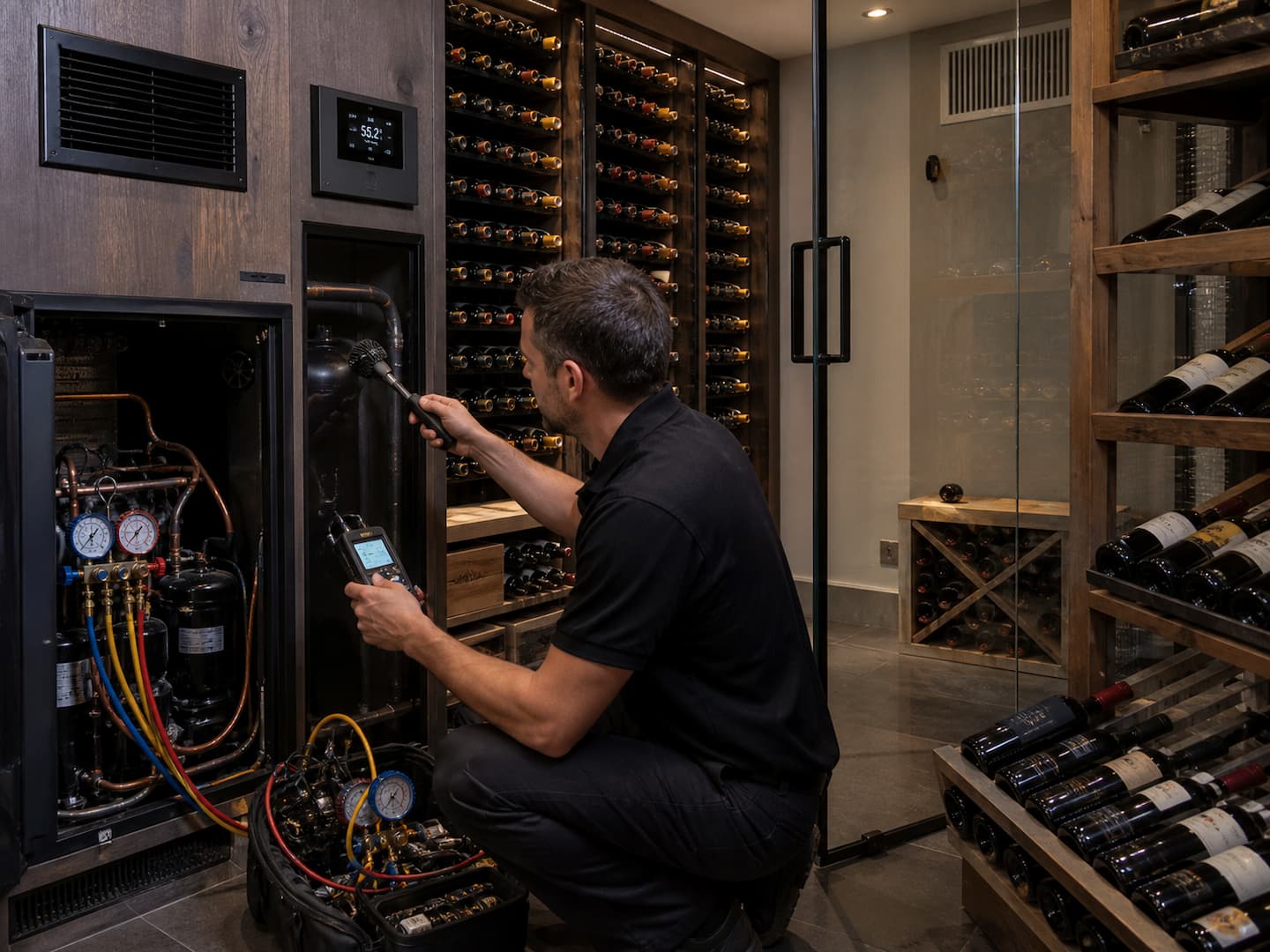
Technician diagnosing both the wine cellar cooling system and cellar conditions

Controls are only one part of the diagnosis.

Setpoint, sensor readings, fan response, and runtime help explain what the system is trying to do.

Temperature Trend Current room temperature, setpoint, recovery time, recent swings, and whether the issue is gradual or sudden.
Airflow Path Supply and return movement, blocked grilles, dirty filters, fan behavior, and rack or bottle placement.
Controls and Sensors Thermostat response, sensor placement, calibration concerns, display errors, and communication behavior.
Condensate Handling Drain line, pan, pump, trap, slope, leaks, water marks, and moisture around the unit or finishes.
Refrigeration Operation Compressor response, coil condition, fan operation, refrigerant symptoms, and heat rejection where applicable.
Room Envelope Door seals, glass, insulation, vapor barrier clues, lighting heat, and adjacent room conditions.

The cellar can make a good unit look bad.

If the room envelope is leaking heat or moisture, equipment may run longer and still struggle.

  • Door gaps can create temperature and humidity drift.
  • Glass exposure can increase load.
  • Blocked airflow can create uneven conditions.

How we narrow the cause

Confirm Drift Temperature, humidity, alarms, water, noise, or runtime.
Check Air Fans, filters, grilles, ducts, rack clearance, and circulation.
Test Equipment Controls, sensors, compressor, coils, condensate, and heat rejection.
Explain Repair Clear findings, collection risk, and practical next steps.

Before Service

Helpful steps when a wine cellar cooling system is acting up.

A few simple observations can help the diagnostic process without risking the collection or the room. Avoid aggressive setting changes or repeated power cycling unless the equipment is unsafe.

  • 1 Record the current temperature, humidity if available, setpoint, and how long the issue has been happening.
  • 2 Check whether the unit is running, cycling, alarming, leaking, or completely off.
  • 3 Look for blocked grilles, closed registers, dirty filters, or racks pushed against airflow paths.
  • 4 Note any water near the unit, drain, ceiling, wall, floor, or cabinetry.
  • 5 Keep the cellar door closed as much as practical while conditions are drifting.
  • 6 Avoid moving sensors, changing multiple settings, or opening equipment panels before diagnosis.
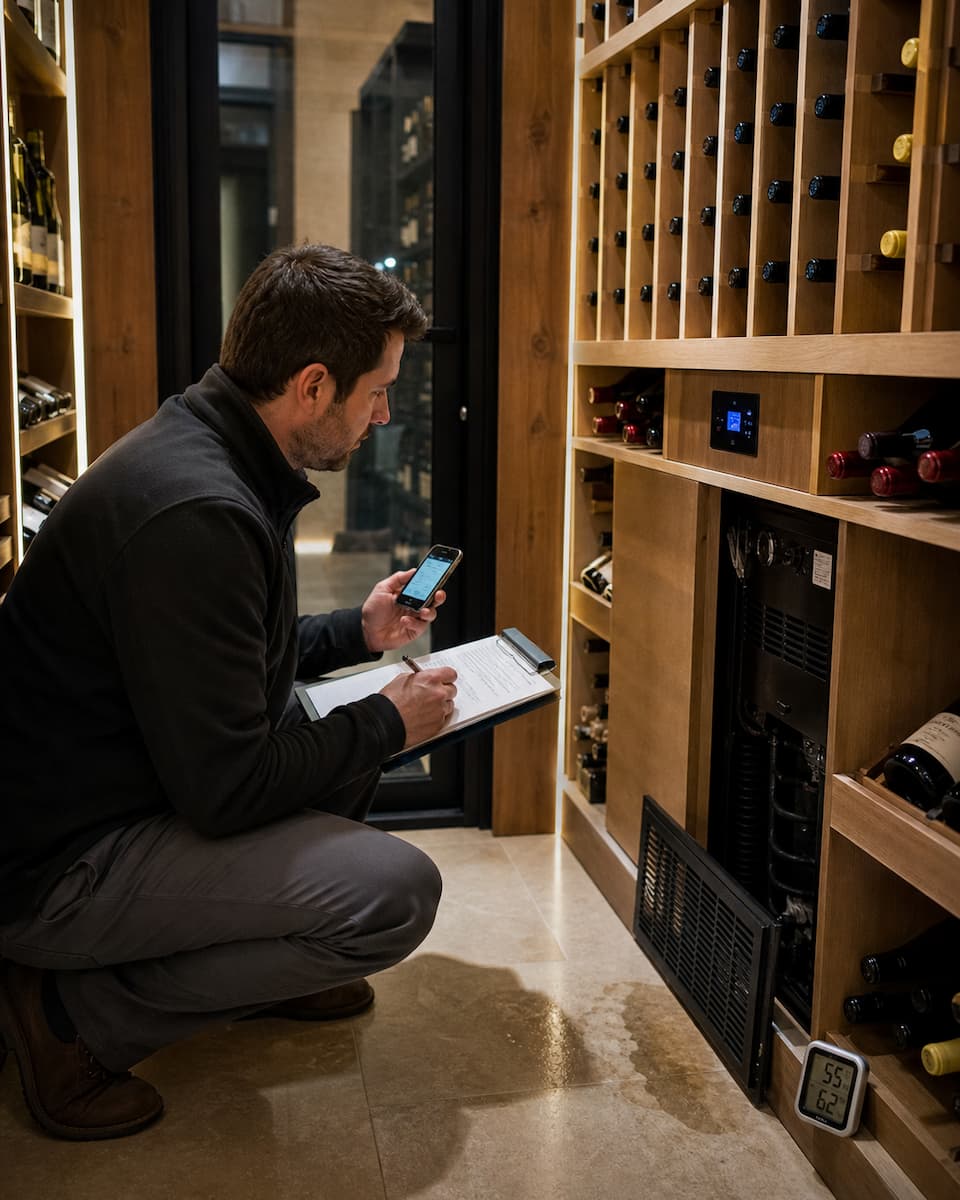
Helpful pre-service checks for a wine cellar cooling problem

Small clues matter in a cellar.

Run time, water marks, door sealing, airflow changes, and sensor location can all help explain why the cellar is not holding conditions.

Repair Process

From cellar symptom to a clear repair path.

Wine cellar cooling repair should be systematic. The goal is to restore stable storage conditions and identify whether the issue is equipment-related, airflow-related, control-related, moisture-related, or tied to the room itself.

Condition Review

We review temperature trend, setpoint, humidity clues, alarms, runtime, water, noise, and when the issue began.

System Inspection

Cooling unit, fans, filters, coils, controls, condensate, airflow, and visible equipment condition are checked.

Cellar Check

Door sealing, glass exposure, rack placement, blocked airflow, adjacent heat, and envelope clues are considered.

Repair Options

Findings are explained clearly so you understand what needs immediate repair and what may require follow-up.

Operation Review

After repair, temperature response, airflow, controls, condensate behavior, and system operation are reviewed where practical.

Local Wine Cellar Cooling Repair

Wine cellar cooling repair for Linden homes and nearby properties.

Sadowski Heating & Air Conditioning is based in Linden, NJ, and supports property owners who need wine cellar cooling diagnostics focused on protecting collections, finished spaces, and stable storage conditions.

  • Linden
  • Roselle
  • Rahway
  • Elizabeth
  • Cranford
  • Union County

For private cellars and display spaces

Residential wine rooms, basement cellars, tasting spaces, display walls, and collector storage areas all need cooling repair that respects both performance and finishes.

Repair with preservation in mind

Temperature stability, humidity, airflow, noise, condensate, and controls are checked through the lens of long-term wine storage.

Licensed local support

NJ HVAC License #13VH11514600, 633 Pierce Ave Unit 7, Linden, NJ 07036.

Wine Cellar Cooling Repair FAQ

Questions when a wine cellar cooling system stops holding conditions.

These answers help Linden property owners understand common wine cellar cooling symptoms and what may be involved in repair.

Why is my wine cellar getting warm?

Possible causes include dirty filters or coils, weak airflow, sensor issues, control faults, refrigerant problems, compressor trouble, high room load, door leakage, or envelope problems.

Why is there water near my wine cellar unit?

Water may come from a clogged drain, bad drain slope, condensate pump issue, pan problem, frozen coil, or moisture conditions around the room.

Can a wine cellar cooling unit be repaired like a regular AC?

Some components are similar, but wine cellar systems operate under different temperature and humidity expectations. Diagnosis should account for the cellar environment, not just the equipment.

Why is the cellar cooling unit running constantly?

Long run times can come from dirty coils, low capacity, refrigerant concerns, high heat load, poor insulation, glass exposure, door leakage, or blocked airflow.

What causes humidity problems in a wine cellar?

Humidity issues can involve runtime, air leakage, vapor barrier problems, door seals, condensate handling, airflow, or equipment operation.

Should I move my wine if the cellar is warm?

That depends on the temperature, duration, collection value, and your storage standards. Keep the door closed as much as practical and follow your own collection protection plan while repair is scheduled.

Wine Cellar Cooling Repair

Wine cellar not holding temperature in Linden?

Call Sadowski Heating & Air Conditioning for wine cellar cooling repair diagnostics, clear findings, and practical next steps when your cellar is warming up, leaking, overcooling, short cycling, or losing stable storage conditions.

Before calling Helpful details include current temperature, setpoint, humidity reading if available, system type, error codes, water leaks, recent changes, and whether the issue appeared suddenly or gradually.