

Wine Cellar Cooling Installation • Linden, NJ
Wine Cellar Cooling Installation in Linden, NJ
A wine cellar cooling system should protect the collection, not simply make the room cold. Sadowski Heating & Air Conditioning helps Linden homeowners and property owners plan wine cellar cooling installation around temperature stability, humidity control, insulation, vapor barrier, airflow, equipment placement, noise, condensate, and long-term service access.
NJ HVAC License #13VH11514600, 633 Pierce Ave Unit 7, Linden, NJ 07036, Mon-Fri 8:00 AM-5:00 PM
Wine Storage Conditions
Wine cellar cooling is built around preservation, not comfort.
A wine room needs stable conditions that protect corks, labels, aging potential, and bottle quality. Standard HVAC equipment is not designed for the lower temperature and humidity expectations of a wine cellar.
Frequent temperature swings can stress wine over time. The system should be selected for stable cellar operation rather than rapid comfort cooling.
Too little humidity can affect corks, while too much can create condensation, odor, or finish concerns in the room.
Airflow should circulate gently through the cellar without blasting bottles, racks, labels, or tasting areas.
Residential wine rooms often need equipment planned around noise, aesthetics, adjacent living areas, and service access.
Cellar Envelope
The room must be prepared before the cooling system can perform.
A wine cellar cooling unit cannot overcome a poorly prepared room forever. The envelope determines how hard the system works, how stable the conditions are, and whether condensation or moisture problems develop.
Insulation
Walls, ceiling, floor conditions, and adjacent spaces affect heat gain and system runtime.
Vapor Barrier
A proper vapor barrier helps reduce moisture migration and condensation risk around the cellar.
Door Sealing
Weatherstripping, thresholds, door glass, and closure quality affect temperature and humidity stability.
Glass Exposure
Large glass walls or doors can create extra load and may require careful design decisions.
Lighting Heat
Lighting choices can add heat and affect bottle exposure, especially in display-focused cellars.
Rack Layout
Racking should leave room for air circulation, service access, and controls where needed.
Adjacent Rooms
Mechanical rooms, garages, basements, kitchens, or exterior walls can change the cooling load.
Condensate Path
Drainage or condensate handling should be planned before equipment placement is finalized.
Cooling System Options
The right wine cellar unit depends on the room and the design goals.
Wine cellar cooling systems can be self-contained, split, ducted, or fully concealed depending on the room, budget, noise expectations, available mechanical space, and desired look.
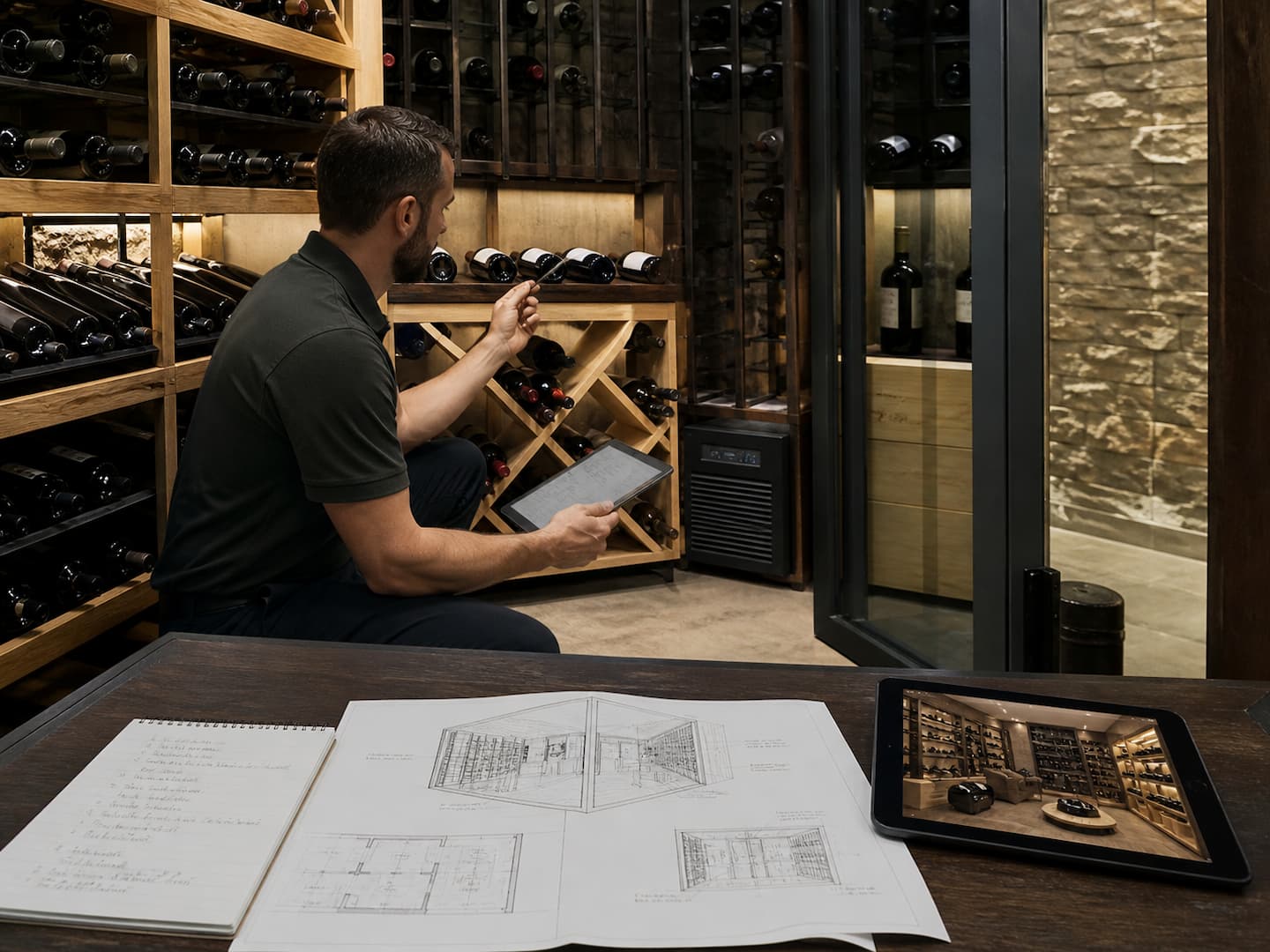
Equipment choice should match the architecture.
Display cellars, tasting rooms, basements, and enclosed storage rooms each call for a different cooling strategy.
Quiet and beautiful still has to be serviceable.
The best equipment location should respect the finished look without making future maintenance difficult.
- Access panels should remain reachable.
- Condensate should have a planned path.
- Airflow should not be blocked by racks or trim.
What drives equipment selection
Design Coordination
Wine cellar cooling should disappear into the room, but not from the service plan.
Many wine cellars are part mechanical room, part display space, and part investment protection. Cooling equipment has to support all three without creating noise, drafts, condensation, or awkward access.
- 1 Supply and return air should support circulation without blowing directly across bottles or labels.
- 2 Grilles, registers, or visible equipment should coordinate with the finished room design.
- 3 Condensate routing should be planned before walls, ceilings, or cabinetry are finalized.
- 4 Controls should be accessible without disrupting the look or function of the cellar.
- 5 Equipment noise should be considered if the cellar is near living or entertaining areas.
- 6 Future service access should be protected before racks and finishes block key components.
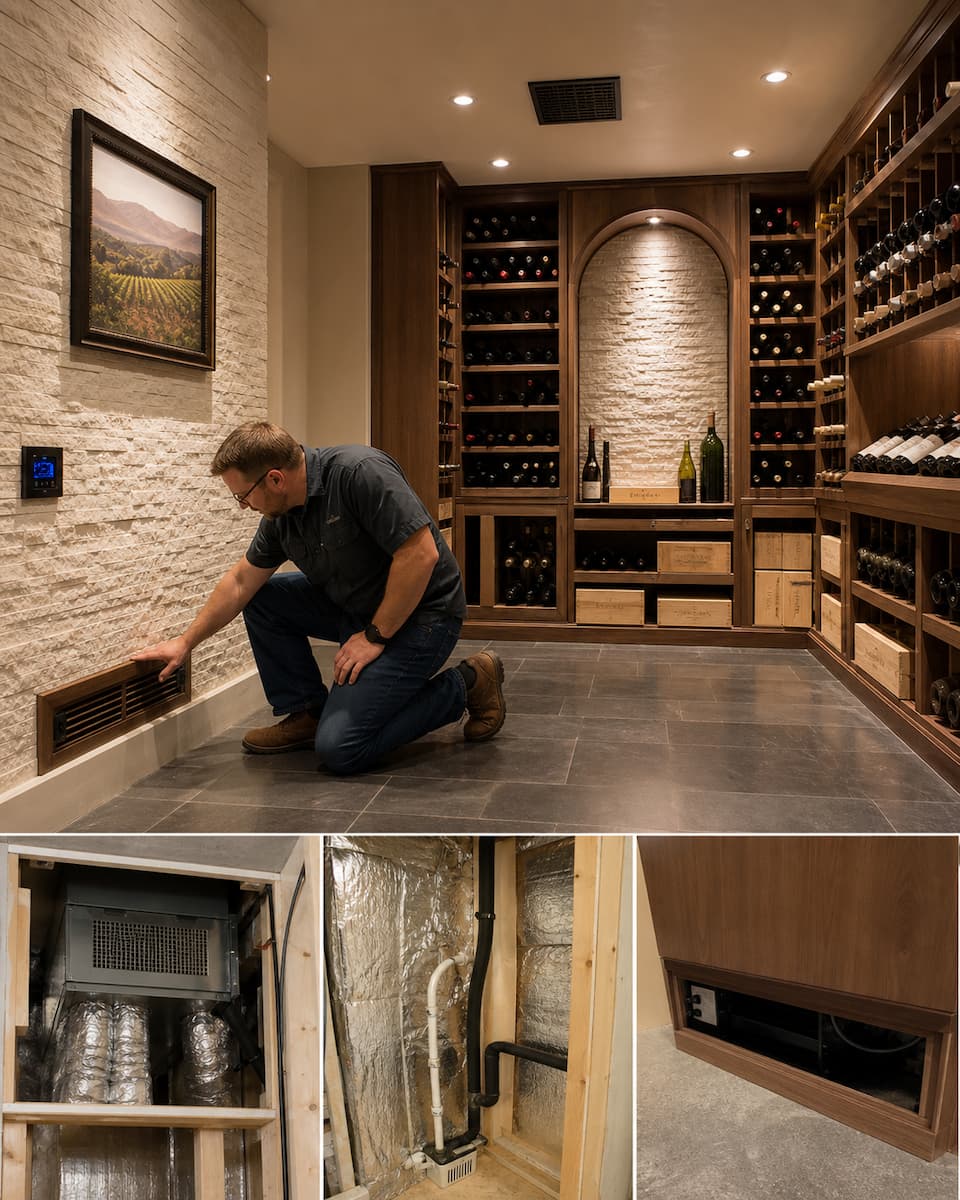
Performance and aesthetics both matter.
A well-planned wine cellar cooling installation respects the collection, the architecture, and the technician who will maintain it later.
Installation Process
From cellar concept to controlled storage conditions.
A wine cellar cooling installation should move through room review, load planning, equipment selection, installation, and startup so the finished space can maintain stable conditions.
Room Review
We review cellar size, location, insulation, vapor barrier, door sealing, glass, lighting, and adjacent spaces.
Load Planning
The cooling requirement is based on the room envelope, target conditions, heat gain, and design expectations.
System Selection
Self-contained, split, ducted, or concealed options are considered around noise, aesthetics, access, and budget.
Installation Work
Equipment, airflow, condensate, controls, refrigeration lines, ducting, or electrical needs are handled to the approved scope.
Startup Review
Temperature response, control operation, condensate behavior, airflow, and equipment access are reviewed at handoff.
Local Wine Cellar Cooling Support
Wine cellar cooling installation for Linden homes and nearby properties.
Sadowski Heating & Air Conditioning is based in Linden, NJ, and supports property owners who need dependable cellar cooling planned around collections, finished spaces, and long-term system serviceability.
- Linden
- Roselle
- Rahway
- Elizabeth
- Cranford
- Union County
For private cellars and display spaces
Residential wine rooms, basement cellars, tasting areas, display walls, and collector storage spaces need cooling that respects both performance and design.
Installed with preservation in mind
Temperature stability, humidity awareness, airflow, noise, condensate, and service access are easier to coordinate before finishes are complete.
Licensed local support
NJ HVAC License #13VH11514600, 633 Pierce Ave Unit 7, Linden, NJ 07036.
Wine Cellar Cooling Installation FAQ
Questions before installing wine cellar cooling.
These answers help Linden property owners think through cellar preparation, system selection, placement, humidity, noise, and startup expectations.
Can a regular AC system cool a wine cellar?
Standard comfort AC is not designed for typical wine cellar temperatures, humidity expectations, or long-term storage stability. Purpose-built wine cellar cooling is usually the better path.
What temperature should a wine cellar maintain?
Many wine cellars are designed around approximately 55°F, but the best target depends on the collection, room use, and storage goals.
Why does the vapor barrier matter?
A vapor barrier helps reduce moisture movement into the cellar envelope. Without proper room preparation, condensation and humidity problems can develop.
Which system type is best for my wine cellar?
The best option depends on room size, glass exposure, noise expectations, available mechanical space, desired aesthetics, and service access.
Can the cooling equipment be hidden?
Often yes, depending on the room and system type. Ducted or split designs can help reduce visible equipment, but airflow and service access still need to be protected.
What happens during startup?
Startup may include checking temperature response, controls, airflow, condensate behavior, equipment operation, and access for future maintenance.
Plan Wine Cellar Cooling
Building or upgrading a wine cellar in Linden?
Contact Sadowski Heating & Air Conditioning to review your cellar space, storage goals, room envelope, cooling options, condensate needs, equipment placement, and the best installation plan for stable wine storage conditions.
