
Commercial Ice Machine Installation • Linden, NJ

Commercial Ice Machine Installation in Linden, NJ

A commercial ice machine should be chosen around daily ice demand, service peaks, bin capacity, water quality, drainage, heat rejection, and available space. Sadowski Heating & Air Conditioning helps Linden restaurants, bars, markets, offices, convenience stores, and food service spaces install ice machines that fit the operation instead of guessing from a catalog.

Daily Ice Demand Planning Machine output and bin size selected around actual use, peak hours, and service needs.
Water and Drain Readiness Water supply, filtration, drain route, clearance, and sanitation access considered early.
Airflow and Heat Rejection Machine placement planned to keep condenser airflow and room heat under control.
Startup and Production Check Fill, freeze, harvest, bin control, drainage, and ice production behavior reviewed.

NJ HVAC License #13VH11514600, 633 Pierce Ave Unit 7, Linden, NJ 07036, Mon-Fri 8:00 AM-5:00 PM

Ice Demand Planning

The right ice machine starts with how your business uses ice.

Commercial ice machine installation should begin with demand, not just available space. A machine that is too small creates shortages; one that is poorly placed can overheat, drain badly, or become difficult to service.

Ice demand changes by business type.

Restaurants, bars, delis, markets, offices, and convenience stores all use ice differently. The installation should reflect daily volume, peak periods, storage needs, and staff workflow.

  • Peak drink service or lunch rush demand
  • Prep, display, bagging, or customer self-service needs
  • Bin storage capacity between production cycles
  • Space for cleaning, filter changes, and future service
Restaurants and Bars Need enough production and bin storage for drinks, prep, service stations, and busy periods.
Markets and Delis May need ice for displays, packaged product, prep areas, or customer-facing operations.
Offices and Facilities Often need reliable ice production with simple access, clean drainage, and predictable maintenance.
Convenience Stores High traffic can require a larger bin, faster recovery, and durable placement for daily use.

Machine Selection

Important choices before an ice machine is installed.

The machine, bin, condenser type, water treatment, and placement should be chosen together. Each decision affects production, ice quality, serviceability, and how well the equipment fits the business.

01

Ice Type

Cube, nugget, flake, or specialty ice may be appropriate depending on beverages, displays, food prep, or customer expectations.

02

Daily Production

Output should cover realistic peak demand, room conditions, water temperature, and the way staff use ice throughout the day.

03

Bin Capacity

The bin should store enough ice between production cycles without blocking workflow, cleaning access, or surrounding equipment.

04

Air-Cooled or Remote

Condenser type depends on heat, noise, available airflow, installation location, and service access.

05

Water Quality

Filtration, scale control, water pressure, and incoming water conditions affect ice quality and equipment reliability.

06

Drain Setup

Drain type, slope, air gap, pump needs, bin drainage, and local site conditions all matter before installation.

07

Electrical Load

Voltage, circuit requirements, disconnects, and control needs should be reviewed before equipment is placed.

08

Cleaning Access

Panels, filters, bin access, water components, and condenser cleaning space should remain reachable after installation.

Installation Site Readiness

The machine location has to support ice production every day.

A commercial ice machine needs more than a footprint. It needs water, drainage, power, airflow, clearance, and a location that staff can use and clean without fighting the equipment.
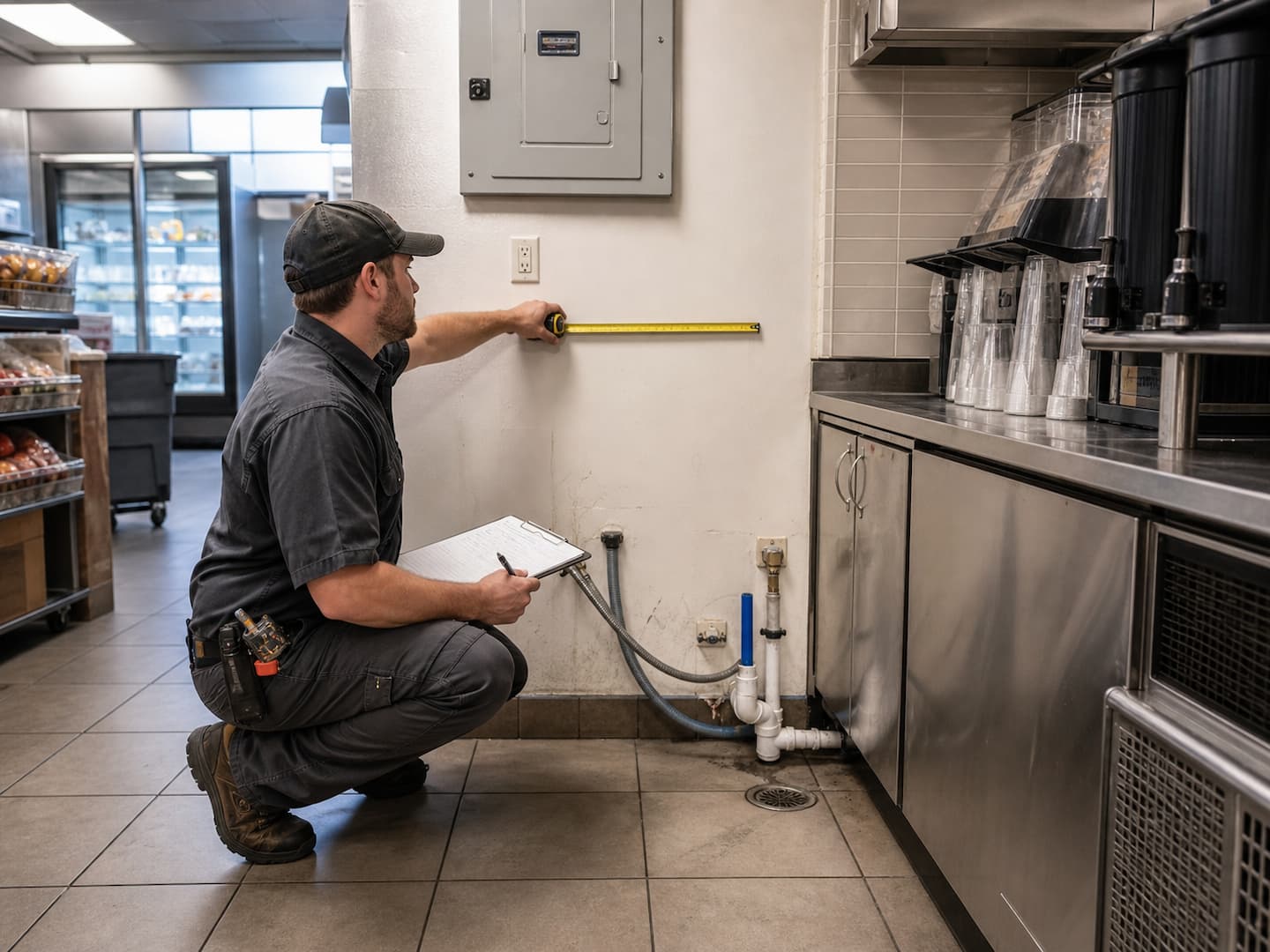
Technician checking site readiness for a commercial ice machine installation

Placement affects production.

Restricted airflow, poor drainage, or difficult cleaning access can shorten equipment life and reduce ice output.

Water Supply Pressure, shutoff access, filtration, tubing path, and inlet requirements reviewed before installation.
Drain Route Gravity drain, floor sink, air gap, pump needs, bin drainage, and backup risk considered early.
Electrical Voltage, circuit, disconnect, plug or hardwire needs, and available power checked for the selected machine.
Airflow Clearance Side, rear, top, and condenser clearance planned so the machine can reject heat properly.
Ambient Heat Kitchen heat, storage rooms, tight closets, and hot utility spaces can reduce production capacity.
Cleaning Access Filter changes, panels, condenser cleaning, bin sanitation, and service access should remain practical.

Poor placement can look like machine failure.

If the machine cannot breathe, drain, or receive proper water, even new equipment may struggle.

  • Hot rooms can reduce daily ice output.
  • Bad drains can create leaks and shutdowns.
  • Tight clearance can make cleaning difficult.

What we verify before installation

Demand Daily production, peak use, bin size, and ice type.
Utilities Water, drain, electrical, filtration, and access.
Placement Clearance, airflow, ambient heat, and staff workflow.
Startup Fill, freeze, harvest, drain, bin control, and production.

Water Quality and Drainage

Ice machine installation depends heavily on water conditions.

Water quality affects ice clarity, taste, scale buildup, freeze cycles, harvest behavior, and maintenance frequency. Drainage affects leaks, sanitation, and equipment reliability. Both should be planned before the machine is installed.

  • 1 Water filtration should match the machine, local water conditions, and ice quality expectations.
  • 2 Scale control helps protect evaporator plates, valves, probes, and water distribution components.
  • 3 Water pressure and shutoff access should be practical for service and filter changes.
  • 4 Drain routing should support the machine, bin, pump if needed, and local site conditions.
  • 5 Air gap and drain access should be considered for sanitation and service requirements.
  • 6 Installation should leave room for filter replacement and future cleaning.
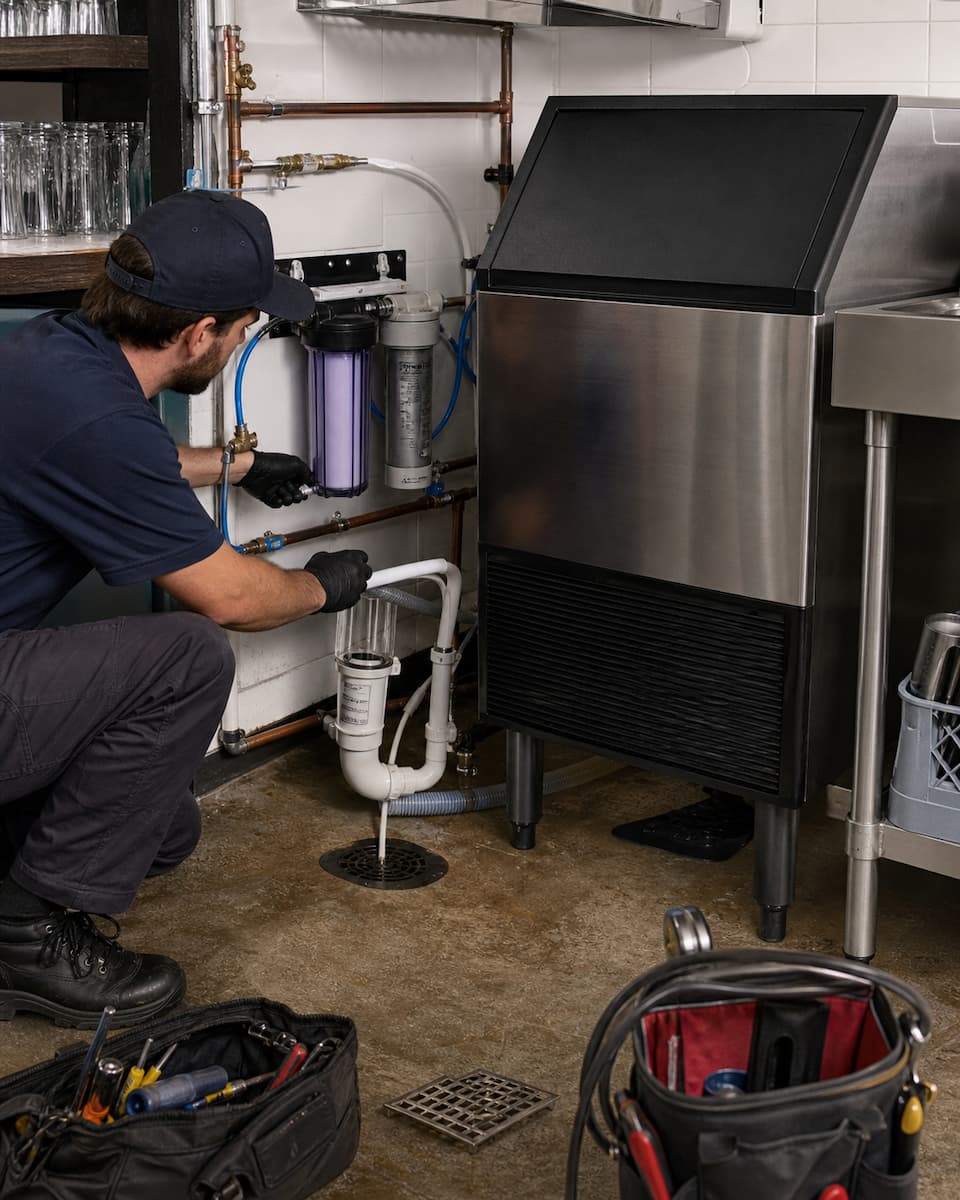
Technician planning water quality and drainage for a commercial ice machine

Better water planning means fewer production problems.

Many ice complaints begin with scale, restricted water flow, poor drainage, or a setup that makes regular maintenance difficult.

Heat Rejection and Clearance

An ice machine makes ice by moving heat somewhere else.

If the machine is installed in a tight, hot, or poorly ventilated area, production can drop and components can run harder. Heat rejection planning is part of a reliable installation.

Air-Cooled Clearance Side, rear, top, and front clearances should support condenser airflow and cleaning access.
Room Temperature Hot kitchens, storage rooms, and utility closets can reduce daily production capacity.
Remote Condenser Options Some sites may benefit from remote heat rejection when room heat or noise is a concern.
Noise and Workflow Machine location should account for staff movement, customers, counters, and service areas.
Cleaning Access Condenser coil cleaning and filter access should not require moving half the workspace.
Production Stability Good airflow helps the machine produce closer to its expected output during busy days.

Installation Process

From ice demand to operating machine.

A smooth commercial ice machine installation starts with the right planning, then moves through utilities, placement, setup, and production checks so the business has a practical handoff.

Demand Review

We review business type, daily use, peak demand, ice type, bin needs, and where staff will access the machine.

Site Check

Water, drain, electrical, clearance, room temperature, cleaning access, and service space are reviewed.

Machine Planning

Production capacity, bin size, condenser type, filtration, and location are matched to the business need.

Installation Work

Equipment is placed and connected with attention to water supply, drainage, power, clearance, and access.

Startup Review

Fill, freeze, harvest, drain, bin shutoff, and initial ice production behavior are checked at handoff.

Local Commercial Ice Machine Installation

Ice machine installation for Linden businesses and nearby communities.

Sadowski Heating & Air Conditioning is based in Linden, NJ, and supports local businesses that need dependable ice production planned around daily operations, utilities, water quality, and service access.

  • Linden
  • Roselle
  • Rahway
  • Elizabeth
  • Cranford
  • Union County

Built for food service and commercial spaces

Restaurants, bars, delis, markets, convenience stores, offices, and facilities all need ice machines sized and installed for their actual demand.

Installed with future service in mind

Filter access, condenser cleaning, drain access, panels, bin sanitation, and service clearance are easier to plan before the machine is in place.

Licensed local support

NJ HVAC License #13VH11514600, 633 Pierce Ave Unit 7, Linden, NJ 07036.

Commercial Ice Machine Installation FAQ

Questions before installing a commercial ice machine.

These answers help Linden business owners think through ice output, bin size, machine placement, water quality, drainage, heat rejection, and startup expectations.

How do you choose the right size ice machine?

The right size depends on daily ice use, peak demand, business type, bin storage, water temperature, room temperature, and how much recovery is needed during busy periods.

What affects ice machine production?

Production is affected by ambient room temperature, incoming water temperature, condenser airflow, water quality, machine condition, cleaning access, and whether the machine has proper clearance.

Where should a commercial ice machine be installed?

The best location has proper water, drainage, electrical access, ventilation, service clearance, staff access, and enough room for bin use and cleaning.

Is water filtration necessary?

Most commercial ice machines benefit from proper filtration and scale control. Water treatment can improve ice quality and help protect internal components from buildup.

Can an ice machine be installed without a floor drain?

It depends on the site and equipment. Some installations may require a drain pump or different drain planning, but drainage must be handled correctly to avoid leaks and sanitation problems.

What happens during startup?

Startup may include checking water fill, freeze cycle, harvest, drain behavior, bin control, ice thickness, and early production behavior.

Plan Commercial Ice Machine Installation

Need an ice machine installed for your Linden business?

Contact Sadowski Heating & Air Conditioning to review daily ice demand, machine size, bin capacity, water quality, drainage, placement, heat rejection, and the best installation plan for reliable ice production.

Before requesting a proposal Helpful details include business type, daily ice use, preferred ice type, available footprint, water and drain location, electrical access, room temperature, and whether a remote condenser may be needed.