Cooling Tower Service in Linden, NJ
A cooling tower can lose capacity long before it stops. Uneven water distribution, plugged strainers, worn drive components, scale, vibration, or a control fault may show up first as rising condenser-water temperature and harder chiller operation.
Describe the tower problem
Share the building, tower cell, current symptom, recent temperatures or alarm, and whether the chiller or condenser-water pumps are also affected.
Tower performance depends on air, water, and outdoor conditions
A fan repair alone will not correct poor approach temperature if nozzles are blocked, fill is fouled, water flow is wrong, or hot discharge air is recirculating into the intake.
Condenser-water temperatures and fan speed can put the complaint on a timeline. Add pump status, plant load, outdoor wet-bulb conditions when available, and the tower's physical behavior, and the search gets narrower. A basin leak still calls for a different path than a cell that shakes only at high speed.
The tower, pumps, strainers, condenser loop, chiller, controls, and water-treatment program are connected. The service scope needs to respect those boundaries rather than treating every symptom as a tower-part failure.
Cooling tower problems we trace
Condenser water stays too warm
Fan operation, rotation, speed command, airflow restriction, water flow, nozzle pattern, fill condition, bypass position, load, and weather conditions all affect the result.
Fan noise or vibration
Belts, sheaves, bearings, shaft alignment, motor mounts, gear drive where present, fan blades, balance, guards, structure, and VFD behavior are checked in context.
Basin level will not stay stable
A make-up valve, float, level sensor, overflow, blowdown setting, leaking basin, stuck equalizer, or changing pump condition can move the water level.
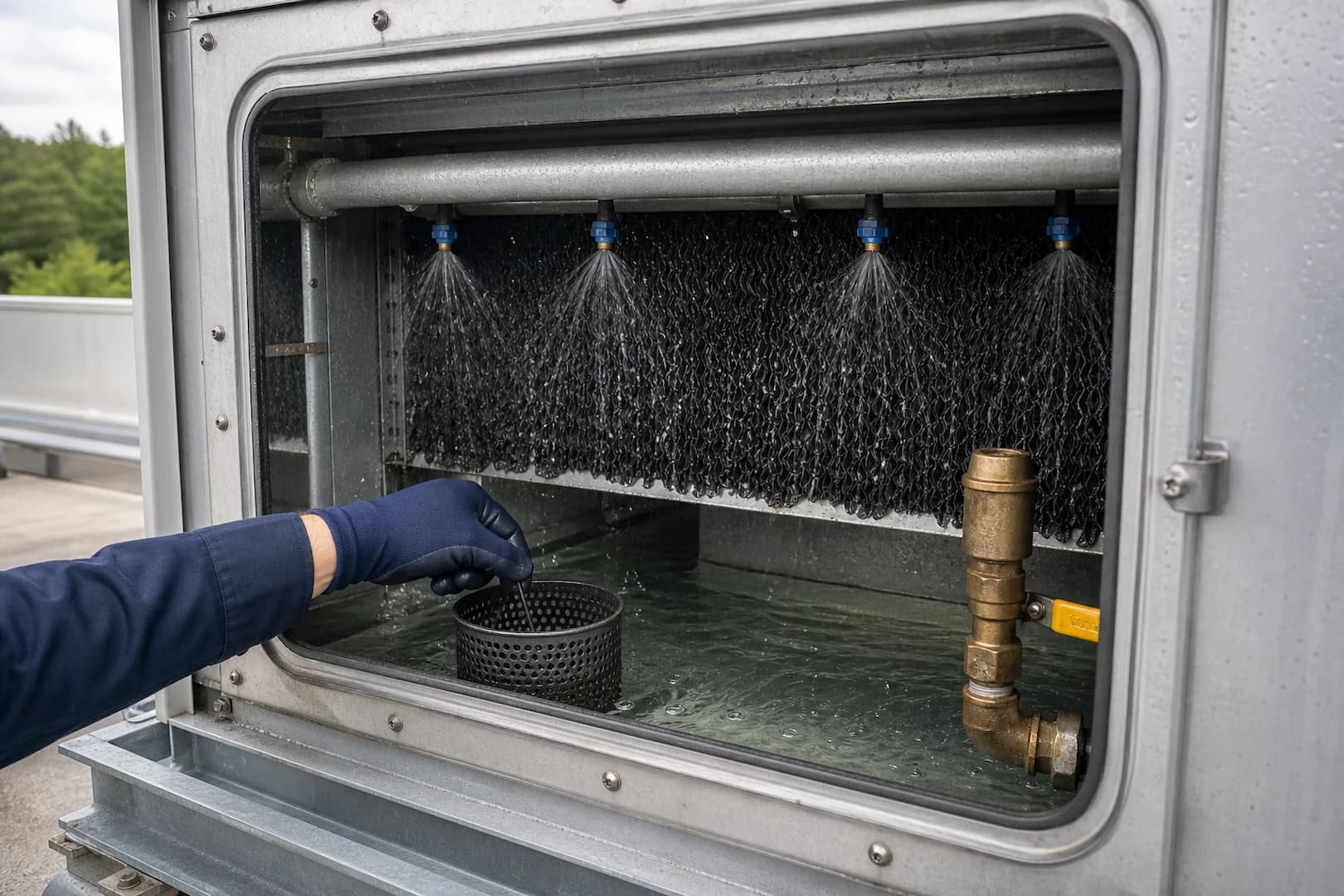
Uneven spray or dry fill areas
Plugged nozzles, dirty strainers, low flow, damaged distribution piping, valve position, debris, and out-of-level components can leave part of a cell underfed.
Leaks around the tower
We identify whether water comes from the basin, casing joint, piping, valve, overflow, drain, pump seal, spray drift, or condensation before recommending a repair.
Fan will not stage or modulate
Sensor values, controller output, contactors, motor starters, overloads, VFD faults, safeties, wiring, and actual mechanical load are part of the sequence.
From operating data to physical inspection
Review the complaint
We note the affected cell, chiller behavior, supply and return temperatures, recent alarms, water-treatment observations, and when the issue began.
Observe the tower safely
Fan, drive, vibration, airflow, water distribution, basin level, visible fill, drift eliminators, piping, valves, strainers, leaks, and structure are reviewed.
Test the control path
We compare the temperature or pressure signal with fan staging, VFD command, motor response, safeties, pump status, and any bypass sequence.
Prioritize work
Immediate mechanical repairs are separated from cleaning, water-treatment, capital, or chiller-side issues that need coordinated planning.
What a useful tower visit can cover
- Fan blades, guards, belts, sheaves, bearings, shafts, couplings, motors, and gear drives where fitted
- Fill media, drift eliminators, louvers, access panels, and visible airflow obstructions
- Spray nozzles, distribution piping, strainers, basin, drains, overflows, and equalizer connections
- Make-up valve, level control, blowdown components, visible leaks, and pipe supports
- Temperature sensors, VFDs, starters, contactors, safeties, fan staging, and control outputs
- Seasonal startup or layup items within the mechanical service scope
Condition matters more than one failed part
Belts, bearings, motors, contactors, sensors, nozzles, floats, valves, and many localized leaks can support a straightforward repair. The rest of the cell's condition still matters.
Widespread structural corrosion, failing basin sections, severely deteriorated fill, repeated fan-drive damage, unavailable components, or a tower that no longer meets the building's heat-rejection demand can shift the decision toward major refurbishment or replacement.
That assessment should include the chiller plant and water program. A new fan assembly cannot solve low condenser flow, fouled heat-transfer surfaces, poor chemical control, or an unsuitable operating sequence.
Coordinate the plant around the tower
Cooling tower service FAQ
What does cooling tower maintenance include?
The exact scope depends on the tower and property plan. Mechanical work can include fan and drive checks, basin and distribution inspection, controls, leaks, strainers, make-up components, seasonal tasks, and coordination with cleaning and water-treatment providers.
Why is the cooling tower approach temperature getting worse?
Possible causes include insufficient airflow, fan or VFD trouble, low or uneven water flow, dirty fill, blocked nozzles, air recirculation, excessive load, inaccurate sensors, or unfavorable outdoor conditions. The readings need context.
Can a leaking cooling tower be repaired?
Many localized piping, valve, overflow, fitting, or accessible basin leaks can be repaired. Material, location, corrosion, access, and the overall condition of the cell determine the practical option.
Do you provide water treatment?
This page covers mechanical HVAC service. Water chemistry, treatment, testing, disinfection, and compliance should be handled under the property's water-management program by appropriately qualified providers.
When should a tower be shut down for vibration?
Severe, new, or rapidly increasing vibration deserves prompt attention. If operation appears unsafe, use the property's shutdown procedure and keep people clear. A technician should inspect the drive, fan, structure, and controls before restart.
What should I send before requesting service?
Provide the tower make and cell if known, recent supply and return temperatures, current alarms, fan or VFD behavior, visible leak location, chiller impact, and safe access details.
Put the tower symptom in context
Send the temperatures, alarm, noise, leak, or fan behavior you are seeing. Sadowski HVAC will use that information to prepare for a focused service visit.
Sadowski HVAC Corp. · 633 Pierce Ave Unit 7, Linden, NJ 07036 · Mon–Fri 8:00 AM–5:00 PM