What Should Indoor Humidity Be in Winter? A New Jersey Homeowner’s Guide
Around 30–35% relative humidity is a sensible winter starting point for many New Jersey homes, provided the rooms feel comfortable and interior window surfaces stay dry. EPA’s broader indoor guidance is ideally 30–50%, but cold weather may require less moisture. Use the reading together with the condition of your windows; 50% is not a target to pursue throughout winter.
A setting that works during mild weather may leave glass wet during a cold spell. Homes with warmer, well-insulated windows can sometimes tolerate more moisture than homes with cold glass or poorly insulated corners. If condensation appears, reduce added humidity and check what is getting wet.
Choosing a winter humidity level
Relative humidity, or RH, is the percentage shown on a household humidity meter. EPA’s moisture guidance recommends staying below 60% and, ideally, between 30% and 50%. That general range does not guarantee dry windows at every winter temperature.
Andersen’s guidance on interior condensation recommends that winter humidity should not exceed 30–35%. The lower recommendation reflects the concern about cold window surfaces. Begin around 30–35%, then watch how your home responds instead of choosing one setting for the entire season.
| Reading and observation | What to consider | Next step |
|---|---|---|
| Below 30%, rooms feel dry, windows stay dry | The home may benefit from carefully controlled added moisture | Confirm the reading, check for drafts and consider modest humidification |
| Around 30–35%, comfortable rooms and dry glass | The current balance may be working | Keep the setting and recheck during colder weather |
| 35–50% with indoor window condensation | This level may be too high for the coldest surfaces | Lower added humidity, dry the glass and check local moisture sources |
| Above 50% for extended periods in winter | Investigate excess moisture or inadequate removal | Turn down humidification and check exhaust ventilation, leaks and damp areas |
| Any RH reading with persistent wet trim or walls | A room reading cannot explain every wet surface | Arrange an assessment of the affected area |
Treat the table as a guide to your next check. Window construction, air movement and temperature affect when water forms. An outdoor-temperature chart in your humidifier manual helps you operate that model; it cannot promise the same results in every house. If glass stays wet at 30%, avoid adding moisture just to stay within the general range. Have the cold surface and moisture sources checked.
Why humidity changes when the heat comes on
When air warms without gaining water vapor, its relative humidity drops. Heating that air has not removed water from it. The National Weather Service’s explanation of humidity distinguishes the amount of moisture present from RH, which also depends on temperature.
Cold outdoor air often contains little water vapor even when its outdoor RH sounds high. When that air enters through leaks or ventilation and warms indoors, it can produce a low indoor RH reading. This is one reason winter dryness should not automatically be blamed on a furnace “removing moisture.” The building’s air leakage and ventilation matter too.
In a bedroom that cools overnight, RH may rise without anyone adding water. Record temperature alongside humidity. A higher percentage after a thermostat setback calls for a different investigation than a rise after a shower.
Measure the room before adjusting the humidifier
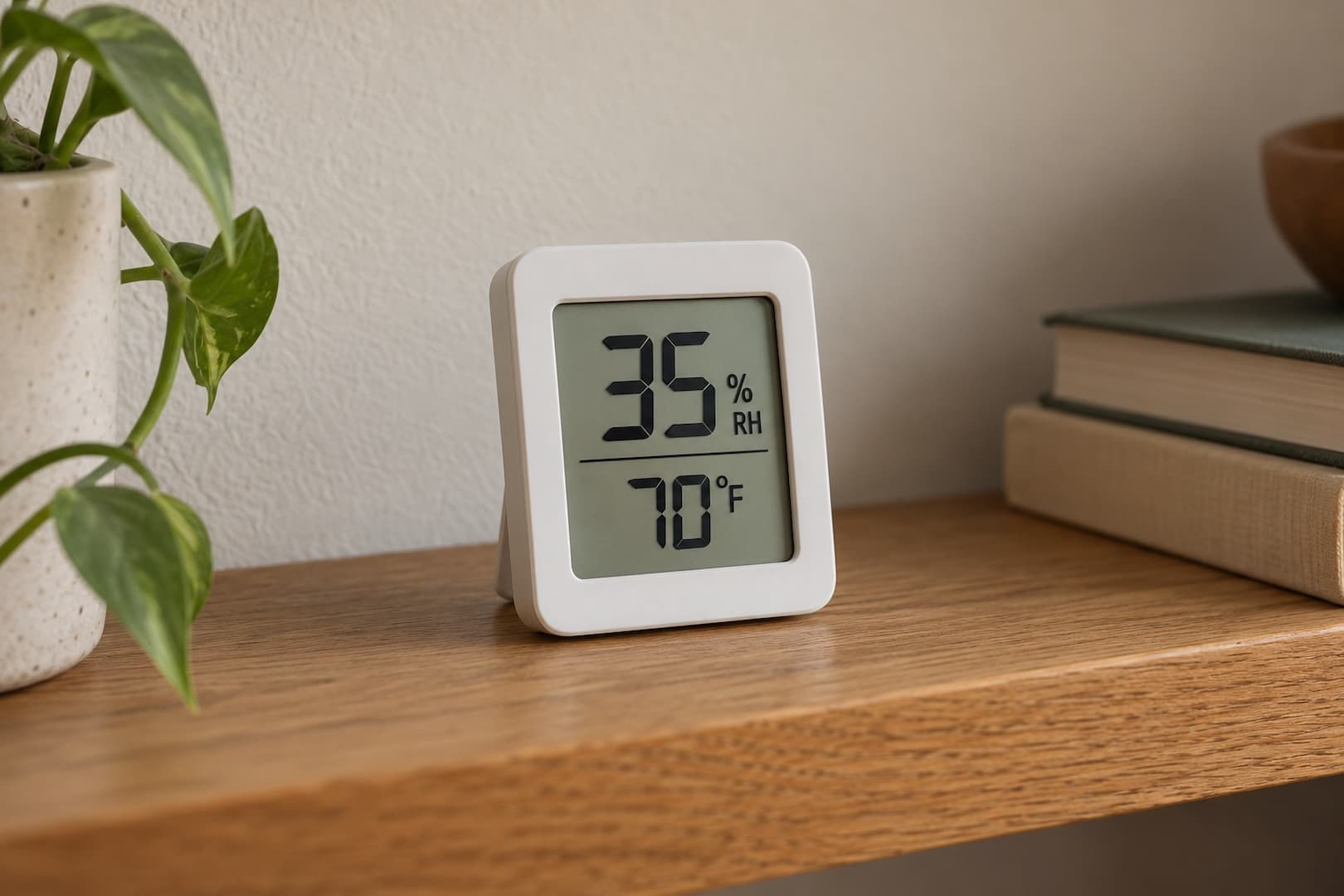
Use a digital hygrometer that also displays temperature. Choose a spot away from supply vents, radiators and direct sunlight, and keep it clear of exterior windows and humidifier mist. A cold windowsill tells you about conditions at the glass; it may not represent the air where you sit or sleep.
Let the meter stabilize as its instructions recommend. Avoid moving it straight from a steamy bathroom to a cool bedroom and acting on the first number. If two meters disagree, place them together and compare their stated accuracy before assuming there is a large difference between rooms.
For several days, record temperature and RH in the morning and evening. Note showers, cooking or humidifier use, and whether the glass was wet. Check again when the weather turns colder. An entry such as “bedroom, 68°F, 34%, clear glass” gives you something concrete to compare with the next morning.
A thermostat reading can be helpful, but it represents the sensor’s location. It may not describe a closed bedroom, a basement or a colder room over a garage. Start with the room where the problem occurs, then compare it with the main living area. You do not need to make every room display exactly the same percentage.
What window condensation tells you
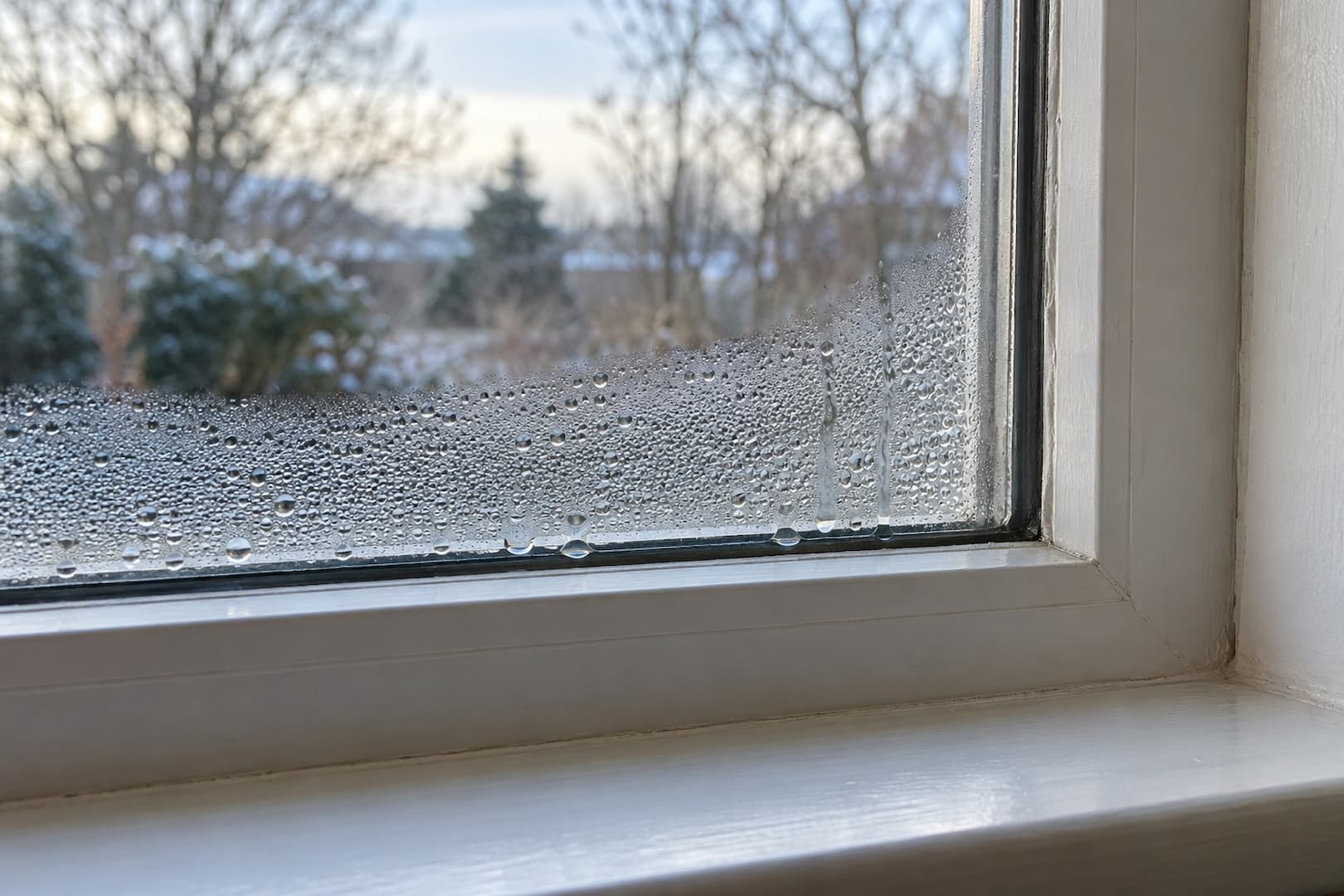
Condensation forms when a surface reaches the dew point of the surrounding air. Dew point is the temperature at which that air becomes saturated and water can collect. A window can reach that temperature while the middle of the room remains comfortable. A cold frame or a poorly insulated section of wall can have the same problem.
Two rooms can both read 35% RH at the same temperature, yet only one has wet glass. Its window may be colder. That is why a reasonable room reading does not rule out a cold-surface problem. Adding humidity to improve comfort in another room could make that window wetter.
Find out which surface is wet before changing the humidity setting:
- Room-facing glass: moisture that wipes away from indoors is interior condensation. Review indoor moisture and the temperature of the surface.
- Inside a factory-sealed glass unit: moisture trapped between its panes may indicate a failed insulating-glass seal. A window professional should assess it; lowering room humidity will not repair the seal.
- Outside glass: outdoor dew does not show that the bedroom needs less humidity. It may appear only early in the morning.
Moisture between a separate storm window and the main window is a different situation from fog inside a factory-sealed glass unit. Have a window professional check that assembly.
Dry interior glass and sills promptly. Repeated wetting, peeling paint or swollen trim needs investigation, even when the room’s RH is within your target range. Condensation by itself does not establish that mold is present. Persistent staining, damp drywall or a musty smell warrants a closer look at the moisture source.
If the house feels too dry
Check the meter before adding moisture. Static electricity and a feeling of dryness can prompt a check, but neither measures RH. With consistently low readings, investigate obvious drafts and ask about air leakage or ventilation where appropriate. Keep required outdoor-air supplies and designed ventilation systems operating.
A portable humidifier may help with a particular room. Start with a modest output and check the room and nearby surfaces afterward. The goal is a stable, comfortable condition without damp furniture, bedding or glass. If the unit makes the surrounding area wet, lower the output or stop it until the placement and setting are corrected.
EPA’s humidifier guidance recommends unplugging portable units before emptying, drying and refilling their tanks daily. It also recommends cleaning portable units every third day. Follow the manufacturer’s directions for cleaning agents and rinse thoroughly. For ultrasonic or impeller models, low-mineral water such as distilled water can reduce mineral release into the air. Maintain central humidifiers according to their own instructions.
Whole-home humidifier controls vary. Some respond to outdoor temperature; others need manual changes before colder weather. AprilAire’s manual-humidistat guidance, for example, calls for lowering manual settings as outdoor temperatures fall. Follow the instructions for your installed equipment rather than copying another model’s dial number.
Request service if a whole-home humidifier leaks or operates unexpectedly. If it fails to maintain the expected humidity after you have followed its instructions, ask for a check of the controls and water delivery. Repeatedly increasing the target may leave the underlying problem unresolved.
If humidity is too high or windows stay wet
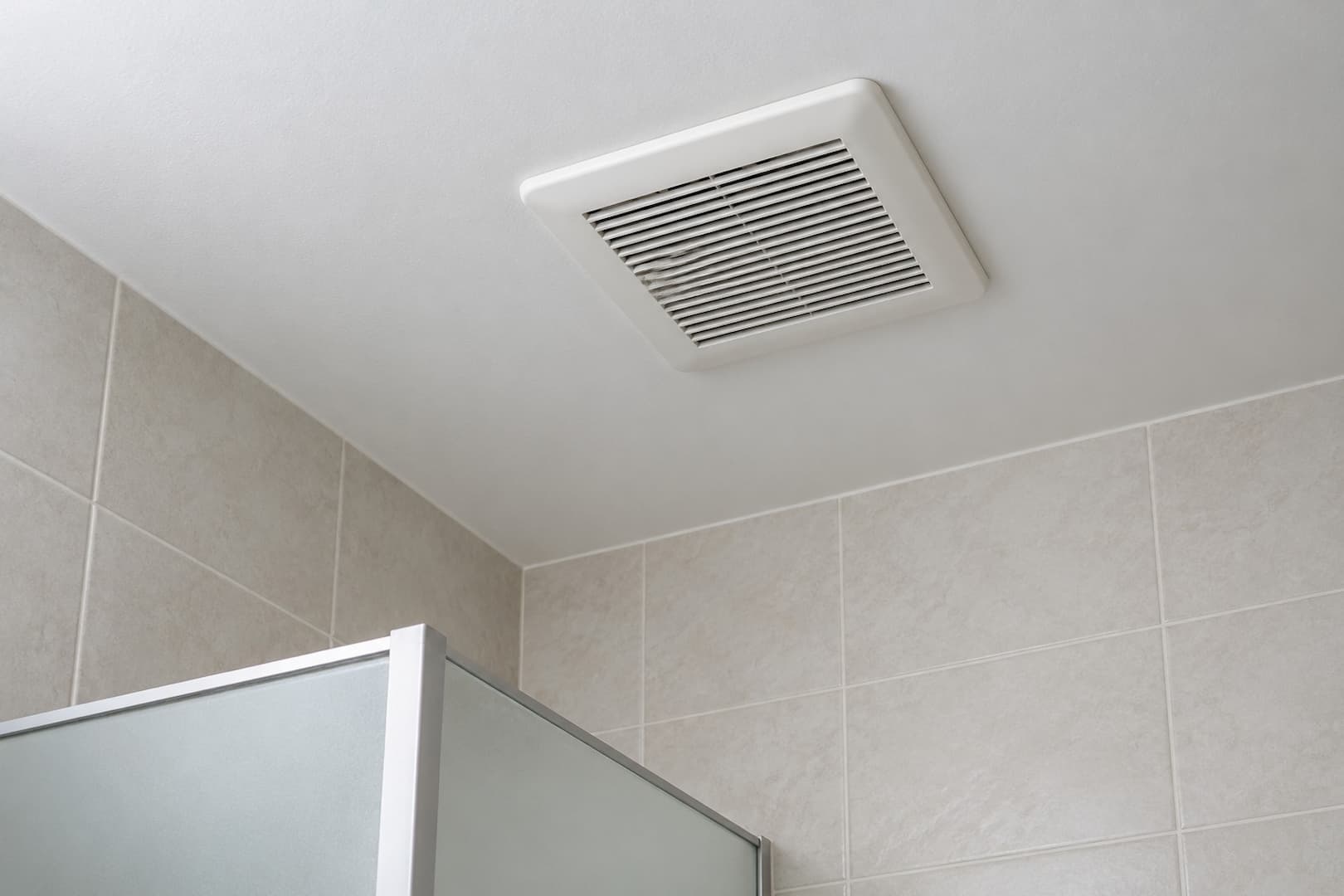
Begin with moisture being added indoors. Turn down or pause unnecessary humidification. Use the bathroom exhaust fan during showers and afterward as directed by its controls and the home’s ventilation plan. Kitchen exhaust should capture cooking moisture and discharge it outdoors. A recirculating range hood returns air to the kitchen and does not perform the same moisture-removal job.
The Department of Energy’s Building America guidance for bathroom fans specifies outdoor discharge. Sending damp air into an attic, wall cavity or crawlspace moves the moisture problem into the building. If you do not know where the duct ends, have it checked. Fan noise alone does not confirm adequate airflow outdoors.
Review daily sources as well. Long showers, simmering uncovered pots and drying laundry indoors can produce different humidity patterns from a steady plumbing leak. Match the investigation to the pattern in your notes. A short rise after a shower that clears is different from a room that stays damp through the day.
Keep heating registers unobstructed and let room air reach cold windows. Tightly closed coverings can separate the glass from warmer room air; opening them during the day may help. If the room is also cold or receives little supply air, see our guide to weak airflow from vents. Better circulation will not repair damaged glazing, a leak or an insulation defect.
If high humidity continues after the obvious sources are addressed, an assessment can determine whether ventilation, moisture entry or another building issue is responsible. A dehumidifier may be appropriate for a damp area, but it should not substitute for repairing a leak. Do not assume a wet basement and a dry upstairs bedroom need the same adjustment.
When to arrange an HVAC or building assessment
Get help when condensation keeps returning after reasonable adjustments, when trim or walls remain wet, or when the heating and ventilation systems are not maintaining normal room conditions. Visible leaks and water-damaged materials need prompt attention. Depending on the finding, the next step may involve HVAC service, a window specialist or a contractor addressing the building enclosure.
Bring your temperature and RH notes, plus photos taken before wiping the glass. Record where moisture appears and any recent change, such as replacement windows or a new thermostat schedule. Those details can reveal a pattern that is no longer visible by the time someone arrives.
Sadowski HVAC supports residential heating and cooling systems in Linden and nearby New Jersey communities. Contact the team about heating, airflow or ventilation concerns, or discuss the readings during an HVAC maintenance visit. Start with the affected room and the conditions you have recorded.