Furnace Making Noise? What Banging, Whistling and Rattling Mean
A gas-fired forced-air furnace can make a soft click at startup, a steady operating hum and a few light ticks from warming ductwork. A loud bang as the burners light, metal scraping or a new, persistent buzz deserves a different response. The sound’s timing helps decide what to do next; it cannot identify a failed part on its own.
Notice where you hear it and when it happens. A noise before warm air reaches the registers provides a different clue from a whistle that lasts as long as air is moving. Arrange a service assessment if the sound is new, getting louder or accompanied by poor heating.
Gas odor, a carbon monoxide alarm or smoke changes the response
If you smell gas or suspect a leak, leave the building without operating the thermostat, switches or appliances. Call your gas utility or 911 from a safe location. PSE&G gives this guidance for a suspected gas leak.
If a carbon monoxide alarm sounds, get everyone outside and call 911. The Consumer Product Safety Commission advises staying out until emergency responders allow reentry. Smoke or signs of fire also require evacuation and an emergency call. Do not stay beside the furnace to record the noise or look for its source.
Furnace noises at a glance
| Sound | When you hear it | What it may involve | What to do |
|---|---|---|---|
| Soft click or low, steady hum | A normal heating cycle | Controls switching and ordinary motor operation | Watch for a change from the furnace’s usual pattern. |
| Light ticking or pinging in ducts | As ducts warm or cool | Metal expanding or contracting | Note the location; ask for a check if it becomes loud or frequent. |
| Bang or boom near the furnace | Around burner ignition | Delayed ignition or another startup fault | If no emergency signs above are present, set the thermostat to Off and request prompt service. |
| Whistling at a return or register | While the blower moves air | Restricted airflow, filter fit or a narrow air passage | Check accessible filters and unobstructed vents; arrange service if it persists. |
| Rattling, scraping or grinding | As a motor starts or runs | Loose components or rotating parts contacting something | Stop operation for scraping, grinding or severe vibration; have the equipment inspected. |
| Loud buzzing or repeated clicking without heat | Startup, during operation or while idle | Electrical, motor or control trouble | Stop requesting heat and call for service; do not keep resetting it. |
Use the emergency instructions above whenever you suspect a gas leak, hear a carbon monoxide alarm, or see smoke or signs of fire. A quiet furnace can still have a safety problem. Reaching the setpoint does not prove that the equipment is operating correctly.
Listen for the stage of the heating cycle
Many gas furnaces start a small draft inducer before ignition. This fan helps move combustion gases through the venting system. The larger circulating blower then moves heated air through the house. Describing the noise simply as “the fan” leaves out that distinction.
Without opening anything, note whether the sound starts before air reaches the room registers, begins when airflow starts or continues after the heating call ends. A blower may keep running briefly after the burners stop. Some thermostats also have a continuous fan setting. Neither observation alone proves a fault.
Trane’s explanation of furnace noises distinguishes a familiar operating hum and light duct expansion sounds from a new buzz or ignition bang. Compare the sound with what you normally hear from your own furnace. A variable-speed blower may also sound different at different airflow settings.
If the furnace made a violent noise or has been shut down for a suspected fault, do not restart it to collect these details. Describe what you already heard.
Banging at ignition or popping in the ducts?
A sharp bang near the furnace just as heat starts may involve delayed ignition. Carrier identifies loud ignition as a reason for professional diagnosis. The technician needs to examine the ignition sequence and combustion equipment; sound alone cannot tell you whether a burner, igniter or another part is responsible.
Turn the thermostat to Off and request prompt service if there are no gas-leak, CO-alarm or fire indications. Leave a furnace with an ignition bang off pending advice. Do not repeatedly raise the setpoint, cycle the power or attempt to clean the burners to make it light more quietly.
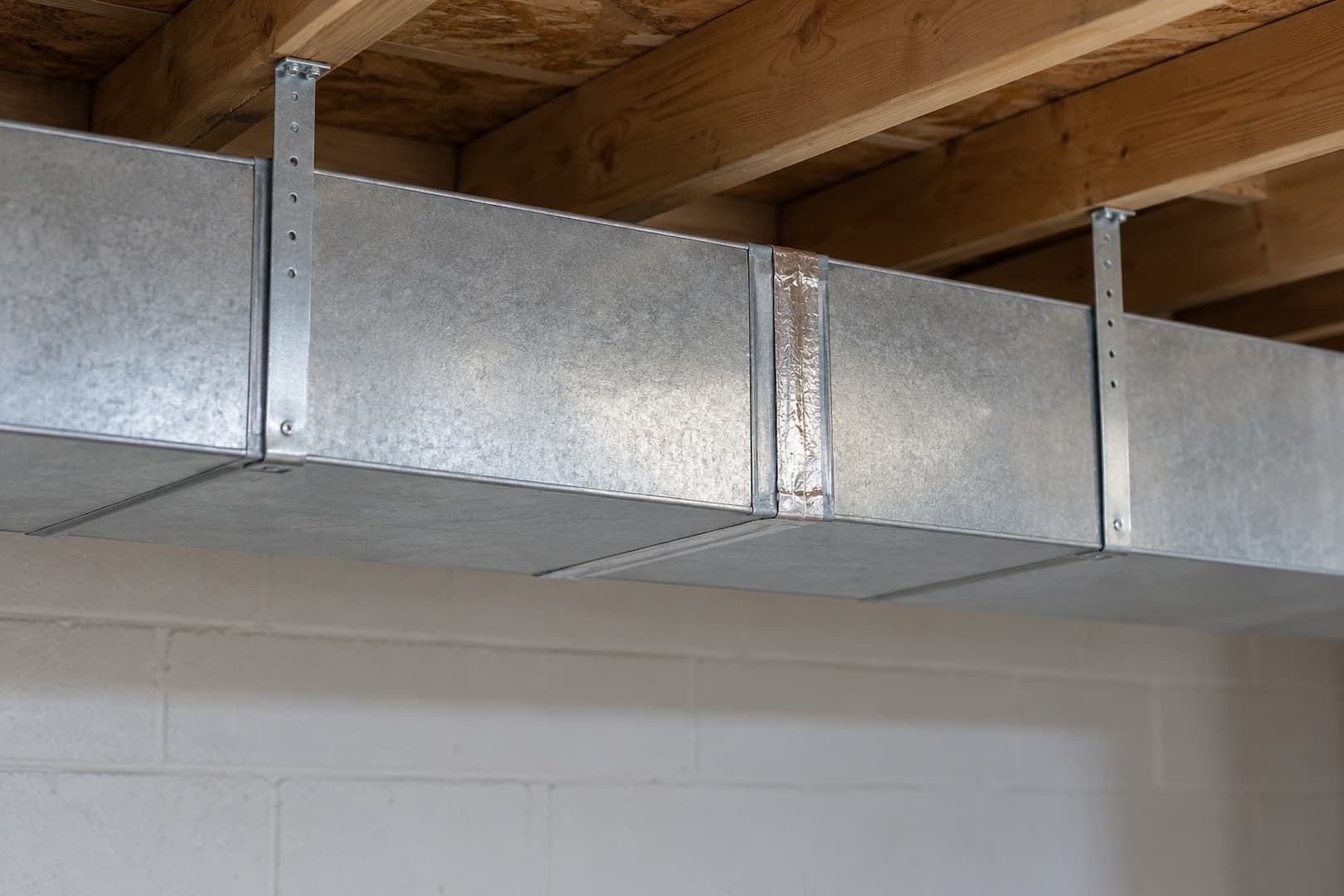
Ductwork can produce a different kind of noise. Thin metal changes shape as it warms and cools, creating light ticks or pops. A larger duct pop when the blower starts can also involve pressure changes. Hearing it at a register is useful information, but it is not a reliable way to rule out a furnace problem: sound travels through the duct system.
Describe the event as you heard it. “One pop in the basement duct just after air starts moving” tells the technician more than “the heat exchanger is banging.” If a duct repeatedly flexes, bangs loudly or has recently become noisy, ask for an airflow and duct-support assessment. Do not screw into the furnace cabinet or ductwork to try to stiffen it yourself.
Whistling usually calls for an airflow check
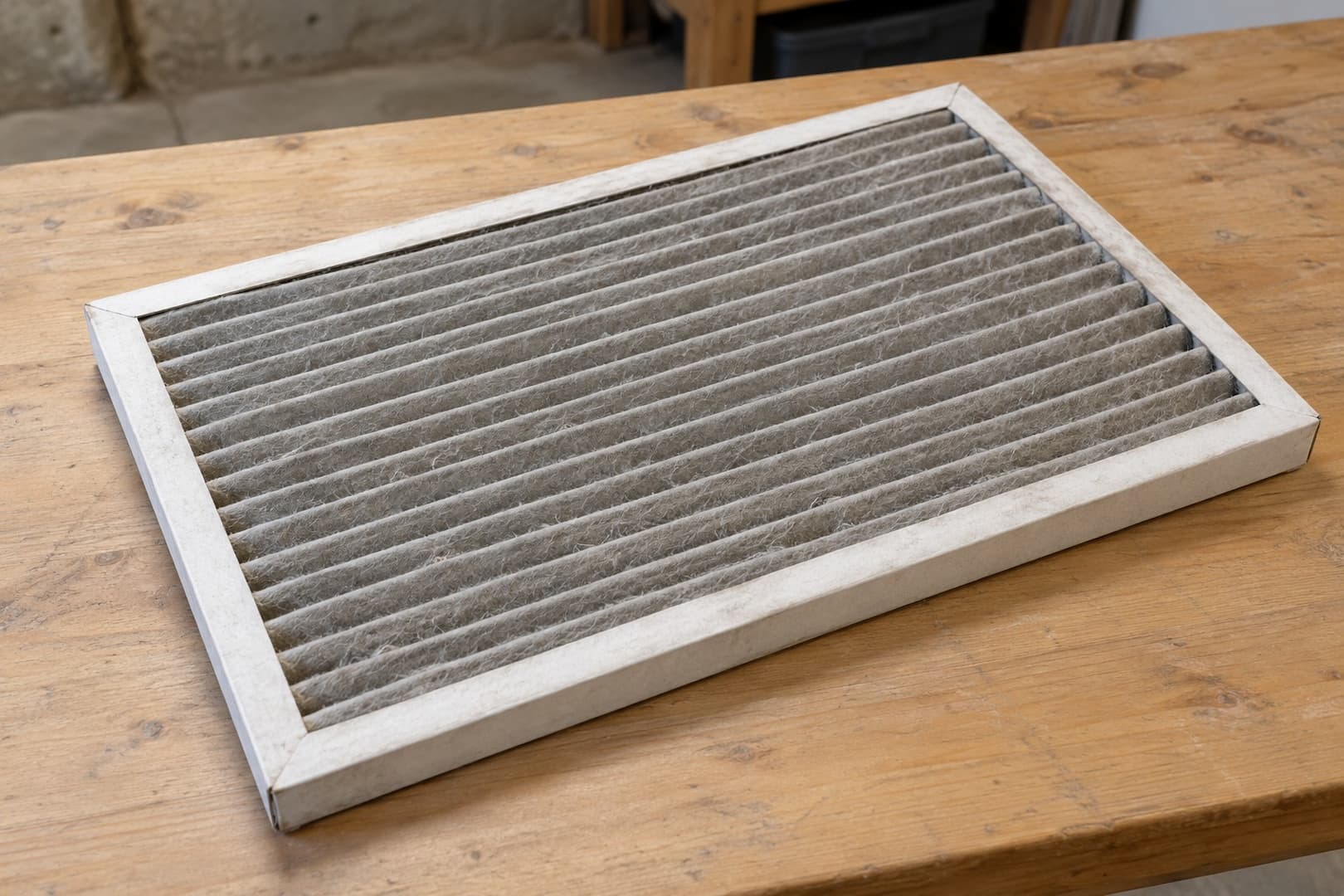
A whistle that follows the blower’s operation often starts where air passes through a restriction or a small gap. A loaded filter, an unsuitable replacement filter or a partially closed grille can be involved. The apparent location matters: one noisy bedroom register suggests a different investigation from loud whistling at the main return.
Check the easy-to-see air path first. Make sure rugs and furniture are not covering supply registers or return grilles. Leave the system’s intended vents open. Closing several vents to quiet one room can change airflow elsewhere.
Inspect only the filter access intended for homeowner maintenance, following the furnace manual’s shutdown procedure. Replace a loaded filter with the specified size and type, fitted correctly. If reaching the filter requires removing furnace service panels, have a technician handle it. Refit the filter cover before operating the equipment.
If the noise began immediately after a filter change, keep the new package or note its exact model. MERV alone does not describe airflow resistance. The Department of Energy’s Building America guidance explains that filter design and surface area affect pressure drop. Our MERV 8 vs. MERV 11 vs. MERV 13 guide covers choosing a compatible replacement.
Never leave the furnace running without its required filter as a noise workaround. A persistent whistle, especially with weak airflow or repeated shutdowns, needs measurements rather than another random filter purchase. See our weak-airflow guide for the difference between one affected vent and a house-wide problem.
Rattling, scraping and grinding
A vibration can come from a panel or a duct connection, but a blower wheel or motor assembly can also be involved. Trane’s guidance on HVAC sounds lists several possible mechanical sources for rattling. A noise that seems to come from the outer cabinet may be transmitted from inside it.
Keep the panels closed. Do not press on a running cabinet, remove a door to locate the sound or add tape over openings. Note whether the rattle is mild and intermittent or accompanied by strong shaking. Persistent new rattling warrants an inspection even when heat output seems normal.
Scraping, grinding or a loud metallic screech is more urgent. Stop operation at the thermostat, provided no emergency condition makes it unsafe to operate controls, and call for service. Continuing to run a rotating assembly that may be contacting another part can worsen damage. Do not reach through an opening or attempt to turn a wheel by hand.
Buzzing, humming and clicking without heat
A low, familiar hum during operation differs from a new electrical-sounding buzz. Lennox identifies several possible sources of buzzing, including a motor problem, transformer or wiring issue. A technician has to test those possibilities. Matching a recording to an online description is not enough to choose a replacement part.
Note when the buzz starts and whether it continues while the system is idle. If it is loud, new or worsening, stop using the furnace and arrange service. Buzzing with a burning odor or a tripped breaker needs prompt professional attention; do not repeatedly reset the breaker. Smoke or fire means leaving the building and calling 911.
Furnaces use different motor designs. A permanent split capacitor motor and an electronically commutated motor, or ECM, need different diagnostic procedures. A buzz does not establish that the furnace needs a capacitor, a belt or lubrication. Leave the motor and electrical components to the technician.
A single control click can be ordinary. Repeated clicking followed by no heat, or repeated attempts to start and then stop, is a service symptom. Save any thermostat alert or visible fault indication and stop requesting repeated starts. Our furnace-won’t-turn-on guide covers the broader no-heat checks.
What you can check without opening the furnace
First confirm that none of the emergency signs listed above is present. For a mild airflow noise or familiar duct tick, a few observations can make the service call more useful:
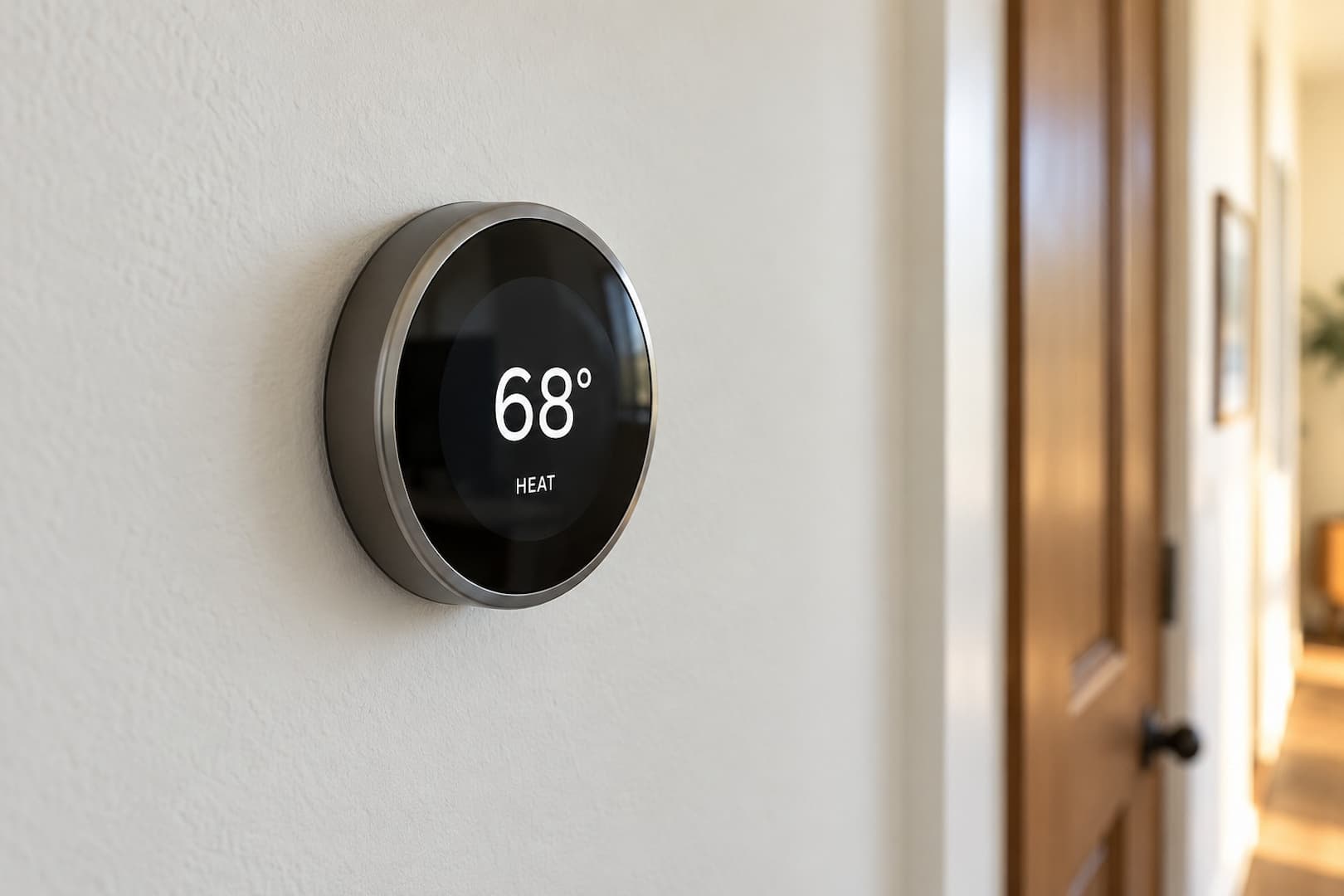
- Read the thermostat’s room temperature, setpoint and fan setting. Write down any alert exactly as displayed.
- Note whether the sound is strongest at the furnace area, one register or a return grille. Listen from the normal occupied space; you do not need to put your ear against equipment.
- Look for blocked room vents and note when the accessible filter was last replaced.
- Record whether the noise began after a filter change, recent service or the first heating use of the season.
- If the furnace is otherwise operating normally and there is no reason to stop it, take a short recording from a safe distance. Include the surrounding room sound, not just a close-up of the cabinet.
Do not restart a noisy furnace solely to make a recording. A phone microphone can also exaggerate some frequencies, so include a written description of how loud the sound seemed in the room.
If a fault code is visible through a factory viewing window, photograph it without removing the panel. Some codes use a sequence of flashes; record the full pattern if it is safely visible. Do not clear codes by cycling power or use a code as a diagnosis on its own.
A note such as “whistle at the hallway return since yesterday’s filter change; heat still reaches the setting” is useful. So is “loud bang when heat started; thermostat now Off.” Neither requires guessing which component has failed.
What a technician should establish
The inspection should establish when and why the noise occurs. An ignition complaint may require checks of the burners and ignition controls, along with combustion and venting as appropriate. A motor complaint calls for electrical and mechanical checks suited to the installed equipment.
For whistling or loud duct movement, ask whether the air path was assessed. Relevant checks can include filter pressure drop, total external static pressure and airflow against the furnace’s specifications. An airflow restriction needs to be corrected even if another noisy component also requires repair.
Trane’s furnace maintenance checklist includes checks of venting, heating output, burners and the blower assembly. The appropriate repair depends on the findings; the sound itself cannot establish that a furnace needs replacement. Ask what was found, what was corrected and whether the noise was absent during the final operating check.
Arrange a furnace noise assessment in Linden
For a new furnace noise in a Linden home, contact Sadowski HVAC about furnace repair. Tell the team what the sound resembles, when it occurs and whether the furnace is currently off. Add the ZIP code and any thermostat message so the team can confirm service availability and prepare for the visit.