MERV 8 vs. MERV 11 vs. MERV 13: Which Air Filter Should You Use?
MERV 13 provides the best small-particle capture of these three ratings, provided your HVAC system can move the required air through the specific filter. MERV 11 is an intermediate option; MERV 8 is useful for larger particles but captures fewer fine particles. Choose by fit and airflow resistance as well as the MERV number.
Before buying a multipack, check what your system accepts. A one-inch return-grille filter and a deep media cabinet may need different products even when both advertise MERV 13. For a New Jersey home with central forced-air heating or cooling, the starting point is the approved filter specification and the cabinet’s actual dimensions.
What the MERV numbers mean
MERV stands for Minimum Efficiency Reporting Value. It describes particle capture across specified size ranges, measured in microns. The following minimum average capture efficiencies come from EPA’s MERV table. These are laboratory filter results; they do not predict the percentage of pollution removed from an entire house.
| Rating | 0.3–1.0 microns | 1.0–3.0 microns | 3.0–10.0 microns |
|---|---|---|---|
| MERV 8 | No minimum specified in this range | At least 20% | At least 70% |
| MERV 11 | At least 20% | At least 65% | At least 85% |
| MERV 13 | At least 50% | At least 85% | At least 90% |
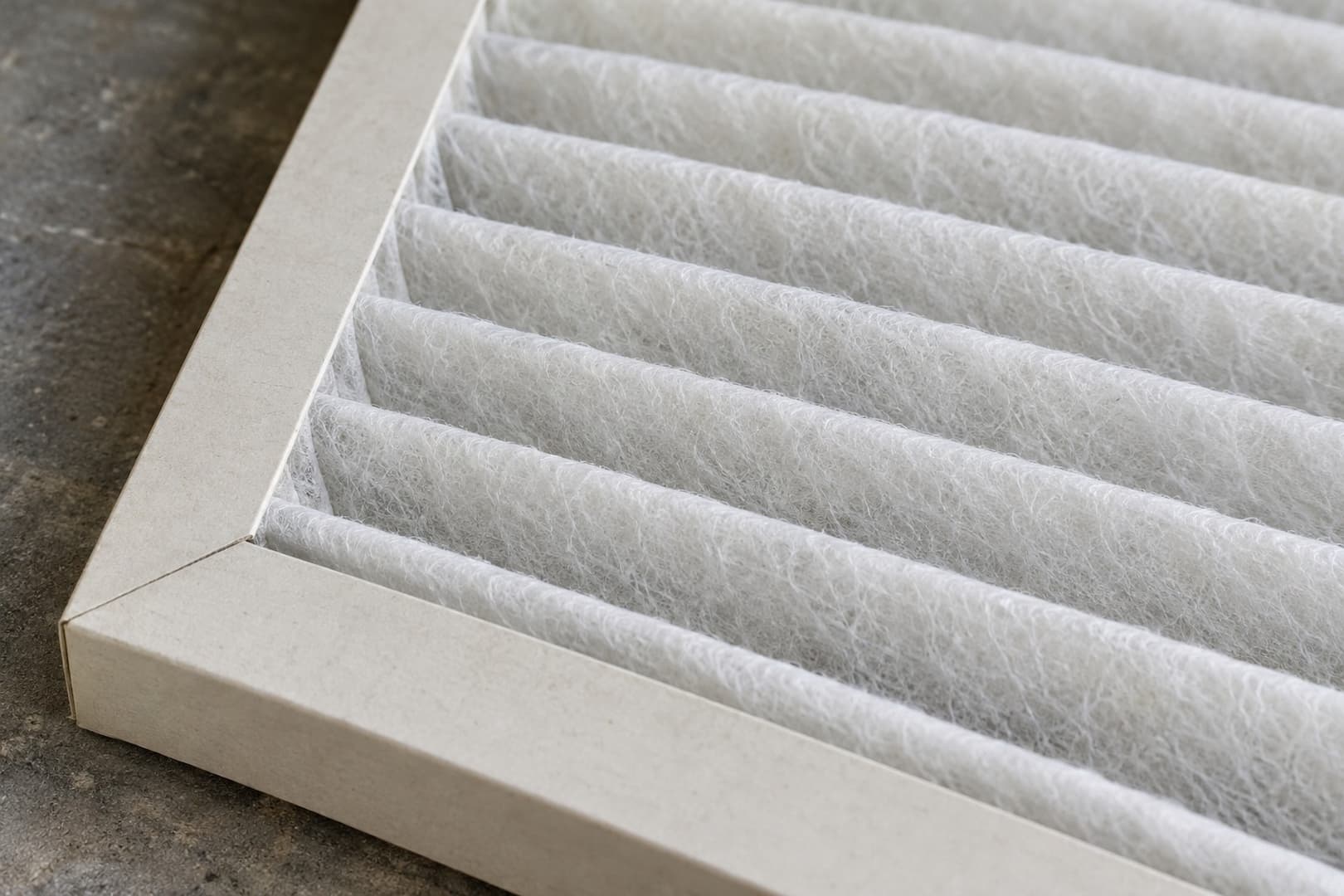
“No minimum specified” does not mean the filter captures zero particles in that size range. The rating simply does not establish a minimum there. The larger gain from MERV 11 to MERV 13 is in small-particle capture: compare the first two columns rather than judging a filter by visible lint.
MERV is also separate from MPR and FPR, the proprietary ratings you may see on store packaging. Compare products using their stated MERV ratings rather than treating the three numbering systems as interchangeable.
Which rating fits your needs?
MERV 8: routine larger-particle filtration
MERV 8 can be an economical choice when it meets your equipment requirements and your priority is routine filtration of larger airborne particles. Keep it clean and properly fitted. Regular replacement maintains the intended airflow, but it cannot give MERV 8 the fine-particle efficiency of a higher rating.
MERV 11: a step up in particle capture
MERV 11 captures more particles in the one-to-three-micron range and has a minimum requirement in the smallest range in the table. It may suit a household seeking better capture of airborne dust and pet-related particles when the specific filter works with the equipment. Having a dog or cat does not settle the choice: the system still needs adequate airflow.
MERV 13: the strongest fine-particle option here
Choose a compatible MERV 13 filter when fine airborne particles are the main concern. It cannot promise allergy relief or collect dust that has already settled on furniture. Air has to pass through the filter for filtration to occur, so the rating alone cannot describe what happens in every room.
Compare the exact replacement models before comparing prices. If the dimensions or part number are uncertain, buy one suitable filter before ordering a year’s supply. Keep the package until you have checked the fit and confirmed normal system operation.
Will MERV 13 restrict airflow?
Every filter resists airflow. The amount of resistance is its pressure drop, and MERV does not specify that value. Filter material, pleat area and the volume of air passing through the filter all affect resistance. Two MERV 13 products can have different pressure-drop curves; so can two MERV 8 products.
The Department of Energy’s Building America guidance on high-MERV filters explains how additional pleated surface area can lower pressure drop. A deep filter can therefore combine high capture efficiency with manageable resistance, if the cabinet and system are designed for it.
Compare pressure-drop data at the same airflow. A value measured at 800 cubic feet per minute cannot be compared directly with one measured at 1,200. Request the product data sheet if the package gives only a MERV number. Pressure drop may be listed in inches of water column, abbreviated in. w.c.
Ask an HVAC technician to check the whole air path. The evaluation should include total external static pressure against the equipment limits, pressure drop across the filter and verification of the required heating and cooling airflow. Blower performance depends on the model and operating setup. There is no single safe pressure number for every furnace or air handler.
If airflow is already weak, tell the technician whether it changed immediately after a filter replacement or had been weak beforehand. That timing helps separate a filter issue from duct restrictions, a dirty coil or an undersized return. Do not adjust blower wiring or installer settings to compensate for a filter purchase.
One-inch versus four- or five-inch filters
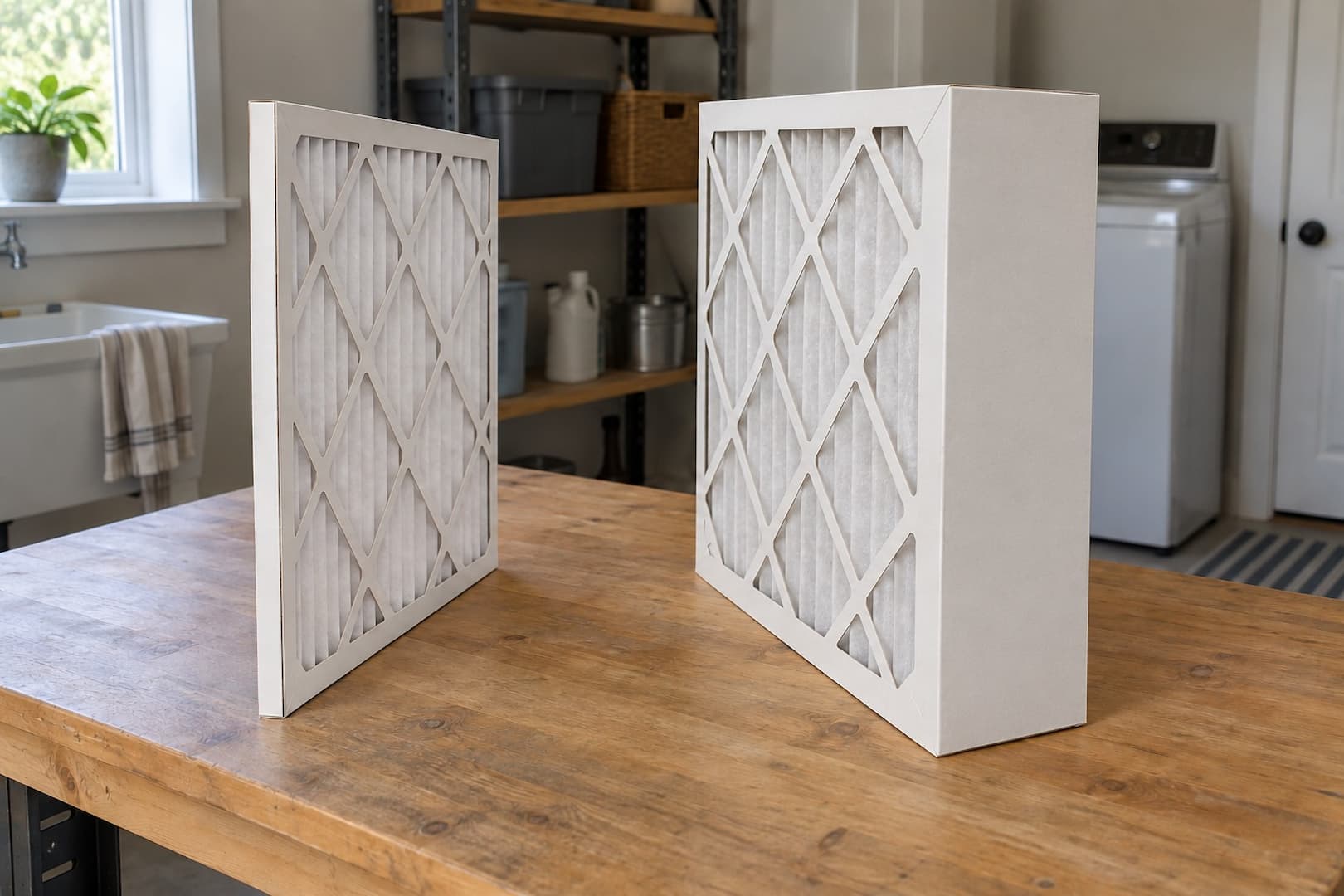
A one-inch MERV 13 filter can be suitable for some systems. The specific product and the available airflow determine that, not thickness alone. Moving to a deep media filter usually means using a purpose-built cabinet; it is not simply a matter of pushing a thicker filter into the existing slot.
Depth describes the physical filter; MERV describes particle capture. A four-inch replacement may not fit a five-inch cabinet. Match the cabinet manufacturer’s replacement specification rather than relying on a product photograph.
Nominal dimensions are the rounded size on the label. Actual dimensions may be smaller and can differ among products sold under similar size names. Check both when switching brands. The filter should seat properly without crushed edges or a gap that allows return air to pass around it.
Do not stack two one-inch filters to create a thicker filter. Do not add a filter at the return grille when another is already in the air handler unless the system is specifically designed for that arrangement. Stacking adds another resistance in the same air path; it does not create the pleat area of a single deep filter.
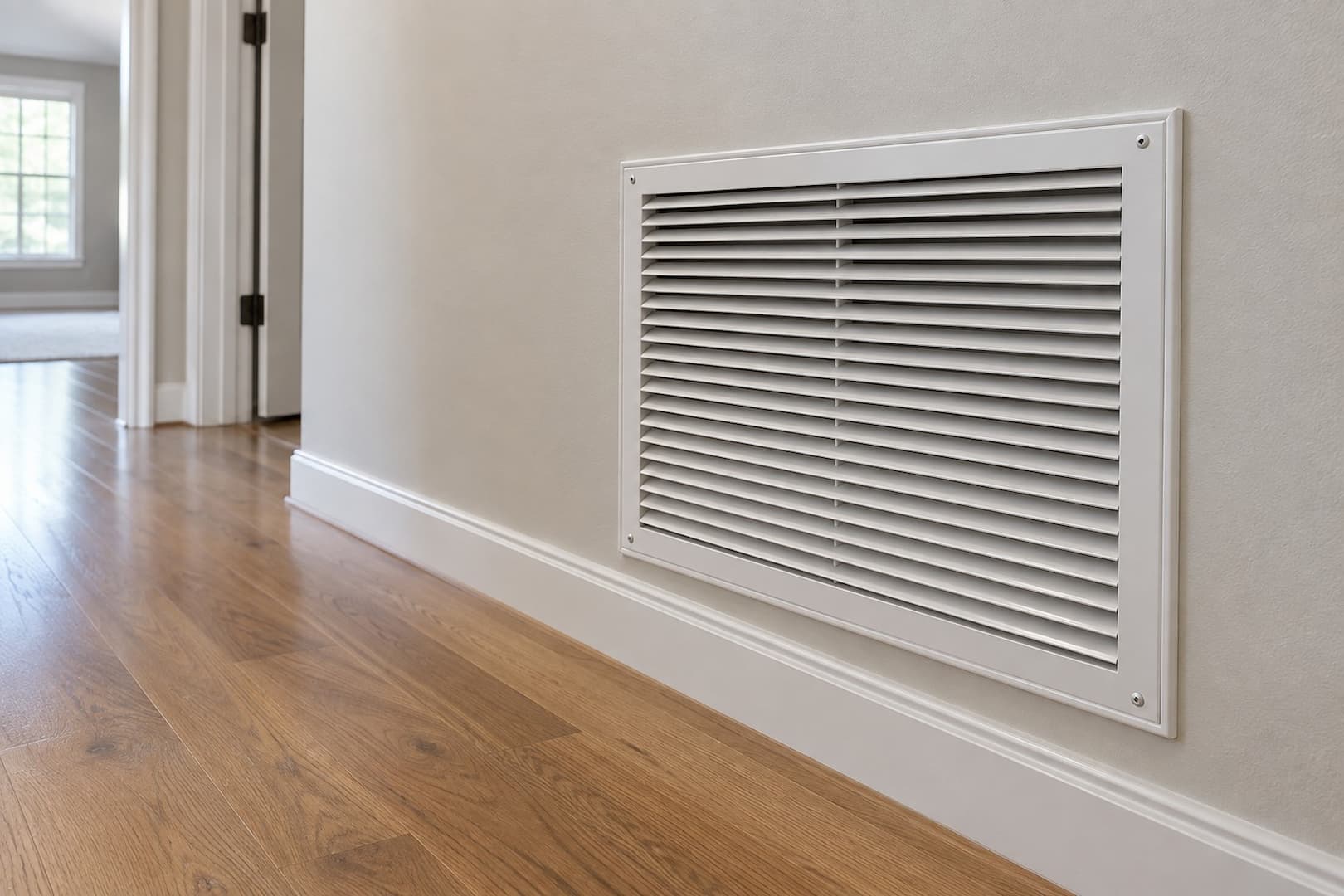
For a home with several return grilles, locate the intended filter positions before shopping. Multiple grilles do not necessarily mean multiple filters. Photograph the existing installation and model label if you need help identifying the correct arrangement. Keep that photograph with the replacement part number for your next purchase.
Allergies, wildfire smoke and odors
The reason for upgrading matters. If seasonal pollen or pet-related airborne particles are the concern, a higher compatible MERV rating can improve particle capture. That does not establish how much one person’s symptoms will change. Cleaning surfaces and limiting the source of particles remain separate tasks.
Wildfire smoke shifts the focus toward fine particles. EPA’s indoor air filtration guidance recommends MERV 13 or higher for central systems that can accommodate it. Arrange the compatibility check before a smoke event where possible. During smoky conditions, inspect the filter more often and follow its replacement instructions.
MERV is a particle rating. It does not certify removal of gases, carbon monoxide or odors. Some air cleaners contain activated carbon or another gas-filtering material, but their gas performance is a separate question. A lingering musty smell also needs investigation of moisture rather than a higher number on a filter box.
If the central system cannot accommodate the desired filter, a portable HEPA air cleaner can supplement filtration in a bedroom or another occupied room. Match its clean air delivery rate, or CADR, to the room size; for smoke, compare smoke CADR. Keep the air openings clear. EPA’s Guide to Air Cleaners in the Home explains how to select one and advises avoiding devices that intentionally produce ozone.
Installing and maintaining the filter you choose
Use the equipment manual’s procedure for turning the system off before replacement. Open only the intended filter access. Install the new filter with its airflow arrow pointing in the direction air travels toward the blower; in a filter return grille, that generally means into the duct. Refit the access cover before restoring operation.
If the old filter was bent or loose, do not assume its size was correct. Confirm the cabinet specification. Keep disposable pleated filters dry and replace them rather than trying to wash and reuse them. A washable filter should be cleaned only as its manufacturer directs.
MERV does not tell you how many weeks a filter will last. Dust loading and equipment runtime vary from home to home. Follow the product’s instructions and inspect it regularly; ENERGY STAR recommends monthly filter checks. Write the installation date on the frame or set a phone reminder. Replace sooner when its condition or the manufacturer’s instructions call for it.
A date on the calendar does not prove a filter is still usable. Its color is not a measurement of airflow resistance, either.
After an upgrade, pay attention to new whistling, weaker air at several vents or rooms that stop reaching the thermostat setting. Have these changes evaluated, especially if a correctly fitted clean filter does not resolve them. Do not leave the system operating without its required filter as a workaround.
Our guide to HVAC filter replacement timing in New Jersey covers maintenance intervals in more detail. If airflow is already a problem, see Weak Airflow From Vents for the difference between one weak vent and a house-wide restriction.
Ask for a filter recommendation tied to your system
Before your next HVAC maintenance visit, record the filter’s size and exact model, and note any comfort change after its last replacement. Ask the technician:
- Which replacement models fit this cabinet?
- Can a MERV 13 option maintain the required airflow?
- Would a different filter cabinet help if the current slot limits the choices?
- When should this particular filter be inspected and replaced?
Sadowski HVAC serves homes in Linden and nearby New Jersey communities. Contact the team to discuss your filter arrangement or an airflow concern. Have the equipment model and filter details ready when you call.