Auxiliary Heat vs. Emergency Heat: What Your Thermostat Means
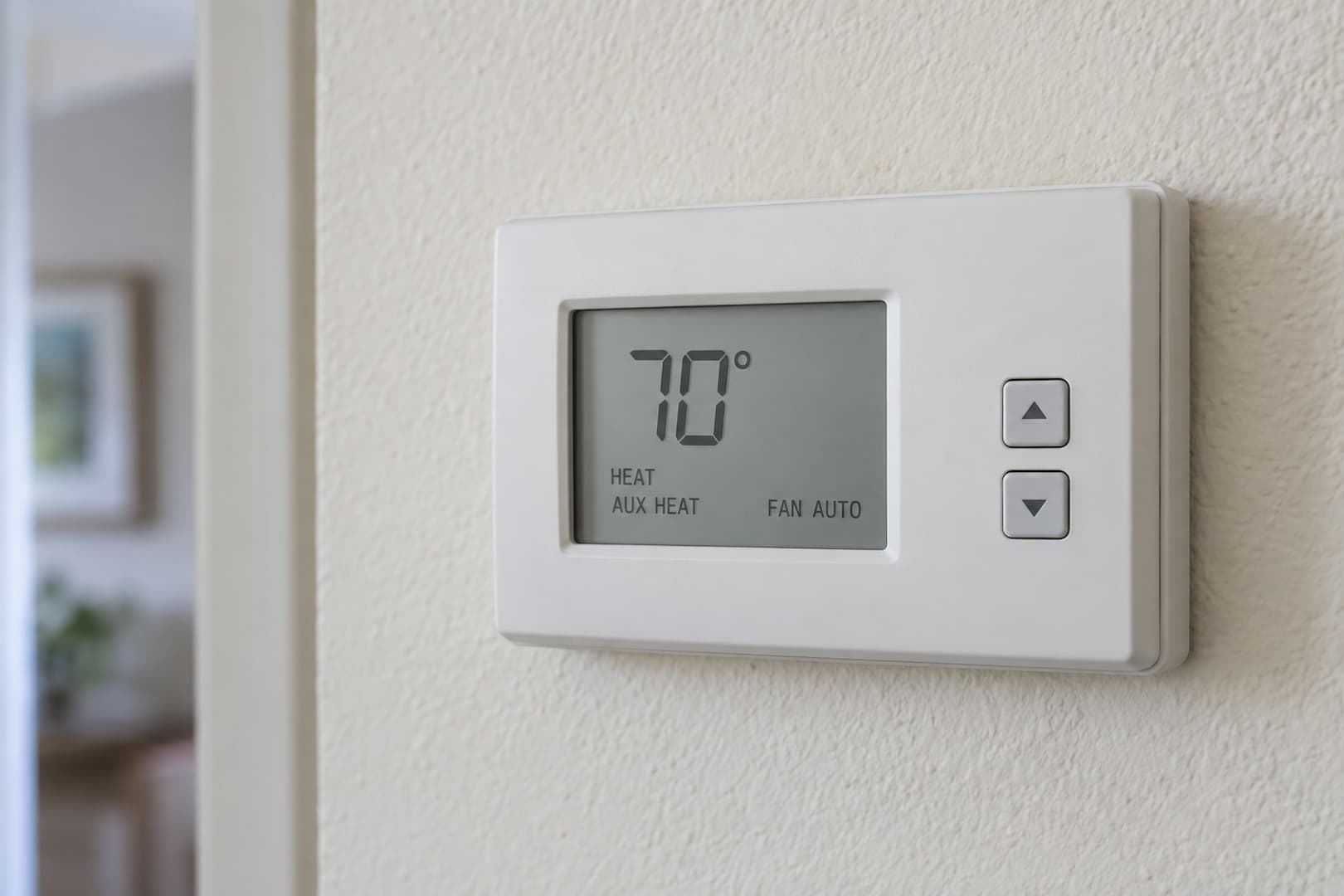
AUX on your thermostat usually means your heat pump has automatically called for backup heat. EM HEAT is a mode you normally select yourself to heat the house with the backup source while bypassing the heat pump compressor. An AUX message alone is not a reason to switch to Emergency Heat.
Check whether the house is reaching the temperature you set. Backup operation can be expected during cold weather. It may also appear while the system recovers from a lower setting or defrosts. A thermostat that keeps showing AUX while the rooms get colder deserves attention.
What changes between Heat, AUX, and Emergency Heat?
In normal Heat mode, the controls decide which heating stages are needed. You set the room temperature; the system manages the equipment. On many electric heat pump systems, resistance heating elements inside the air handler provide supplemental heat when called for. You may see them described as heat strips in the equipment paperwork.
AUX is generally a status message, not a fault code. It means a secondary heating source has been requested. In an all-electric system, the heat pump and heat strips can run together. A compressor lockout can also stop the heat pump and leave backup heat running alone, even with normal Heat selected. The available lockouts depend on the equipment.
Emergency Heat changes that normal sequence. On a typical heat pump thermostat, selecting EM HEAT locks out compressor heating and makes the backup source responsible for warming the home. The same electric elements may serve both AUX and Emergency Heat; the difference is how they are controlled. Emergency Heat is not a higher-speed setting for an otherwise functioning heat pump.
Your display may say AUX or Auxiliary Heat. Stage 2 can instead mean a second compressor stage, rather than backup heat. Check your exact thermostat’s manual before interpreting a stage number.
Dual-fuel systems need a different interpretation
A heat pump paired with a gas or oil furnace is a dual-fuel system. Its controls normally choose the heat pump or the furnace according to the system’s setup. Do not assume they should run together just because electric heat strips can operate alongside a heat pump.
Some thermostats call the furnace Alternate Heat or Alt Heat. Certain configurations do not offer a separate Emergency Heat selection at all. For example, Google documents this behavior for a Nest Thermostat E configured for dual fuel. Available modes depend on what is installed and how the thermostat is configured.
If you recently changed thermostats and now see unfamiliar backup-heat messages, have the installer confirm the configuration. Selecting a different equipment type in the setup menu is not a safe way to test the system.
When auxiliary heat is normal
Cold-weather demand
As the outdoor temperature drops, a home’s heating requirement changes. A heat pump may eventually need backup capacity to maintain the indoor setting. The outdoor temperature at which heat pump capacity matches the home’s heat loss is its thermal balance point.
There is no universal temperature at which every heat pump should turn on AUX. Equipment capacity and the house matter, as do the installed controls. Two homes on the same Linden street can use backup heat differently on the same night. A neighbor’s thermostat is not a benchmark for your system.
A thermostat change or scheduled recovery
Suppose the house has been held at 62°F overnight and the morning schedule calls for 68°F. Some controls may bring on auxiliary heat to close that gap. That is a different situation from a house already holding 68°F with an unchanged setting.
The six-degree change in this example is only an illustration, not an activation threshold. Thermostats may use temperature difference, elapsed heating time, outdoor conditions, or a combination of these inputs when deciding to add a stage.
Defrosting the outdoor coil
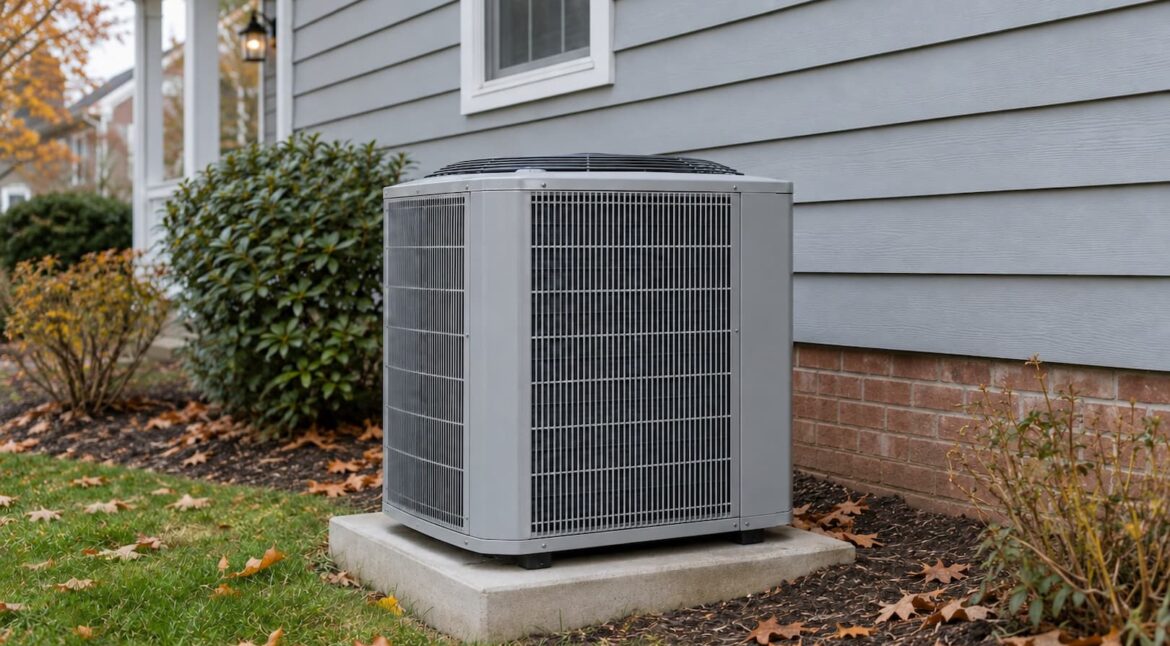
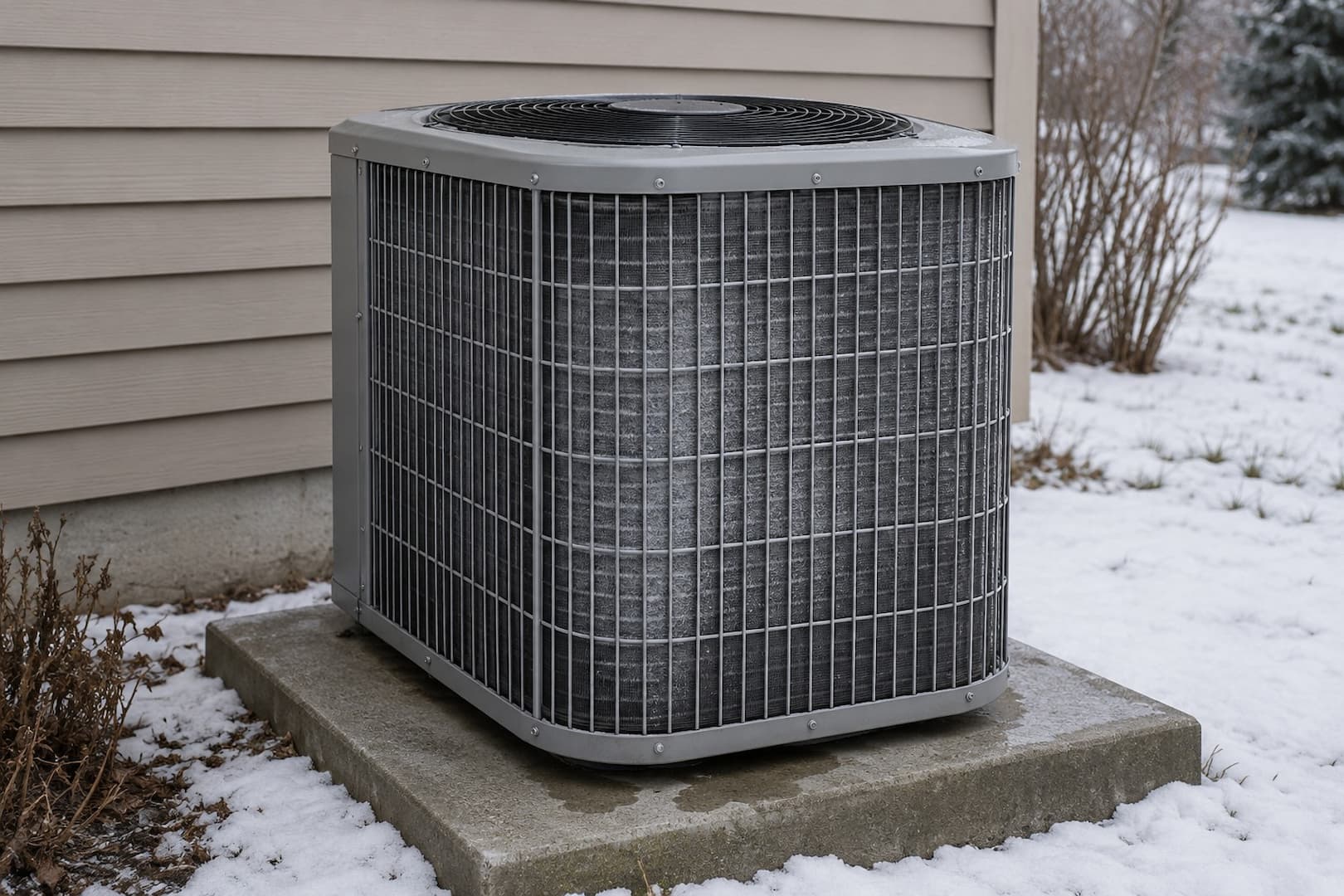
Frost can form on an outdoor heat pump coil during heating. The unit periodically reverses operation to warm that coil and melt the frost. Supplemental heat may run indoors during this defrost cycle to help maintain comfort.
You might notice a change in sound or a brief cloud of water vapor outdoors. The outdoor fan may pause on systems designed that way. Those signs can fit normal defrost operation. The cycle should finish and regular heating should resume.
Timing varies with the model and conditions. A thin frost layer that clears is different from heavy ice that remains or keeps building. Have the system checked if heavy ice persists or defrost fails to clear it. Falling indoor temperatures make the problem more urgent. Do not chip the coil or pour hot water over the unit.
When AUX is a reason to call for service
AUX is more concerning when its behavior changes without an obvious change in weather or thermostat use. Arrange an inspection if you notice any of the following:
- The room temperature continues falling even though the thermostat is calling for heat.
- Backup heat runs repeatedly in mild weather with a steady temperature setting.
- The outdoor unit remains heavily iced or makes new grinding, scraping, or loud electrical noises.
- AUX began running much more often after thermostat replacement or recent HVAC work.
- Electricity use rises sharply and the increase coincides with prolonged backup heating.
AUX cannot identify a failed part. Restricted airflow, a refrigerant problem, or faulty controls may be involved. The next step is to establish why the backup stage is being called and whether the heat pump is producing heat. Our guide to why a heat pump is not heating covers the broader fault symptoms.
Keep a short record before the visit if the home remains comfortably heated. Note the approximate outdoor temperature, room temperature, setpoint, and when AUX appeared. Include whether a schedule change happened just beforehand. A photo of the display and an error message are more useful than repeatedly resetting the equipment and losing that information.
What you can safely check first
- Read the current mode. If someone selected EM HEAT accidentally and the heat pump was working normally, follow the thermostat guide to return to Heat. If it was selected because the unit failed, leave the recovery decision to the technician.
- Look at the schedule. An unnoticed morning recovery or an app adjustment may explain why backup heat started. Hold one comfortable setting while you observe the pattern instead of repeatedly raising it.
- Check the accessible air filter. Follow the system’s instructions, switch it off before replacing the filter, and use the specified size and type. A filter that looks heavily loaded needs attention; a more restrictive replacement is not automatically better.
- Make sure furniture and rugs are not blocking supply registers or return grilles. Avoid closing a collection of vents to force more heat into one room.
- Inspect outdoors from a safe distance. Remove loose leaves or snow from the surrounding area without reaching through the grille or touching the coil. Follow the manufacturer’s clearance guidance and keep the unit uncovered while it operates.
Leave electrical panels, refrigerant connections, thermostat wiring, and installer settings alone. Do not repeatedly reset a breaker that trips. Stop using equipment that produces smoke, sparks, or a persistent burning odor and get professional help. If a carbon monoxide alarm sounds or you smell gas, leave the building and call emergency services or the gas utility from a safe location.

When should you actually use Emergency Heat?
Use Emergency Heat as a temporary measure when the heat pump has failed and the system’s instructions or a qualified technician confirm that the backup source can safely heat the home. Arrange repair rather than treating the setting as a seasonal operating mode.
An outdoor unit damaged by falling debris needs prompt professional advice. If the technician confirms that only the heat pump is affected, a working backup heater may keep the home warm while repairs are arranged.
Do not select it just because the weather forecast is cold. Normal Heat mode should manage available backup capacity according to the installed controls. The word emergency does not mean the system can operate without electricity. Electric heat strips require power, and a fuel-burning furnace still needs electricity for its controls and blower.
If Emergency Heat is on and the house is still cooling down, request urgent service. The backup heater, its power supply, or the airflow system may also have a problem. Turning the thermostat higher will not repair it.
How much does backup heat cost?
Electric resistance heat produces heat directly from electricity. A working heat pump moves heat, which is why replacing its output with resistance heat usually increases electricity use for the same heating need. The bill impact depends on the backup capacity actually energized and how long it runs.
To see how runtime affects cost, suppose a 10 kW electric backup stage runs for a total of three hours at an electricity rate of $0.20 per kWh:
10 kW × 3 hours × $0.20/kWh = $6.00
These are hypothetical inputs, not a New Jersey rate quote or an estimate for your home. The $6 covers only the assumed resistance-heating use. Blower and compressor electricity would be additional, as would the rest of the household’s consumption. Staged heat strips may not use their full installed capacity every time AUX appears.
Use your own electricity tariff and the actual energized heater capacity for a meaningful estimate. If you only know the maximum heater rating, treat the result as a full-capacity scenario. Thermostat runtime reports can help, but they may not tell you which electric stages were active.
A gas or oil backup furnace needs a separate fuel-cost comparison. The electric heat-strip calculation does not describe the operating cost of a dual-fuel system.
How to reduce unnecessary AUX operation
Avoid large temperature setbacks if recovering from them regularly brings on resistance backup heat. The U.S. Department of Energy’s Energy Saver guide specifically advises against thermostat setbacks that cause electric resistance backup to engage. A steady setting can be a useful starting point while you learn how your system responds.
Compatible smart thermostats may provide heat pump recovery or comfort-and-savings settings. Use the guidance for your exact model. Allowing less backup heat may mean a slower warm-up. A thermostat preference cannot correct a failing heat pump.
Ask the servicing technician to check airflow and heat delivery before changing lockout settings. The review may include thermostat staging and outdoor temperature sensing, along with defrost operation and the backup heater. If equipment checks out, heat loss through the house or ducts may explain why demand remains high. The useful result is an explanation of when your backup heat should operate and what pattern would warrant another call.
Does a warm vent prove the heat pump is working?
No. Heat strips can warm the air even when the heat pump compressor is not delivering heat. Likewise, air from a heat pump can feel less hot than air from a furnace while still warming the house. Use the room-temperature trend and the equipment’s operating status as context; a hand held over a register cannot diagnose the system.
Will Emergency Heat turn itself off?
Do not assume so. Many thermostats keep this mode selected until you change it. After the repair, ask the technician to confirm that the thermostat has returned to normal Heat and that the heat pump operates correctly. An apparently comfortable house can otherwise continue running on backup heat.
Need help with a heat pump in Linden?
If AUX stays on and your home struggles to warm up, Sadowski HVAC offers heat pump repair in Linden, NJ. Contact the team with the thermostat model, a description of the temperature problem, and any displayed error. Mention whether you have electric backup heat or a dual-fuel furnace, if you know.