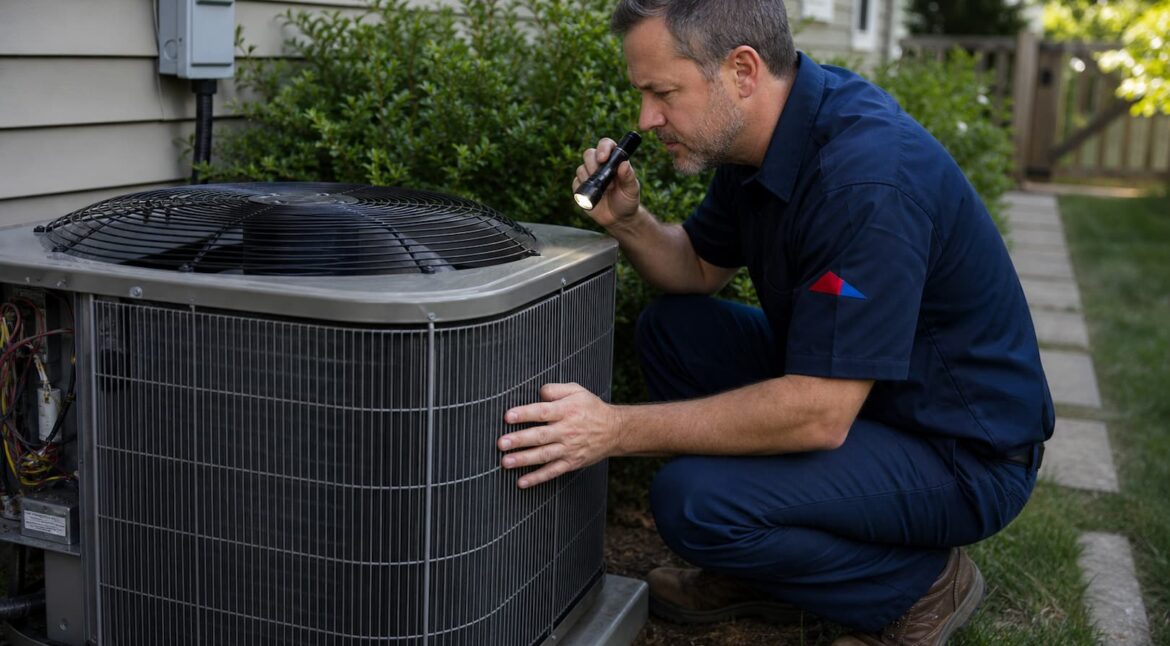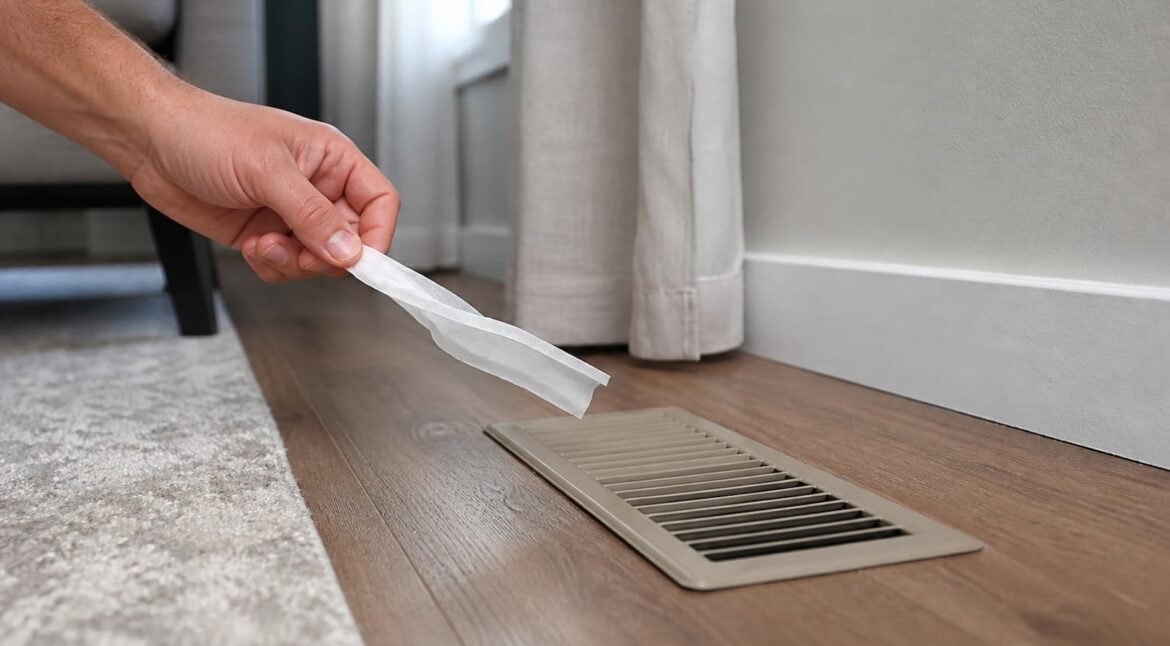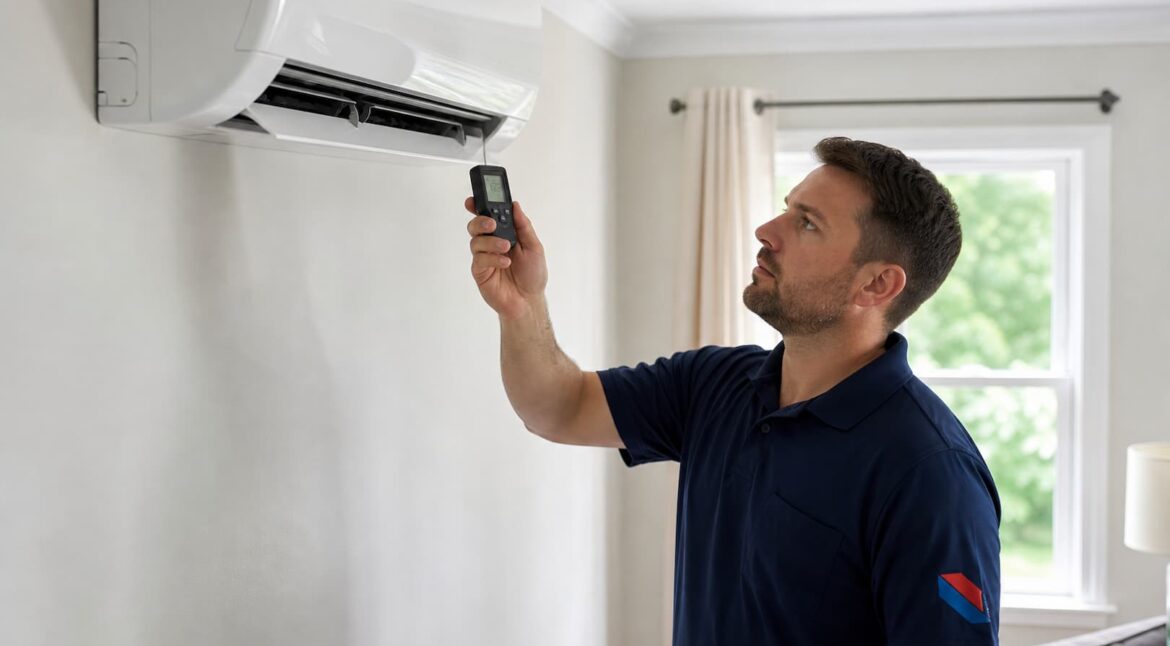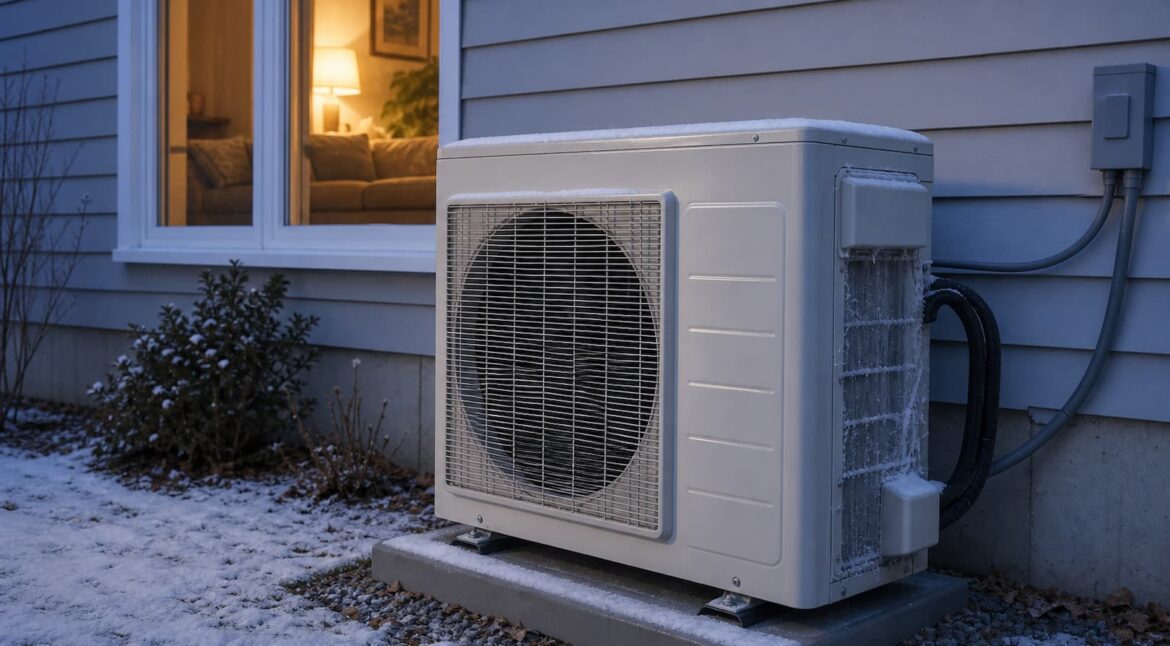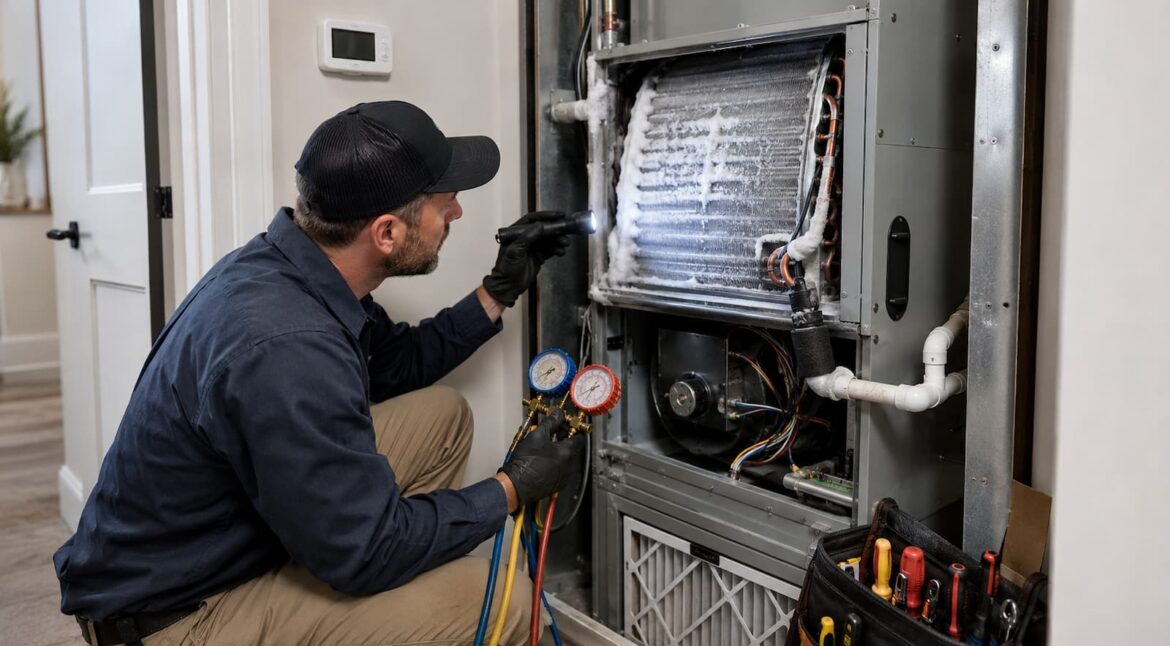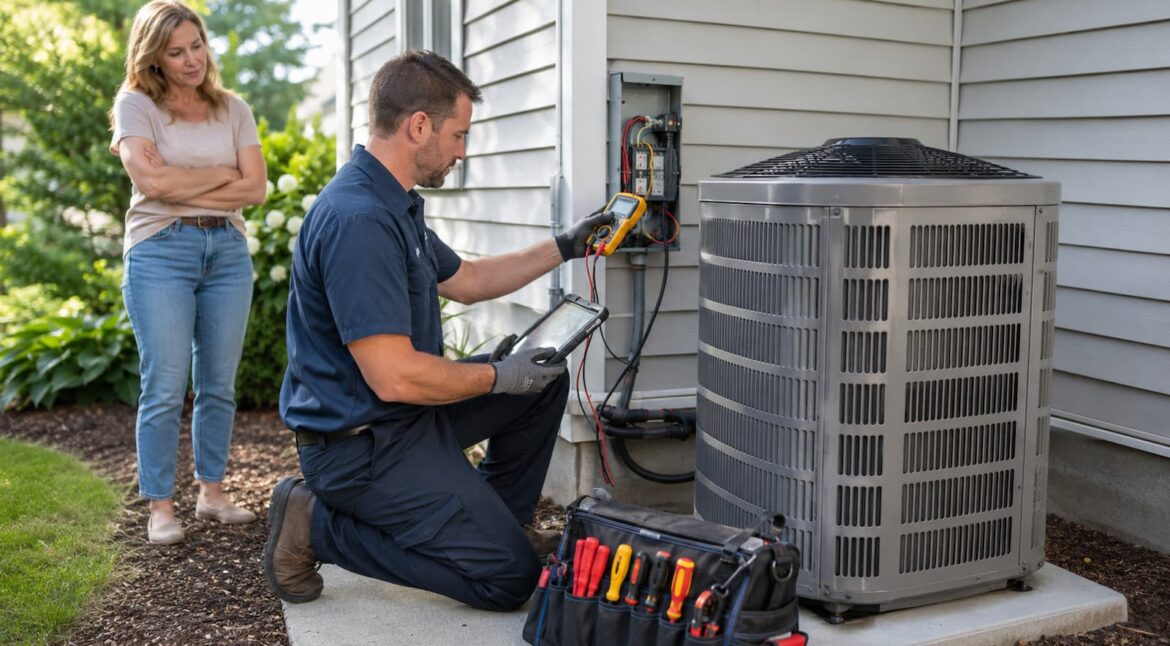

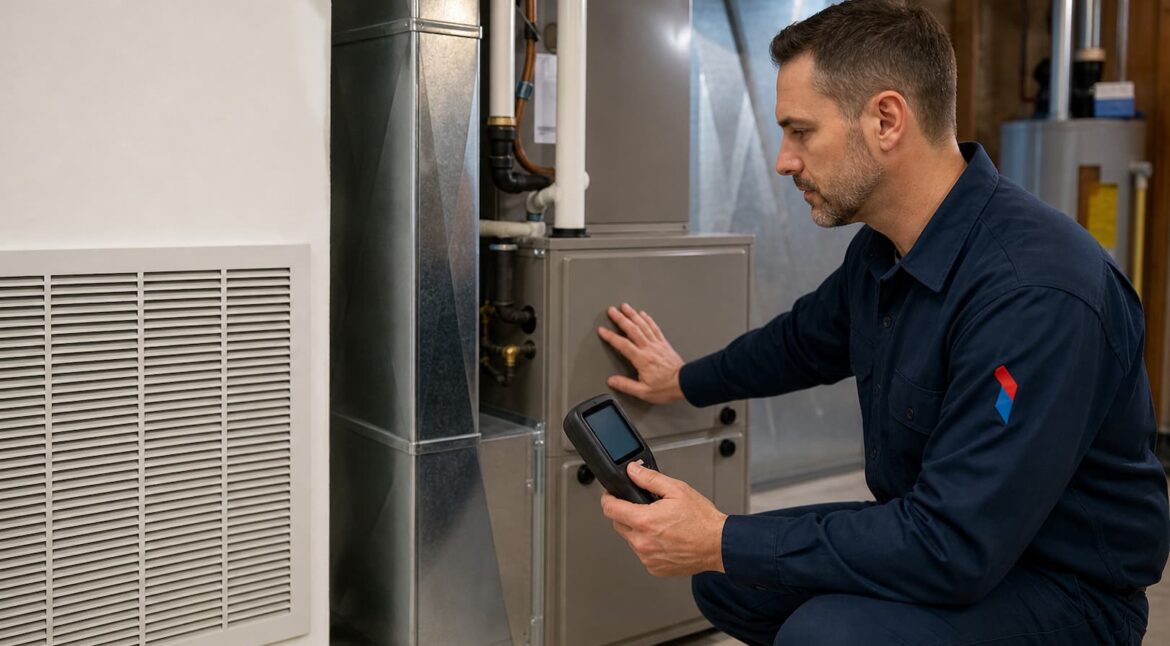
If your AC is freezing up, the ice is usually a symptom of a deeper problem — restricted airflow, a dirty filter, dirty evaporator coil, low refrigerant, blower issues, blocked vents, duct problems, or a system running under the wrong conditions. This guide explains why AC systems freeze, what to…
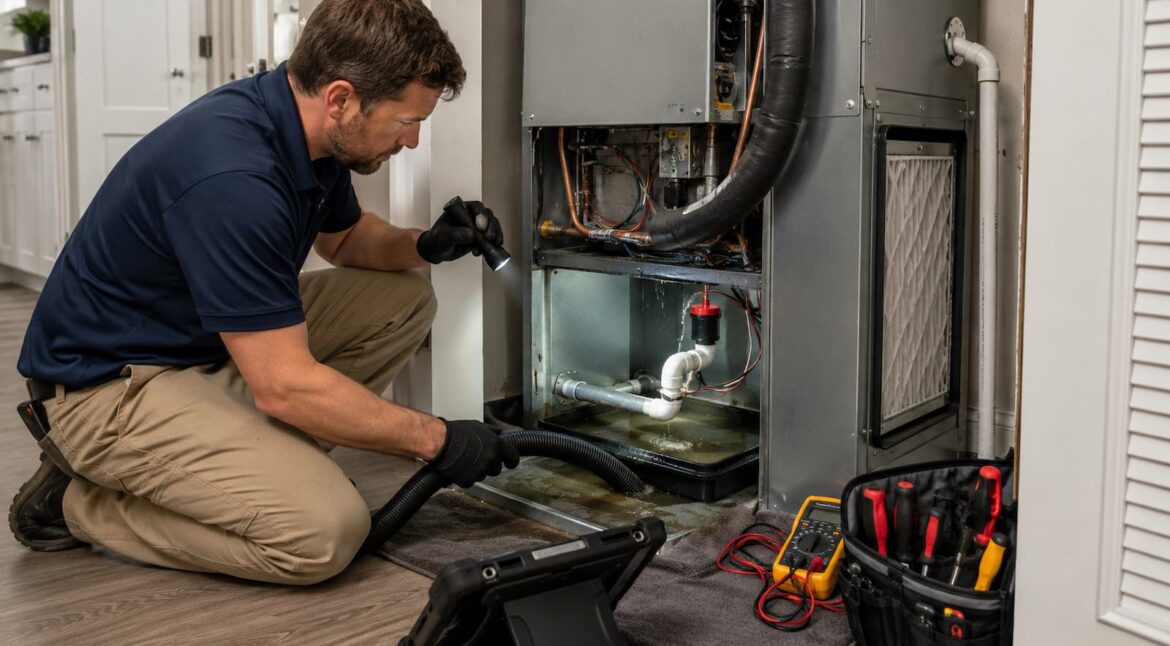
If your AC is leaking water, the problem is usually connected to the condensate drain system, a clogged drain line, cracked drain pan, failed condensate pump, frozen evaporator coil, dirty filter, poor airflow, or improper installation. This guide explains why AC systems produce water, when leaking is normal or not,…
If your AC breaker keeps tripping, do not keep resetting it. A tripped breaker usually means the system is drawing too much current, overheating, shorting, grounding out, or trying to run with a failing component. Common causes include dirty coils, a clogged filter, weak capacitor, failing fan motor, compressor problems,…
If your AC will not turn on, the cause may be as simple as thermostat settings, dead batteries, a tripped breaker, a clogged drain safety switch, or a dirty filter — but it can also point to a failed capacitor, contactor, blower motor, transformer, control board, or compressor issue. This…
A rooftop unit, or RTU, is a packaged commercial HVAC system installed on a building’s roof. It usually combines cooling, heating, ventilation, air filtration, fans, controls, and sometimes an economizer in one outdoor cabinet. This guide explains what rooftop units are, how they work, what components they include, why commercial…
Commercial HVAC maintenance for New Jersey buildings should cover filters, coils, belts, motors, drains, controls, economizers, rooftop units, heating equipment, airflow, refrigerant performance, safety devices, and seasonal changeovers. This checklist explains what facility managers, property owners, and business operators should inspect monthly, seasonally, and annually to reduce breakdowns, protect comfort,…
Central AC and ductless mini-splits can both cool a home effectively, but they solve different problems. Central AC is often better for whole-home cooling when you already have good ductwork, while ductless mini-splits can be ideal for additions, older homes without ducts, finished basements, garages, sunrooms, and room-by-room zoning. This…
Most central air conditioners last about 15–20 years, but age alone does not tell the whole story. If your AC needs frequent repairs, struggles to cool the house, runs constantly, uses older refrigerant, makes unusual noises, or causes rising energy bills, it may be nearing the end of its useful…
AC repair usually costs anywhere from a simple service visit for a minor issue to a much higher bill for refrigerant leaks, motors, coils, compressors, or electrical failures. This guide explains what affects the price, why diagnosis matters, which repairs are usually cheaper or more expensive, and when it may…
If your AC is not cooling, you do not always need to turn it off immediately — but you should shut it down if you see ice, weak airflow, water leaks, burning smells, breaker trips, loud buzzing, or an outdoor unit struggling to start. This guide explains when it is…