
Why Is My AC Making Noise? Buzzing, Clicking, Rattling and Hissing Explained
Every air conditioner makes sound. Air moves through ducts, a contactor closes, refrigerant changes pressure, fans spin, and metal panels expand as temperatures change. The useful question is not whether the AC is silent. It is whether the sound is new, louder than usual, repeating at the wrong time, or paired with weak cooling, vibration, odor, ice, water, or a tripped breaker.
Buzzing often points toward electricity or a motor that is trying to start. Clicking can be a normal control event or a failed start repeating over and over. Rattling usually means something is loose, vibrating, or in the path of a fan. Hissing may be air leaking through a gap, refrigerant pressure equalizing, a metering sound, or a refrigerant leak. The same word can describe different noises, so location and timing matter.
Use this guide to record the symptom and decide whether the system can stay on. Do not remove electrical panels, touch capacitors, reach through a fan guard, or search for refrigerant leaks yourself. For a new or worsening noise, professional air conditioning repair can separate a loose cover from a component that is close to failing.
Quick answer: Turn the thermostat off if the AC gives a loud electrical buzz without starting, repeatedly clicks, rattles as though a fan is striking metal, hisses continuously while cooling declines, trips a breaker, or produces a burning smell. If the noise is brief and occurs only once at startup or shutdown, record it and monitor the next cycle. Take a short video from a safe distance; sound, location, timing, and equipment behavior are valuable diagnostic clues.
Before You Diagnose the Sound, Locate It
Stand back and listen at the thermostat, a nearby supply vent, the indoor unit, and the outdoor unit. Do not open a panel to make the sound clearer. Note whether it begins before cooling, at the moment the outdoor unit starts, while the compressor runs, when the blower changes speed, or after shutdown. If you have a heat pump, state whether it is in cooling or heating mode because the reversing valve and defrost process add normal operating sounds.
Write down four things:
- Location: thermostat, vent, return, furnace or air handler, line set, drain, or outdoor unit.
- Timing: once at startup, continuously, in pulses, after shutdown, or only during hot afternoons.
- System response: normal cooling, warm air, weak airflow, short cycling, outdoor fan stopped, ice, or breaker trip.
- Change: when the sound began and whether there was recent service, a storm, yard work, filter replacement, or renovation.
Shut the AC off for an electrical or mechanical danger sign.
Turn cooling off for smoke, a scorched-wire or burning-plastic odor, a breaker that trips again, metal-on-metal grinding, severe shaking, a fan striking an object, arcing, or a loud buzz from equipment that cannot start. If there is smoke or fire, leave the area and call emergency services.
Why Is My AC Buzzing?
A soft transformer or electrical hum can be normal. A new, loud buzz is not something to ignore, especially when the outdoor fan or compressor does not start. Electricity can energize a coil or motor even when the mechanical part it controls is stuck. The resulting buzz is a symptom of effort without normal movement.
Contactor or Relay Chatter
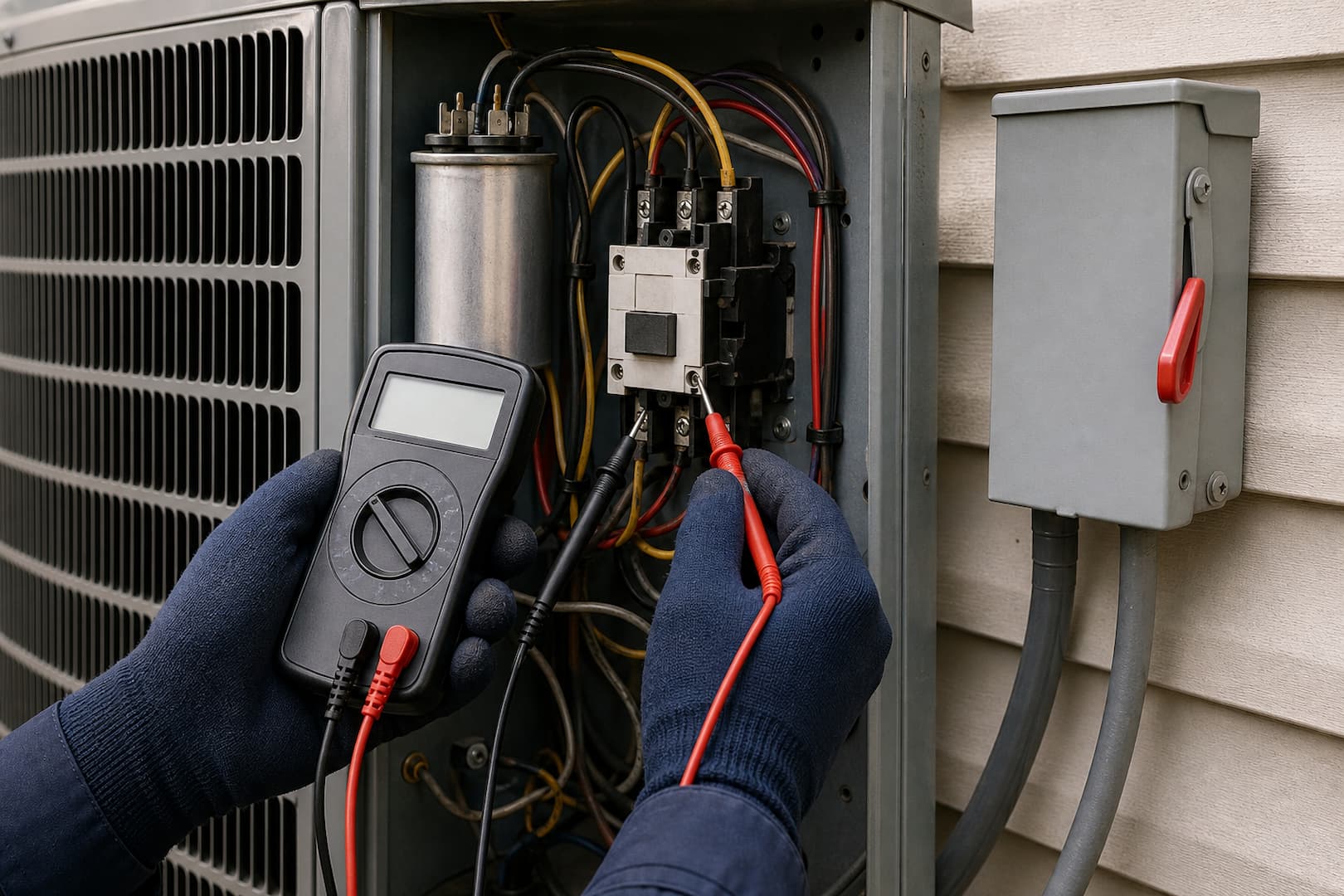
The outdoor contactor closes when the thermostat calls for cooling. A worn contactor, weak control voltage, loose connection, failing transformer, damaged coil, or unstable thermostat signal can make it buzz or chatter. Repeated opening and closing can burn contacts and send erratic power to the compressor and fan. The control-voltage cause should be found before the contactor is replaced automatically.
Weak or Failed Capacitor on Applicable Equipment
Many conventional outdoor units use a run capacitor to support the compressor and fan motor. When it weakens, a motor may hum, start slowly, overheat, or fail to turn. Capacitors can retain a dangerous charge after power is disconnected. Do not touch terminals or attempt to spin the fan with a stick. Inverter equipment uses different electronics and should not be diagnosed by assuming it has the same capacitor arrangement.
Motor or Compressor Cannot Start
A seized fan bearing, obstructed blade, damaged motor winding, low voltage, compressor mechanical problem, or abnormal refrigerant pressure can create a hard-start buzz. The overload may open, the sound stops, and the unit tries again later. Repeated attempts create heat. Switch the system off rather than waiting through cycles of humming and clicking.
Loose Electrical Component or Panel Vibration
A wire, coil, transformer, tubing section, or cabinet panel can vibrate at line frequency and sound like an electrical buzz. The source may be mechanically harmless, but a loose electrical connection is not. Heat discoloration, odor, intermittent operation, or a louder buzz under load raises the priority of service.
Why Is My AC Clicking?
One click when a thermostat calls and another when the cycle ends are often normal. Relays and contactors are switches, and switches make sound. Rapid clicking, a repeating click every few seconds, or clicking without the fan and compressor starting points to unstable control or a failed start.
Thermostat or Control Signal Is Repeating
Loose thermostat wiring, a failing thermostat, low transformer voltage, a float switch opening and closing, board trouble, or communication errors can make controls click repeatedly. If the indoor unit and outdoor unit click in response to each other, a technician needs to trace the signal rather than replace whichever relay is loudest.
The Outdoor Unit Tries and Fails to Start
A contactor may close with a click, the compressor or fan fails to start, a protective overload opens, and the process repeats later. Capacitor, motor, compressor, voltage, contactor, wiring, or pressure conditions may be involved. Leave the AC off if clicking is paired with buzzing, dimming lights, breaker trouble, or no outdoor fan movement.
Fan Blade Is Touching Debris
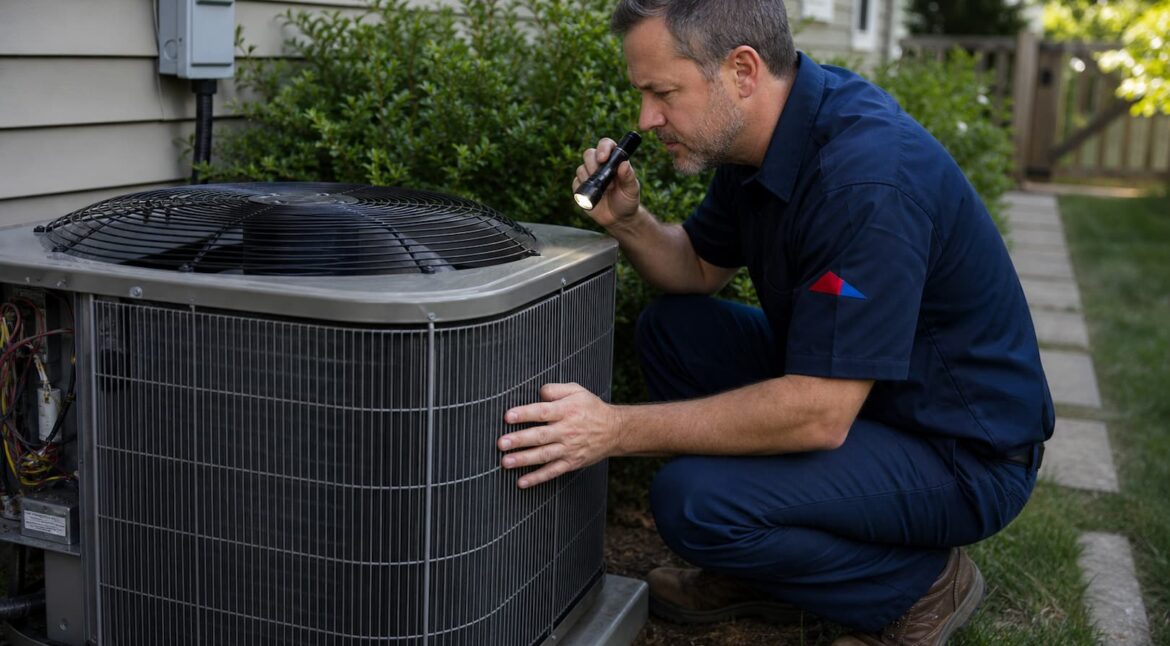
A twig, leaf, cable tie, ice fragment, or bent guard can produce a regular click that follows fan speed. Do not reach through the grille. Turn the system off and inspect from outside. Loose debris that is completely accessible outside the cabinet can be cleared only with power safely off; fan damage, guard contact, or anything inside the unit should be handled by a technician.
Ducts Expand and Contract
A pop or click from sheet-metal ducts as the blower starts can come from pressure and temperature change. Occasional expansion noise is common. Repeated oil-canning, loud bangs, or a new sound after a filter upgrade can point to high static pressure, a loose duct panel, or inadequate reinforcement. The solution may involve airflow and duct changes rather than the outdoor AC.
Why Is My AC Rattling?
Rattles come from movement between parts. The job is to determine whether the moving part is an exterior cover, a refrigerant line touching framing, debris in a fan section, a loose motor mount, a duct joint, or an internal component. A faint cabinet rattle can become much louder at a certain compressor or blower speed, particularly on variable-speed systems.
Loose Access Panel or Fastener
Panels can loosen after service, weather exposure, or repeated vibration. A missing screw, bent tab, deteriorated grommet, or panel that is not seated can buzz or rattle. Do not remove or tighten an outdoor electrical panel while the system is energized. Report whether gentle pressure on the outside of a non-electrical cover changes the sound, but keep hands away from fan guards and wiring compartments.
Leaves, Twigs, or Foreign Objects
Storms and yard work can send debris through an outdoor guard. Indoor returns can also collect a loose filter tab, insulation, or small object. A rattle that begins after wind or landscaping deserves a visual check from outside. If debris is inside a fan section, switch off the equipment and call rather than reaching in.
Fan, Motor Mount, or Blower Wheel Problem
A bent outdoor fan blade, loose hub, worn bearing, damaged blower wheel, or failed mount can create a rattle that changes with speed. Continuing to run may turn a small clearance problem into a damaged coil, guard, motor, or housing. Shut the system off for visible wobble, scraping, or severe vibration.
Refrigerant Line or Drain Touching the Building
Copper lines and drains pass through walls and may contact wood, metal, or siding. Compressor vibration can travel along the line set and produce a rattle inside a room even though the outdoor unit is the source. Correct isolation and support have to allow for thermal movement without pinching, abrading, or sharply bending the tubing.
Internal Compressor Noise
A compressor can become noisier because of internal wear, mounting problems, liquid return, abnormal pressures, or electrical trouble. Not every compressor rattle means immediate failure, but it needs prompt attention when paired with poor cooling, difficult starting, high current, or noise that is clearly worsening.
Why Is My AC Hissing?
Hissing is the most easily misinterpreted of these sounds. Air passing a narrow gap hisses. Refrigerant moving through a metering device can hiss. Pressures equalizing after shutdown can create a short rush. A leak can hiss too. Duration, location, cooling performance, frost, and oil residue help distinguish them, but leak confirmation requires instruments.
Brief Pressure Equalization After Shutdown
A short refrigerant-flow sound after the compressor stops can be normal as high- and low-side pressures equalize. It should fade. A similar steady sound near an expansion device during operation may also be normal for that system. Compare it with the equipment’s historic sound and cooling performance rather than diagnosing from the hiss alone.
Refrigerant Leak
A leak at a coil, fitting, valve, line, or service point can sometimes produce a continuous hiss. Cooling may weaken, ice may form, runtime may increase, and oily residue can appear near the leak. Many leaks are silent, however, and many hisses are not leaks. Do not handle oily residue or search with a flame. Turn the system off if the leak seems substantial, ventilate the area if it is safe to do so, and call a qualified technician.
Duct or Air-Handler Air Leak
High-velocity air at a loose access door, filter slot, register, disconnected duct joint, or small grille opening can hiss or whistle. If the sound changes when a door closes or after a new filter is installed, pressure and return-air restriction may be involved. Do not seal a service panel or combustion-air opening indiscriminately; first identify what the opening is designed to do.
Filter Whistle
Air can whistle around a filter that is the wrong size, installed backward, severely clogged, or poorly seated. A high-resistance filter in a small rack can produce the same effect. Replace a dirty or incorrect filter, but ask for pressure-drop and return-system evaluation if the whistle returns with a clean, properly fitted filter.
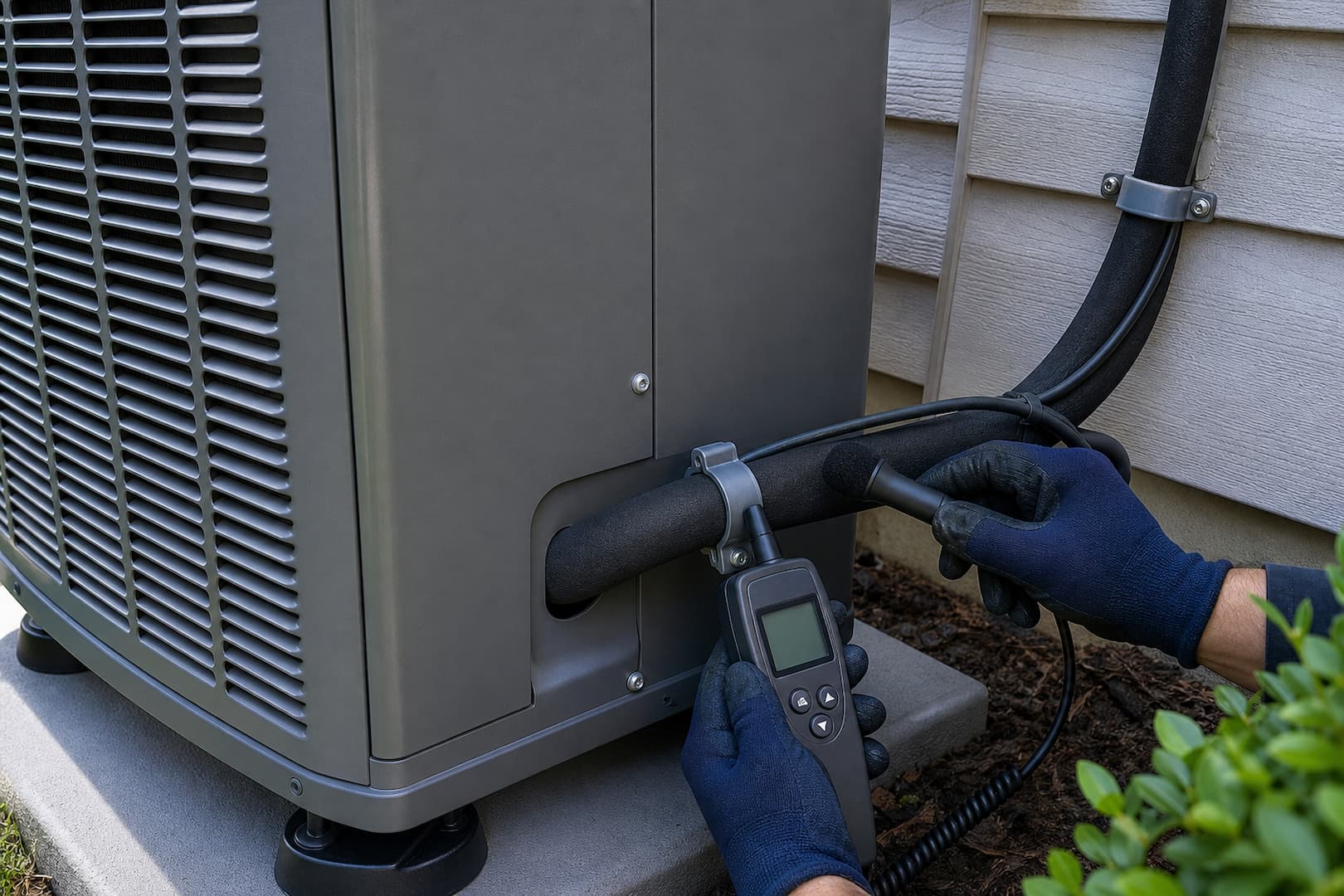
Noise Guide: What Is Normal and What Is Not?
| Sound pattern | Often normal | Needs attention |
|---|---|---|
| Buzzing | Soft, stable electrical hum that has not changed | Loud buzz, no start, hot odor, chatter, or breaker trouble |
| Clicking | One click at startup and one at shutdown | Rapid or repeated clicks, failed starts, regular fan-speed clicks |
| Rattling | Very light panel resonance with no performance change | New or worsening rattle, wobble, scraping, severe vibration |
| Hissing | Brief pressure equalization after shutdown | Continuous local hiss with poor cooling, ice, or oily residue |
What an AC Technician Will Check
A recording helps, but the technician still needs to reproduce the noise. Intermittent sounds may appear only at a certain outdoor temperature, compressor speed, blower stage, or point in the cycle. The diagnostic approach follows the location and timing.
- Line and control voltage, terminals, contactors, relays, capacitors where used, current draw, and overheating.
- Outdoor fan blade, motor, bearings, guard, debris, balance, clearances, and mounting.
- Compressor startup and running behavior, mounts, pressures, temperatures, and protective trips.
- Indoor blower wheel, motor, housing, cabinet panels, filter, coil, and static pressure.
- Duct joints, plenums, grilles, dampers, return restrictions, and sheet-metal movement.
- Refrigerant lines, supports, wall penetrations, abrasion points, oil traces, and leak-test results where indicated.
- Drain piping, pumps, check valves, and vibration transfer into the structure.
The repair should be tested at the operating state that produced the noise. A panel tightened while the AC is idle may still resonate when the compressor ramps up. A new contactor does not solve low control voltage. A refrigerant repair is incomplete until the leak is addressed and performance is verified.
Repair or Replace a Noisy Air Conditioner?
Loose panels, supports, contactors, capacitors, relays, fan motors, blower wheels, dampers, and many refrigerant leaks can be repaired. Noise does not automatically mean the compressor or system is finished. It does mean the failure should be identified before continued operation turns a loose or weak part into collateral damage.
Replacement may make more sense when the compressor has internal damage, the coil has an extensive or inaccessible leak, major proprietary parts are unavailable, or the equipment has a pattern of costly failures and declining efficiency. Duct noise should be diagnosed separately; installing a new outdoor unit will not fix high static pressure or oil-canning sheet metal.
Can Maintenance Prevent AC Noises?
Maintenance cannot prevent every electrical failure or refrigerant leak, but it can find loose connections, worn contactors, weak capacitors on applicable systems, debris, dirty coils, blower buildup, drain vibration, abnormal current, and changing operating sound. Early repair is usually easier before a motor overheats or a fan begins striking the coil.
During seasonal AC maintenance, mention any sound even if it has stopped. A recording, the outdoor temperature, and the exact point in the cycle give the technician a better chance of reproducing it.
Frequently Asked Questions
Is a buzzing AC dangerous?
A soft unchanged hum may be normal, but a loud buzz with no start, hot odor, arcing, repeated breaker trip, or motor overheating can be hazardous. Turn the system off and have it tested.
Why does my AC click once and then start?
A relay or contactor normally closes when cooling is requested, so one click can be ordinary. Repeated clicking, chatter, or a click followed by buzzing and no fan or compressor movement is not.
Can I run an AC that is rattling?
A faint panel vibration may be low risk, but shut the system off for a worsening rattle, wobbling fan, scraping, metal contact, or severe cabinet movement. Continued operation can damage a motor, blade, guard, coil, or tubing.
Does hissing always mean a refrigerant leak?
No. Pressure equalization, a metering device, duct leakage, and filter whistle can hiss. A sustained localized hiss paired with weak cooling, ice, or oily residue makes a refrigerant leak more plausible and should be professionally tested.
Why is the noise louder inside than outside?
Refrigerant lines, drains, ducts, framing, and wall penetrations can carry vibration into the house. The apparent location may be a resonating surface rather than the original source.
Should I record the AC noise for the technician?
Yes. Record from a safe distance and capture what the thermostat and fans are doing at the time. Do not open panels or move closer to energized or rotating parts for a clearer recording.
Bottom Line
One click or a brief hiss can be part of a normal cycle. Persistent buzzing, rapid clicking, growing rattles, and sustained hissing with lost cooling deserve attention. The combination of sound, location, timing, and system response is more diagnostic than the sound word alone.
Turn the AC off when the noise suggests a failed start, electrical heat, fan contact, severe vibration, refrigerant loss, or another condition that could worsen. Save a short recording and let the technician reproduce the operating state. Quieting the cabinet is useful only if the repair also addresses what made it vibrate, chatter, leak, or struggle in the first place.