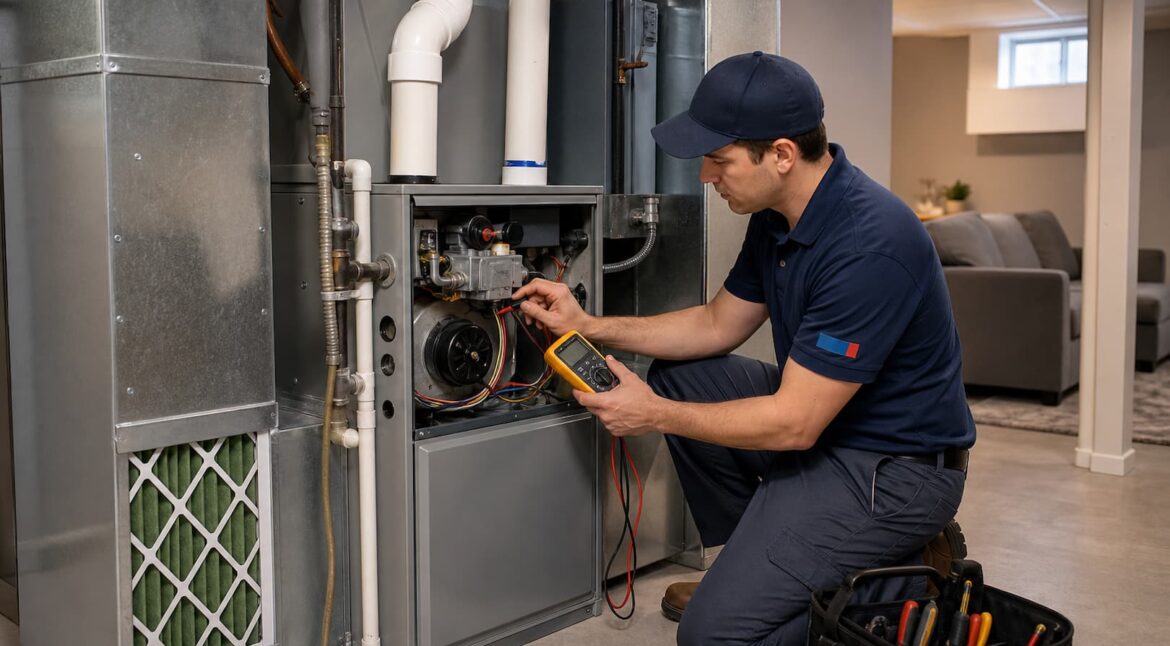
Why Is My Furnace Blowing Cold Air?
Cold air from the vents on a winter day does not always mean the furnace has failed. A forced-air system may move a brief pocket of room-temperature air before the burners warm the heat exchanger, and it may continue running the blower for a minute after the flame shuts off. That is normal. Air that stays cold through the entire cycle is different. It usually means the thermostat is asking only for the fan, the furnace cannot ignite, airflow is causing an overheat shutdown, or a safety control is interrupting the heating sequence.
The timing matters as much as the air temperature. Does the air warm up after 30 to 90 seconds? Does it start warm and turn cool? Do you hear the burners light and then shut down almost immediately? Does the furnace try several times before the blower runs? Those patterns point to different parts of the system and can save a lot of guesswork.
This guide explains the checks a homeowner can make without opening the furnace cabinet, the most common mechanical causes, and the warning signs that call for prompt furnace repair. If you smell natural gas, a strong electrical odor, or a carbon monoxide alarm sounds, skip the troubleshooting and follow the emergency steps below.
Quick answer: First, set the thermostat to Heat, choose Auto rather than On for the fan, and set the temperature above the current room temperature. Check the filter and make sure supply and return vents are open. If the furnace blows warm air briefly and then turns cold, repeatedly tries to ignite, trips a breaker, shows a fault code, or cannot raise the indoor temperature, stop resetting it and schedule service. A safety switch may be shutting the burners down while the blower continues to clear heat from the cabinet.
First, Is the Air Truly Cold?
Furnace supply air does not have to feel hot enough to sting your hand. High-efficiency furnaces and systems with variable-speed blowers often deliver a gentler, steadier stream than older equipment. Air around 90°F can feel cool against skin because skin temperature is close to that range and moving air increases evaporation. The better test is whether the furnace raises the room temperature and completes a normal cycle.
Use a room thermometer or the thermostat display instead of judging only by touch. Give the furnace ten to fifteen minutes after it starts. If the indoor temperature is climbing, the burners run steadily, and the cycle eventually ends at the setpoint, the system may be operating normally. If the temperature keeps falling or the vents never become warmer than the room, there is a real no-heat or low-heat problem.
How a Normal Furnace Heating Cycle Works
A modern gas furnace follows a specific sequence. The thermostat calls for heat. The control board checks safety circuits and starts the inducer motor, which establishes draft through the heat exchanger and vent. A pressure switch confirms that draft. The igniter heats or a spark begins, the gas valve opens, and the burners light. A flame sensor then proves that flame is present. Only after the heat exchanger warms does the main blower start moving air through the house.
When the thermostat is satisfied, the gas valve closes first. The blower continues briefly to recover useful heat and cool the heat exchanger. This is why a short cool period at the beginning or end of a cycle can be normal. If any proof or safety step fails, however, the board may close the gas valve while allowing the blower to run. The homeowner feels cold air, but the blower is often doing exactly what the safety logic tells it to do.
Safe Checks to Make Before Calling
Keep the first round of troubleshooting outside the furnace cabinet. Do not remove burner panels, touch wiring, bypass a door switch, or try to light a modern furnace by hand. The following checks are enough to catch several everyday causes without interfering with combustion or electrical safeguards.
1. Set the Thermostat to Heat and the Fan to Auto
A fan setting of On commands the blower to circulate air whether or not the burners are operating. Between heating cycles, that air will feel cool. Change the fan to Auto so it runs with a heat call. Then raise the setpoint three to five degrees above room temperature and wait. On a smart thermostat, also confirm that the active system mode is Heat rather than Cool, Fan, or an energy-saving schedule that has lowered the target temperature.
2. Check the Air Filter
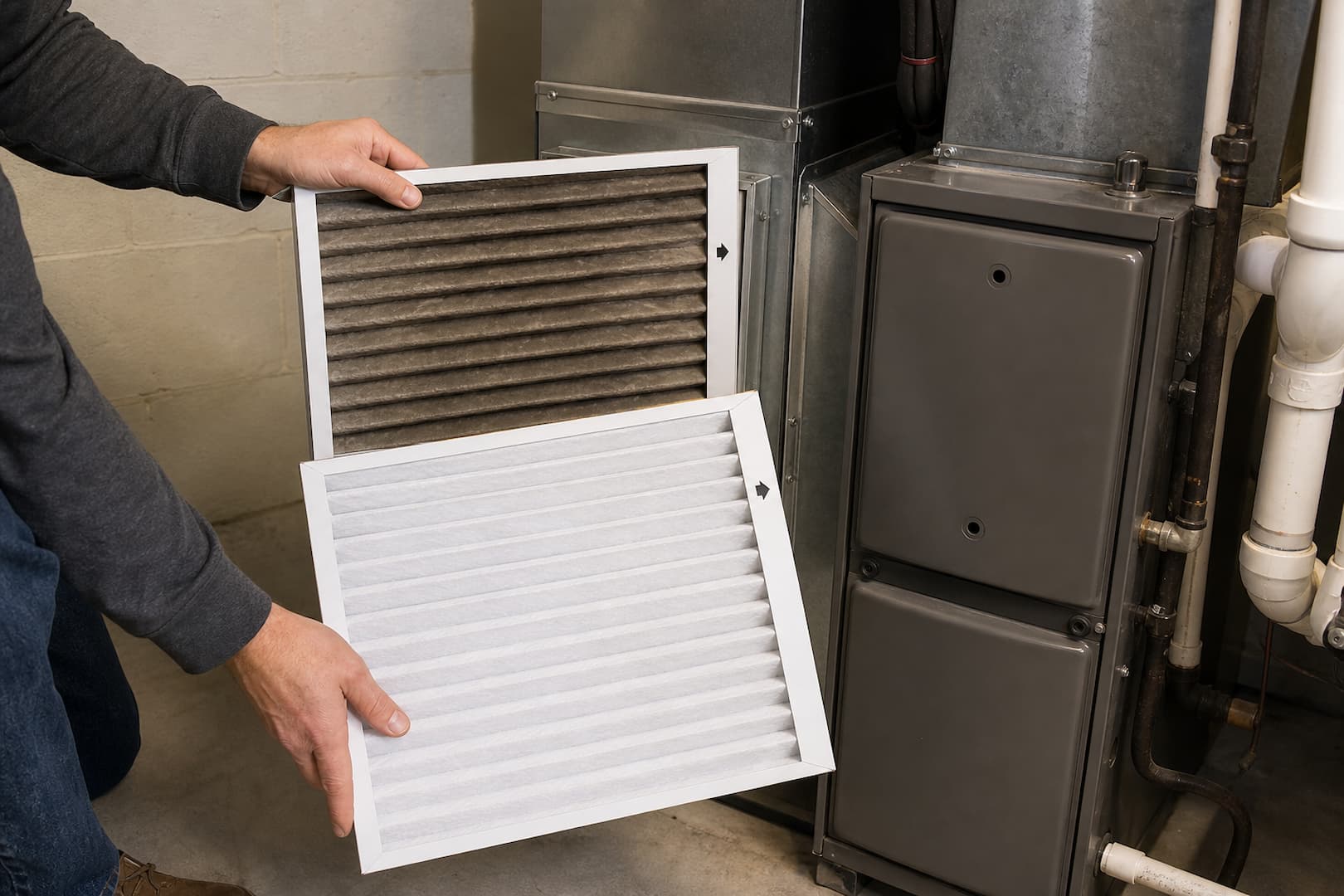
Pull the filter only if it is in a homeowner-accessible rack. Hold it toward a light. A thick layer of dust, pet hair, renovation debris, or lint can reduce airflow enough to make the furnace overheat. Replace a disposable filter with the same dimensions and orient the airflow arrow toward the furnace or air handler. Do not stack filters, and do not substitute a very restrictive filter unless the system is designed for it.
3. Open Supply Registers and Clear Return Grilles
Make sure furniture, curtains, rugs, and boxes are not blocking returns. Open supply registers throughout the home. Closing many vents rarely saves energy; it can raise duct pressure and reduce airflow through the furnace. If one room is too warm, the underlying issue may need balancing rather than a row of closed registers.
4. Look for a Simple Power or Fuel Interruption
Check whether the furnace service switch was bumped and whether the labeled furnace breaker is tripped. A breaker handle in the middle position is tripped, not on. Reset it once by moving it fully Off and then On. If it trips again, leave it off. For a gas furnace, confirm only that other gas appliances appear to have service; do not operate valves or attempt gas-line work if you are unsure of their position.
5. Read the Furnace Status Light
Many furnaces have a small viewing window with an LED that flashes a diagnostic pattern. Write down the pattern before turning power off. The code chart is often printed on the inside of a removable panel, but opening that panel may stop the furnace by releasing its door switch. If the chart is not visible from outside, save the blink count for the technician instead of repeatedly cycling power and erasing useful history.
Common Reasons a Furnace Blows Cold Air
The Blower Is Running Between Heating Cycles
This is the simplest explanation. Someone selected Fan On, a thermostat schedule enables circulation, or a smart thermostat is configured to run the fan for a certain number of minutes each hour. The air is not being heated because there is no heat call. If changing the fan to Auto stops the unwanted circulation and normal heat returns on the next call, the furnace itself may be fine.
The Furnace Is Overheating From Low Airflow
A dirty filter, blocked return, dirty evaporator coil, matted blower wheel, failing blower motor, collapsed duct, or too many closed vents can prevent the furnace from moving enough air. Heat then builds inside the cabinet. The high-limit switch shuts the burners off to protect the heat exchanger, while the blower keeps running to remove excess heat. At the vents, the cycle often begins warm and turns cool several minutes later.
Repeated limit trips should not be treated as a harmless reset issue. They can stress components and may indicate that airflow, furnace sizing, temperature rise, or the limit circuit needs attention. Replacing a visibly dirty filter is reasonable. If the pattern returns, the system needs measured airflow and temperature-rise checks.
The Burners Light, but the Flame Sensor Does Not Prove Flame
The flame sensor is a safety device. If it cannot confirm a stable burner flame, the control closes the gas valve. A common pattern is ignition, a few seconds of visible flame, shutdown, and another attempt. Oxidation on the sensor can be involved, but so can grounding, wiring, burner carryover, gas pressure, or control problems. Cleaning the sensor is often discussed as a do-it-yourself fix; opening the combustion area and handling the sensor is better left to a technician who can verify the entire flame-proving circuit.
The Igniter or Pilot Cannot Light the Burners
Most newer furnaces use a hot-surface igniter or electronic spark ignition. Older models may have a standing pilot. A cracked igniter, contaminated pilot assembly, failed ignition module, closed gas valve, gas pressure problem, or control fault can prevent flame. The furnace may make several attempts and then enter lockout. You may hear the inducer and clicks but never hear the soft rush of established burners.
The Condensate Drain or Pressure-Switch Circuit Is Open
High-efficiency condensing furnaces create water. A blocked trap, backed-up drain, frozen termination, failed condensate pump, or water where it should not be can interrupt operation. Draft problems can also keep the pressure switch from proving safe venting. The inducer may start, but ignition never follows. Because this circuit protects combustion and venting, never jump the pressure switch to make the furnace run.
The Intake or Exhaust Vent Is Restricted
Snow, ice, leaves, animal nesting, or an installation problem can obstruct sidewall PVC terminations. From the ground, look for obvious blockage without taking the vent apart. Keep snow from accumulating around the openings. A technician should evaluate recurring pressure-switch faults, water in vent tubing, improper pitch, deteriorated vent material, or signs that combustion products are not leaving the home correctly.
The Gas Valve, Control Board, or Thermostat Signal Has Failed
The heating call has to travel through thermostat wiring, the furnace board, safeties, ignition components, and the gas valve. A loose low-voltage connection, damaged thermostat cable, weak transformer, failed relay, bad board, or valve problem can break that chain. Parts should not be replaced from symptoms alone. A cold-air complaint can look similar even when the failure is at an entirely different point in the sequence.
Heat Is Being Lost Through the Duct System
If air is warm near the furnace but cool at distant registers, disconnected or leaking ducts may be sending heated air into an attic, crawlspace, garage, or wall cavity. Uninsulated ducts in cold spaces can also lose heat before it reaches the room. This tends to produce uneven comfort rather than a total loss of heat. A duct inspection, static-pressure measurement, and temperature checks at several points can separate distribution loss from a furnace problem.
What the Cold-Air Pattern Usually Suggests
| What you notice | What it may mean | Best next step |
|---|---|---|
| Cool air only between heat calls | Fan set to On or circulation schedule | Change fan to Auto and review thermostat settings |
| Warm air becomes cool before the room reaches setpoint | High-limit trip, low airflow, or unstable flame | Check filter and vents; schedule service if it repeats |
| Inducer runs and clicks, but no burner sound | Ignition, gas supply, pressure-switch, or control fault | Record the fault code and call a technician |
| Burners light for a few seconds, then stop | Flame-proving or burner issue | Do not keep resetting; arrange diagnosis |
| Some vents are warm and others are cold | Duct leak, balancing issue, insulation loss, or zone control | Have airflow and duct distribution tested |
Should You Reset the Furnace?
One reset can be reasonable after correcting a clear, nonhazardous issue such as a thermostat setting or replacing a clogged filter. Turn the thermostat off, wait a few minutes, restore the normal setting, and observe one complete heating cycle. Follow the furnace manual if it gives a specific reset procedure.
Repeated resets are not troubleshooting. Modern controls lock out after failed ignition attempts for a reason. Power-cycling may temporarily erase the code without fixing weak ignition, overheating, blocked venting, condensate trouble, or an electrical fault. If the same behavior returns, leave the furnace in a safe state and call for service.
Stop and leave the home if you smell gas or a CO alarm sounds.
Do not touch switches, use a phone inside, light a flame, or search for the leak. Move everyone outside, get well away from the building, and call 911 or the gas utility from a safe location. Carbon monoxide has no smell; a working CO alarm, headache, dizziness, nausea, confusion, or unusual weakness around fuel-burning equipment must be taken seriously.
When Cold Air Is an Urgent Furnace Problem
Arrange urgent service, and keep the system off when appropriate, if you notice any of the following:
- A burning-plastic, scorched-wire, or strong electrical odor.
- A breaker that trips again after one reset.
- Booming, delayed ignition, flame rollout, or soot around the furnace.
- Water leaking into electrical areas or spreading around the furnace.
- Repeated high-limit shutdowns or a cabinet that becomes unusually hot.
- No heat during dangerous cold, especially with infants, older adults, or medically vulnerable occupants in the home.
- Any gas odor or carbon monoxide alarm. Evacuate first; do not wait for an HVAC appointment.
For sudden no-heat conditions involving electrical trouble, unsafe temperatures, unusual combustion behavior, or repeated shutdowns, contact emergency HVAC repair in Linden after immediate gas or life-safety hazards have been reported to the proper emergency service.
What a Furnace Technician Will Check
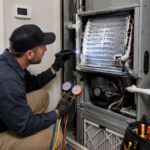
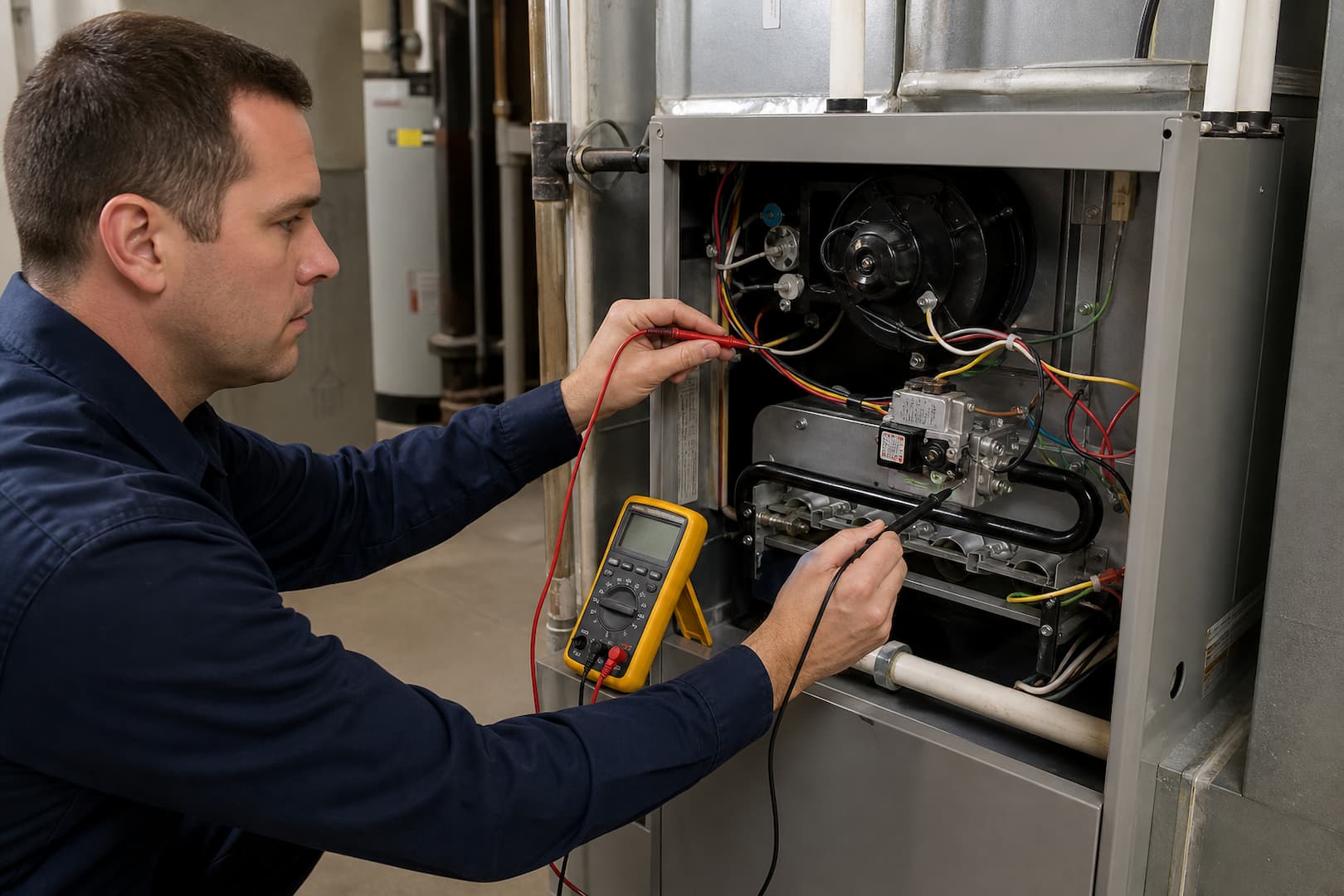
A good diagnosis begins by recreating the complaint. The technician watches the startup sequence instead of replacing the most familiar part. Thermostat input, fault history, inducer operation, pressure-switch response, igniter current or spark, gas-valve operation, burner ignition, flame-sensor signal, blower timing, limit response, and shutdown behavior all help locate the failure.
Depending on the pattern, the visit may also include:
- Measuring supply and return temperatures and comparing temperature rise with the furnace rating plate.
- Checking static pressure, filter restriction, blower speed, motor performance, wheel condition, and coil cleanliness.
- Inspecting intake, exhaust, condensate trap, drain tubing, and pressure-switch tubing.
- Evaluating burner flame, ignition carryover, manifold pressure, grounding, and flame-proving current.
- Inspecting accessible heat-exchanger and venting conditions and performing appropriate combustion-safety checks.
- Testing low-voltage signals, safeties, relays, capacitors where applicable, and line-voltage connections.
- Checking the duct system when heat loss or uneven delivery is part of the complaint.
The goal is not simply to make the burners light once. The repaired furnace should start cleanly, maintain flame, move the required air, stay within its temperature-rise range, satisfy the thermostat, and shut down without another fault.
Repair or Replace a Furnace That Keeps Blowing Cold Air?
Cold air alone does not justify replacement. Thermostat corrections, filters, igniters, flame sensors, capacitors, relays, drain repairs, and many airflow problems are routine repairs when the rest of the furnace is in sound condition. Age matters, but the diagnosis matters more.
Replacement deserves a practical discussion when the furnace has a compromised heat exchanger, extensive corrosion, obsolete or hard-to-source major parts, repeated safety-related failures, or a repair history that no longer buys dependable heat. Comfort problems caused by poor ductwork should be addressed in the plan as well; a new furnace connected to the same restrictive or leaking distribution system can repeat old complaints.
How to Reduce the Chance of Another Cold-Air Problem
- Check the filter monthly during heavy use. Replace it when dirty rather than relying only on the date printed on the package.
- Keep returns clear and most supply registers open. The furnace needs a stable air path through the entire system.
- Keep outdoor vent terminations clear. After snow or wind, look from a safe location for obvious accumulation around sidewall vents.
- Test smoke and carbon monoxide alarms. Follow the alarm manufacturer’s placement, testing, and replacement instructions.
- Schedule pre-season service. Regular furnace maintenance can catch developing ignition, airflow, condensate, electrical, and venting concerns before the coldest week of the year.
Frequently Asked Questions
Why does my furnace blow cold air for a minute before it gets warm?
The blower may be clearing room-temperature air from the ducts while the heat exchanger warms. A brief delay can be normal. If the air never warms or the delay has become much longer than usual, the ignition sequence or blower timing should be checked.
Why does the furnace start warm and then blow cold?
That pattern often occurs when the burners shut down before the thermostat is satisfied. Restricted airflow can trip the high-limit switch, while a flame-proving or control problem can also close the gas valve. The continuing blower then sends unheated air through the vents.
Can a dirty filter make a furnace blow cold air?
Yes. A severely restricted filter can reduce airflow, overheat the furnace, and cause the high-limit switch to stop the burners. Replacing the filter may correct a simple case, but repeated shutdowns call for airflow and temperature-rise measurements.
Is it safe to keep running the furnace when the air is cold?
Not indefinitely. Confirm the thermostat and filter first. If the system is failing to heat, cycling abnormally, overheating, tripping a breaker, or showing an ignition fault, shut it down and arrange service. Never continue operating it after a gas odor, CO alarm, electrical smell, or delayed-ignition boom.
Why is the blower running when the burners are off?
The thermostat may be set to Fan On, the control may be finishing a normal post-purge, or the blower may be responding to an overheat condition. If it runs continuously and heat does not return, note the fault light and have the system diagnosed.
Can I clean the flame sensor myself?
The job is often described as simple, but a flame-sensor symptom can also come from grounding, burner, wiring, gas-pressure, or control issues. Because access requires opening the combustion compartment, professional diagnosis is the safer choice—especially when the furnace repeatedly loses flame.
Bottom Line
Start with the few things you can verify safely: Heat mode, Fan Auto, a reasonable setpoint, a clean correctly installed filter, open registers, clear returns, and normal power. Then watch one complete cycle. A short cool draft at startup or shutdown can be ordinary. Air that stays cold, turns cold early, or arrives after repeated failed ignition attempts is not.
The furnace may be protecting itself from low airflow, failed ignition, poor flame proof, blocked drainage, venting trouble, or an electrical fault. Record what you hear, how long the burners run, and any status-light pattern. That evidence gives a technician a better starting point—and it is far safer than bypassing a control or resetting the same fault over and over.