
Why Is My AC Leaking Water?
If you notice water around your indoor AC unit, under the air handler, near the furnace cabinet, around a ceiling vent, or dripping from a drain line, it is natural to worry. Air conditioners do remove moisture from indoor air, so water is part of normal cooling operation. But that water should be collected, drained, and carried away safely. It should not be leaking onto floors, ceilings, walls, insulation, or equipment.
An AC leaking water usually means something is wrong with the condensate system, airflow, coil temperature, or installation. The most common causes include a clogged condensate drain line, overflowing drain pan, failed condensate pump, cracked or rusted pan, frozen evaporator coil, dirty air filter, dirty coil, weak blower, disconnected drain line, or a unit that was not installed with proper slope or drainage.
The important part is acting quickly. A small AC leak can become ceiling damage, stained drywall, wet flooring, odors, mold concerns, or electrical issues if the water reaches the wrong area. This guide explains why AC systems produce water, what causes leaks, what you can safely check, when to turn the system off, and when professional air conditioning repair is needed.
Quick answer: Your AC is leaking water because the moisture it removes from indoor air is not draining properly, or because the evaporator coil has frozen and is melting. Common causes include a clogged condensate drain line, dirty filter, frozen coil, cracked drain pan, failed condensate pump, disconnected drain line, dirty evaporator coil, poor airflow, or improper installation. Turn cooling off if water is spreading, the ceiling is wet, the unit is frozen, or electrical parts may be exposed to moisture.
Why Does an Air Conditioner Produce Water?
To understand why an AC leaks water, it helps to know why there is water in the system at all. Your air conditioner does not create water from nowhere. It removes moisture from indoor air as part of the cooling process.
When warm indoor air passes over the cold evaporator coil, two things happen. Heat is absorbed from the air, and moisture in the air condenses on the coil surface. It is similar to how water droplets form on the outside of a cold glass on a humid day. That moisture should drip into a drain pan, flow into a condensate drain line, and leave the home safely.
During humid weather, a central AC can remove a significant amount of moisture from the air. That is normal. What is not normal is water pooling around the indoor unit, dripping through a ceiling, leaking from the furnace or air handler cabinet, overflowing the drain pan, or causing the system to shut off.
In a properly operating system, condensate drainage should be quiet and controlled. If you see water where it does not belong, the drain path, coil condition, airflow, or safety controls should be checked.
Is AC Water Leaking Normal?
Some water from an air conditioner is normal. Water dripping from the end of a condensate drain line outdoors during cooling season can be normal. Moisture flowing through the drain line is normal. A small amount of condensation on cold, insulated refrigerant lines may also be normal in humid conditions if it is not dripping heavily or soaking surrounding materials.
But water leaking indoors is not normal. Water around the air handler, furnace, ceiling, wall, closet, attic platform, or floor usually means the condensate is not draining correctly or the system has frozen and is now melting. It should be investigated before damage spreads.
Water is usually a problem if you notice:
- Water pooling under the indoor air handler.
- Water dripping from the furnace or indoor AC cabinet.
- Water stains on ceiling tiles or drywall.
- A wet attic platform or secondary drain pan.
- Water dripping from a ceiling vent.
- A full or overflowing drain pan.
- A condensate pump that is not turning on.
- A musty smell near vents or the indoor unit.
- The thermostat going blank after water backs up.
- The AC shutting off and not restarting after a leak.
What to Do Right Away If Your AC Is Leaking Water
If water is actively leaking, start with damage prevention and safety. Do not ignore the leak and do not keep lowering the thermostat hoping the system will “push through” the problem.
Step 1: Turn Cooling Off
Turn the thermostat from Cool to Off. This stops the system from producing more condensate and can help prevent the leak from getting worse. If the leak is small and you are only seeing water in the secondary pan, turning cooling off may give you time to prevent further damage.
Step 2: Leave the Fan On Only If the System Is Not Leaking Heavily or Frozen
If you suspect the coil is frozen, setting the fan to On may help thaw ice if the blower works. But use caution. As ice melts, more water may drain or leak. If water is already spreading, dripping into a ceiling, or reaching electrical areas, leave the system off and call for service.
Step 3: Protect the Area
If water is on the floor, place towels or a shallow pan where safe. Move stored items away from the unit. If the leak is above a ceiling, protect the area below and avoid using electrical devices near wet surfaces. Water near electrical components should be treated seriously.
Step 4: Check the Air Filter
A severely dirty filter can restrict airflow and cause the evaporator coil to freeze. When the ice melts, it can look like the AC is leaking water. If the filter is clogged, replace it with the correct size. But if the system was frozen or leaking heavily, do not restart cooling until the unit is thawed and the drain path is safe.
Step 5: Look for Ice
Check the larger copper refrigerant line near the indoor unit or outdoor unit. If it is covered in frost or ice, the leak may be meltwater from a frozen coil. Turn cooling off and let the system thaw completely. Do not chip ice away or use heat tools inside the equipment.
Step 6: Call for Service If Water Is Indoors or the Cause Is Not Obvious
A clogged drain or pump issue can sometimes be straightforward, but leaks often return if the underlying cause is not corrected. If water is indoors, in a ceiling, near electrical components, or connected to freezing, schedule professional diagnosis.
Common Reasons an AC Leaks Water
AC water leaks can come from several parts of the system. The most common causes are related to drainage, airflow, freezing, or installation.
1. Clogged Condensate Drain Line
A clogged condensate drain line is one of the most common reasons an AC leaks water. As the system removes moisture from the air, that water flows into the drain pan and exits through the drain line. Over time, algae, dust, sludge, debris, rust, insulation particles, or biological growth can clog the line.
When the drain line clogs, water has nowhere to go. It can back up into the drain pan, overflow, trigger a float switch, shut down the AC, or leak around the indoor unit. If the air handler is in an attic or above a finished ceiling, a clogged drain can cause ceiling stains and water damage quickly.
Signs of a clogged drain include standing water in the pan, water around the indoor unit, a musty smell, a blank thermostat caused by a float switch shutdown, or water dripping from a secondary drain outlet. If the line clogs repeatedly, the drain design, slope, trap, venting, or maintenance routine may need attention.
2. Dirty Air Filter Causing a Frozen Coil
A dirty air filter can restrict airflow across the evaporator coil. When not enough warm indoor air passes across the coil, the coil can get too cold and freeze. Later, when the ice melts, water may overflow the drain pan or leak from areas not designed to handle that much meltwater at once.
This is why an AC leak and a frozen coil often happen together. You may first notice weak airflow or warm air from the vents. Then you may see ice on the refrigerant line. Later, you may see water leaking as the system thaws.
Replacing the filter is important, but it may not be enough if the coil is dirty, blower is weak, ductwork is restricted, or refrigerant is low. If freezing returns after a clean filter is installed, the system needs diagnosis.
3. Frozen Evaporator Coil
A frozen evaporator coil is a major cause of AC water leaks. Ice forms on the coil because of airflow problems, low refrigerant, dirty coils, blower issues, blocked vents, duct restrictions, or control problems. When the ice melts, the drain system may not be able to handle the sudden amount of water.
If the coil is frozen, the leak is not just a drainage problem. The system is operating incorrectly. Continuing to run cooling mode while frozen can stress the compressor and make water damage worse.
If your AC is freezing and leaking, turn cooling off and let the unit thaw. Then schedule diagnosis if the cause is not a simple clogged filter or if the freezing returns.
4. Cracked, Rusted, or Damaged Drain Pan
The drain pan collects condensate as it drips from the evaporator coil. Older metal pans can rust. Plastic pans can crack. A pan can also become damaged, misaligned, or loose. If the pan cannot hold and direct water into the drain line, water may leak even if the drain line itself is clear.
A damaged drain pan is more common in older systems, but it can happen in newer installations too if the pan is not supported properly or if equipment shifts. The repair depends on the system design and access. Some pans can be replaced; others are integrated into the coil or air handler assembly and require more involved work.
5. Failed Condensate Pump
Some AC systems cannot drain by gravity alone. They use a condensate pump to move water to a drain location. If the pump fails, loses power, clogs, sticks, or has a blocked discharge line, water may collect and overflow.
Signs of a condensate pump problem include a full pump reservoir, water around the pump, a pump that does not turn on, a pump that runs constantly, or an AC that shuts off due to a safety switch connected to the pump. Pump replacement or cleaning may be needed.
6. Disconnected or Poorly Sloped Drain Line
The condensate drain line needs proper slope and secure connections. If the line becomes disconnected, loose, sagging, poorly pitched, or improperly trapped, water may not flow correctly. It can leak at joints, sit in low spots, or back up into the pan.
Improper drain installation is especially common after equipment replacement, renovation work, attic changes, or drain rerouting. A technician can inspect slope, support, fittings, trap design, venting, and termination to see why water is not draining properly.
7. Float Switch Shutoff or Safety Pan Full of Water
Many systems include a float switch that shuts off the AC when water backs up. This is a protective device designed to prevent water damage. If the float switch activates, the AC may stop running, the thermostat may go blank, or cooling may not start.
A float switch is not the problem by itself. It is usually responding to a drainage problem. Do not bypass it to make the AC run. Find out why water is backing up, then restore normal drainage.
8. Dirty Evaporator Coil
A dirty evaporator coil can contribute to both freezing and drainage problems. Dirt on the coil affects heat transfer and can cause moisture to drain unevenly. Instead of dripping cleanly into the pan, water may cling to dirt, blow off the coil, or freeze under poor airflow conditions.
Dirty coils often develop when filters are neglected, filters do not fit properly, the return duct pulls in dust, or the system has not been maintained. Coil cleaning should be handled carefully because the fins and tubing can be damaged.
9. Low Refrigerant or Refrigerant Leak
Low refrigerant can cause the evaporator coil to get too cold and freeze. When that ice melts, the result may look like an AC water leak. Since refrigerant circulates in a sealed system, low refrigerant usually means there is a leak or service issue.
Adding refrigerant without finding the cause may only provide temporary cooling. If the system freezes and leaks repeatedly, refrigerant performance should be checked along with airflow and coil condition.
10. Poor Installation or Incorrect Equipment Pitch
Air handlers and coils must be installed so condensate flows toward the drain. If the unit is not level in the proper direction, if the drain pan is poorly positioned, or if the drain line is incorrectly installed, water may pool or leak. This can happen after a new installation, replacement, renovation, or attic platform shift.
If your AC has leaked since installation or after recent work, poor drainage setup should be considered. The solution may involve correcting slope, adjusting drain piping, replacing a pan, adding a trap or vent where appropriate, or reworking the condensate route.
11. Missing or Damaged Insulation on Refrigerant Lines
The larger refrigerant line should usually be insulated. If insulation is missing, torn, loose, or saturated, condensation may form on the line and drip. This may look like an AC leak even when the drain system is working.
Line insulation problems are usually smaller than a clogged drain or frozen coil, but they can still cause water stains, dripping, and moisture damage if the line runs through finished or enclosed spaces.
12. High Indoor Humidity
During humid weather, your AC removes more moisture from indoor air. If the system is already borderline because of a slow drain, dirty coil, weak airflow, or poor pan design, high humidity can push the condensate system beyond what it can handle.
High humidity can also make condensation more visible on ducts, supply registers, refrigerant lines, or poorly insulated surfaces. If water appears around vents or ductwork, insulation and humidity control should be evaluated.
Where Is the Water Coming From?
The location of the water can help narrow the cause. You do not need to take equipment apart, but observe where the leak appears.
Water Under the Indoor Air Handler
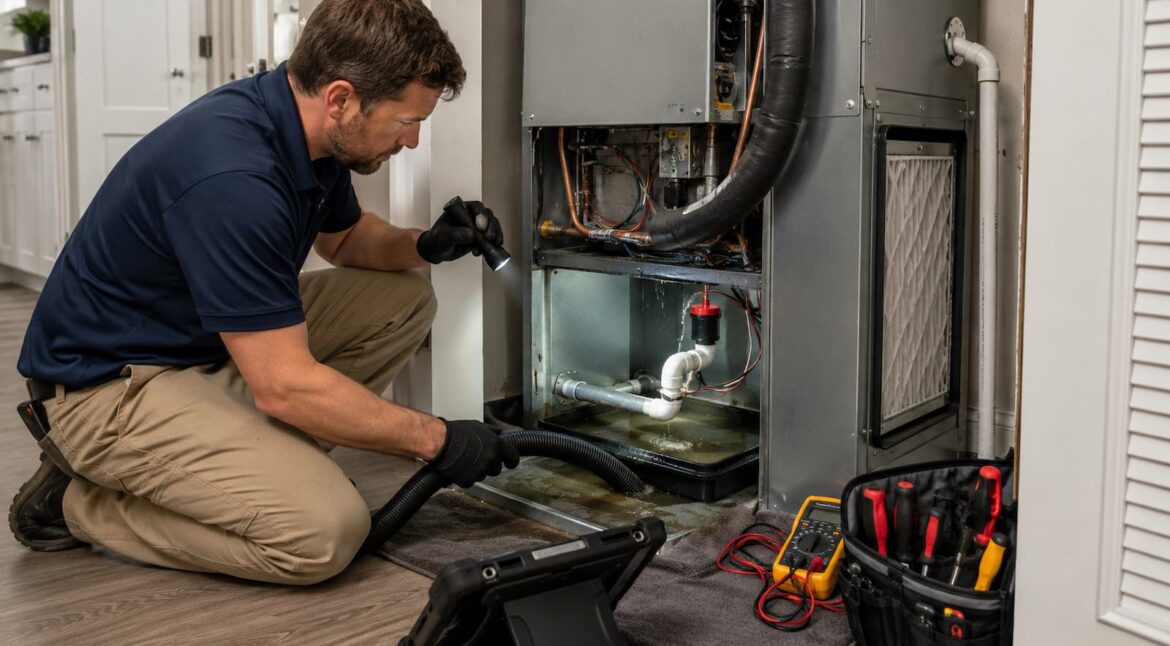
Water under the indoor unit often points to a clogged drain line, overflowing drain pan, cracked pan, frozen coil melting, failed condensate pump, or disconnected drain line. If the equipment is in a basement or utility room, you may notice puddles near the unit. If it is in an attic or closet, the leak may show up as ceiling damage instead.
Water Dripping From the Furnace Cabinet
If your evaporator coil sits above or near the furnace, water may appear to come from the furnace even though the cooling coil or drain pan is the source. This can happen when condensate leaks down through the cabinet. Do not assume the furnace itself is the issue during cooling season.
Water Around a Ceiling Vent
Water near a ceiling vent may come from condensation on poorly insulated ducts, a leaking air handler above the ceiling, a clogged drain, or a roof/plumbing issue unrelated to the AC. If the water appears only when the AC runs, HVAC condensation or drainage should be investigated.
Water in the Secondary Drain Pan
A secondary drain pan under an attic or closet air handler is designed to catch water if the primary drain system fails. It should not be full during normal operation. Water in the secondary pan usually means the main drain, pan, pump, or coil drainage needs attention.
Water From an Outdoor Drain Line
Water dripping from the normal condensate drain outlet outside can be normal during cooling season. However, water dripping from an emergency or secondary drain outlet may mean the primary drain is clogged. If the outlet is in a visible place, such as above a window or door, it may be designed to warn you that the primary drain needs service.
Can an AC Leak Cause the System to Shut Off?
Yes. Many systems have condensate safety switches that shut the AC off when water backs up. This can make the system seem like it has an electrical or thermostat problem. The thermostat may be blank, the AC may not respond, or cooling may stop unexpectedly.
The shutoff is intentional. It is meant to prevent water damage. If a float switch has shut down the system, the answer is not to bypass the switch. The answer is to fix the drainage problem that caused the switch to activate.
If your AC stopped working and you also see water near the indoor unit, mention both symptoms when scheduling service. That combination often points to a condensate drain or safety switch issue.
Can You Keep Running an AC That Is Leaking Water?
In most cases, you should turn cooling off if the AC is leaking indoors. Continuing to run the system produces more condensate and may worsen the leak. If the leak is caused by a frozen coil, running cooling mode can create more ice and later more meltwater.
You should not run the AC if water is spreading, dripping into a ceiling, pooling near electrical components, filling a secondary pan, or appearing after the system froze. It is better to stop the water source and diagnose the problem than risk damage.
If the only water you see is normal condensate dripping from the exterior drain line, the system may be operating normally. The key is location. Water outside at the drain outlet is usually expected. Water inside the home is a warning sign.
When Is an AC Water Leak an Emergency?
Not every AC water leak is an emergency, but some situations require fast action. Water damage can spread quickly, especially if the air handler is above finished space.
Call for urgent service if:
- Water is dripping through a ceiling.
- The secondary drain pan is full.
- Water is near electrical components.
- The AC is frozen and leaking as it thaws.
- The system has shut off and will not restart.
- The thermostat is blank after water backed up.
- There is a musty smell or repeated drain clog.
- The leak is in an attic, closet, or finished area.
- You cannot identify where the water is going.
- The leak is spreading faster than you can contain it.
If the leak is active and the home is at risk of damage, turn the system off and schedule service promptly. For urgent no-cooling problems with water damage risk, emergency HVAC repair may be appropriate.
What an HVAC Technician Will Check
A proper AC leak diagnosis should identify why water is escaping the system. The technician will look at drainage, airflow, coil condition, freezing, equipment installation, and safety controls.
A diagnostic visit may include:
- Inspecting the condensate drain line for clogs.
- Clearing the drain line if needed.
- Checking the drain pan for cracks, rust, or overflow.
- Testing the condensate pump if present.
- Inspecting the float switch and safety pan.
- Checking drain line slope, traps, supports, and termination.
- Inspecting the air filter and filter fit.
- Checking for a frozen evaporator coil.
- Inspecting evaporator coil cleanliness.
- Checking blower motor and airflow.
- Evaluating refrigerant performance if freezing is suspected.
- Checking line insulation and condensation points.
- Looking for signs of water damage around the unit.
- Confirming that the system drains properly after repair.
The repair may be simple, such as clearing a drain line, or more involved, such as replacing a pan, repairing a pump, correcting drain piping, cleaning a coil, diagnosing freezing, or fixing airflow issues.
How AC Maintenance Helps Prevent Water Leaks
Many AC water leaks are preventable with routine service. Maintenance helps keep condensate moving, airflow steady, coils clean, and freezing risks lower. It also gives a technician a chance to catch drainage problems before they overflow into the home.
During seasonal AC maintenance, a technician can inspect the drain line, pan, pump, float switch, filter, blower, evaporator coil, refrigerant performance, and overall system operation. This is especially important before humid summer weather, when condensate volume increases.
Maintenance can reduce water leak risk by:
- Clearing or treating condensate drain lines before they clog.
- Checking drain pans for rust, cracks, or standing water.
- Testing condensate pumps and safety switches.
- Replacing dirty filters before airflow drops.
- Inspecting evaporator coil condition.
- Checking blower operation and airflow.
- Finding early signs of freezing or refrigerant issues.
- Confirming that water drains where it should.
How to Prevent Your AC From Leaking Water Again
Once a leak has been repaired, prevention depends on what caused it. A one-time drain clog may need better drain maintenance. A frozen coil may require airflow or refrigerant diagnosis. A pump failure may require replacement. A repeated attic leak may require better secondary protection and safety switches.
Change Filters Regularly
A clean filter helps maintain airflow and reduces the risk of coil freezing. Check the filter monthly during heavy cooling season and replace it when it looks dirty. Use the correct size and avoid filters that are too restrictive for your system.
Keep the Drain Line Maintained
Condensate drains can clog with algae and debris. Depending on the system, a technician may recommend periodic clearing, drain treatment, trap cleaning, pump inspection, or improved access for maintenance.
Watch the Secondary Drain or Safety Pan
If your system has a secondary pan, check it occasionally. It should normally be dry. Water in that pan means the primary drainage system may not be working correctly.
Pay Attention to Weak Airflow
Weak airflow can lead to freezing, and freezing can lead to leaks. If vents feel weak, rooms are not cooling well, or the system runs constantly, address the airflow issue before water appears.
Do Not Ignore Ice
Ice on the refrigerant line or coil area is an early warning sign. If you ignore it, the system may leak water when the ice melts. Turn cooling off and diagnose the cause.
Schedule Service Before Peak Humidity
Spring maintenance can catch drain, coil, filter, blower, and refrigerant issues before humid summer weather increases condensate load. This is one of the best ways to reduce surprise leaks during cooling season.
Repair or Replace: What If the AC Keeps Leaking?
Many AC leaks are repairable. A clogged drain line, failed pump, dirty filter, or float switch issue does not automatically mean the system needs replacement. But repeated leaks on an older system may point to deeper problems.
Repair often makes sense when:
- The leak is caused by a clogged drain line.
- The drain pan or pump can be repaired or replaced reasonably.
- The system is otherwise cooling well.
- The evaporator coil is not leaking refrigerant.
- Airflow can be restored through maintenance or minor repair.
- The equipment is relatively young or in good condition.
Replacement may be worth discussing when:
- The evaporator coil is badly corroded or leaking refrigerant.
- The system freezes and leaks repeatedly.
- Major repairs are needed on an older AC.
- The system has repeated drainage and airflow problems due to poor installation.
- Cooling performance is poor even after maintenance.
- Repair cost is high compared with replacement value.
If the leak is tied to major coil failure, repeated refrigerant problems, or an aging system that no longer cools reliably, it may be time to compare repair with replacement. But the decision should come after diagnosis, not from the leak alone.
Frequently Asked Questions
Why is my AC leaking water inside the house?
The most common causes are a clogged condensate drain line, overflowing drain pan, frozen evaporator coil, dirty air filter, failed condensate pump, cracked drain pan, disconnected drain line, dirty coil, or poor installation. Water inside the home is not normal and should be checked.
Should I turn off my AC if it is leaking water?
Yes, if water is leaking indoors, spreading, dripping through a ceiling, filling a pan, or near electrical components, turn cooling off. Continuing to run the AC can create more water and worsen damage.
Can a clogged drain line cause my AC to leak?
Yes. A clogged condensate drain line is one of the most common reasons AC systems leak water. When the line clogs, water backs up into the pan and may overflow or trigger a safety switch.
Can a dirty filter cause water leaking from the AC?
Yes. A dirty filter can restrict airflow and cause the evaporator coil to freeze. When the ice melts, water may leak from the indoor unit or overflow the drain system.
Why is my AC leaking water after it froze?
When a frozen coil thaws, the melting ice can release more water than the drain system can handle at once. The original cause may be poor airflow, dirty filter, low refrigerant, dirty coil, blower issue, or duct restriction.
Is water dripping from the AC drain line outside normal?
Yes, water dripping from the normal condensate drain outlet outside can be normal during cooling season. Water leaking indoors, from a ceiling, or from an emergency secondary drain outlet may indicate a problem.
Can an AC water leak shut off the thermostat?
Yes. If a float switch detects backed-up water, it may shut off the AC or interrupt low-voltage power. This can make the thermostat go blank or stop responding until the drain problem is fixed.
How do I know if my condensate pump failed?
Signs include water around the pump, a full pump reservoir, a pump that does not turn on, a pump that runs constantly, or AC shutdown connected to the pump safety switch. A technician can test the pump and discharge line.
Can AC leaking water cause mold?
Persistent moisture can contribute to mold concerns, odors, and damage if materials stay wet. The leak should be stopped, the source repaired, and wet materials dried properly.
When should I call a technician for an AC water leak?
Call a technician if water is leaking indoors, the drain pan is full, the system has shut off, the thermostat is blank, the coil is frozen, water is near electrical components, the leak is above finished space, or the leak returns after basic filter and drain checks.
Bottom Line: AC Water Leaks Usually Mean Drainage, Airflow, or Freezing Problems
Your AC is supposed to remove moisture from indoor air, but that water should drain safely. If water is leaking inside the home, the system needs attention. The cause may be a clogged condensate drain, failed pump, cracked pan, frozen coil, dirty filter, poor airflow, dirty evaporator coil, low refrigerant, disconnected drain line, or improper installation.
The safest first step is to turn cooling off if the leak is indoors or spreading. Check the filter, look for ice, protect the area from water damage, and do not bypass safety switches. If water is in a ceiling, attic, closet, or near electrical parts, schedule service promptly.
A technician can clear the drain, test the pump, inspect the pan, check airflow, diagnose freezing, and confirm that the system drains properly before normal cooling resumes. Fixing the cause early helps protect your AC, your home, and your indoor comfort.