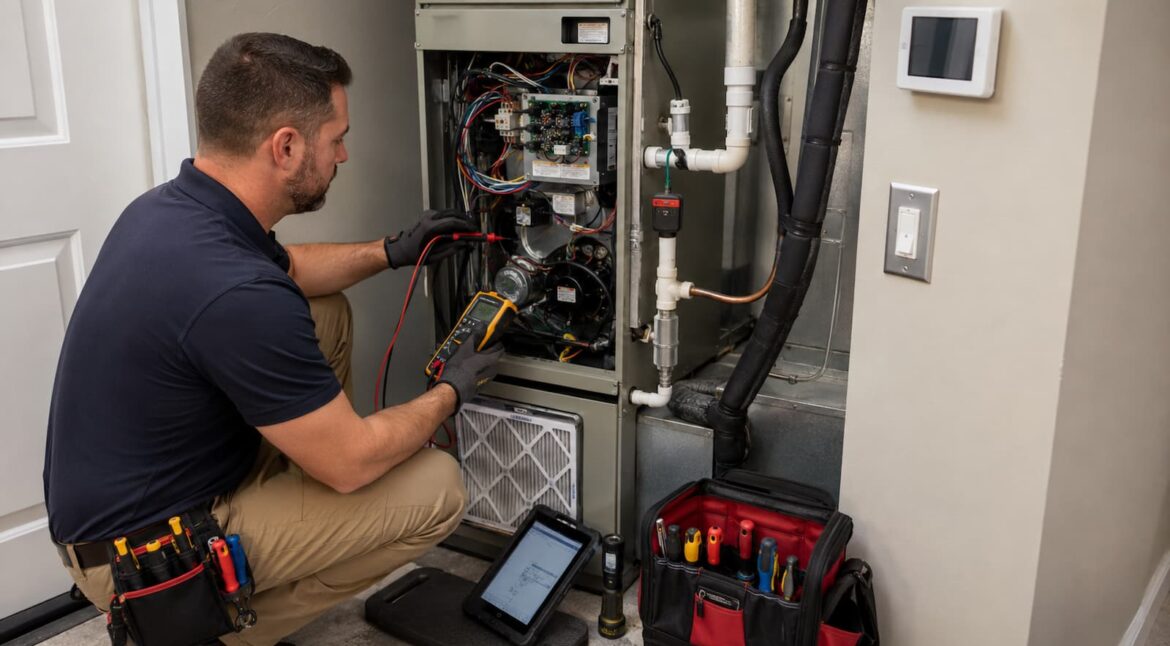
Why Won’t My AC Turn On?
When your air conditioner will not turn on, the problem can feel urgent right away. The thermostat may be blank. The indoor fan may not start. The outdoor unit may stay completely silent. Or the system may click, hum, buzz, or try to start before shutting down again. In hot weather, even a few hours without cooling can make the house uncomfortable.
The good news is that not every AC startup problem means the system has failed completely. Sometimes the cause is simple: thermostat settings, dead thermostat batteries, a tripped breaker, a shut-off switch, a clogged condensate drain, or a dirty filter that led to a safety shutdown. Other times, the issue involves electrical components, a failed capacitor, a bad contactor, a low-voltage problem, a blower motor failure, a control board issue, or compressor trouble.
This guide explains why an AC may not turn on, what you can safely check first, which warning signs mean you should stop troubleshooting, and when to call a professional for air conditioning repair. The goal is not to turn you into an HVAC technician. The goal is to help you avoid unsafe DIY work, identify obvious issues, and know when the system needs proper diagnosis.
Quick answer: If your AC will not turn on, check that the thermostat is set to Cool, the temperature is set below room temperature, the thermostat has power, breakers are not tripped, indoor and outdoor switches are on, the air filter is not severely clogged, and the condensate drain safety switch has not shut the system down. If the breaker trips again, the system hums or buzzes, the thermostat stays blank, water is backed up, or the outdoor unit will not start, call an HVAC technician.
First, What Do You Mean by “AC Won’t Turn On”?
“My AC won’t turn on” can mean several different things. The first step is identifying what is actually happening. A blank thermostat is different from a working thermostat with a silent outdoor unit. An indoor fan that runs without cooling is different from a completely dead system. A unit that hums but will not start is different from one that starts and trips the breaker.
Try to match your situation to one of these scenarios:
- The thermostat is blank. The display has no power or does not respond.
- The thermostat is on, but nothing happens. It says cooling is needed, but the indoor and outdoor equipment do not start.
- The indoor fan runs, but the outdoor unit does not. Air may come from the vents, but it is not cool.
- The outdoor unit hums or buzzes but will not start. The fan may not spin, or the compressor may not start.
- The AC starts and then shuts off quickly. The system short cycles or trips out.
- The breaker trips when the AC starts. Electrical protection is shutting the system down.
- The system stopped after water backed up. A float switch or condensate safety device may have shut it off.
These details matter because each scenario points to different possible causes. They also help an HVAC technician diagnose the system faster when you schedule service.
Safe Checks to Try Before Calling for AC Repair
Before assuming the worst, start with safe homeowner-level checks. These do not require opening electrical panels inside the equipment, handling refrigerant, bypassing switches, or touching high-voltage parts. If anything smells burned, sparks, trips repeatedly, or looks unsafe, stop and call a professional.
1. Check the Thermostat Mode
Make sure the thermostat is set to Cool. It sounds simple, but thermostat mode is one of the first things to check. A thermostat set to Heat, Off, Fan, Eco, Vacation, or a programmed setback may prevent the AC from turning on when you expect it to.
Next, set the temperature several degrees below the current room temperature. If the room is 78°F, set the thermostat to 72°F or lower for testing. Some systems also have a built-in delay to protect the compressor, so give it a few minutes before assuming nothing is happening.
If you have a smart thermostat, check schedules, app settings, occupancy modes, geofencing, utility demand response settings, and temporary holds. Sometimes the AC is not broken; the thermostat is simply following a schedule or energy-saving mode.
2. Check Thermostat Batteries and Power
If the thermostat display is blank, the AC may not receive a call for cooling. Some thermostats use batteries. Replace them if the display is blank, dim, or showing a low-battery warning. Make sure the battery contacts are clean and the thermostat face is fully seated on the wall plate.
If your thermostat does not use batteries, or if new batteries do not restore the display, the issue may be low-voltage power from the HVAC system. Possible causes include a tripped indoor unit switch, blown low-voltage fuse, failed transformer, clogged drain safety switch, wiring issue, or control board problem. These require professional diagnosis.
3. Check the Circuit Breakers Once
Your AC usually has electrical circuits for the indoor unit and outdoor unit. Check the electrical panel for tripped breakers. A breaker may appear slightly out of position rather than fully off. If you find a tripped breaker, turn it fully off and then back on one time.
If the breaker trips again, do not keep resetting it. A repeatedly tripping breaker can indicate an electrical fault, compressor issue, motor failure, shorted wiring, bad capacitor, or overloaded component. Breakers are safety devices. Repeated resets can be dangerous and can make equipment damage worse.
4. Check the Indoor Service Switch
Many indoor air handlers or furnace cabinets have a service switch nearby. It may look like a regular light switch. If someone accidentally turned it off while cleaning, storing items, or working near the equipment, the indoor unit may have no power. Make sure the switch is on.
Also check that the blower door panel is properly in place. Some systems have a door safety switch that prevents operation if the panel is not seated correctly. Do not tape or bypass this switch. It is there for safety.
5. Check the Outdoor Disconnect
The outdoor condenser usually has a disconnect box mounted on the wall near the unit. If it has been turned off for service, storm preparation, or by accident, the outdoor unit will not run. Make sure it is in the on position if you can do so safely and without opening damaged equipment.
Do not open the condenser cabinet or electrical compartment. Outdoor AC units contain high-voltage components and capacitors that can hold electrical charge. If the disconnect or wiring looks damaged, leave it alone and call a technician.
6. Check the Air Filter
A dirty filter may not always prevent the AC from turning on, but it can cause airflow problems, coil freezing, overheating, and safety shutdowns. If the filter is clogged with dust, pet hair, lint, or debris, replace it with the correct size and make sure the airflow arrow points in the right direction.
If the system shut down after poor airflow or freezing, it may not restart normally until the underlying issue is corrected. Regular air conditioning maintenance helps prevent filter, coil, drain, and electrical issues from turning into no-cooling problems.
7. Look for Water Near the Indoor Unit
Many AC systems have a condensate safety switch, often called a float switch. It shuts the system down if water backs up in the drain pan or condensate line. This helps prevent water damage to ceilings, floors, walls, and equipment.
If the thermostat is blank or the AC will not start and you see water near the indoor unit, a clogged drain may be the reason. Do not bypass the safety switch. The water problem should be fixed before the system is restarted.
8. Look for Ice on the Refrigerant Line or Indoor Coil Area
If the AC was running earlier and then stopped, check for ice on the larger copper refrigerant line, the indoor coil cabinet, or around the air handler. A frozen system may stop cooling or shut down. It may also have weak airflow from the vents.
If you see ice, turn cooling off. Set the fan to On if the blower works and let the system thaw completely. Do not chip the ice, pour hot water into the unit, or keep forcing the AC to run. Freezing can be caused by restricted airflow, dirty coils, low refrigerant, blower problems, or duct issues.
Common Reasons an AC Will Not Turn On
If the basic checks do not solve the problem, the AC likely needs diagnosis. Below are the most common reasons an air conditioner will not start.
1. Thermostat Settings, Failure, or Misconfiguration
The thermostat is the command center. If it is set incorrectly, has dead batteries, loses low-voltage power, or is configured for the wrong equipment type, it may not send the signal to start cooling. Smart thermostats can also create issues if they are not wired correctly or if they require a common wire that the system does not provide.
Thermostat problems can look like equipment failure. For example, a blank thermostat may point to dead batteries, but it may also point to a drain safety switch, transformer problem, blown fuse, or control board issue. A technician can test whether the thermostat is calling for cooling and whether that signal reaches the equipment.
2. Tripped Breaker or Electrical Protection
A tripped breaker may shut down the indoor unit, the outdoor unit, or both. Sometimes a breaker trips from a temporary power event. But if it trips repeatedly, something is wrong. Common causes include compressor trouble, motor failure, shorted wiring, a bad capacitor, a failed contactor, or overheating electrical components.
If a breaker trips again after one reset, leave it off and call for service. Repeatedly resetting the breaker can create risk and may damage the system further.
3. Failed Capacitor
Capacitors help motors start and run. In an outdoor AC unit, a failed capacitor may prevent the compressor or condenser fan motor from starting. The unit may hum, buzz, click, or do nothing. Capacitor failures are common during hot weather because the system runs longer and electrical components are under more stress.
This is not a DIY repair. Capacitors can store electrical charge even when the power is off. Testing and replacement should be handled by a qualified technician.
4. Bad Contactor
The contactor is an electrical switch inside the outdoor unit. When the thermostat calls for cooling, the contactor pulls in and sends power to the compressor and condenser fan. If the contactor is burned, pitted, stuck, or not receiving the correct low-voltage signal, the outdoor unit may not turn on.
A bad contactor can also cause the opposite problem: the outdoor unit may keep running even when the thermostat is not calling. Either way, it requires electrical diagnosis.
5. Clogged Condensate Drain or Float Switch Shutdown
During cooling, moisture from indoor air collects on the evaporator coil and drains away. If the condensate line clogs, water can back up into the drain pan. A float switch may shut the system down to prevent water damage.
This can make the AC seem completely dead, especially if the switch interrupts low-voltage power to the thermostat. If you see water near the indoor unit or notice the thermostat is blank, the drain system should be checked.
6. Blown Low-Voltage Fuse
Many systems have a low-voltage fuse on the control board. If the fuse blows, the thermostat may go blank or the system may stop responding. A blown fuse is usually a symptom, not the root cause. It may be caused by thermostat wiring issues, a shorted contactor coil, damaged low-voltage wiring, water intrusion, or a control problem.
Replacing the fuse without finding the cause may lead to another blown fuse. A technician should trace the low-voltage circuit and identify why the fuse failed.
7. Failed Transformer
The transformer provides low-voltage power for the thermostat and controls. If it fails, the thermostat may be blank and the system may not respond. A transformer can fail because of age, electrical issues, shorts in low-voltage wiring, or connected component problems.
Transformer diagnosis involves electrical testing and should not be handled as a guess. If the replacement transformer fails again, the underlying short or wiring issue still exists.
8. Blower Motor Failure
The indoor blower moves air across the evaporator coil and through the duct system. If the blower will not start, the system may shut down or the AC may not cool properly. In some cases, the outdoor unit may run while the indoor blower does not, which can cause the coil to freeze quickly.
Blower problems may involve the motor, capacitor, relay, control board, wiring, wheel assembly, or airflow restriction. Warning signs include weak airflow, humming, overheating smells, intermittent fan operation, and repeated shutdowns.
9. Condenser Fan Motor Failure
The condenser fan helps release heat outdoors. If the fan motor fails, the outdoor unit may overheat, shut down, or fail to cool. Sometimes the compressor may try to run while the fan stays still. That can create high pressure and compressor stress.
If the outdoor unit hums and the fan is not spinning, turn the system off and call a technician. Do not try to spin the fan blade with a stick or tool. That is unsafe and does not repair the problem.
10. Compressor Problem
The compressor is the heart of the cooling system. If it will not start, the AC cannot cool. Compressor symptoms can include humming, hard starting, breaker trips, short cycling, poor cooling, or complete failure to run.
Not every compressor symptom means the compressor is bad. A failed capacitor, bad contactor, low voltage, dirty condenser coil, refrigerant issue, or control problem can make a compressor appear to fail. A technician should test the system before recommending major repairs.
11. Control Board Failure
Control boards manage signals between the thermostat, blower, outdoor unit, safeties, and other components. A failed board can prevent the AC from turning on, stop the blower, interrupt the compressor call, or create inconsistent operation.
Control board failure can be caused by age, moisture, electrical surges, wiring problems, or component faults. Diagnosis should include checking inputs and outputs, not simply replacing the board because the system is not running.
12. Safety Switch or Pressure Switch Lockout
HVAC systems include safety controls to protect equipment and property. These may include float switches, high-pressure switches, low-pressure switches, temperature limits, door switches, and other protective devices. If a safety switch opens, the system may shut down or refuse to start.
Never bypass safety switches to make the AC run. A safety switch is usually responding to a real condition, such as water backup, poor airflow, refrigerant pressure problems, overheating, or an unsafe operating state.
Troubleshooting by Symptom
The fastest way to narrow down an AC that will not turn on is to look at the exact symptom. Use the guide below as a practical starting point.
Thermostat Is Blank
Possible causes include:
- Dead thermostat batteries.
- Indoor unit power switch is off.
- Tripped breaker.
- Blower door not seated.
- Clogged drain safety switch.
- Blown low-voltage fuse.
- Failed transformer.
- Control board problem.
- Thermostat wiring issue.
Start with batteries, the breaker, the indoor service switch, and visible water near the indoor unit. If the thermostat remains blank, schedule service.
Thermostat Says Cool On, But Nothing Happens
Possible causes include:
- Built-in compressor delay.
- Thermostat not sending the signal correctly.
- Low-voltage wiring issue.
- Float switch shutdown.
- Failed control board.
- Outdoor disconnect off.
- Failed contactor or capacitor.
Wait a few minutes for the compressor delay. If nothing starts and the settings are correct, further diagnosis is needed.
Indoor Fan Runs, But Outdoor Unit Does Not
Possible causes include:
- Outdoor breaker or disconnect off.
- Failed capacitor.
- Bad contactor.
- Condenser fan motor problem.
- Compressor issue.
- Control signal problem between indoor and outdoor units.
If the indoor fan runs but the outdoor unit is silent, the system cannot cool properly. Check the outdoor disconnect and breaker once. If they are on and the outdoor unit still does not run, call a technician.
Outdoor Unit Hums or Buzzes But Does Not Start
Possible causes include:
- Failed capacitor.
- Bad contactor.
- Locked rotor or hard-start compressor condition.
- Condenser fan motor failure.
- Voltage problem.
Turn the system off. A humming outdoor unit that will not start can overheat components. Do not try to force it to run.
AC Starts Then Trips the Breaker
Possible causes include:
- Shorted compressor or motor.
- Failed capacitor.
- Electrical short.
- Damaged wiring.
- Overheating outdoor unit.
- Locked compressor.
Do not reset the breaker repeatedly. Turn the system off and call for service. This is an electrical warning sign.
AC Will Not Turn On After a Storm or Power Outage
Storms and outages can affect breakers, disconnects, thermostat settings, surge-sensitive control boards, transformers, and electrical components. Check the thermostat and breakers once. If the system remains off, or if the breaker trips again, call a technician.
Power interruptions can also trigger time delays. If everything appears normal, wait a few minutes before retesting. But do not keep forcing the system if it hums, buzzes, trips, or smells electrical.
When You Should Turn the AC Off and Stop Troubleshooting
Some symptoms mean the safest choice is to stop and call a professional. Continuing to test the system can damage equipment or create electrical risk.
Turn the AC off and call for service if:
- The breaker trips more than once.
- You smell burning, melting plastic, or electrical odors.
- The outdoor unit hums or buzzes but will not start.
- The indoor blower does not run while the outdoor unit is trying to operate.
- You see ice on the refrigerant line or indoor coil area.
- Water is leaking around the indoor unit.
- The thermostat stays blank after battery and breaker checks.
- The system starts and stops repeatedly.
- The outdoor fan is not spinning while the unit is energized.
- You see damaged wiring, burned components, or signs of overheating.
For urgent no-cooling situations, especially when the home is becoming unsafe, vulnerable occupants are affected, water is leaking, or electrical symptoms are present, emergency HVAC repair may be appropriate.
Why You Should Not Bypass Safety Switches
It can be tempting to bypass a float switch, door switch, pressure switch, or safety control when the house is hot and the AC will not turn on. Do not do it. These switches exist because the system can damage itself or your home if it runs under unsafe conditions.
A float switch may be preventing water damage. A pressure switch may be responding to refrigerant or airflow conditions. A door switch may be preventing operation with an access panel removed. A limit or safety control may be protecting against overheating or unsafe operation.
Bypassing the switch does not repair the cause. It only removes the protection. A technician should determine why the safety opened and correct the underlying problem.
What an HVAC Technician Will Check
A proper no-start diagnosis looks at the system as a whole. The technician needs to confirm whether the issue is thermostat, power, low voltage, safety controls, indoor unit, outdoor unit, or refrigerant-related.
A diagnostic visit may include:
- Checking thermostat settings, wiring, and output signal.
- Verifying indoor and outdoor power.
- Testing breakers, disconnects, and service switches.
- Checking low-voltage fuse and transformer operation.
- Inspecting condensate float switches and drain condition.
- Testing capacitors and contactors.
- Checking control board inputs and outputs.
- Testing blower motor and condenser fan motor operation.
- Measuring voltage and amp draw.
- Checking compressor startup behavior.
- Inspecting for burned wires, loose connections, corrosion, or overheating.
- Checking for frozen coil conditions or airflow problems.
- Verifying system operation after repair.
The goal is to avoid guessing. A silent outdoor unit may be a simple contactor problem or a more serious electrical issue. A blank thermostat may be batteries or a safety shutdown. A humming condenser may be a capacitor or compressor problem. Testing matters.
Repair or Replace: What If the AC Will Not Turn On Because of a Major Failure?
Many no-start problems are repairable. Thermostat issues, capacitors, contactors, clogged drains, blown fuses, transformers, relays, and some motor problems can often be corrected. But if the diagnosis points to a major compressor failure, severe electrical damage, refrigerant circuit problems, or repeated failures on an older system, replacement may need to be considered.
Repair often makes sense when:
- The system is relatively young.
- The failed part is minor or moderate.
- The system has been reliable overall.
- The repair addresses a clear, isolated issue.
- Parts are available and reasonably priced.
- The AC cools the home well when it operates properly.
Replacement may be worth discussing when:
- The system is older and has repeated breakdowns.
- The compressor has failed.
- There is major refrigerant circuit damage.
- The system needs multiple expensive repairs.
- Cooling performance has been poor for several seasons.
- Energy bills are high and comfort is declining.
- The equipment is improperly sized or poorly matched to the home.
If the system is older and the repair is expensive, comparing repair with air conditioning replacement can help you make a better long-term decision.
How to Prevent Future AC Startup Problems
You cannot prevent every failure, but many no-start calls are connected to maintenance issues that build up over time. Regular attention to filters, coils, drains, electrical components, and airflow can reduce the chance of surprise breakdowns during hot weather.
Change Filters Before They Become Restrictive
Check the filter more often during heavy cooling season. Homes with pets, dust, renovations, high occupancy, or continuous fan operation may need more frequent changes. A dirty filter can reduce airflow, freeze coils, and increase system stress.
Keep the Outdoor Unit Clear
Clear leaves, weeds, grass clippings, and debris around the condenser. Good airflow helps the outdoor unit reject heat. A blocked or dirty condenser can increase operating stress and contribute to failures.
Do Not Ignore Water Near the Indoor Unit
Water around the air handler may indicate a clogged drain, cracked pan, failed pump, frozen coil, or float switch issue. Drain problems can shut the system down and cause property damage if ignored.
Schedule Seasonal Service Before Peak Heat
Spring AC service can catch weak capacitors, dirty coils, clogged drains, loose electrical connections, and airflow problems before the system is under heavy summer demand. Many no-start calls happen on the first very hot days because weak parts finally fail under load.
Pay Attention to Early Warning Signs
An AC rarely goes from perfect to dead without any warning. Watch for longer run times, weak airflow, warm air, buzzing, clicking, water near the unit, frozen lines, higher energy bills, or occasional startup delays. These signs may appear before a complete no-start condition.
Frequently Asked Questions
Why won’t my AC turn on at all?
Common reasons include thermostat problems, dead batteries, a tripped breaker, indoor service switch off, outdoor disconnect off, clogged condensate drain safety switch, blown low-voltage fuse, failed transformer, bad capacitor, bad contactor, control board issue, or compressor trouble.
Why is my thermostat blank and my AC not working?
A blank thermostat may be caused by dead batteries, no power to the indoor unit, a tripped breaker, a loose thermostat faceplate, a clogged drain float switch, a blown fuse, a failed transformer, or a wiring issue. Replace batteries first if your thermostat uses them. If it remains blank, call for service.
Why does my AC click but not turn on?
Clicking may come from a thermostat, relay, contactor, control board, or electrical component trying to start the system. If the unit clicks but does not run, possible causes include a failed capacitor, bad contactor, control issue, compressor problem, or low-voltage fault.
Why does my outside AC unit hum but not start?
A humming outdoor unit may have a failed capacitor, bad contactor, stuck motor, compressor startup problem, or voltage issue. Turn the system off and call a technician. Do not try to push-start the fan.
Should I reset the breaker if my AC will not turn on?
You can reset a tripped breaker one time by turning it fully off and then back on. If it trips again, do not keep resetting it. Repeated breaker trips indicate an electrical problem that needs professional diagnosis.
Can a clogged drain stop my AC from turning on?
Yes. Many systems have a float switch that shuts the AC down when the condensate drain backs up. This helps prevent water damage. If you see water near the indoor unit or the thermostat is blank, a clogged drain may be involved.
Can a dirty filter keep my AC from turning on?
A dirty filter may not directly prevent startup, but it can cause airflow restriction, frozen coils, overheating, and safety shutdowns. If the filter is severely clogged, replace it and check for ice before restarting cooling.
Why won’t my AC turn on after a power outage?
A power outage can trip breakers, disrupt thermostat settings, trigger time delays, or damage electrical components. Check the thermostat and breaker once. If the system still will not start, or if the breaker trips again, schedule service.
How long should I wait for the AC to turn on?
Many systems have a built-in delay of a few minutes to protect the compressor. If the thermostat is set correctly, the system has power, and nothing happens after several minutes, further diagnosis may be needed.
When should I call an HVAC technician?
Call a technician if the thermostat stays blank, the breaker trips repeatedly, the outdoor unit hums but does not start, water is backed up, the system is frozen, the indoor blower does not run, there are electrical smells, or basic checks do not restore operation.
Bottom Line: Start With Safe Checks, Then Get a Proper Diagnosis
If your AC will not turn on, start with the simple and safe checks: thermostat mode, thermostat power, breaker position, indoor service switch, outdoor disconnect, air filter, visible water, and visible ice. These steps can sometimes solve the issue or at least identify what may be happening.
But do not keep resetting breakers, bypassing switches, opening electrical compartments, or forcing the system to run when it hums, buzzes, freezes, leaks, or smells electrical. Those signs can point to equipment damage or safety risks.
The safest next step is a proper diagnostic visit. An HVAC technician can test power, controls, safeties, capacitors, contactors, motors, drains, wiring, and compressor operation to find the real cause. Once the cause is clear, you can decide whether the system needs a simple repair, preventive maintenance, or a larger replacement discussion.