
Why Is My AC Running Constantly But Not Cooling the House?
An air conditioner that runs all day but still does not cool the house is one of the most frustrating HVAC problems. You can hear the system working. The thermostat says it is calling for cooling. The indoor fan may be blowing. The outdoor unit may be running. But the house stays warm, sticky, uneven, or several degrees above the set temperature.
This problem is different from an AC that will not turn on at all. It is also slightly different from an AC that simply blows warm air from the vents. In this case, the system is operating, but it is not keeping up with the cooling load. That can happen because the air conditioner is not removing enough heat, the home is gaining heat faster than the system can remove it, or the equipment is running under poor conditions.
Sometimes the fix is simple, such as replacing a clogged filter or clearing a blocked return grille. Other times, constant AC runtime points to low refrigerant, a dirty evaporator coil, a weak blower motor, a failing compressor, leaky ductwork, poor insulation, incorrect equipment sizing, or a system that is nearing the end of its useful life. If the system runs constantly and still cannot cool your home, professional air conditioning repair may be needed to find the real cause before the problem gets worse.
Quick answer: If your AC runs constantly but does not cool the house, first check the thermostat setting, air filter, supply vents, return grilles, outdoor unit airflow, and signs of ice or water near the indoor unit. If airflow is weak, ice is present, the outdoor unit sounds unusual, the breaker trips, or the temperature never drops after basic checks, shut the system down if needed and call an HVAC technician.
What It Means When Your AC Runs Constantly But Does Not Cool
A properly working air conditioner should run long enough to remove heat and humidity, then cycle off once the thermostat is satisfied. During very hot weather, longer run times are normal. On the hottest afternoons of the year, your AC may run for extended periods, especially if the thermostat is set low. But there is a difference between “working hard” and “not keeping up at all.”
If the thermostat is set to 72°F and the house stays at 78°F for hours, something is wrong or the system is being pushed beyond its ability. If the AC runs continuously overnight when outdoor temperatures are lower, that is another warning sign. If the air from the vents feels weak, barely cool, humid, or room temperature, the system is not moving or removing heat properly.
The cause can be inside the HVAC equipment, inside the duct system, or inside the home itself. That is why this problem requires a broader view than simply asking whether the outdoor unit is running. The system might be running, but not performing.
Start With These Safe Checks First
Before assuming the worst, start with simple homeowner-level checks. These will not solve every issue, but they can rule out common problems and help you decide whether the system needs service.
1. Confirm the Thermostat Is Set Correctly
Make sure the thermostat is set to Cool, not Heat, Off, or Fan. Then check the set temperature. If the thermostat is set only one degree below room temperature, the system may run briefly or behave inconsistently. Set it several degrees below the current indoor temperature and give the system time to respond.
Also check whether the fan is set to Auto or On. The fan setting does not control whether the AC is cooling; it controls whether the indoor blower runs continuously. If the fan is set to On, you may feel air from the vents even when the outdoor unit is not actively cooling. That can make it seem like the AC is running constantly, when in reality the blower is running but the compressor is not always operating.
Smart thermostats can add extra confusion. Look for eco mode, sleep schedules, vacation mode, geofencing, utility demand response settings, or app-based holds. A thermostat can be technically working but still operating in a way that does not match what you expect.
2. Check the Air Filter
A dirty filter is one of the most common reasons an AC runs constantly and cools poorly. The system needs enough warm indoor air moving across the evaporator coil. If the filter is clogged, airflow drops. The AC may run longer because less air is being cooled per minute. In severe cases, restricted airflow can cause the coil to freeze, which makes cooling even worse.
Remove the filter and inspect it. If it is gray, dusty, matted with pet hair, or visibly clogged, replace it with the correct size and type. Make sure the airflow arrow points in the correct direction. A filter installed backward can create unnecessary resistance.
Be careful with highly restrictive filters. A higher MERV rating may improve filtration, but if the system was not designed for that resistance, airflow can suffer. Better filtration is useful only if the blower and duct system can support it.
3. Make Sure Vents and Returns Are Open
Walk through the home and check supply vents. Make sure they are open and not covered by furniture, rugs, curtains, or storage boxes. Then check return grilles. Return grilles are just as important because the AC needs to pull air back to the indoor unit before it can cool it again.
Do not close several vents to “push” more air to another room. In many homes, that increases static pressure and reduces total airflow. Reduced airflow can lead to poor comfort, coil freezing, blower strain, and longer run times.
4. Check the Outdoor Unit
Go outside and look at the condenser. It should have space around it for airflow. Leaves, weeds, grass clippings, mulch, fencing, shrubs, outdoor furniture, or stored items can block airflow. The outdoor coil has to reject heat from your home. If airflow through the condenser is restricted, the system may run longer and cool less effectively.
You can clear loose debris around the unit and gently remove leaves from the outside. Do not open the electrical panel, remove protective grilles, bend coil fins, or use high-pressure water. If the coil is packed with dirt or cottonwood-like debris, professional cleaning may be needed.
5. Look for Ice on the Refrigerant Line or Indoor Coil Area
If your AC runs constantly but does not cool, check for frost or ice on the larger copper refrigerant line, usually near the outdoor unit or where the line enters the indoor unit. You may also notice ice around the indoor coil cabinet or weak airflow from vents.
Ice means the system is not operating correctly. Turn cooling off and set the fan to On if the blower works. Let the system thaw completely. Do not chip the ice or keep running the AC in cooling mode. A frozen coil can be caused by airflow restriction, dirty coils, low refrigerant, blower problems, or other system issues.
6. Compare Supply Air and Room Air
You do not need advanced tools to notice whether the air from the vents feels cool. Hold your hand near a supply vent while the outdoor unit is running. The air should feel noticeably cooler than the room air. If it feels barely cool or room temperature, the system may not be removing heat properly.
A technician will measure this more precisely using temperature probes and system readings. Homeowners should not rely on guesswork alone, but if the vent air is clearly not cool while the AC is running, that is useful information.
Common Causes of an AC Running Constantly But Not Cooling
Once basic thermostat and airflow checks are done, the next step is understanding what could make an AC run all day without cooling the home properly. These are the most common causes.
1. Dirty Air Filter Restricting Airflow
A clogged filter reduces the volume of air moving through the system. Even if the AC is technically cooling the air that passes over the coil, it may not be moving enough cooled air into the home. The thermostat remains unsatisfied, so the system keeps running.
Dirty filters also create secondary problems. They can cause the evaporator coil to get too cold, increase blower strain, worsen humidity control, and contribute to dust buildup inside the system. If the filter has been neglected for a long time, replacing it may help, but it may not fully restore performance if the coil or blower wheel is already dirty.
2. Dirty Evaporator Coil
The evaporator coil is where heat is absorbed from the indoor air. If the coil is covered with dust, pet hair, lint, or biological buildup, heat transfer becomes less effective. The system may run constantly because it cannot remove heat efficiently.
A dirty evaporator coil can also reduce airflow. The coil has many thin fins, and air must pass through them. When those passages become restricted, the blower moves less air, the coil may get too cold, and the system may freeze. A dirty coil is especially likely if filters have been missing, changed too rarely, poorly fitted, or installed backward.
Coil cleaning is not the same as wiping dust from a vent grille. The coil may be inside a cabinet, difficult to access, and easy to damage. A maintenance visit can inspect the coil, airflow, drain system, electrical components, and overall performance. If your system has not been serviced before summer, AC maintenance can help prevent many constant-running and poor-cooling problems.
3. Dirty Outdoor Condenser Coil
Your AC does not create cold air from nothing. It removes heat from the house and releases that heat outdoors. The outdoor condenser coil is where much of that heat rejection happens. If the coil is dirty or blocked, the system cannot release heat efficiently.
A dirty outdoor coil can cause higher operating pressures, longer run times, warmer supply air, higher energy use, and more stress on the compressor. Common debris includes grass clippings, leaves, pollen, dirt, dryer lint, cottonwood seeds, and landscaping debris. Homes near busy roads, construction, trees, or heavy vegetation may see condenser coils get dirty faster.
Keeping the area around the unit clear helps, but deep coil cleaning should be handled carefully. Bent fins, damaged coils, and water in electrical areas can create additional problems.
4. Low Refrigerant or Refrigerant Leak
Low refrigerant is a major reason an AC may run constantly without cooling well. Refrigerant is the substance that absorbs heat inside the evaporator coil and releases it outside. If the refrigerant charge is low, the system cannot move heat properly.
It is important to understand that refrigerant is not consumed during normal operation. A central AC is a sealed system. If it is low, there is usually a leak or another issue. Simply adding refrigerant without finding the cause may provide temporary relief, but the problem can return and may worsen.
Signs that may point to low refrigerant include:
- AC runs constantly but temperature barely drops
- Air from vents is not very cold
- Ice forms on the refrigerant line or evaporator coil
- Hissing or bubbling sounds near refrigerant lines
- Oily residue near coils, fittings, or refrigerant lines
- Cooling has slowly gotten worse over time
- Energy bills rise while comfort drops
Refrigerant diagnosis requires gauges, temperature measurements, leak detection methods, and proper handling. This is not a homeowner repair. If low refrigerant is suspected, the system should be checked by a qualified HVAC technician.
5. Weak or Failing Compressor
The compressor is the main component that circulates refrigerant through the system. If it is weak, overheating, electrically compromised, or mechanically failing, the AC may run but fail to move enough heat out of the house.
Compressor problems can be difficult to identify from symptoms alone because they can look like refrigerant issues, capacitor problems, dirty coils, or airflow problems. A technician may need to check amp draw, pressures, temperatures, capacitor condition, voltage, winding condition, and system performance before determining whether the compressor is actually failing.
Compressor repairs can be expensive. On older systems, a serious compressor problem may raise the question of whether it makes more sense to repair the unit or consider AC replacement. That decision should be based on age, repair history, system efficiency, refrigerant type, comfort needs, and total repair cost.
6. Blower Motor or Blower Wheel Problems
Even if the cooling side of the system is working, the house will not cool properly if the blower does not move enough air. The blower motor pushes air across the evaporator coil and through the duct system. If the motor is weak, overheating, set to the wrong speed, or failing intermittently, airflow can drop.
The blower wheel can also become dirty. Dust buildup on blower blades changes the shape of the blades and reduces their ability to move air. This can happen gradually, so homeowners may not notice the decline until the AC starts running constantly.
Possible signs of blower problems include:
- Weak airflow from most vents
- A humming sound near the indoor unit
- Burning or hot electrical smell
- Airflow that starts strong and fades
- Frozen evaporator coil
- Indoor fan not running while outdoor unit runs
If the blower is not working correctly, turn the system off and schedule service. Running the outdoor unit without indoor airflow can freeze the coil and potentially damage the compressor.
7. Leaky or Poorly Designed Ductwork
Sometimes the AC is producing cool air, but that air is not reaching the rooms where you need it. Leaky ducts can lose cooled air into attics, crawl spaces, basements, wall cavities, or other unconditioned areas. Poorly designed ducts can also create rooms that never get enough airflow.
Duct leakage is especially wasteful because the system may run constantly trying to cool the living space while a portion of the cooled air is escaping elsewhere. Return duct leaks can also pull hot, dusty, or humid air into the system, making cooling and indoor air quality worse.
Signs that ducts may be part of the problem include:
- Some rooms are much warmer than others
- Airflow is strong near the unit but weak far away
- High energy bills despite normal thermostat settings
- Dusty rooms or musty odors
- Ducts in attic or crawl space feel disconnected or damaged
- The system was replaced but comfort did not improve
Duct problems are often missed when people focus only on the AC unit. A complete comfort diagnosis should consider both the equipment and the air distribution system.
8. Undersized AC System
An undersized AC may run constantly because it simply cannot remove heat as fast as the home gains it. This can happen if the system was incorrectly sized, if the home was expanded without upgrading HVAC capacity, if insulation is poor, or if the cooling load has changed over time.
However, do not assume the AC is undersized just because it runs a lot. During extreme heat, a properly sized system may run for long periods. The real concern is whether it can maintain a reasonable indoor temperature under expected conditions. If it never reaches the set point, especially at night or during moderate weather, sizing or performance problems should be investigated.
A proper sizing evaluation should consider square footage, insulation, windows, sun exposure, duct design, ceiling height, air leakage, occupancy, equipment condition, and local climate. Replacing a system with the same size without evaluating the home can repeat the same problem.
9. Oversized AC System and Poor Humidity Control
Oversized systems are usually associated with short cycling, not constant running. But oversizing can still make a home feel uncomfortable. An oversized AC may cool the thermostat area quickly and shut off before removing enough humidity. The temperature may look acceptable, but the house feels sticky, heavy, and uncomfortable.
In some cases, poor humidity control leads homeowners to set the thermostat lower and lower. The system then runs more often, energy use rises, and comfort still feels wrong. Humidity problems can also be connected to duct leakage, oversized equipment, poor airflow, short cycling, or ventilation issues.
10. Thermostat Location or Calibration Problems
The thermostat controls the system based on the temperature it senses. If it is in a poor location, the AC may run too long, not long enough, or at the wrong times. A thermostat located near direct sunlight, electronics, lamps, kitchen heat, drafts, exterior doors, or supply vents may not represent the rest of the home accurately.
Thermostats can also be misconfigured. This is especially common after thermostat replacement. If the thermostat is set up for the wrong system type, staging, fan control, or heat pump/conventional configuration, system operation can become inefficient or incorrect.
11. Extreme Heat and Realistic System Limits
Air conditioners are designed around expected outdoor design conditions, not unlimited heat. On unusually hot days, especially during heat waves, a system may run longer than usual. If the outdoor temperature is very high, the home has strong sun exposure, and the thermostat is set very low, the AC may struggle to reach the set point in the afternoon.
That does not automatically mean the system is broken. But it should still be able to maintain reasonable comfort if it is clean, properly charged, properly sized, and the home is not gaining excessive heat. If the system cannot recover in the evening or overnight, there is likely a performance issue.
12. Poor Insulation, Air Leaks, or High Solar Heat Gain
Sometimes the AC is blamed for a house problem. If the home has poor attic insulation, air leaks, old windows, unsealed attic bypasses, hot attic ductwork, or large west-facing windows without shading, the cooling load can be much higher than expected. The AC may run constantly because heat keeps entering the home.
HVAC performance and building performance are connected. A perfectly functional AC can struggle in a home that gains too much heat. Signs of this include upstairs rooms overheating, rooms with direct sun staying hot, large temperature swings between floors, and comfort that worsens dramatically during afternoon sun.
13. Aging Equipment Losing Capacity
As AC systems age, performance can decline. Coils get dirty, motors weaken, electrical components wear, refrigerant leaks develop, compressor efficiency drops, and airflow problems accumulate. The system may still run, but it may not deliver the cooling capacity it once did.
If your AC is older, needs frequent repairs, runs constantly, cools unevenly, and struggles during normal summer weather, it may be time to compare repair options with replacement. A technician should still diagnose the specific issue first, because sometimes an older system has a repairable problem. But repeated poor performance is a sign worth taking seriously.
Is It Normal for AC to Run Constantly During a Heat Wave?
It can be normal for an AC to run for long stretches during extreme heat. In fact, a properly sized system may run nearly continuously on the hottest afternoons because it is matching the home’s heat gain. Frequent cycling on and off during peak heat is not always better.
The key question is whether the system is maintaining comfort. If it runs constantly but keeps the house near the set temperature, removes humidity, and produces cool air from the vents, it may simply be working hard. If it runs constantly and the indoor temperature keeps rising, does not recover at night, or feels humid and uncomfortable, something is likely wrong.
Constant runtime is more concerning when:
- The system never reaches the thermostat setting
- The air from vents is not cool
- Airflow is weak from most vents
- The home stays humid
- The AC runs all night during moderate outdoor temperatures
- The outdoor unit sounds louder or different than usual
- The system recently started behaving this way
Why the House May Still Feel Hot Even If the AC Is Producing Cool Air
Sometimes the AC is cooling, but the home still feels uncomfortable. This can happen when the system is fighting humidity, solar heat gain, poor airflow balance, or building envelope problems.
High Humidity Makes the House Feel Warmer
Humidity affects comfort. A room at 74°F with high humidity can feel warmer and heavier than a room at the same temperature with better humidity control. If the AC is not running long enough to remove moisture, if the system is oversized, if airflow is too high or too low, or if outdoor humid air is leaking into the home, comfort can suffer.
Signs of high indoor humidity include sticky air, musty odors, condensation on vents or windows, clammy bedding, and a thermostat setting that keeps getting lowered because the house never feels comfortable.
Uneven Cooling Can Make the Whole System Seem Weak
One room or one floor may stay hot even if other parts of the house are cooling. This can happen because of duct layout, poor return airflow, insulation gaps, attic heat, sun exposure, closed doors, or equipment sizing. If the thermostat is located in a cooler area, it may shut off before warmer rooms are comfortable. If the thermostat is located in a hot area, the system may run constantly trying to satisfy that one location.
The Home May Be Gaining Heat Too Fast
Large windows, poor attic insulation, unsealed air leaks, hot attic ductwork, dark roofing, and strong afternoon sun can all increase the cooling load. Your AC may be removing heat, but the house may be gaining heat just as quickly. That is why comfort problems sometimes require more than equipment repair.
Should You Turn the AC Off If It Is Running Constantly?
It depends on what symptoms you see. If the system is running constantly but producing cool air, airflow is normal, and the home is slowly cooling during extreme heat, you may not need to turn it off. But you should reduce unnecessary heat gain and monitor performance.
You should turn cooling off and call for service if:
- Ice forms on the refrigerant line or indoor coil area
- The breaker trips
- You smell burning or electrical odors
- The outdoor unit hums, buzzes, or struggles to start
- The indoor blower is not moving air
- Water is leaking around the indoor unit
- The system runs but vent air is room temperature
Running a struggling system can sometimes turn a manageable repair into a more expensive failure, especially if airflow is poor, the coil is frozen, or the compressor is under stress.
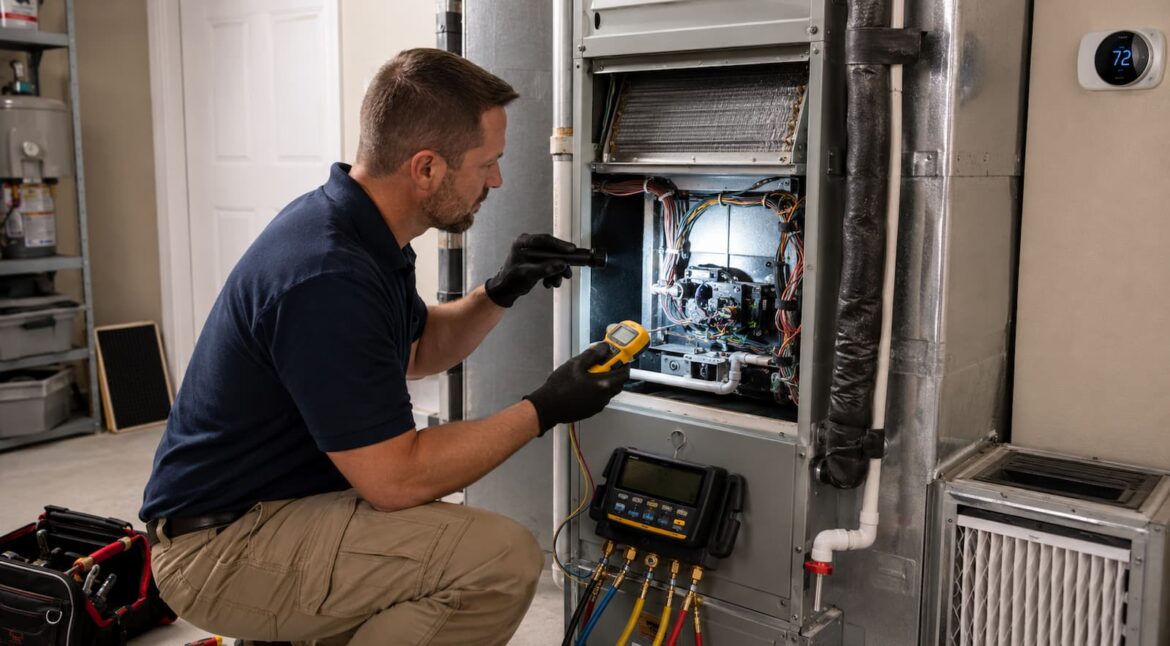
What a Technician Will Check During Diagnosis
A proper diagnosis for “AC runs constantly but does not cool” should look at the full system. The technician is not only checking whether the unit turns on. They are checking whether it is performing correctly.
A diagnostic visit may include:
- Checking thermostat operation and placement
- Measuring indoor return and supply air temperatures
- Inspecting the air filter and filter fit
- Checking evaporator coil condition
- Inspecting blower motor, blower wheel, and airflow
- Checking condenser coil cleanliness
- Testing capacitor, contactor, motors, and electrical components
- Measuring refrigerant pressures and temperatures
- Checking superheat and subcooling where appropriate
- Looking for refrigerant leak indicators
- Inspecting duct conditions and airflow balance
- Checking condensate drainage and signs of freezing
- Evaluating whether the equipment is properly sized and operating safely
This complete approach matters because the same symptom can have multiple causes. Low refrigerant, dirty coils, weak airflow, duct leakage, and thermostat problems can all make an AC run constantly. Guessing based on one symptom alone can lead to the wrong repair.
Repair, Maintenance, or Replacement: Which One Do You Need?
An AC that runs constantly does not automatically need replacement. Many causes are repairable or maintenance-related. The right solution depends on what the diagnosis shows.
Maintenance May Be Enough If…
- The filter is dirty
- The condenser coil is clogged with debris
- The evaporator coil needs cleaning
- The drain line needs clearing
- The system has not had seasonal service
- The equipment is otherwise in good condition
Repair May Be Needed If…
- There is a refrigerant leak
- A capacitor or contactor is failing
- The blower motor is weak or intermittent
- The condenser fan is not working properly
- The thermostat or control board is malfunctioning
- The system freezes repeatedly
- A duct or airflow problem is correctable
Replacement May Be Worth Considering If…
- The system is older and has repeated breakdowns
- A major compressor or coil repair is needed
- Comfort has been poor for years
- The system is inefficient and expensive to run
- The equipment is improperly sized
- Refrigerant type and repair costs make long-term ownership less practical
- You are planning to stay in the home and want better comfort and reliability
The best decision is not always the cheapest immediate fix or the most expensive upgrade. It is the option that gives you reliable cooling, reasonable operating cost, and fewer repeat problems.
How to Help Your AC Keep Up During Hot Weather
While you should not ignore a system problem, there are practical steps that reduce cooling load and help the AC perform better during heat waves.
- Keep blinds or curtains closed during strong afternoon sun. Solar heat gain can raise room temperatures quickly.
- Avoid large thermostat setbacks during extreme heat. Letting the house get very warm can make recovery difficult.
- Use ceiling fans correctly. Fans do not lower room temperature, but they can make occupants feel cooler.
- Limit oven and dryer use during peak heat. Indoor heat sources add to the cooling load.
- Keep interior doors open if the home lacks good return paths. Closed doors can trap pressure and reduce airflow.
- Check the filter more often during heavy use. Long runtimes move more air and can load the filter faster.
- Keep the outdoor unit clear. Good condenser airflow is essential for heat rejection.
These steps can improve comfort, but they will not fix low refrigerant, a failing motor, a dirty coil, or a duct problem. If the system is consistently unable to cool, schedule a professional inspection.
Commercial Buildings: Constant AC Runtime Can Mean Bigger Problems
In commercial spaces, an AC or rooftop unit that runs constantly but does not cool can affect employees, customers, products, tenants, and operating costs. The causes are similar — dirty coils, low refrigerant, blower issues, controls, economizer problems, duct issues, or oversized/undersized equipment — but the consequences can be larger.
Commercial systems may also involve zoning controls, rooftop units, building automation, economizers, belts, dampers, commercial filters, and more complex airflow requirements. If a business space is not cooling properly, delaying service can lead to comfort complaints and higher energy bills. For business properties, commercial HVAC repair may be the right path to diagnose the issue before it disrupts operations.
Frequently Asked Questions
Why is my AC running all day but the house is still hot?
The system may be low on refrigerant, restricted by a dirty filter or coil, struggling with a weak blower, losing air through leaky ducts, fighting extreme heat, or incorrectly sized for the home. The house may also have insulation, air leakage, or sun exposure problems that increase the cooling load.
Is it bad if my AC runs constantly?
Long run times can be normal during extreme heat if the system is cooling properly. It is bad if the AC runs constantly and cannot reach the set temperature, airflow is weak, the home stays humid, the coil freezes, or the system sounds unusual. Constant operation under poor conditions can increase wear and energy use.
Why is my AC running but not lowering the temperature?
This usually means the system is not removing enough heat or the home is gaining heat too quickly. Common causes include low refrigerant, dirty coils, airflow restrictions, duct leakage, weak compressor performance, poor insulation, high humidity, or thermostat issues.
Can a dirty filter make the AC run constantly?
Yes. A dirty filter restricts airflow, which reduces the amount of cooled air delivered into the home. The thermostat may stay unsatisfied, causing the system to run longer. Severe restriction can also contribute to frozen coils and poor humidity control.
Does running constantly mean my AC is low on refrigerant?
Not always. Low refrigerant is one possible cause, but airflow problems, dirty coils, duct leaks, blower issues, thermostat problems, and home insulation issues can also cause constant runtime. Refrigerant should be checked by a technician, not guessed.
Should I set the thermostat lower if the AC is not cooling?
Setting the thermostat much lower will not make the AC cool faster. It usually just makes the system run longer. If the AC cannot reach a reasonable set point, lowering the thermostat may increase energy use without solving the problem.
Why is my AC cooling a little but not enough?
Partial cooling can happen with low refrigerant, dirty coils, weak airflow, leaky ducts, an aging compressor, or a system that is undersized for the home. It can also happen during extreme outdoor heat if the home has high heat gain.
Can duct leaks make my AC run constantly?
Yes. If cooled air leaks into an attic, crawl space, basement, or wall cavity, less cooling reaches the living areas. The thermostat keeps calling for cooling, and the AC runs longer. Return duct leaks can also pull hot or humid air into the system.
Why does my AC run constantly at night?
Constant nighttime operation is more concerning than long afternoon operation during a heat wave. At night, outdoor temperatures are usually lower, so the system should often recover. If it runs all night and still does not cool, look for airflow problems, low refrigerant, duct leakage, thermostat issues, or equipment performance problems.
When should I call an HVAC technician?
Call a technician if the AC runs constantly and the home does not cool after checking the thermostat, filter, vents, returns, and outdoor unit clearance. You should also call if you see ice, water leaks, weak airflow, unusual noises, burning smells, breaker trips, or vent air that does not feel cool.
Bottom Line: Constant Runtime Is a Symptom, Not a Diagnosis
If your AC is running constantly but not cooling the house, the system is either not removing enough heat, not moving enough air, losing cooled air, or fighting too much heat gain. The cause may be simple, such as a clogged filter or blocked condenser, but it may also involve refrigerant, coils, blower components, ductwork, thermostat controls, sizing, or aging equipment.
Start with safe checks: thermostat settings, filter condition, open vents, clear returns, outdoor unit airflow, and visible ice. If those do not solve the problem, do not keep forcing the system to run without understanding why it is struggling. Long runtime under poor conditions can raise energy bills, reduce comfort, and put expensive components at risk.
A proper HVAC diagnosis looks at the whole cooling process: airflow, refrigerant performance, heat transfer, electrical components, duct delivery, humidity, thermostat control, and the home itself. Once the real cause is found, the solution becomes clearer — maintenance, repair, airflow correction, duct improvement, or, in some cases, replacement.