
Should I Turn Off My AC If It’s Not Cooling?
When your air conditioner is running but the house still feels warm, one of the first questions is simple: should you leave the AC on and hope it catches up, or should you turn it off before something gets worse? The answer depends on what the system is doing. Sometimes the AC is just working hard during extreme heat. Other times, continuing to run it can make the problem worse, freeze the coil, stress the compressor, cause water damage, or point to an electrical issue that should not be ignored.
In general, if your AC is running but not cooling well, you can do a few safe checks first: thermostat settings, air filter, vents, return grilles, outdoor unit clearance, and visible signs of ice or water. But if the system is frozen, airflow is weak, the breaker trips, the outdoor unit is buzzing or humming without starting, or you smell burning, you should turn cooling off and call for service.
This guide explains when to turn your AC off, when it may be okay to let it run, what signs suggest a serious problem, and what you should check before scheduling service. If your system is not cooling after basic checks, professional AC repair can help identify the cause before a small issue turns into a more expensive breakdown.
Quick answer: Turn your AC off if it is not cooling and you see ice, hear loud buzzing or grinding, smell burning, notice water leaking near the indoor unit, have weak or no airflow, or the breaker keeps tripping. If the system is simply running longer than usual during a heat wave but still blowing cool air and keeping the home reasonably comfortable, it may be okay to monitor it while you check filters, vents, and thermostat settings.
The Short Answer: Sometimes Yes, Sometimes No
There is no single answer that fits every no-cooling situation. Air conditioners can fail in different ways. A system that is running constantly but blowing cool air during a 95-degree afternoon is not the same as a system with ice on the refrigerant line. A thermostat that is set too low is not the same as an outdoor unit that is humming and failing to start. A dirty filter is not the same as a compressor electrical problem.
The decision comes down to risk. If continuing to run the AC could damage the equipment or your home, turn it off. If the system appears to be operating normally but struggling under heavy cooling demand, you may be able to keep it running while you reduce heat gain and monitor performance. The key is knowing which symptoms are warning signs.
A helpful rule is this: if the system is not cooling and something looks, sounds, smells, or feels abnormal, turn cooling off. If everything seems normal except the house is cooling slowly during extreme heat, start with basic checks before shutting the system down entirely.
Turn Off Your AC Immediately If You Notice These Signs
Some no-cooling symptoms should not be treated as “wait and see” problems. They suggest that the system may be operating under unsafe or damaging conditions. If you see any of the signs below, turn cooling off at the thermostat. If needed, shut the system off at the breaker or service switch only if you can do so safely.
1. There Is Ice on the Refrigerant Line or Indoor Coil Area
Ice is one of the clearest signs that you should turn cooling off. An AC that is frozen cannot cool properly, and continuing to run it usually makes the ice worse. You may see frost or ice on the larger copper refrigerant line near the outdoor unit, around the indoor coil cabinet, or near the air handler. You may also notice weak airflow from the vents.
A frozen AC is commonly caused by restricted airflow, a dirty filter, dirty evaporator coil, low refrigerant, blower problems, duct restrictions, or control issues. As the ice builds, airflow becomes even more restricted, which makes the coil colder and creates more ice. This cycle can continue until the system barely moves air at all.
Turn cooling off and set the fan to “On” if the indoor blower still works. Let the ice melt completely. Do not chip away the ice, pour hot water into the unit, or restart cooling before the system has thawed. If ice returns after the filter is replaced and vents are open, call a technician.
2. Airflow From the Vents Is Very Weak
Weak airflow is a major warning sign. Your AC depends on indoor air moving across the evaporator coil. If airflow is too low, the coil can freeze, the system can run constantly, and the compressor can be stressed. Weak airflow may be caused by a clogged filter, dirty coil, failing blower motor, blocked return, collapsed duct, closed dampers, or frozen coil.
If airflow is weak from one room, you may have a duct or balancing issue. If airflow is weak from most vents, the problem is more likely near the filter, blower, coil, or main duct system. Turn cooling off if airflow is extremely weak, especially if the outdoor unit is still running. Running the outdoor unit without adequate indoor airflow is not good for the system.
3. The Breaker Trips or Keeps Tripping
If your AC breaker trips once, you can reset it one time by turning it fully off and then back on. But if it trips again, do not keep resetting it. A tripping breaker can point to an electrical fault, failing motor, compressor issue, shorted wiring, weak capacitor, or overloaded circuit.
Breakers are safety devices. They are not meant to be forced repeatedly. If the AC is not cooling and the breaker trips, turn the system off and schedule service. Repeated resets can create risk and may worsen equipment damage.
4. You Smell Burning, Melting Plastic, or Electrical Odors
Burning smells should always be taken seriously. A dusty smell at the beginning of heating season is one thing; an electrical or melting smell during AC operation is different. If your AC is not cooling and you smell burning, hot wiring, melting plastic, or a sharp electrical odor, turn the system off.
Possible causes include overheated motors, damaged wiring, failed capacitors, control board issues, contactor problems, or electrical shorts. Do not open electrical compartments or continue testing the system. Call a professional.
5. The Outdoor Unit Hums, Buzzes, or Struggles to Start
If the outdoor unit is humming or buzzing but the fan is not spinning, the compressor is not starting, or the unit repeatedly tries and fails to start, turn the AC off. This symptom may involve a failed capacitor, bad contactor, condenser fan motor problem, compressor issue, or voltage problem.
Do not try to push-start the fan with a stick or tool. That is unsafe and does not solve the underlying problem. Electrical components inside the outdoor unit can hold dangerous voltage, and capacitors can store electrical charge even after power is disconnected.
6. Water Is Leaking Around the Indoor Unit
Water near the indoor HVAC unit can come from a clogged condensate drain, full drain pan, cracked pan, disconnected drain line, frozen coil melting, or failed condensate pump. If water is actively leaking, turn cooling off. Continuing to run the system can create more condensate or melt more ice, increasing the risk of water damage.
Many systems have a float switch that shuts the AC off when water backs up. Do not bypass it. That safety switch may be preventing damage to your ceiling, floor, walls, or equipment. The drainage issue should be corrected before normal operation resumes.
7. The Indoor Blower Is Not Running But the Outdoor Unit Is
The indoor blower must move air across the evaporator coil. If the outdoor condenser is running but the indoor blower is not, the coil can freeze quickly. This can also create conditions that are harmful to the compressor. Turn the system off and call for service.
Blower failure can involve the motor, capacitor, relay, control board, wiring, wheel assembly, or thermostat signal. It is not something to ignore.
8. The AC Starts and Stops Repeatedly
Short cycling means the system starts and stops too frequently. If your AC is not cooling and cycles on and off every few minutes, turn it off and schedule service. Short cycling can be caused by thermostat problems, low refrigerant, dirty coils, pressure issues, electrical problems, an oversized system, or a failing compressor.
Repeated short cycles are hard on equipment. They can increase wear, reduce comfort, and prevent the system from removing humidity properly.
When It May Be Okay to Leave the AC Running
Not every no-cooling complaint requires shutting the system off immediately. There are situations where the AC may be operating normally but struggling because of weather, thermostat settings, or heat gain inside the home.
It may be okay to keep the AC running while you monitor it if:
- The air from the vents feels cool, not warm or room temperature.
- Airflow from the vents is normal.
- There is no ice on the refrigerant line or coil area.
- There are no burning smells or unusual electrical noises.
- The breaker is not tripping.
- The system is slowly lowering the indoor temperature.
- The problem is happening during extreme outdoor heat.
During a heat wave, a properly sized AC may run for long stretches. That can be normal if it is keeping the home reasonably close to the set temperature. Long runtime is not automatically bad. In fact, longer cycles can help with humidity control when the system is operating correctly.
But there is a difference between “running a lot” and “running without cooling.” If the indoor temperature keeps climbing, the system never recovers in the evening, or the vent air is not cool, the AC needs attention.
What to Check Before You Turn It Off Completely
If there are no urgent warning signs, you can perform a few safe checks. These steps can sometimes solve the problem or help you describe it clearly when calling for service.
1. Check the Thermostat Mode
Make sure the thermostat is set to Cool. Check that the set temperature is below the current room temperature. If the fan is set to On, the blower may run constantly even when the outdoor unit is not actively cooling. For normal cooling operation, many homeowners prefer the fan set to Auto.
Also check thermostat schedules, eco settings, vacation mode, app settings, and temporary holds. Smart thermostats can make it seem like the AC is misbehaving when the schedule is actually overriding your expected setting.
2. Check the Filter
A clogged filter can reduce airflow enough to make the AC cool poorly or freeze. Remove the filter and inspect it. If it is dirty, replace it with the correct size and type. Make sure the airflow arrow points toward the equipment, not back toward the return grille.
If the filter is extremely dirty and the system has been running for a while, check for ice before restarting cooling. A dirty filter can be the first step in a frozen coil problem.
3. Open Vents and Clear Return Grilles
Walk through the home and make sure supply vents are open. Clear furniture, rugs, curtains, and boxes away from vents and return grilles. A blocked return can reduce airflow through the entire system.
Closing vents in unused rooms may seem harmless, but closing too many can increase duct pressure and reduce system airflow. That can make cooling worse, not better.
4. Look at the Outdoor Unit
The outdoor unit needs room to breathe. If it is surrounded by weeds, leaves, grass clippings, mulch, fencing, outdoor furniture, or storage items, it may not be able to reject heat properly. Clear debris around the unit and make sure air can move through it.
Do not open the outdoor electrical panel or remove protective grilles. If the coil is heavily clogged, the fan is not spinning, the unit is buzzing, or it sounds abnormal, turn the AC off and call a technician.
5. Check for Ice
Look for frost or ice on the larger copper refrigerant line, near the indoor coil cabinet, or around the air handler. If you find ice, turn cooling off. A frozen system needs to thaw before it can be properly diagnosed.
6. Check for Water Around the Indoor Unit
Water around the indoor unit can indicate a clogged condensate drain, frozen coil melting, or drain pan problem. If you see active leaking, shut cooling off to reduce the chance of water damage. A technician can clear the drain, inspect the pan, check the float switch, and confirm why water is appearing.
Why Running a Badly Performing AC Can Cause Damage
Many homeowners leave the AC running because they assume “some cooling is better than none.” Sometimes that is true. But if the system is operating under the wrong conditions, continuing to run it can create more damage. Air conditioners are designed to operate within a range of airflow, refrigerant pressure, electrical load, and temperature conditions. When those conditions are off, the system may keep running while internal components are under stress.
Frozen Coil Damage Risk
When airflow is low or refrigerant conditions are wrong, the evaporator coil can freeze. Once ice forms, airflow gets even worse. The system then loses more cooling capacity, and the ice grows. Running a frozen AC can lead to water leaks when the ice melts and can create conditions that are harmful to the compressor.
Compressor Stress
The compressor is one of the most expensive components in the system. It is designed to move refrigerant vapor through the circuit. If refrigerant conditions are wrong, airflow is poor, the condenser is dirty, or the system is overheating, the compressor may operate under stress. In severe cases, continuing to run the system can contribute to compressor failure.
Electrical Wear
Motors, capacitors, contactors, relays, and control boards can all be affected by repeated starts, overheating, voltage issues, or failing components. If the system is buzzing, clicking, tripping the breaker, or struggling to start, leaving it on is not a safe strategy.
Water Damage
A frozen coil or clogged drain can create water around the indoor unit. If the system is in an attic, closet, finished basement, or above a ceiling, water damage can become expensive quickly. If there is water where it should not be, turn cooling off and investigate.
Common Reasons Your AC Is Running But Not Cooling
Understanding why an AC stops cooling can help you decide whether to shut it down or continue monitoring it. These are the most common causes behind poor cooling.
Dirty Air Filter
A dirty air filter restricts airflow across the evaporator coil. That reduces cooling output, increases system runtime, and can lead to freezing. If the filter is badly clogged, replace it. If the system still does not cool or ice appears, turn cooling off and schedule service.
Dirty Evaporator Coil
The evaporator coil absorbs heat from indoor air. If it is dirty, heat transfer suffers and airflow may be restricted. The AC may run constantly but cool poorly. A dirty coil can also freeze. Coil cleaning is usually a professional task because the coil is delicate and may be difficult to access.
Dirty Outdoor Condenser Coil
The outdoor coil releases heat outside. If it is covered with dirt, pollen, leaves, grass clippings, or debris, the system cannot reject heat efficiently. This can make the AC run longer, cool less, and increase stress on the compressor.
Low Refrigerant or Refrigerant Leak
Low refrigerant can make the system run without removing enough heat. It can also cause the evaporator coil to freeze. Refrigerant is not used up like fuel. If it is low, there is usually a leak or another issue. Do not try to add refrigerant yourself. This requires professional tools and proper handling.
Blower Motor Problems
If the blower is weak, intermittent, or not running, cooled air will not move through the home properly. A blower problem can cause weak airflow, coil freezing, and poor comfort. If the outdoor unit runs but the indoor blower does not, turn the system off.
Failed Capacitor or Contactor
Capacitors help motors start and run. Contactors control power to the outdoor unit. If either component fails, the system may hum, buzz, click, or run only partially. For example, the indoor blower may run while the outdoor unit does not. These are electrical components and should be handled by a technician.
Duct Leaks or Airflow Imbalance
Your AC may be cooling air, but the cooled air may not be reaching the rooms. Leaky ducts can dump conditioned air into attics, crawl spaces, wall cavities, or basements. Return duct leaks can pull in hot, dusty, or humid air. Duct issues often show up as uneven rooms, weak airflow, high bills, and constant runtime.
Thermostat Problems
A thermostat can be misconfigured, poorly located, inaccurate, or affected by schedules and smart settings. If it is near sunlight, lamps, electronics, kitchen heat, drafts, or supply vents, it may not sense the home correctly. Thermostat issues can make the system run too long, not long enough, or at the wrong times.
Aging or Undersized Equipment
Older air conditioners can lose performance over time. Motors weaken, coils get dirty, refrigerant leaks develop, compressors wear, and electrical parts fail. An undersized system can also run constantly because it cannot remove heat fast enough. If the system is older, inefficient, and frequently struggling, it may be worth comparing repair with AC replacement.
Should You Set the Thermostat Lower If the AC Is Not Cooling?
Usually, no. Setting the thermostat much lower does not make the AC cool faster. Most single-stage residential systems operate at one cooling output: on or off. If the AC is already running, lowering the thermostat from 74°F to 65°F usually just tells it to run longer. It does not make the air colder or repair the problem.
If the system is not cooling because of low refrigerant, poor airflow, dirty coils, or a failing component, lowering the thermostat can make things worse by keeping the system running under bad conditions. If the house is warm and the AC is not making progress, check for warning signs instead of pushing the thermostat lower.
Should You Turn the Fan From Auto to On?
It depends on the situation. If the AC is frozen, turning cooling off and setting the fan to On can help thaw the evaporator coil if the blower is working. This is one of the few times fan-on operation can be helpful during a no-cooling issue.
But if the system is not frozen and the AC is not actively cooling, running the fan continuously may circulate warm or humid air. It may also make the house feel less comfortable if moisture on the coil is blown back into the living space after the cooling cycle stops. For normal operation, Auto is often the better setting because the blower runs with the cooling cycle.
If you are using Fan On because the house is hot and the AC is not cooling, remember that the fan alone does not remove heat. It only moves air. If the cooling side is not working, the fan will not solve the underlying problem.
What If the AC Is Blowing Warm Air?
If the air from the vents feels warm or room temperature, check whether the outdoor unit is running. If the indoor fan is blowing but the outdoor condenser is off, the system is not completing the cooling cycle. Possible causes include a tripped breaker, failed capacitor, bad contactor, thermostat issue, low-voltage problem, disconnect issue, or compressor problem.
If the outdoor unit is running but the vent air is still warm, the system may have low refrigerant, dirty coils, compressor trouble, airflow problems, or a refrigerant metering issue. In either case, if basic checks do not reveal an obvious problem, schedule service.
What If the AC Is Cooling a Little, But Not Enough?
Partial cooling can be tricky. The system may be doing something, but not enough. If the air is somewhat cool and airflow is normal, the system may be dealing with extreme heat, dirty coils, low refrigerant, duct leakage, poor insulation, high humidity, or reduced capacity from aging equipment.
You may not need to shut it off immediately if there are no warning signs. But if the temperature never drops, the system runs all night, or cooling is getting worse, you should schedule diagnosis. A system that is barely cooling may be close to freezing, overheating, or failing.
What If the AC Is Not Cooling During a Heat Wave?
During extreme heat, it is normal for an AC to run longer. A system is usually sized to maintain indoor comfort under expected design conditions, not necessarily to pull the house down quickly during the hottest part of a record heat wave. If the outdoor temperature is extremely high, the house has strong sun exposure, and the thermostat is set very low, the AC may struggle.
However, the system should still produce cool air. It should not freeze, trip breakers, leak water, or make unusual electrical sounds. It should also recover when outdoor temperatures drop in the evening. If the house remains warm all night and the system never catches up, there may be an equipment or home performance issue.
To help during extreme heat:
- Close blinds or curtains on sunny windows.
- Avoid using the oven or dryer during peak afternoon heat.
- Check and replace dirty filters.
- Keep the outdoor unit clear of debris.
- Use ceiling fans to improve comfort, but turn them off in empty rooms.
- Avoid large thermostat setbacks that make the system recover from a very hot house.
These steps reduce cooling load, but they do not fix mechanical or refrigerant problems. If performance is clearly abnormal, schedule a diagnostic visit.
How Long Should You Wait Before Calling for Service?
If there are urgent warning signs, do not wait. Turn the system off and call for help. If there are no urgent signs and you just changed the thermostat setting, give the system some time. Many systems have a short delay before the compressor starts. A house that is very warm may also take time to cool down.
As a general guide, if the AC is running normally, the vent air feels cool, and the indoor temperature is slowly dropping, you can monitor it. If the AC has been running for an hour or more with no temperature improvement, especially during moderate weather or evening hours, something is likely wrong.
If you have already checked the thermostat, filter, vents, returns, outdoor airflow, and visible ice/water signs, and the system still is not cooling, a technician should diagnose it. For urgent situations, especially if the home is becoming unsafe or the system shows electrical symptoms, emergency HVAC repair may be appropriate.
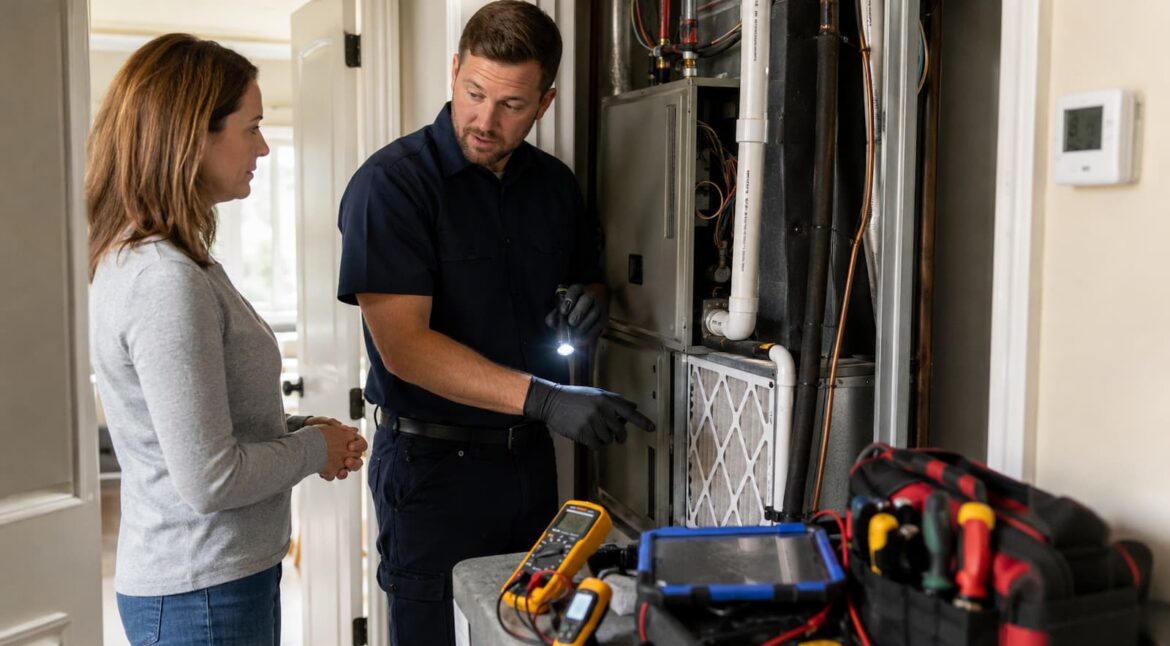
What an HVAC Technician Will Check
A technician will not simply ask whether the unit is running. They will check whether the system is moving air, moving heat, receiving proper electrical power, draining properly, and operating within safe conditions. A no-cooling diagnostic may include:
- Thermostat operation and configuration
- Return and supply air temperature readings
- Air filter condition and filter fit
- Evaporator coil condition
- Blower motor operation and airflow
- Condenser coil cleanliness
- Outdoor fan operation
- Capacitor and contactor testing
- Voltage and amp draw readings
- Refrigerant pressures and temperature readings
- Signs of refrigerant leaks
- Drain line, drain pan, condensate pump, and float switch operation
- Duct airflow issues or obvious leakage
- Signs of freezing, overheating, or compressor stress
The goal is to identify why the system is not cooling before replacing parts. Poor cooling can come from airflow, refrigerant, electrical, control, duct, or equipment sizing problems. Guessing can lead to unnecessary repairs.
How to Prevent No-Cooling Problems in the Future
You cannot prevent every AC failure, but many no-cooling calls are connected to maintenance issues that build up over time. A system that is clean, properly charged, draining correctly, and moving enough air is less likely to fail during the hottest part of summer.
Replace Filters Regularly
Filter replacement is simple but important. A clogged filter can reduce airflow, freeze the coil, increase energy use, and make the system run longer. Check filters more often during heavy cooling season, especially if you have pets, dust, renovations, or continuous fan operation.
Keep Coils Clean
Both indoor and outdoor coils matter. The indoor coil absorbs heat. The outdoor coil releases heat. Dirt on either coil reduces performance. Regular air conditioning maintenance helps catch coil, airflow, condensate, and electrical issues before they turn into no-cooling emergencies.
Protect Airflow
Keep supply vents and return grilles open. Avoid blocking them with furniture or rugs. Do not close many vents in an attempt to save energy. If some rooms are uncomfortable, the solution may be duct balancing, airflow correction, insulation improvements, or equipment evaluation.
Pay Attention to Early Warning Signs
Weak airflow, longer run times, higher energy bills, water around the indoor unit, ice on the refrigerant line, unusual noises, or cooling that slowly gets worse are all signs that the system should be checked. Early service is usually less expensive than emergency repair after a full breakdown.
Frequently Asked Questions
Should I turn off my AC if it is blowing warm air?
If the AC is blowing warm air and you have checked the thermostat, it is usually smart to turn it off if the outdoor unit is not running, the system is making unusual noises, airflow is weak, or the issue continues. Warm air can point to refrigerant problems, compressor issues, electrical faults, or airflow problems.
Should I turn off my AC if the coil is frozen?
Yes. Turn cooling off and set the fan to On if the blower works. Let the system thaw completely. Do not keep running the AC while it is frozen, and do not chip the ice away.
Can running the AC when it is not cooling damage it?
Yes, depending on the cause. If the system is frozen, low on refrigerant, has weak airflow, is overheating, or has electrical problems, continuing to run it can stress the compressor, motors, and electrical components.
How long should I let my AC run if it is not cooling?
If the system is producing cool air and the temperature is slowly dropping, you can monitor it. If it runs for an hour or more with no improvement, or if you see ice, water, weak airflow, breaker trips, or unusual sounds, turn it off and call for service.
Should I keep lowering the thermostat to make it cool faster?
No. Lowering the thermostat does not make most AC systems cool faster. If the system is already running, a lower setting usually just makes it run longer. If there is a problem, that can increase stress without improving comfort.
Should I turn the fan on if the AC is not cooling?
If the coil is frozen, turning the fan on while cooling is off can help thaw it. If the system is not frozen, fan-only operation may circulate air but will not cool the home. It can sometimes make the house feel more humid if used continuously after cooling cycles.
What if the outside AC unit is not running?
If the indoor fan runs but the outdoor unit does not, the AC cannot cool properly. Check the thermostat and breaker once. If the outdoor unit still does not run, or if it hums, buzzes, or trips the breaker, turn the system off and call a technician.
Is it normal for AC to run all day in very hot weather?
It can be normal during extreme heat if the system is producing cool air and keeping the home reasonably comfortable. It is not normal if the temperature keeps rising, the air is not cool, the coil freezes, airflow is weak, or the system never recovers at night.
Should I turn off the AC if water is leaking?
Yes. Turn cooling off if water is leaking around the indoor unit. The cause may be a clogged condensate drain, frozen coil melting, cracked drain pan, pump issue, or float switch problem. Continuing to run the system can increase water damage risk.
When should I call for emergency AC repair?
Call for emergency service if the home is becoming unsafe, the system has electrical smells, the breaker keeps tripping, water is leaking into finished areas, the AC is frozen and will not recover, or vulnerable occupants are affected by the heat.
Bottom Line: Turn It Off If There Are Warning Signs
If your AC is not cooling, you do not always need to shut it down immediately. If it is blowing cool air, airflow is normal, no ice is present, and the system is slowly making progress during extreme heat, you can monitor it while checking filters, vents, thermostat settings, and outdoor airflow.
But if you see ice, weak airflow, water leaks, burning smells, breaker trips, loud buzzing, a non-running blower, or an outdoor unit struggling to start, turn cooling off. These symptoms can point to conditions that may damage the compressor, electrical components, or your home.
The safest approach is to start with simple checks, avoid forcing the system to run under abnormal conditions, and schedule professional diagnosis when the AC is still not cooling. Turning the system off at the right time can protect your equipment and help prevent a manageable repair from becoming a major breakdown.