

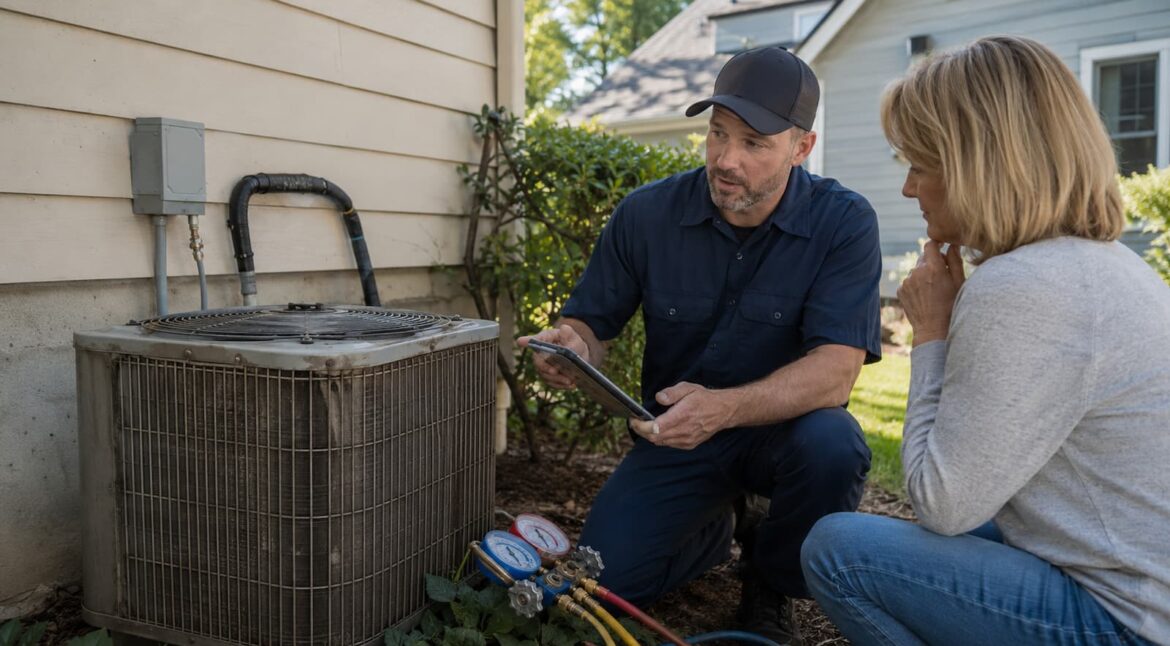
How Long Do Air Conditioners Last? Signs Yours Is Near the End
Air conditioners do not last forever, but they also do not all fail on the same schedule. One system may struggle after 11 or 12 years because it was poorly maintained, oversized, installed badly, or exposed to harsh conditions. Another may run closer to 18 or 20 years because it was properly sized, regularly serviced, and not pushed beyond its limits every summer.
So when homeowners ask, “How long do air conditioners last?” the practical answer is this: many central air conditioning systems last about 15 to 20 years, but useful life depends heavily on maintenance, installation quality, runtime, climate, repair history, and overall system condition. Age matters, but it is not the only factor.
The more useful question is not just “How old is my AC?” It is “Is this AC still worth repairing?” A 9-year-old system with a dirty coil and a failed capacitor may have plenty of life left. A 16-year-old system with a refrigerant leak, weak compressor, poor comfort, and repeated service calls may be near the end. This guide explains typical AC lifespan, what shortens it, the warning signs that your system is wearing out, and how to decide whether repair or air conditioning replacement makes more sense.
Quick answer: A well-maintained central AC often lasts around 15–20 years, but you should start paying closer attention after year 10. If repairs become frequent, cooling performance drops, energy bills rise, refrigerant leaks appear, or the system struggles during normal summer weather, it may be approaching the end of its useful life.
How Long Does a Central Air Conditioner Usually Last?
For a typical residential central air conditioner, a reasonable lifespan expectation is about 15 to 20 years. Some systems fail earlier. Some last longer. The difference usually comes down to how the system was installed, how often it was maintained, how hard it runs, and whether small problems were corrected before they damaged larger components.
It is also important to separate “still running” from “still worth keeping.” An older AC may technically turn on and blow cool air, but it may no longer operate efficiently, evenly, quietly, or reliably. It may run longer than it should, cool some rooms poorly, fail during heat waves, or need expensive repairs every season. At that point, the system may still function, but it may no longer be a good investment.
Air conditioner lifespan can be thought of in stages:
- Years 1–5: The system should be relatively reliable if it was installed correctly. Problems during this period often point to installation issues, poor sizing, electrical problems, airflow issues, or unusual operating conditions.
- Years 6–10: Normal wear begins to show. Capacitors, contactors, motors, and drainage components may need attention. Maintenance becomes more important.
- Years 10–15: Efficiency and reliability may begin declining. Repair-versus-replacement decisions become more relevant, especially for larger repairs.
- Years 15–20: Many systems are nearing the end of their practical service life. Repairs should be evaluated carefully against replacement cost and long-term reliability.
- Beyond 20 years: Some systems continue running, but comfort, efficiency, refrigerant availability, parts availability, and repair economics become increasingly important.
A system does not automatically need replacement on its 15th birthday. But once an AC reaches that age range, every major repair deserves a closer look. A small repair may still be reasonable. A major compressor, coil, or refrigerant leak repair may not be.
Different Types of AC Systems Have Different Lifespans
Not every cooling system ages the same way. A central split system, ductless mini-split, heat pump, packaged rooftop unit, and window AC all have different components, installation requirements, and operating conditions.
| System Type | Typical Lifespan | What Usually Affects It |
|---|---|---|
| Central air conditioner | About 15–20 years | Maintenance, refrigerant leaks, coil condition, airflow, installation quality, compressor health. |
| Ductless mini-split | Often around 12–20 years depending on care | Cleaning frequency, indoor head maintenance, condensate drainage, refrigerant charge, installation quality. |
| Heat pump used for heating and cooling | Often shorter if used heavily year-round | Runs in both summer and winter, defrost operation, outdoor exposure, maintenance, electrical components. |
| Commercial rooftop unit | Varies widely | Runtime, roof exposure, filter changes, belts, coils, controls, economizer operation, maintenance contracts. |
| Window or portable AC | Often shorter than central systems | Sizing, cleaning, storage, drainage, installation, usage intensity. |
For this article, the main focus is central residential air conditioning, but many of the same warning signs apply to ductless and commercial systems too: poor cooling, longer run times, rising energy use, frequent repairs, refrigerant issues, and declining comfort.
What Shortens the Life of an Air Conditioner?
AC lifespan is not only about age. Two systems installed in the same year can age very differently. Here are the biggest factors that can shorten the useful life of an air conditioner.
Poor Installation
Installation quality has a huge effect on system life. An air conditioner is not a plug-in appliance. It depends on correct sizing, proper refrigerant charge, good airflow, clean brazing practices, correct line set installation, proper drainage, compatible indoor and outdoor equipment, and safe electrical work.
A system that is installed with poor airflow, incorrect refrigerant charge, badly matched components, undersized ductwork, or poor condensate drainage may have problems from the beginning. It may run, but it may run under stress. That stress can shorten compressor life, reduce efficiency, increase repair frequency, and create comfort complaints.
Lack of Maintenance
Skipping maintenance is one of the fastest ways to shorten AC life. Dirt builds up on coils. Filters get clogged. Condensate drains grow algae. Capacitors weaken. Electrical connections loosen. Blower wheels collect dust. Refrigerant leaks can start small and become worse over time.
A neglected system may still cool for years, but it often works harder than it should. Harder operation means longer run times, more heat in electrical components, more compressor stress, more airflow problems, and higher operating cost. Routine air conditioning maintenance helps catch many of these problems before they become expensive failures.
Dirty Filters and Restricted Airflow
Airflow is essential for AC performance. A clogged filter restricts air moving across the evaporator coil. That can reduce cooling, cause the coil to freeze, make the blower work harder, and increase system runtime. In severe cases, airflow problems can contribute to compressor stress because the refrigerant circuit is not absorbing heat properly.
The filter is simple, but it matters. Homes with pets, renovation dust, high occupancy, frequent cooking, or continuous fan operation may need filter changes more often than the package suggests. A filter that looks dark, matted, or loaded with dust should be replaced, even if the calendar says it should still have life left.
Oversized or Undersized Equipment
An undersized AC may run constantly and still struggle to cool the home. That long runtime can increase wear. An oversized AC can short cycle, meaning it starts and stops too often. Short cycling is hard on compressors, contactors, capacitors, and motors. It can also leave the house humid because the system does not run long enough to remove moisture properly.
Proper sizing is not based only on square footage. It should consider insulation, windows, sun exposure, ductwork, ceiling height, air leakage, occupancy, and local climate. Replacing an old system with the exact same size is not always the best choice if the original system was never sized correctly.
Refrigerant Leaks
Refrigerant should not disappear during normal operation. If a system is low, there is usually a leak or another problem. Low refrigerant can reduce cooling capacity, cause frozen coils, increase runtime, and stress the compressor. Repeatedly adding refrigerant without finding the leak can become expensive and may allow damage to continue.
Refrigerant leaks become especially important on older systems. If the leak is in the evaporator coil or condenser coil, the repair may be expensive. If the system is already near the end of its life, replacement may be more practical than investing in a major refrigerant repair.
Harsh Outdoor Conditions
The outdoor unit sits through heat, rain, snow, leaves, grass clippings, pollen, dirt, and changing seasons. Over time, outdoor exposure affects coils, fan motors, wiring, cabinets, and electrical components. Units near heavy landscaping, road dust, coastal air, or areas with poor drainage may age faster.
Keeping the condenser clear of debris helps. The unit needs airflow around it to release heat. If shrubs, weeds, fencing, or stored items block the unit, the system may run hotter and less efficiently.
High Runtime and Aggressive Thermostat Settings
The more an AC runs, the more wear it experiences. A system in a heavily occupied home, poorly insulated home, or home with very low thermostat settings will work harder. Long run times are not always bad when the system is properly sized and operating efficiently, but constant operation under poor conditions shortens equipment life.
Setting the thermostat extremely low does not make the AC cool faster. It only tells the system to run longer. If the home never reaches the set temperature, there is a performance issue, sizing issue, or building issue that should be evaluated.
Signs Your Air Conditioner Is Near the End
Age matters, but symptoms matter more. Here are the warning signs that an AC may be approaching the end of its useful life.
1. Frequent Repairs
One repair does not mean your AC is finished. Parts fail sometimes. A capacitor, contactor, thermostat, or drain issue can happen even on a system with years of useful life left. But repeated repairs are different. If you are calling for service every season, or multiple times in one summer, the system may be declining.
Frequent repairs are not only inconvenient. They also make the total cost of ownership harder to justify. A $300 repair here and a $600 repair there can add up quickly, especially if the system is old and still uncomfortable after each repair.
2. The AC Runs Constantly But Does Not Cool Well
An older AC that runs all day and still cannot keep the house comfortable may be losing capacity. The problem could be a dirty coil, low refrigerant, duct leakage, airflow restriction, or failing compressor. Some of those issues are repairable. But if the system has been properly maintained and still cannot keep up, age may be catching up with it.
This is especially concerning if the system does not recover in the evening or overnight. It is normal for an AC to work harder during extreme afternoon heat. It is not normal for it to run endlessly during mild conditions and still fail to cool the home.
3. Energy Bills Keep Rising
Rising electric bills can come from utility rate changes, weather, occupancy, or lifestyle changes. But if your usage pattern is similar and the AC is running more than it used to, the system may be losing efficiency. Dirty coils, weak motors, low refrigerant, duct leaks, and aging compressors can all increase energy use.
An older system can consume more electricity while delivering less comfort. That combination is one of the clearest signs that the AC is becoming expensive to keep.
4. Uneven Cooling Gets Worse
If one room or floor has always been warmer, the issue may be duct design, insulation, sun exposure, or return airflow. But if uneven cooling has become noticeably worse over time, the AC may no longer be moving enough air or removing enough heat.
Aging equipment can reveal comfort problems that were previously manageable. A system that once overcame duct or insulation weaknesses may no longer have enough performance margin to do so.
5. The System Uses Older Refrigerant
Refrigerant type can affect repair decisions. Older systems may use refrigerants that are more expensive or less practical to service over time. Even R-410A systems are now part of a broader transition toward newer lower-GWP refrigerants in newly manufactured equipment. That does not mean every R-410A system must be replaced immediately, but it does mean refrigerant-related repairs should be evaluated carefully.
If an older AC has a refrigerant leak, especially in a coil, the cost of leak detection, repair, refrigerant, and recharge may be high enough that replacement deserves serious consideration.
6. Major Components Are Failing
A failed capacitor is one thing. A failing compressor is another. Major component failures are often the turning point in the repair-versus-replacement decision. Expensive repairs involving the compressor, evaporator coil, condenser coil, blower motor, or refrigerant circuit may not be worth it on an old system.
The key is context. A major repair on a 7-year-old system may be reasonable, especially if warranty applies. The same repair on a 17-year-old system may be a poor investment.
7. The AC Freezes Up Repeatedly
A frozen coil can be caused by restricted airflow, dirty filters, dirty coils, low refrigerant, blower problems, duct restrictions, or controls. If freezing happens once because of a clogged filter, the solution may be simple. If it happens repeatedly after basic issues are corrected, the system needs a deeper diagnosis.
Repeated freezing can put stress on the compressor and create water damage when the ice melts. On an older AC, recurring freeze-ups can be a sign that the system is becoming unreliable.
8. The System Is Loud, Rough, or Vibrating
Aging air conditioners often become noisier. Some noises point to specific repairable problems: a failing capacitor, worn fan motor, loose panel, damaged fan blade, weak compressor, or blower issue. But if the system sounds rough overall, vibrates heavily, or has multiple worn components, it may be nearing the end.
Pay attention to changes. A system that has always had a soft hum is different from one that suddenly starts banging, grinding, buzzing, or screeching.
9. Humidity Control Is Getting Worse
Air conditioners do more than lower temperature. They also remove moisture from indoor air. If your home feels sticky even when the thermostat temperature looks acceptable, the AC may not be running or performing correctly. Poor humidity control can come from oversizing, short cycling, weak cooling capacity, dirty coils, airflow problems, or duct leakage.
Older systems can struggle to maintain both temperature and humidity, especially during humid summer weather. If lowering the thermostat is the only way to feel comfortable, the system may not be doing its job efficiently.
10. The AC Still Works, But You No Longer Trust It
Reliability matters. If you worry every heat wave that the system will fail, that is part of the decision. An aging AC may be technically repairable, but repeated uncertainty can be stressful. Planned replacement is usually easier than emergency replacement after the system fails during peak summer demand.
Repair or Replace: How to Make the Decision
Deciding whether to repair or replace an AC is not always obvious. A good decision should consider age, repair cost, comfort, efficiency, reliability, refrigerant type, warranty, and how long you plan to stay in the home.
Repair Usually Makes Sense When…
- The system is relatively young.
- The repair is minor or moderate.
- The system has been reliable overall.
- Parts are available and reasonably priced.
- The system cools the home well when operating properly.
- Warranty covers part of the repair.
- The repair addresses a clear, isolated issue.
For example, a failed capacitor or contactor on a 9-year-old system that otherwise cools well may be a straightforward repair. A clogged condensate drain on a well-maintained system does not mean the AC is near the end.
Replacement Is Worth Considering When…
- The system is 15 years old or older and needs a major repair.
- Repair costs are becoming frequent or expensive.
- The compressor or coil has failed.
- There is a significant refrigerant leak.
- Comfort has been poor for several seasons.
- Energy bills are rising because the system runs constantly.
- The system uses older refrigerant and repair costs are high.
- The existing system was poorly sized or poorly installed.
- You want better efficiency, quieter operation, or improved humidity control.
The decision is not about replacing equipment just because it is old. It is about avoiding repeated spending on a system that may continue to decline.
The “50 Percent Rule” Is Helpful, But Not Perfect
You may hear a rule of thumb that if a repair costs close to 50 percent of replacement, replacement is usually the better choice. This can be a helpful starting point, but it should not be the only factor.
A repair that is 40 percent of replacement may still be a bad idea if the system is 18 years old and inefficient. A repair that is 50 percent of replacement may be reasonable if the system is young and under warranty. The better approach is to consider both the repair cost and the future risk.
Ask these questions:
- How old is the system?
- Is this the first repair or one of many?
- Is the failed part major or minor?
- Are parts and refrigerant easy to get?
- Does the system cool the home well when repaired?
- Is there a warranty?
- How long do you plan to stay in the home?
- Would replacement reduce operating costs or comfort complaints?
Why Efficiency Matters More as the System Ages
An old AC can cost more even before it breaks. Older systems often have lower efficiency ratings than modern equipment, and age-related wear can make real-world efficiency even worse. Dirty coils, weak motors, refrigerant issues, and worn compressors can all make the system use more electricity for less cooling.
Newer systems may offer higher efficiency, better humidity control, quieter operation, staged or variable-speed performance, and improved comfort. The best choice depends on the home and budget, but efficiency should be part of the conversation when an older AC needs significant repair.
Efficiency upgrades can also interact with incentives, rebates, or tax credits. Eligibility changes over time and depends on equipment ratings and program rules, so homeowners should confirm current options before deciding.
Can Maintenance Extend the Life of an AC?
Yes, maintenance can help extend the useful life of an AC. It cannot make a system last forever, and it cannot undo poor installation or major corrosion, but it can reduce preventable wear. Maintenance keeps the system cleaner, safer, and closer to proper operating conditions.
Good maintenance can help by:
- Keeping coils clean for better heat transfer.
- Reducing airflow restrictions.
- Finding weak capacitors before they fail on a hot day.
- Catching drain clogs before they cause water damage.
- Identifying refrigerant concerns early.
- Checking electrical connections and operating readings.
- Reducing unnecessary runtime caused by dirty components.
- Improving comfort and system reliability.
Maintenance is especially important after the system passes the 10-year mark. At that point, catching small issues early can help you get more useful life out of the equipment and avoid surprise breakdowns.
What Homeowners Can Do to Help an AC Last Longer
You do not need to be an HVAC technician to protect your system. A few simple habits can reduce strain and help your AC age better.
Change Filters Regularly
Check your filter more often during peak cooling season. Replace it when it is dirty, not only when the calendar says it is time. A clean filter supports airflow and helps keep the evaporator coil and blower cleaner.
Keep the Outdoor Unit Clear
Remove leaves, weeds, grass clippings, and debris around the condenser. Keep shrubs trimmed back so the unit has room for airflow. Do not store items around the unit, and avoid building tight fencing too close to it.
Avoid Extreme Thermostat Settings
Setting the thermostat extremely low does not make the AC cool faster. It simply increases runtime. Reasonable settings, steady operation, and avoiding large recovery loads during heat waves can reduce stress on the system.
Fix Airflow Problems Early
Weak airflow, closed vents, blocked returns, dirty blower wheels, and duct restrictions make the AC work harder. If airflow has changed, do not ignore it. Airflow problems can lead to frozen coils, poor comfort, and more wear.
Do Not Ignore Water Around the Indoor Unit
Water near the air handler may point to a clogged condensate drain, frozen coil, cracked pan, pump issue, or float switch problem. Water issues can damage the home and may also signal a system performance problem.
Schedule Service Before Peak Summer
Spring is often the best time to check the AC before heavy summer demand. Waiting until the system fails during a heat wave can mean less comfort, more urgency, and fewer scheduling options.
How to Tell the Difference Between a Repairable Problem and End-of-Life Decline
Some problems sound serious but are repairable. Others are signs that the system is aging out. The difference usually comes down to cost, frequency, age, and whether the repair restores reliable comfort.
| Symptom | Could Be Repairable If… | May Suggest End of Life If… |
|---|---|---|
| AC will not turn on | It is a thermostat, capacitor, contactor, breaker, or drain safety issue. | The compressor has failed or multiple major components are worn. |
| AC freezes up | The cause is a dirty filter, airflow restriction, or serviceable blower issue. | There is a major refrigerant leak or repeated freezing on an old system. |
| Warm air from vents | A failed capacitor, dirty coil, or low-charge issue can be corrected. | The compressor is weak or the system has major refrigerant circuit damage. |
| High energy bills | Maintenance restores airflow and heat transfer. | The old system remains inefficient even after service. |
| Frequent repairs | The repairs are minor and isolated. | Repairs involve major components or happen every season. |
If you are unsure, start with diagnosis. Professional AC repair is not only about replacing a part. A good diagnostic visit can help determine whether repair is practical or whether replacement is the smarter long-term option.
Questions to Ask Before Replacing an Air Conditioner
If replacement is on the table, do not rush into choosing the cheapest unit or simply replacing the old system with the same size. Ask the right questions first.
- Was the old system properly sized? If not, repeating the same size can repeat the same comfort problems.
- Are the ducts in good condition? A new AC connected to poor ductwork may still perform poorly.
- What efficiency level makes sense? Higher efficiency may reduce operating costs, but the best option depends on budget, home, and usage.
- Will the new system improve humidity control? Comfort is not only about temperature.
- Are there rebates, tax credits, or financing options? Incentives change, so current eligibility should be verified.
- Is the indoor coil or furnace/air handler compatible? Matched equipment matters for performance and warranty.
- What warranty is included? Compare both equipment warranty and labor warranty.
- What refrigerant does the new system use? Refrigerant transitions can affect equipment selection and future service considerations.
A replacement estimate should be more than a price. It should explain the system recommendation, efficiency level, sizing approach, installation scope, warranty, and what comfort problems the new system is expected to solve.
Is It Better to Replace Before the AC Completely Fails?
Sometimes, yes. Planned replacement gives you more control. You can compare options, schedule installation at a better time, review efficiency levels, ask about incentives, and avoid emergency decisions during a heat wave.
Waiting until complete failure can be more stressful. During peak summer, scheduling may be tighter, temporary cooling may be needed, and you may feel pressured to choose quickly. If your AC is already old, unreliable, and showing multiple end-of-life signs, planning ahead can be smarter than waiting for the final breakdown.
That said, replacing too early is not always necessary. If the system is older but reliable, well-maintained, and cooling properly, you may choose to keep maintaining it while preparing for eventual replacement.
Frequently Asked Questions
How long does a central air conditioner last?
Many central air conditioners last about 15 to 20 years with proper installation and maintenance. Some fail earlier due to poor airflow, refrigerant leaks, heavy use, poor installation, or lack of maintenance. Others last longer but may become less efficient and less reliable with age.
Should I replace my AC after 10 years?
Not automatically. A 10-year-old AC may still have useful life left if it has been maintained and repairs are minor. But after 10 years, it is smart to pay closer attention to repair frequency, energy bills, comfort, refrigerant issues, and major component failures.
Is a 15-year-old AC worth repairing?
It depends on the repair. A small repair may be reasonable. A major compressor, coil, or refrigerant leak repair on a 15-year-old system may not be the best long-term investment. Compare repair cost with replacement cost, comfort, efficiency, and future reliability.
Can an air conditioner last 25 years?
Some air conditioners can last that long, especially with excellent maintenance and favorable conditions. But by that age, efficiency, parts availability, refrigerant issues, comfort, and repair economics become important. A 25-year-old AC that still runs may not be operating efficiently or reliably.
What is the biggest sign an AC is near the end?
Frequent expensive repairs on an older system are one of the strongest signs. Other major signs include poor cooling, long run times, rising energy bills, repeated refrigerant problems, compressor issues, and comfort problems that do not improve after maintenance.
Does regular maintenance really extend AC life?
Yes. Maintenance helps keep coils clean, airflow strong, drains clear, electrical components checked, and system operation closer to proper conditions. It cannot prevent every failure, but it can reduce preventable wear and catch problems early.
Why is my old AC still running but not cooling well?
It may have dirty coils, weak airflow, low refrigerant, duct leakage, a failing compressor, or general age-related performance decline. A system can still turn on while no longer cooling efficiently or reliably.
Should I replace my AC and furnace at the same time?
Sometimes it makes sense, especially if both systems are old, the indoor blower affects AC performance, or matched equipment is needed for efficiency and warranty. But it depends on the age and condition of each system. A contractor should evaluate both before recommending replacement.
Will a new AC lower my energy bills?
It may, especially if the old system is inefficient, dirty, oversized, undersized, or running constantly. Actual savings depend on equipment efficiency, installation quality, ductwork, thermostat habits, insulation, local energy rates, and how much the system runs.
What should I do if my AC is old but still working?
Keep maintaining it, monitor repair costs, watch energy bills, and plan ahead for replacement. If the system is 15 years or older, start comparing options before it fails completely, especially if comfort or reliability is already declining.
Bottom Line: Age Matters, But Performance Matters More
Most central air conditioners last about 15 to 20 years, but the real question is whether your system is still reliable, efficient, and worth repairing. A well-maintained older AC with minor issues may still be useful. A newer system with poor installation or repeated failures may need serious attention sooner than expected.
If your AC is older and needs frequent repairs, struggles to cool, runs constantly, uses more energy, freezes up, leaks refrigerant, or no longer keeps the home comfortable, it may be near the end of its practical life. At that point, repair may still be possible, but replacement may offer better long-term value.
The best next step is a proper evaluation. A technician can check the system’s condition, identify whether the current problem is repairable, and help you compare short-term repair cost with long-term replacement value. That way, you are not guessing based only on age — you are making a decision based on performance, comfort, reliability, and cost.