
Why Is There Water Around My Indoor HVAC Unit?
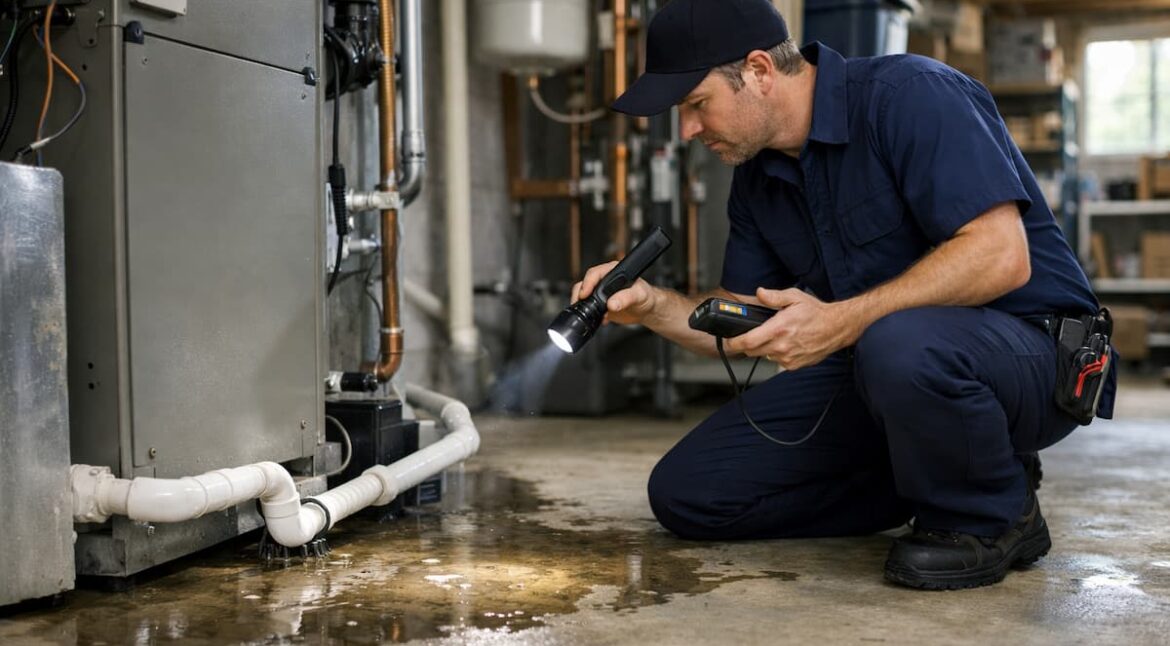
If you have noticed water around your indoor HVAC unit, it is completely reasonable to feel concerned. Most homeowners do not expect to see puddles, damp spots, or water stains near a furnace, air handler, or indoor AC component. Even if the system seems to still be heating or cooling, water around HVAC equipment is never something to ignore for long. At best, it may point to a relatively minor drainage issue. At worst, it may be the first visible sign of airflow problems, frozen coils, clogged drain lines, or an equipment issue that can lead to water damage, mold concerns, or more expensive repairs if it is allowed to continue.
The reason this issue confuses so many homeowners is that water and HVAC systems do sometimes go together. Air conditioners and heat pumps naturally produce condensation during cooling season. High-efficiency furnaces can also create condensate during heating season. So the presence of water somewhere in the system is not automatically abnormal. The problem starts when that water is no longer draining where it is supposed to go. Once it escapes into the surrounding floor area, drips from the unit, or starts showing up in places homeowners can see, it usually means something in the drainage, airflow, or operating process is not working correctly.
In some homes, the water appears as a small puddle near the indoor unit. In others, it may show up as repeated dampness around the base of the furnace, water under an air handler in an attic or closet, staining on the ceiling below an attic unit, or a drip that only appears when the AC runs for a while. Some homeowners first notice the problem after the system stops cooling well. Others only discover it because a safety float switch shuts the system down. And in some cases, the water seems to come out of nowhere, even though the HVAC system otherwise sounds normal.
The good news is that most indoor HVAC water leaks come from a fairly manageable list of causes. A clogged condensate drain line, a dirty filter causing a frozen evaporator coil, a cracked or rusted drain pan, a blocked trap, a failed condensate pump, a drain line disconnection, or a refrigerant-related freeze-up are all common possibilities. In heating season, high-efficiency furnace condensate drainage can also be part of the picture. The trick is understanding which of these problems fits what you are seeing.
In this guide, we will walk through the most common reasons there is water around an indoor HVAC unit, how to tell what kind of issue you may be dealing with, what homeowners can safely check on their own, when you should turn the system off, and when it is time to call for professional repair. We will also explain why the leak may not be just a “water problem,” but instead a symptom of a larger airflow or system-performance issue that needs attention.
If you are already dealing with water around your equipment and want someone to inspect it, you can always schedule an HVAC repair visit. But before you do, it helps to understand what the water is usually trying to tell you.
Is Any Water Around HVAC Equipment Normal?
Inside the system, yes. Around the outside of the unit or on the floor, no.
During cooling season, your air conditioner or heat pump removes both heat and moisture from indoor air. As warm indoor air passes over the cold evaporator coil, moisture condenses into water. That condensation is supposed to drip into a drain pan and then move out through a condensate drain line to a proper drainage location. If everything is working correctly, you usually never see that water inside the home.
In heating season, some high-efficiency condensing furnaces also create water as part of the combustion and exhaust process. That water is supposed to drain correctly through the furnace’s condensate system. Again, homeowners should not normally see it on the floor.
So the basic rule is:
- water being created inside the system can be normal
- water draining out through the proper line can be normal
- water pooling around the indoor unit, dripping into the home, or showing up where it should not is not normal
That means the real question is not whether the system can ever produce water. It is why the water is no longer being managed correctly.
The Most Common Reasons There Is Water Around Your Indoor HVAC Unit
1. The Condensate Drain Line Is Clogged
This is one of the most common reasons homeowners find water around the indoor unit, especially during cooling season. The condensate drain line carries moisture away from the evaporator coil area. Over time, that drain line can become clogged with algae, slime, dirt, dust, or debris. Once the line is blocked, the water backs up instead of draining properly. That backed-up water then overflows from the drain pan or leaks around the unit.
Signs of a clogged drain line often include:
- water around the indoor air handler or furnace area during AC use
- the system shutting off because a safety float switch was triggered
- musty smells near the unit
- visible standing water in or near the drain pan area
- repeated leaking during humid weather
In many homes, this is the first thing technicians check because it is so common and so directly tied to water around the unit.
2. The Condensate Drain Trap Is Blocked
Some systems use a drain trap in the condensate line. If that trap gets clogged, the system may not drain properly even though the line itself looks intact. Homeowners often assume the “drain line” is the only thing that can clog, but the trap can be just as important. A blocked trap can create the same basic result: backed-up condensate that overflows and ends up around the unit.
If your system seems to leak even though the visible line does not look damaged, the trap may be part of the issue.
3. The Evaporator Coil Is Frozen and Then Melting
A frozen evaporator coil is another very common reason water appears around indoor HVAC equipment. This catches homeowners off guard because they often assume the leak means “too much water,” when the real issue may be “ice first, then meltwater later.”
When the evaporator coil freezes, ice builds up on or around the indoor coil area. Once the system turns off, or once the ice begins to thaw, a large amount of water can suddenly melt and overwhelm the drain setup. Instead of draining normally, it spills out around the indoor unit.
A frozen evaporator coil may be caused by:
- a dirty air filter
- restricted airflow
- blower problems
- low refrigerant
- other cooling-performance issues
This is a good example of how water around the unit may actually be a symptom of a bigger performance problem rather than just a drainage problem by itself.
4. The Air Filter Is Dirty and Airflow Is Restricted
A dirty filter deserves its own mention because it is such a common upstream cause. When airflow is restricted, the coil can get too cold and begin freezing. Once that ice melts, water can collect around the indoor unit. Homeowners often focus only on the puddle and miss the fact that the dirty filter may be what set the entire chain reaction in motion.
This is one reason routine maintenance and basic filter changes matter. A neglected filter can create a lot more trouble than weak airflow alone.
5. The Drain Pan Is Rusted, Cracked, or Damaged
The condensate drain pan is designed to catch water from the evaporator coil area and direct it to the drain line. If that pan is cracked, rusted through, poorly seated, or otherwise damaged, water may leak out before it ever reaches the drain line correctly.
This is especially common in older systems where the drain pan has seen years of moisture exposure. In some cases, the pan leak is slow and creates recurring dampness rather than an obvious puddle. In others, the pan fails enough that water shows up more dramatically during heavy AC use.
6. The Condensate Pump Has Failed
Some indoor HVAC systems use a condensate pump because gravity drainage is not enough to move the water where it needs to go. If that pump fails, the condensate can no longer be pumped out properly. The water then backs up and ends up in or around the unit area.
This is more common in basements or utility areas where the drainage path depends on a small pump instead of a simple downward drain line. When the pump fails, the system may still cool for a while, but the water has nowhere to go.
7. The Drain Line Is Disconnected, Loose, or Improperly Pitched
Sometimes the problem is not a clog at all. The condensate line may be loose, disconnected, cracked, or installed with an incorrect slope. If the line is not allowing water to flow properly away from the unit, leaks can show up around the equipment even if the line is technically open.
This can happen after service work, vibration over time, aging plastic components, or installation issues that were never quite right from the beginning.
8. The Evaporator Coil Is Dirty
A dirty evaporator coil can affect how condensation forms and drains. It can also contribute to airflow problems and freezing, which then lead to more serious water leakage. Homeowners usually do not see the coil directly, so they may never suspect it. But if the system has been running with poor filtration or light maintenance for a long time, coil condition can absolutely be part of the problem.
9. Low Refrigerant Is Causing Coil Freeze-Ups
Low refrigerant does not create water directly, but it can contribute to evaporator coil freezing. Once the coil ices over and then thaws, you may end up with water around the indoor unit. In other words, the puddle is not the refrigerant leak itself. It is a secondary symptom of what refrigerant problems can do to the coil and cooling process.
If the system is leaking water and also not cooling properly, or if you see signs of ice, refrigerant issues need to be considered.
10. The System Is Producing More Condensate Than a Marginal Drain Setup Can Handle
In very humid weather, a system can produce a lot of condensation. A healthy drain setup should still be able to handle it. But a system that already has a partially clogged line, weak drain slope, marginal trap, or aging pan may suddenly start leaking when humidity rises. This is why some homeowners only notice the problem during peak summer conditions.
The humidity itself is not usually the “real cause.” It is more often the factor that exposes a drainage weakness that was already there.
11. A High-Efficiency Furnace Condensate Issue
If the water appears during heating season rather than cooling season, and you have a high-efficiency condensing furnace, the source may be furnace condensate rather than AC condensation. These furnaces extract extra heat from combustion gases, which creates water that must be drained away properly.
Problems can include:
- blocked furnace condensate lines
- trap issues
- drain hose problems
- internal drainage restrictions
- condensate pump issues if one is used
If the leak only shows up while the furnace is heating, this distinction matters.
12. A Whole-Home Humidifier Is Leaking
Some homeowners assume the HVAC unit itself is leaking when the actual source is a whole-home humidifier attached to the furnace. Humidifiers have water supply components, drains, pads, and small valves that can leak or overflow. If your furnace has a humidifier mounted on it, that should be checked too, especially if the problem appears during heating season.
13. Installation or Leveling Problems
Indoor HVAC equipment needs to be installed in a way that allows drainage to work correctly. If the unit, pan, or drainage components are not level or properly aligned, water may not move the way it should. This is less common than clogged drains, but it does happen, especially in attic or closet installations where drainage has to be handled carefully.
In some homes, the leak shows up only after years because the support or drain alignment slowly shifted over time.
What You Can Safely Check Yourself
If you find water around the indoor unit, there are a few safe checks you can make before calling for service.
Check whether the system is in cooling mode or heating mode
This helps narrow down whether you are likely dealing with AC condensate, a frozen coil, a furnace condensate issue, or a humidifier-related problem.
Inspect the air filter
If the filter is dirty, replace it. A restricted filter can contribute to frozen coils and overflow problems.
Look for visible ice
Ice on refrigerant lines or visible indoor components strongly suggests freezing is part of the issue.
Look at the condensate drain area
If you can clearly see the line or drain connection, check for obvious disconnections, cracks, or signs of overflow.
Check the secondary pan if the unit is in an attic
If you have an attic air handler and can safely view the area, see whether the emergency or secondary pan is holding water.
Dry the area and monitor whether new water appears
This can help you tell whether the leak is active and whether it seems tied directly to system operation.
If the issue is a simple dirty filter or a clearly visible drainage problem, this may help narrow the diagnosis. But homeowner checks should stop short of invasive equipment work or anything involving refrigerant, sealed components, or internal controls.
Should You Turn the System Off?
Often, yes. If the leak is active, if water is building up around the indoor unit, or if you suspect a frozen coil, turning the system off is usually the smart move until the cause is clearer. Continuing to run the system can worsen water damage, allow more overflow, or make a freezing problem more severe.
If you suspect an evaporator coil freeze-up, turning off the cooling mode and allowing the system to thaw may be necessary before diagnosis can happen properly. But even if the water stops temporarily after thawing, that does not mean the problem is solved. It just means the frozen ice has melted and the system is no longer actively freezing at that moment.
If water is near electrical components or creating obvious safety concerns, the situation deserves extra caution.
What You Should Not Try to Fix Yourself
Some homeowners try to push beyond simple checks and end up making things worse. Avoid taking apart evaporator sections, opening sealed refrigerant systems, forcing frozen components to thaw with unsafe methods, or trying to diagnose electrical faults by guesswork.
If the water issue is tied to refrigerant, a frozen coil, internal drainage, a failed condensate pump, furnace condensate control, or a safety shutdown, proper diagnosis matters more than experimentation.
When You Should Call a Professional
You should call for professional HVAC service if:
- the water keeps returning after you changed the filter
- you see ice or signs of coil freezing
- the system is not cooling or heating normally
- the leak is coming from an attic unit or causing ceiling stains
- you suspect a condensate pump or furnace condensate problem
- the unit is older and this is not the first airflow or performance issue
- you are not sure whether the water is coming from the HVAC system or an attached humidifier component
If the system is leaking and you want the actual cause identified rather than guessed at, it usually makes sense to start with a cooling-system repair evaluation or broader HVAC repair visit depending on the season and the symptoms.
How an HVAC Technician Diagnoses Water Around the Unit
A good diagnosis should not stop at “there is water on the floor.” The real question is why the system is no longer draining or handling condensation the way it should.
Diagnosis may include checking:
- filter condition and airflow
- evaporator coil condition
- evidence of freezing
- condensate drain line and trap condition
- drain pan condition
- condensate pump function
- furnace condensate setup in heating season
- refrigerant-side performance if freezing is suspected
- installation alignment or drainage slope issues
The important point is that water around the unit should lead to a root-cause diagnosis, not just a quick cleanup.
Can Water Around the Indoor Unit Mean You Need a Full Replacement?
Not automatically. Many indoor water issues are repairable. A clogged drain, blocked trap, dirty filter, failed pump, or drain line problem often falls clearly into the repair category. In many cases, the right fix is straightforward once the cause is identified.
But water leaks do sometimes become part of a larger replacement conversation if the system is older and the leak is only one sign of broader trouble. For example, if the unit is aging, repeatedly freezing, struggling with refrigerant issues, showing poor airflow, and no longer keeping the home comfortable, the water around the unit may simply be one more symptom of a system that is wearing out.
In those cases, it may make sense to discuss replacement options instead of continuing to address symptoms one at a time.
How to Help Prevent Indoor HVAC Water Leaks
While not every leak is preventable, some of the most common causes can be reduced with better maintenance and attention. Helpful habits include:
- changing filters regularly
- keeping up with seasonal HVAC maintenance
- having condensate drains and traps checked during service
- watching for early warning signs like weak airflow, poor cooling, or unusual moisture
- paying attention to attic units and secondary drain pans
- addressing refrigerant or freezing issues early instead of waiting for repeated leaks
Water problems often start small. Catching them early usually means a simpler repair and much less risk of damage around the equipment.
Frequently Asked Questions
Why is there water on the floor near my HVAC unit?
The most common causes are a clogged condensate drain line, frozen evaporator coil, dirty air filter, cracked drain pan, failed condensate pump, or another drainage issue. In heating season, a high-efficiency furnace or attached humidifier may also be involved.
Is water around my indoor HVAC unit dangerous?
It can be. Even a small leak can lead to water damage, mold concerns, or trouble if moisture reaches electrical components. It is best not to ignore it.
Can a dirty filter really cause water around the unit?
Yes. A dirty filter can reduce airflow, which may contribute to a frozen evaporator coil. When that ice melts, water can overflow around the unit.
Should I turn off my AC if it is leaking water inside?
Usually yes, especially if the leak is active, water is building up, or a frozen coil may be involved. Running it longer can worsen the problem.
Can low refrigerant cause water around the unit?
Indirectly, yes. Low refrigerant can contribute to coil freezing, and when the ice melts, you may see water around the indoor equipment.
Does water around the unit mean I need a new HVAC system?
Not automatically. Many water issues are repairable. But if the leak is part of a pattern of freezing, poor cooling, refrigerant issues, or general system decline, replacement may need to be discussed.
What else can I read about common HVAC issues?
You can also visit our FAQ page for answers to other common heating and cooling questions.
Final Thoughts
If there is water around your indoor HVAC unit, the most important thing to understand is that the water itself is usually not the main problem. It is the sign that something in the system’s drainage, airflow, cooling process, or condensate handling is no longer working the way it should. In many homes, the cause is something fixable, such as a clogged drain line, dirty filter, blocked trap, failed pump, or damaged pan. In others, the water leak is the visible symptom of a larger issue like coil freezing, refrigerant trouble, or a system that is beginning to struggle more broadly.
The good news is that these problems are often much easier to deal with when they are addressed early. Waiting too long can turn a manageable drainage issue into water damage, mold growth, or a much larger HVAC repair.
Start with the basics: check the filter, look for obvious ice, notice whether the problem happens in heating or cooling mode, and do not keep running the system if water is actively building up. If the cause is not immediately obvious or the leak returns, a professional diagnosis is the smartest next step.
If you want help figuring out why water is showing up around your indoor HVAC unit, you can contact our team to schedule service.