Why Is My HVAC System Short Cycling?
If your HVAC system keeps turning on and off more often than it should, there is a good chance it is short cycling. This is one of the most common heating and cooling complaints homeowners run into, and it is also one of the easiest to ignore at first. The system still turns on. Air still comes from the vents. The house may still get somewhat warm or cool. But the equipment never seems to settle into a normal operating rhythm. Instead, it starts, runs briefly, shuts off, starts again, and repeats the same pattern over and over.
At first, short cycling can seem more annoying than serious. Maybe you notice the thermostat clicking more often. Maybe the outdoor unit sounds like it is constantly restarting. Maybe the furnace runs in short bursts instead of long, steady cycles. Some homeowners only notice because the home feels less comfortable. Others spot the problem when they see energy bills rise even though their usage has not changed much. In many homes, short cycling shows up before a full system breakdown, which is why it deserves attention early rather than after the equipment starts failing in a bigger way.
The reason this matters is simple: HVAC systems are not designed to start and stop constantly. They are built to run in normal heating or cooling cycles, reach temperature gradually, and then shut off when the thermostat is satisfied. When the system keeps restarting too quickly, the equipment experiences extra wear, comfort becomes less stable, energy use often climbs, and the underlying issue usually gets worse instead of better.
The good news is that short cycling does not point to only one possible cause. In some cases, the issue is relatively simple, like a dirty filter, a thermostat problem, or blocked airflow. In other cases, it can involve more serious concerns, such as refrigerant problems, overheating, flame-sensing issues, frozen coils, electrical faults, or oversized equipment. The key is understanding that short cycling is a symptom, not a complete diagnosis. It tells you something is wrong with the way the system is operating, but you still have to determine why.
In this guide, we will break down what short cycling actually means, how to recognize it, why it is bad for your HVAC system, and what the most common causes are for both heating and cooling equipment. We will also explain what homeowners can safely check on their own, when it makes sense to call a technician, and when short cycling may be part of a larger repair-versus-replacement conversation.
If you are already dealing with a system that keeps turning on and off and want someone to look at it, you can always schedule a repair visit. But before you do, it helps to understand what short cycling actually means and what might be causing it.
What Does Short Cycling Mean?
Short cycling means your HVAC system is turning on and off too frequently, with run times that are shorter than normal. Instead of completing a steady heating or cooling cycle, the system starts, runs briefly, and shuts down before it should. Then it restarts again soon after.
The exact timing can vary from one system to another, so homeowners do not need to memorize a perfect number of minutes. The more useful way to think about it is behavioral. If the system seems to be “chattering” through repeated starts and stops, or it rarely settles into a consistent cycle, that is usually what people mean by short cycling.
Common examples include:
- the furnace turns on, runs for a very short time, and shuts off before the house warms up properly
- the air conditioner starts cooling, then shuts off too quickly and restarts again a short time later
- the outdoor unit seems to come on and off repeatedly during the same period
- the system hits temperature too quickly, shuts off, then the house immediately drifts uncomfortable again
- you hear repeated startup sounds much more often than normal
Short cycling can happen in heating mode, cooling mode, or both, depending on the underlying issue.
Why Short Cycling Is a Problem
Many homeowners assume that if the system is still turning on, the problem cannot be that serious. But short cycling is hard on HVAC equipment for several reasons.
Short cycling can lead to:
- increased wear on motors, compressors, ignition components, relays, and controls
- higher utility bills because startup is energy-intensive and the system never settles into efficient operation
- more uneven temperatures throughout the house
- poorer humidity control in cooling season
- faster aging of components that might otherwise have lasted longer
- a higher risk of complete breakdown if the real cause is not addressed
In other words, short cycling is not just a minor operating quirk. It is a condition that can actively shorten the life of the system and make comfort worse at the same time.
What Causes HVAC Short Cycling?
There are several common causes, and the exact one depends on whether you are dealing with a furnace, an air conditioner, a heat pump, or a broader airflow/control issue. Some causes are simple. Others are more technical. In many homes, more than one factor may be involved.
Common Causes of Short Cycling in Any HVAC System
1. Thermostat Problems
A thermostat issue is one of the first things to consider because the thermostat controls when the system turns on and off. If it is misreading temperature, reacting too quickly, placed poorly, losing power intermittently, or wired incorrectly, it can cause the equipment to cycle abnormally.
Thermostat-related short cycling may happen because:
- the thermostat is near a heat source, sunny wall, or drafty area
- the sensor is inaccurate
- the thermostat has a battery or power issue
- programming or smart thermostat settings are creating inconsistent calls
- the thermostat is simply failing
If the thermostat thinks the temperature has already been reached when it has not, the system may shut off too soon and restart again shortly after.
2. Dirty Air Filter and Restricted Airflow
A dirty filter is one of the most common and most overlooked reasons HVAC systems start behaving badly. When the filter is clogged, airflow drops. That restricted airflow can affect both heating and cooling performance, and in some cases it can trigger short cycling indirectly by causing overheating, freezing, or abnormal operating conditions.
In cooling mode, restricted airflow can contribute to evaporator coil problems. In heating mode, it can make the furnace run hotter than it should. Either way, the system may begin shutting down earlier than normal instead of completing a full cycle.
This is one reason routine HVAC maintenance and basic filter changes matter more than many homeowners think.
3. Oversized Equipment
An oversized HVAC system is one of the classic causes of short cycling. If the equipment is too large for the space, it can heat or cool the thermostat area too quickly and shut off before the house has actually been conditioned evenly. Then the system restarts again soon after because the overall comfort balance was never truly achieved.
This often sounds counterintuitive to homeowners because bigger equipment seems like it should be better. But oversized systems frequently create exactly the kind of unstable, on-off behavior that people find frustrating. In cooling mode, oversized AC systems can also reduce humidity control because they do not run long enough to remove moisture effectively.
Oversizing is especially important when short cycling has been present for a long time, not just suddenly. If the system has “always kind of run like this,” sizing deserves serious attention.
4. Blocked or Closed Vents and Return Air Issues
The system depends on free movement of air. If too many supply vents are closed, return grilles are blocked, or airflow is being restricted by furniture, rugs, or other obstructions, the system may operate under abnormal pressure and temperature conditions. In some homes, that can contribute to short cycling.
This is usually not the only cause, but it can absolutely make an existing issue worse.
Common Causes of Furnace Short Cycling
5. Furnace Overheating
One of the most common reasons a furnace short cycles is overheating. When the furnace gets too hot, a safety limit switch can shut the burners down to protect the system. The blower may continue to run for a while, the system cools off, and then the furnace tries again. To the homeowner, this can look like repeated brief heating cycles.
Overheating can happen because of:
- a dirty air filter
- blower motor problems
- restricted ducts or vents
- dirty internal components
- limit switch issues or incorrect airflow setup
If the furnace is short cycling because it is overheating, the system should not just be “reset and ignored.” The underlying cause still needs attention.
6. Flame Sensor Problems
The flame sensor is a safety component that verifies the burners are igniting properly. If the sensor is dirty or malfunctioning, the furnace may light, run briefly, then shut down because the control board does not believe the flame is stable or safe. Then the system may attempt another cycle shortly after.
This kind of issue often creates a very specific pattern: the furnace starts, the burners ignite, then the system shuts off again much sooner than it should. Homeowners sometimes mistake that for a thermostat problem when the real issue is ignition safety logic.
7. Limit Switch or Control Problems
Limit switches and other furnace controls are designed to protect the equipment. If one of these components is failing, it may shut the system down prematurely or create erratic operation. Sometimes the system is not truly overheating, but a faulty switch or control signal makes it behave as if it were.
Control issues are especially important when the short cycling seems inconsistent or hard to predict.
Common Causes of AC or Cooling Short Cycling
8. Low Refrigerant or Refrigerant Problems
Refrigerant problems are a common cause of abnormal cooling behavior, including short cycling. If refrigerant is low due to a leak or other issue, the cooling cycle may not operate normally. The system may struggle to absorb and reject heat correctly, pressures may behave abnormally, and the unit may shut down sooner than it should.
Refrigerant issues do not usually resolve themselves. If short cycling is tied to refrigerant, the problem needs proper diagnosis, repair, and charging, not just a temporary guess or adjustment.
9. Frozen Evaporator Coil
A frozen evaporator coil can interfere with normal cooling operation and contribute to strange cycling behavior. When the coil freezes, airflow and heat transfer are disrupted. The system may stop cooling properly, shut off at the wrong time, or behave unpredictably as the controls respond to abnormal conditions.
Frozen coils are often caused by airflow problems, dirty filters, low refrigerant, or blower issues. So even if the ice is the visible symptom, the real cause may be upstream.
10. Dirty Condenser Coil or Outdoor Unit Stress
If the outdoor condenser coil is dirty or airflow around the outdoor unit is restricted, the cooling system may struggle to reject heat properly. That can increase stress on the compressor and other components, sometimes contributing to irregular cycling and poor cooling performance.
This is especially likely during the hottest weather, when the system is already under more strain than usual.
11. Electrical Component Problems
Capacitors, contactors, relays, and other electrical parts can cause the system to behave erratically if they are failing. In some cases, the system may start but not stay running normally. In others, the controls may shut the system down and retry. This can look like short cycling even when the deeper issue is electrical stability.
If short cycling is accompanied by clicking, humming, delayed startups, or strange outdoor unit behavior, electrical causes deserve attention.
Common Causes of Heat Pump Short Cycling
Heat pumps can short cycle for many of the same reasons as air conditioners, since they share similar refrigeration and airflow logic. But because they also provide heating, heat pumps can short cycle in either mode. Thermostat issues, refrigerant problems, airflow restrictions, dirty filters, and control board problems are all relevant here.
If you are seeing repeated on-off behavior in a heat pump system, it is important to identify whether the issue is happening in heating mode, cooling mode, or both. That clue often helps narrow down the likely cause.
What Homeowners Can Safely Check
Short cycling does not always mean you need to start taking equipment apart. There are several basic things you can safely check first.
Check the air filter
If the filter is dirty, replace it. Restricted airflow is one of the easiest and most common causes to eliminate.
Check the thermostat setting and location
Make sure the thermostat is not near a lamp, sunny wall, supply vent, or another source that could cause inaccurate temperature readings. If it uses batteries, replace them if needed.
Make sure vents and returns are open
Confirm that supply vents are not heavily closed off and that return grilles are not blocked by furniture or rugs.
Look for obvious ice in cooling mode
If you see frost or ice on refrigerant lines or visible indoor components, turn the system off and let it thaw. Ice points to a real issue that should not be ignored.
Observe the pattern
Notice whether the short cycling happens only in cooling mode, only in heating mode, or all the time. Also note whether it happens more during very hot or very cold weather.
Listen for unusual sounds
Clicking, humming, repeated ignition attempts, or outdoor unit noises can help point toward electrical or ignition-related causes.
These steps will not solve every short cycling issue, but they can help rule out simple causes and give a technician much better information if service is needed.
What You Should Not Try to Fix Yourself
Some parts of short cycling diagnosis go beyond safe homeowner checks. Avoid trying to diagnose or repair refrigerant issues, internal furnace safety controls, high-voltage electrical components, limit switches, flame sensors, capacitors, or compressors without proper training.
HVAC equipment contains high voltage, combustion safety logic, pressurized refrigerant, and moving mechanical parts. Guesswork can make the problem worse or create safety risks.
When Short Cycling Means You Should Call a Professional
You should call for professional help if:
- replacing the filter did not change anything
- the thermostat appears normal but the system still cycles rapidly
- you see ice, smell something unusual, or hear abnormal noises
- the furnace shuts down repeatedly before heating the house properly
- the air conditioner keeps starting and stopping during the same cooling call
- comfort is getting worse or energy bills are noticeably climbing
- the system is older and this is not the first performance problem you have noticed
At that point, the best next step is usually a proper diagnostic rather than more trial-and-error adjustments at home.
If the system keeps turning on and off and you want the cause identified correctly, it usually makes sense to start with a professional HVAC repair evaluation rather than waiting for the problem to grow into something more expensive.
How an HVAC Technician Diagnoses Short Cycling
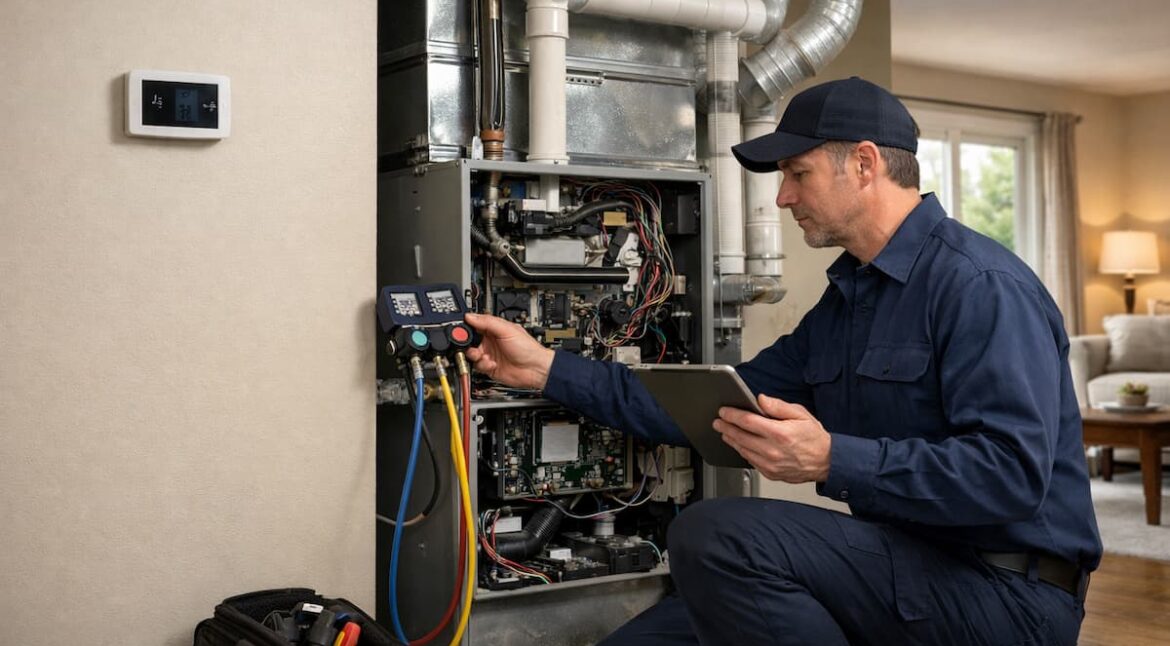
A good diagnosis should not stop at “it is short cycling.” That is only the symptom. A technician should work through the control logic, airflow conditions, equipment performance, and the mode in which the problem appears.
Diagnosis may include checking:
- thermostat operation and placement
- filter condition and airflow
- blower performance
- limit switches and furnace safety controls
- flame sensing and ignition behavior
- refrigerant pressures and cooling performance
- coil condition and evidence of freezing
- condenser and outdoor unit function
- electrical components and control response
If the equipment is older, diagnosis may also include the bigger question of whether the short cycling is one isolated issue or part of broader system decline.
Can Short Cycling Mean the System Is Too Big?
Yes, absolutely. Oversized systems are one of the classic reasons short cycling happens, especially when the issue has been present for a long time and not just suddenly appeared. If the equipment reaches the thermostat setting too quickly and shuts off before the home is conditioned evenly, that on-off pattern can become normal.
This is why bigger equipment is not automatically better. In HVAC, oversizing can create real comfort and efficiency problems instead of solving them.
Can a Dirty Filter Really Cause Short Cycling?
Yes, it can. A dirty filter reduces airflow, and once airflow drops enough, it can contribute to overheating, freezing, or other operating problems that make the system shut down too early. It is not always the only cause, but it is common enough that every short cycling complaint should start with a filter check.
It is one of the easiest problems to prevent and one of the most common problems homeowners accidentally let grow.
Does Short Cycling Mean You Need a Full Replacement?
Not automatically. Short cycling can absolutely come from repairable issues like dirty filters, thermostat problems, control failures, flame-sensor problems, airflow restrictions, or specific cooling-related faults. In many cases, repair is the correct answer.
But if the system is older, if short cycling has become part of a pattern of poor performance, or if oversizing and broader comfort problems are involved, the conversation may naturally shift toward replacement.
If the system has become unreliable enough that every fix seems temporary, or if the equipment no longer matches the needs of the home well, it may make sense to discuss full replacement options instead of continuing to chase symptoms one repair at a time.
How to Help Prevent Short Cycling in the Future
While not every cause is preventable, some of the most common ones can be reduced with better system care. Good habits include:
- changing filters regularly
- keeping supply and return airflow open and unobstructed
- scheduling routine maintenance before peak heating and cooling seasons
- paying attention to early warning signs like odd cycling, weak airflow, or inconsistent comfort
- avoiding DIY thermostat or control changes you do not fully understand
- making sure system sizing and replacement decisions are done correctly when new equipment is installed
Prevention does not guarantee that short cycling will never happen, but it makes it much less likely that basic maintenance problems will trigger it.
Frequently Asked Questions
What does it mean if my HVAC system keeps turning on and off?
It often means the system is short cycling. That can be caused by thermostat problems, dirty filters, airflow restrictions, oversized equipment, refrigerant issues, furnace overheating, electrical faults, or other control and performance problems.
Can a dirty filter cause short cycling?
Yes. Restricted airflow from a dirty filter can contribute to overheating, freezing, and other operating problems that make the system shut down too early.
Is short cycling bad for my HVAC system?
Yes. Frequent starts and stops increase wear on key components, raise energy use, and often reduce comfort and humidity control.
Can an oversized HVAC system cause short cycling?
Absolutely. Oversized equipment can hit the thermostat setting too fast and shut off before the home is conditioned evenly, creating repeated short cycles.
Should I keep running the system if it is short cycling?
It is better to address the issue sooner rather than later. Short cycling puts extra wear on the equipment, and the underlying cause can get worse if ignored.
Does short cycling always mean I need a new HVAC system?
No. Many short cycling problems are repairable. But on older or poorly matched systems, short cycling can also be part of a bigger replacement conversation.
What else can I read about common HVAC issues?
You can also visit our FAQ page for answers to other common heating and cooling questions.
Final Thoughts
If your HVAC system is short cycling, it is telling you that something is interrupting normal operation. That “something” may be as simple as a dirty filter or thermostat problem, or it may be a bigger issue involving airflow, refrigerant, overheating, controls, or system sizing. The most important thing is not to dismiss it as harmless just because the system still turns on.
Short cycling is hard on HVAC equipment, bad for energy efficiency, and frustrating for comfort. It often starts as a symptom and becomes a bigger repair if left alone too long. The sooner the cause is identified, the better your chances of solving the problem before it affects more expensive parts of the system.
Start with the basics: check the filter, confirm the thermostat is behaving normally, and look for obvious airflow issues or ice. If the problem continues, a proper diagnosis is usually the smartest next step.
If your system keeps turning on and off and you want help figuring out what is causing it, you can contact our team to schedule service.