

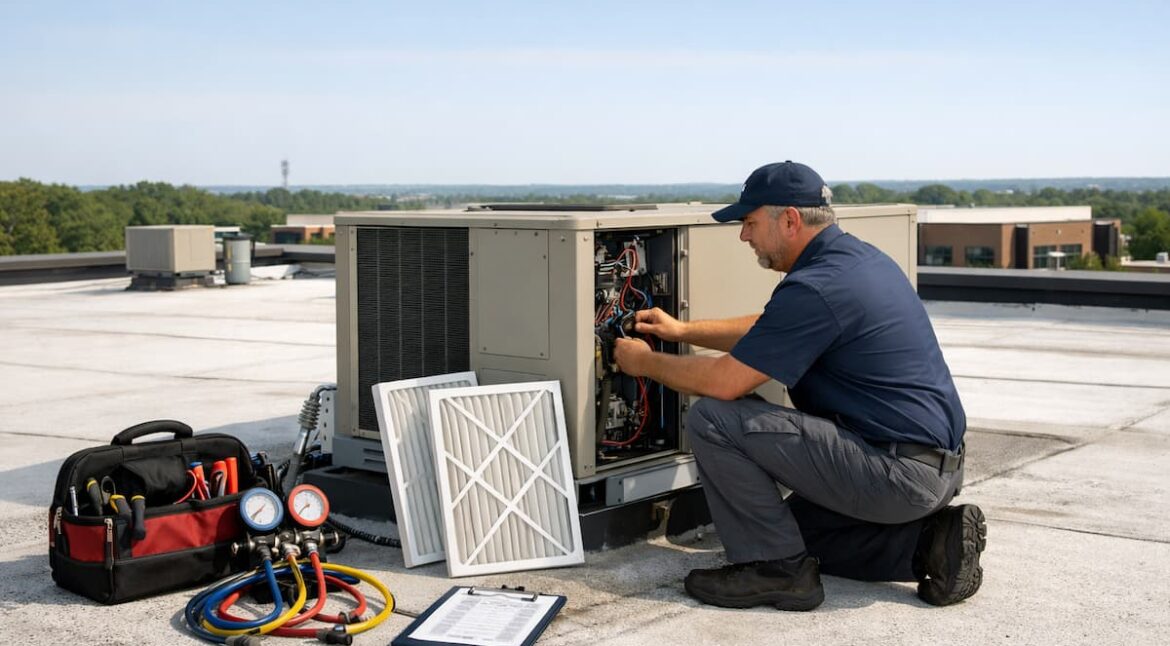
How Often Should Commercial HVAC Be Serviced?
If you manage a commercial property, one of the most practical HVAC questions you can ask is how often the system should actually be serviced. Not just checked when it breaks. Not just looked at when tenants start complaining. Not just patched up during a summer emergency. The real question is how often commercial HVAC should be serviced if you want the equipment to stay reliable, the building to stay comfortable, and the repair budget to stay under control.
The short answer is that most commercial HVAC systems should be professionally serviced at least twice a year, and many buildings are better off with quarterly service. But that answer is only the starting point. The right service frequency depends on the type of building, the type of HVAC equipment, how heavily it runs, how critical indoor comfort is to operations, what kind of air quality demands the building has, and how expensive downtime would be if the system fails at the wrong time.
A small office with moderate occupancy and a relatively simple HVAC setup does not have the same maintenance needs as a restaurant, medical facility, warehouse office, retail store, mixed-use building, or property with multiple rooftop units running hard through changing seasons. A system serving a lightly used professional office may survive with a simpler preventive schedule. A system serving heat-producing equipment, long business hours, heavy foot traffic, kitchen exhaust, server rooms, or strict indoor comfort requirements often needs much more attention.
What makes commercial HVAC maintenance different from residential maintenance is not just the size of the equipment. It is the cost of failure. When a home system goes down, the problem is personal and inconvenient. When a commercial system goes down, the problem can become operational. Employees get uncomfortable. Customers leave. Tenants complain. Equipment overheats. Air quality drops. Storefronts lose business. Repairs become urgent, more expensive, and harder to schedule on your terms.
That is why the real goal of commercial HVAC service is not just “keeping it clean.” It is reducing the risk of interruptions, catching wear before it turns into failure, protecting airflow and efficiency, extending equipment life, and helping building owners avoid the cycle of waiting until something major breaks.
In this guide, we will break down how often commercial HVAC should be serviced, what a realistic maintenance schedule looks like for different property types, which parts need more frequent attention than others, why quarterly service is often the real-world standard, and how to tell whether your building needs more than the bare minimum. We will also cover filters, rooftop units, seasonal tune-ups, tenant comfort, emergency prevention, and what happens when service gets pushed off too long.
If you are already looking for a more structured maintenance plan for a building or commercial rooftop system, you can always schedule preventive rooftop unit service. But before you do that, it helps to understand what a smart commercial HVAC service schedule actually looks like.
The Short Answer
For most commercial buildings, professional HVAC service should happen at least twice a year, usually once before cooling season and once before heating season. But for many commercial properties, quarterly service is the better standard.
A practical rule of thumb looks like this:
- twice a year is the minimum for many standard commercial systems
- quarterly service is often ideal for buildings with regular business use
- monthly or frequent filter checks may still be needed even when full service is less frequent
- restaurants, healthcare spaces, high-occupancy buildings, and mission-critical spaces often need more frequent attention
- rooftop units and high-use systems usually deserve a more structured preventive plan, not a wait-until-it-breaks approach
So if you want the truly useful answer, it is this: commercial HVAC should be serviced often enough that filters, airflow, electrical wear, drainage, coil condition, and seasonal performance never get the chance to quietly turn into downtime.
Why Commercial HVAC Needs a Different Maintenance Mindset
Commercial HVAC systems should not be managed with the same mindset people sometimes use at home. In a residential setting, many people delay maintenance because the equipment still “seems fine.” In a commercial setting, that logic becomes expensive very quickly. Commercial systems often serve larger spaces, longer run times, bigger loads, more occupants, and more complicated operating schedules. They also often work harder in dirtier or more demanding environments.
Even a modest commercial building may have multiple zones, multiple thermostats, several packaged rooftop units, tenant-specific comfort demands, ductwork that spans long distances, ventilation requirements, and occupancy patterns that change throughout the day. That kind of setup accumulates wear faster than people expect. And because the system is tied to comfort, workflow, customer experience, and equipment protection, the cost of failure is usually much bigger than the cost of routine service.
In other words, commercial HVAC service is not just about keeping equipment clean. It is about protecting operations. A maintenance plan is really a risk-management plan for comfort, energy use, and continuity.
What Counts as Commercial HVAC Service?
Before talking about how often service should happen, it helps to define what service actually means. Commercial HVAC service is not the same thing as someone briefly looking at the equipment and saying it seems okay. A real service visit should involve inspection, cleaning, testing, adjustment, and performance review.
Depending on the equipment and season, a commercial HVAC service visit may include:
- filter inspection and replacement recommendations
- blower and airflow checks
- electrical testing and inspection of contactors, capacitors, connections, and controls
- coil inspection and cleaning as needed
- belt, motor, and bearing inspection where applicable
- refrigerant-side checks on cooling equipment
- drainage and condensate inspection
- heating performance checks in season
- thermostat and control verification
- general condition review and identification of wear before it becomes failure
In a commercial environment, the quality of the service matters almost as much as the frequency. A poor “maintenance” visit that skips actual testing and inspection does not replace a real preventive program.
The Bare Minimum: Twice Per Year
For many commercial buildings, twice-yearly service is the minimum reasonable standard. This usually means one visit before the cooling season and one visit before the heating season. The idea is simple: inspect and prepare the system before it enters its most demanding operating period.
A spring visit typically focuses on cooling readiness. A fall visit typically focuses on heating readiness. This seasonal timing matters because it gives technicians a chance to catch weak capacitors, dirty coils, airflow problems, failing contactors, burner concerns, condensate issues, or other problems before they become emergency failures during peak demand.
If you have a small or lightly used commercial property, and the system is relatively straightforward, twice per year may be a workable baseline. But for many properties, that is still just the floor, not the ideal plan.
Why Quarterly Service Is Often the Better Standard
Quarterly service is often the real-world sweet spot for commercial HVAC. It creates enough touchpoints throughout the year to catch developing issues earlier, monitor filters more realistically, and keep high-use systems from drifting too far between inspections.
Quarterly service is especially useful because it helps bridge the gaps between seasons. Instead of only checking the equipment twice a year, the building gets:
- more regular filter review
- better tracking of wear trends
- fewer surprises before peak weather swings
- more consistent attention to rooftop exposure, drainage, and coil condition
- a much better chance of preventing emergency repair calls
For many offices, retail spaces, mixed-use buildings, and small-to-midsize commercial properties, quarterly service is not overkill. It is simply the maintenance frequency that matches real operating conditions better than “spring and fall only.”
If the building relies on packaged rooftop equipment, a structured preventive maintenance program for RTUs is often the smarter choice than seasonal service alone.
When Commercial HVAC Should Be Serviced More Than Quarterly
Some buildings need more attention than others. There are plenty of situations where quarterly service is still not enough. In those properties, monthly inspections, frequent filter changes, or targeted maintenance tasks between larger service visits may be completely justified.
More frequent service often makes sense for:
- restaurants and food-service spaces
- medical or healthcare buildings
- high-occupancy retail spaces
- buildings with high ventilation demand
- facilities with long operating hours
- spaces with dust, grease, lint, or particulate-heavy conditions
- mission-critical rooms or tenant-sensitive environments
- older equipment with a history of performance issues
In these settings, it is usually better to think in layers: scheduled seasonal service, recurring quarterly inspections, and more frequent filter or condition checks in between when needed.
Filters Need Attention More Often Than Full Service
One of the most common mistakes in commercial HVAC management is assuming that if the system is serviced quarterly or twice a year, everything else can simply wait until then. Filters are the clearest example of why that is not true.
In many commercial buildings, filters need to be checked far more often than the full service schedule. Some systems need filter review monthly. Some need it even more often depending on occupancy, dust load, or operating conditions. Waiting three or six months to think about filters in a busy commercial setting can create airflow restriction, reduced comfort, energy waste, and unnecessary stress on the equipment.
Filter frequency depends on:
- occupancy levels
- building cleanliness and dust load
- nearby construction or outdoor debris
- filter type and thickness
- operating hours
- whether the system is serving sensitive environments
A smart commercial maintenance program usually separates filter attention from the broader service schedule instead of treating them as the same thing.
Rooftop Units Usually Need Structured Preventive Maintenance
Rooftop units are among the most common types of commercial HVAC equipment, and they are also some of the easiest systems to neglect until there is a problem. Because the equipment is out of sight, building owners and managers often assume everything is fine as long as the thermostats still call and the space feels acceptable most of the time. That is exactly how minor issues turn into compressor strain, airflow problems, electrical failures, and surprise shutdowns.
Rooftop units are exposed to weather, dirt, wind-blown debris, temperature swings, drainage issues, and long commercial operating hours. They should almost never be treated as “set it and forget it” equipment.
Rooftop equipment often needs consistent attention to:
- filters
- coils
- blower sections
- electrical components
- condensate drainage
- heating and cooling sequence of operation
In practice, this usually means rooftop units should be on a formal preventive maintenance schedule, not an occasional service list.
How Building Type Changes Service Frequency
Not every commercial property needs the same schedule. The type of business and the way the building is used should directly affect how often HVAC is serviced.
Office buildings
Many office buildings do well with quarterly service, with more frequent filter checks as needed. If occupancy is predictable and the environment is relatively clean, twice-yearly service may work for smaller spaces, but quarterly service is often still the more dependable approach.
Retail spaces
Retail stores often benefit from quarterly service because comfort directly affects customer experience. Door openings, foot traffic, display lighting, and occupancy swings can all increase HVAC stress.
Restaurants
Restaurants often need more attention because of grease, heat loads, kitchen influence, longer hours, and high ventilation demand. Waiting until seasonal service alone is usually not enough.
Healthcare and professional care spaces
These spaces often need more careful filter management, more consistent performance, and more proactive maintenance because indoor conditions matter more than average.
Warehouses and industrial support spaces
Service needs depend heavily on dust, occupancy, office buildout, heat-producing equipment, and whether comfort is mission-critical in all areas or only in certain zones.
Mixed-use and tenant buildings
These properties often need a very organized maintenance plan because complaints can come from multiple users with different comfort expectations and schedules.
Seasonal Service Still Matters Even on a Quarterly Plan
Even if your building is on a quarterly schedule, seasonal service still matters because spring and fall tune-ups tend to focus on different parts of system readiness.
Before cooling season, service should pay close attention to:
- condenser and evaporator coils
- refrigerant performance
- drainage and condensate lines
- cooling controls and electrical wear
- airflow and filter condition
Before heating season, attention often shifts toward:
- heating sequence and controls
- ignition and combustion-related checks where applicable
- blower readiness
- electrical and safety review
- general winter reliability checks
That is why “once a year” is usually not enough for commercial HVAC. The systems face too many different demands across the year to be managed that loosely.
What Happens If Commercial HVAC Is Not Serviced Often Enough
When commercial HVAC service gets delayed too long, the consequences often build slowly before becoming expensive. The system may still run, but it no longer runs as cleanly, efficiently, or safely as it should. Filters become overloaded. Airflow drops. Electrical components wear quietly. Coils lose performance. Drainage issues start developing. Small warning signs stay unnoticed because nobody is opening the panels and actually looking.
Under-serviced commercial HVAC often leads to:
- more emergency repair calls
- inconsistent comfort for tenants, staff, or customers
- reduced equipment life
- higher utility costs
- shortened life of motors, compressors, belts, and controls
- more difficult service events because problems are discovered later
- avoidable disruption to business operations
In other words, service frequency is not just a maintenance topic. It is a budget and operations topic too.
Signs Your Commercial HVAC Probably Needs More Frequent Service
Some buildings reveal very clearly that the current maintenance schedule is not enough. If you are not sure whether your building needs more frequent service, look for patterns like these:
- filters are dirty long before the next scheduled visit
- comfort complaints happen regularly between service calls
- the building experiences frequent minor breakdowns
- energy costs seem consistently high
- certain zones are struggling even though the system is technically running
- rooftop units collect noticeable debris, dirt, or drainage buildup between visits
- you are repeatedly paying for reactive repairs instead of preventing them
If those problems sound familiar, the issue may not be that the equipment is “bad.” It may be that the maintenance interval is too loose for the way the building actually operates.
How Often Should Commercial HVAC Filters Be Changed?
This is one of the most practical follow-up questions, and it deserves a separate answer because filter frequency is usually more aggressive than full service frequency.
Many commercial systems need filters checked monthly. Some can go longer, depending on the building and filter type. Others need even more frequent attention when dirt, dust, grease, lint, or heavy occupancy is involved.
Filter schedules should be based on:
- filter size and MERV level
- hours of operation
- occupancy and indoor activity
- outdoor air exposure
- building cleanliness and environment
- equipment sensitivity to airflow loss
A property that waits until scheduled seasonal service to think about filters is often waiting too long.
Should Commercial HVAC Be Inspected Even If It Seems Fine?
Yes. In fact, that is the entire point of preventive maintenance. By the time a commercial HVAC problem is obvious to building occupants, the system has often been drifting for a while. Filters do not clog in one day. Capacitors do not become weak in one hour. Coils do not suddenly become dirty the exact moment people notice discomfort. Most problems develop gradually before they become operationally visible.
Preventive inspections are valuable precisely because they happen before the system “seems broken.” Waiting for symptoms means you are already running late.
How to Think About Maintenance Plans vs One-Off Service Calls
One-off service calls are sometimes necessary, but they should not be the entire HVAC strategy for a commercial property. If the building only gets attention when something stops working, then the maintenance program is really just an emergency program wearing a different name.
A structured commercial HVAC maintenance plan is different because it creates regular checkpoints. It gives the property a service rhythm. Instead of waiting for failures, the system gets reviewed on a schedule that fits the building.
In many cases, that is what separates buildings with relatively predictable HVAC budgets from buildings that keep getting blindsided by avoidable repair costs.
If your building is still operating on a reactive model, it may be worth moving that conversation toward ongoing preventive maintenance rather than continuing to rely on urgent calls and temporary fixes.
What a Good Commercial Service Schedule Often Looks Like
A practical commercial HVAC schedule often looks something like this:
Basic schedule
Two professional tune-ups per year, plus regular filter monitoring in between.
Stronger standard schedule
Quarterly service visits with seasonal focus, plus monthly filter checks or changes as needed.
Higher-demand schedule
Quarterly full service plus more frequent equipment observations, filter attention, and targeted follow-up based on the building environment.
The right answer is not always the most aggressive schedule possible. It is the schedule that actually matches the building’s risk, usage, and operational needs.
Frequently Asked Questions
How often should commercial HVAC be serviced?
For many buildings, at least twice a year is the minimum. Quarterly service is often the better standard for commercial properties with regular occupancy and year-round equipment use.
Is twice-a-year service enough for commercial HVAC?
Sometimes, for simpler and lighter-use buildings. But many commercial systems perform better and fail less often with quarterly service and more frequent filter checks.
How often should commercial HVAC filters be changed?
Many commercial filters should be checked monthly. Replacement timing depends on filter type, building conditions, hours of operation, dust load, and airflow demands.
Do rooftop units need more maintenance?
Often yes. Rooftop units are exposed to weather, debris, and seasonal stress, so they usually benefit from a structured preventive maintenance plan rather than occasional service only.
What types of commercial buildings need more frequent HVAC service?
Restaurants, healthcare spaces, high-occupancy retail, dust-heavy environments, long-hour buildings, and properties with sensitive tenant comfort demands often need more frequent attention than standard offices.
Can I wait until the system seems to have a problem?
You can, but that usually leads to more reactive repairs, higher operating costs, and greater risk of downtime. Preventive service works best before problems become obvious.
What else can I read about commercial and general HVAC questions?
You can also visit our FAQ page for more answers to common HVAC questions.
Final Thoughts
So how often should commercial HVAC be serviced? For most properties, twice a year is the minimum reasonable answer. But for many real-world buildings, quarterly service is the more practical standard. Once you consider occupancy, rooftop exposure, filter loading, operating hours, tenant expectations, and the cost of downtime, it becomes clear that “just call when something breaks” is usually the most expensive maintenance plan of all.
The right service frequency depends on the building, but the bigger principle stays the same: commercial HVAC should be serviced often enough to catch problems before they become operational disruptions. That usually means separating filter attention from full service, treating rooftop units seriously, and building a schedule around how the equipment is actually used instead of how often someone remembers to think about it.
If your building’s current approach is reactive, uncomfortable, or too dependent on urgent repair calls, it may be time to move toward a more structured maintenance rhythm. That shift often pays for itself in reduced surprises, better comfort, and equipment that lasts longer under real commercial demand.
If you want help putting the right service plan in place for your building, you can contact our team to schedule a consultation.